
+18 | Commercial Content | T&C's Apply | Play Responsibly | Publishing Principles
World Cup

World Cup Overview

Spain bounce back GFX

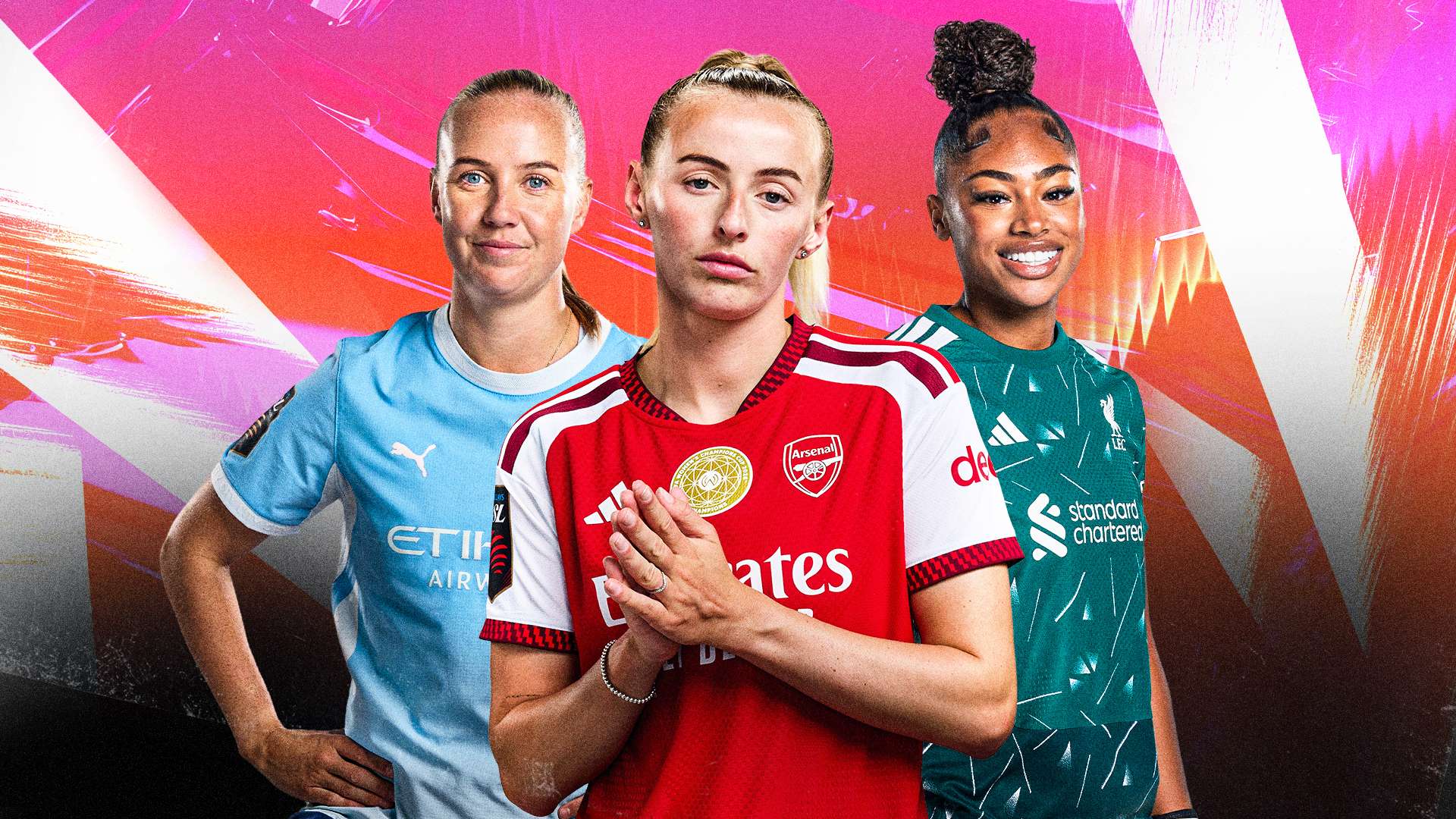
How Spain bounced back from Euro 2025 to be World Cup favourites

Spain's devastation after defeat in last summer's European Championship final was palpable. There is perhaps no crueller way to lose than on penalties and that theory was backed up by the heartbreak on show by La Roja's players and staff after England fought back to take the game in Basel to extra time and then defeat the world champions 3-1 via spot-kicks. "Very cruel," was how Aitana Bonmati, the three-time Ballon d'Or winner, put it. "It will hurt for some time."

FBL-WC-2026-DRAW

A new front has opened in the ongoing debate over inclusion in international sport. Former U.S. President Donald Trump has publicly called for transgender individuals to be barred

The US President is seeking to strengthen his influence in the world of football. This strategic push, though light on specifics so far, is being watched closely by stakeholders across the sport. From domestic leagues to international governing bodies, officials are weighing how the White House might leverage diplomatic, economic, and cultural levers to expand American interests on and off the pitch. In recent years, football—or soccer, as it is known in the United States—has emerged as a powerful soft-power tool for nations seeking to project influence, attract investment, and build global partnerships. The world’s most popular sport commands billions of fans, making it an attractive arena for political leaders aiming to amplify their messages and forge new alliances. While the details of the President’s plan remain unclear, several potential avenues are under consideration. These include hosting high-profile tournaments, investing in youth development programs, and using the sport as

Lionesses World Cup ladder GFX

Lionesses World Cup squad: Who will make the cut in 2027?

England's qualifying campaign for the 2027 Women's World Cup is officially underway. The Lionesses started it with a 6-1 win over Ukraine on Tuesday and will continue their quest to secure a place in Brazil when hosting Iceland on Saturday. As runners-up in 2023, few would not expect Sarina Wiegman's side to achieve as much, but who the manager will choose to represent the European champions in South America is a little less certain.

More
Advertisement

World Cup, fixtures & results

Monday 14 August
Saturday 19 August
More

Standings

PosTeamPWDLFA+/-PTSForm
1Arsenal crestArsenal88002341924
W
W
W
W
W
2Bayern Munich crestBayern Munich87012281421
W
W
W
L
W
3Liverpool crestLiverpool86022081218
W
W
W
L
W
4Tottenham crestTottenham85211771017
W
W
W
L
W
5FC Barcelone crestFC Barcelone85122214816
W
W
W
L
D
More

Frequently asked questions

Egypt are the team who have won the most AFCON titles in history, with seven to their name. It was in 1957, the inaugural edition of AFCON, where Egypt attained glory. They would go on to add three more trophies before the turn of the century (1957, 1986, 1998), before completing a threepeat in 2006, 2008, and 2010.

The first-ever AFCON featured just three teams. Between 1968 and 1990, eight teams featured in the tournament. An expansion in 1992 saw 12 teams feature in AFCON, and 16 from 1998. The latest expansion in 2019, though, sees 24 teams fight for glory.

Cameroon legend Rigobert Song set the record of most AFCON appearances in 2010, playing in his 36th game in the tournament. That record was equalled by Ghanaian icon Andre Ayew in 2024.

Cameroon icon Samuel Eto'o leads the all-time goalscoring charts with an impressive 18 goals over the course of 29 matches during six different tournaments.

Egypt's Essam El Hadary is the oldest player ever to play in AFCON at the age of 44 years and 21 days. He achieved this feat in 2017 during Egypt's 2-1 loss to Cameroon.

Former Ghana defender Joseph Odoi made his AFCON debut in 1984 at the age of 15 years and 164 days, becoming the youngest player ever to feature in the African Cup of Nations.

Samuel Eto'o, Mohamed Salah, Yaya Toure, Didier Drogba, Jay-Jay Okocha, Sadio Mane, Roger Milla, Ahmed Hassan, George Weah, etc, are some of the biggest names to have featured in the African Cup of Nations.

Charles Gyamfi, Hassan Shehata, Herve Renard, and Avram Grant are some of the most famous coaches to have led their respective teams at AFCON.