
.jpg?auto=webp&format=pjpg&width=3840&quality=60)
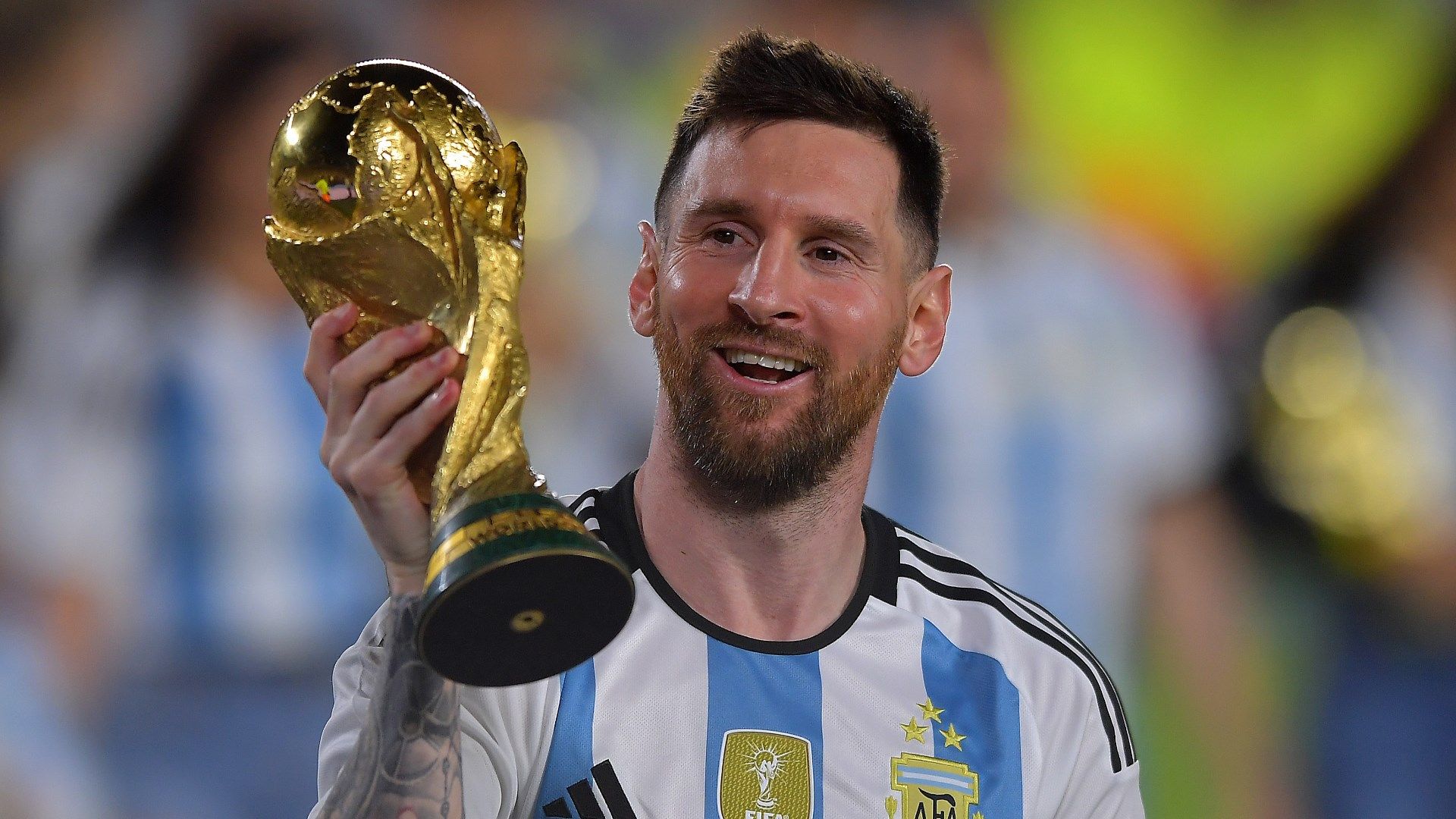
The FIFA World Cup is a football tournament which takes place every four years in a bid to crown the best international team on the planet. Argentina are the reigning world champions following their victory over France in the 2022 final.
Teams can secure a place in the World Cup finals by progressing through a qualifying tournament in one of the following six regions designated by FIFA:
- AFC (Asia)
- CAF (Africa)
- CONCACAF (North and Central America and the Caribbean)
- CONMEBOL (South America)
- OFC (Oceania)
- UEFA (Europe)
The next edition of the World Cup is due to take place in 2026 in North America, Mexico and Canada from June 11 to July 19. It’s the first time in the competition’s history that three nations will host the tournament.
This is not the only major change that fans can look forward to ahead of the big kick-off. The World Cup has also been expanded to 48 teams for 2026 - 16 more than last time around in Qatar 2022 – meaning a total of 104 games will be played.
What is the format of the World Cup?
The World Cup starts with a group stage which sees all 48 teams involved. The draw for the group stage took place in December 2025 and created 12 groups of four teams. All teams will play the other three nations in their group once in a round robin tournament.
A total of 32 teams will then progress to the knockout stages when the format of the tournament switches to winner-takes-all matches. This format continues all the way to the final where the winners of the last match will be crowned world champions.
How does the group stage work at the World Cup?
.jpg?format=pjpg&quality=60&auto=webp&width=380) Getty Images
Getty Images
Each team will play three games in the group phase, taking on every other nation in their group once. Games will last for 90 minutes, split into two halves of 45 minutes each.
Teams are awarded three points for a win, one for a draw and receive zero points for a defeat. Goals are also important as goal difference (the difference between the amount of goals conceded and scored by each team) may play a part when it comes to determining final places in the group.
The top two teams in the group will automatically secure a place in the knockout stage of the tournament. Eight third-placed teams, based on points and goal difference - will also join the 12 group winners and runners-up in progressing to the round of 32.
What happens if teams finish level on points in the group stage?
If teams finish level on points in the group stage, then a series of seven tie-breakers will be used to determine the final positions in the table.
- The most points won in the group matches played between the teams involved.
- The best goal difference (the difference between goals scored and goals conceded) in the group matches played between the teams involved.
- The most goals scored in the group matches played between the teams concerned
- The best goal difference in all three of the group games.
- The most goals scored in all three of the group games.
- The highest 'fair play' score in all three group matches
- By FIFA world ranking
What happens at the World Cup knockout stage?
.jpg?format=pjpg&quality=60&auto=webp&width=380) Getty Images
Getty Images
After the group phase, the tournament becomes a straight knockout for the Round of 32, Round of 16, quarter-finals, semi-final and final.
At the 2026 World Cup, the knockout stage will begin on June 28th with teams progressing from the group phase to a round of 32. Teams will play winner-takes all matches all the way through to the final.
Games will again last 90 minutes but if the scores finish level, extra-time – consisting of two 15-minutes halves - will be played. If a match is still level after extra-time, a penalty shoot-out will determine the winners.
How do you win a penalty shoot-out?
.jpg?format=pjpg&quality=60&auto=webp&width=380) Getty Images
Getty Images
In a penalty shoot-out both teams initially take five kicks and alternate the order (ABAB). The team which scores the most goals, wins the shoot-out.
Teams can also win if one side has scored more successful penalties than the other can reach with their remaining kicks.
If both teams score all five if their initial penalties, the shoot-out continues until one team misses and the other scores in the same round. This is known as sudden death.
Previous World Cup formats
The World Cup is no stranger to change and has evolved considerably since the competition was held for the very first time all the way back in 1930.
| World Cup | Format |
|---|---|
| Uruguay 1930 | A total of 13 teams were involved in a group stage that involved three groups of three and one of four. The four group winners progressed straight to the semi-finals. |
| Italy 1934 - France 1938 | The competition grew slightly in these two editions. On both occasions, 16 teams were involved in a straight knockout-only format. |
| Brazil 1950 | The tournament returned after as 12-year gap due to World World II with 13 teams involved, playing in four groups. The four winners went straight to another final group stage, playing a round robin format to determine the winners. It remains the only World Cup never to have had a specific final |
| Switzerland 1954 | The tournament changed again in 1954 as 16 teams were split into four groups, with the two seeded sides facing the other two in the group. The top two went straight into the quarter-finals |
| Sweden 1958 – Mexico 1970 | Once again there were 16 teams involved but there was a change to the group phase as each team played all the other teams in their group. Again the top two went through to the quarter-finals |
| West Germany 1974 - Argentina 1978 | Yet another format change for the World Cup for these two editions, as a second group phase was introduced instead of the quarter and semi-finals. The top teams went straight into the final, the runners-up played for third place. |
| Spain 1982 - USA 1994 | The tournament evolved again, expanding from 16 to 24 teams, made up of six groups of four. The top team in each group progressed to another group of three. The winners of the second group phase qualified for the semi-finals. |
| Mexico 1986 - USA 1994 | More World Cup changes as the second group phase was discarded. The tournament started with six groups, and the four best third-placed joined the top two in the last 16. |
| France 1998 to Qatar 2022 | More expansion as the World Cup was expanded to 32 teams. The initial phase consisted of eight groups of four teams, with the top two going into the last 16 and the third-placed team rule dropped. |