Goal.com
+18 | Commercial Content | T&C's Apply | Play Responsibly | Publishing Principles
Poch Rondo GOAL

The Rondo, Mauricio Pochettino edition: Was the manager's USMNT return a ‘marriage of convenience’ or a ‘no-brainer’ - and will he make it to 2030?

"Se queda" were the words that Gerard Pique posted in a selfie with Neymar in 2016, not too long before the then-Barcelona man left for PSG. That moment was supposed to be one when Barca held onto their star man.

The USMNT can only pray that Mauricio Pochettino won't do the same. They have now, officially, taken the first step in that effort, penning the head coach to a four-year contract that will last through the 2030 World Cup. Pochettino is here for, in theory, one more go of things. The U.S. have their manager back.

And this would seem to be an agreeable deal. Pochettino doesn't have another club job open. It's hard for the U.S. to hire a more accomplished coach. Poch seems the best bet. But what's missing here? Was this definitely the right choice? And with club jobs constantly opening up, can Pochettino be counted on to stay? GOAL writers break it down in another edition of... The Rondo.

  • Mauricio Pochettino Getty

    Was U.S. Soccer smart to bring Poch back?

    Tom Hindle: No. Pochettino feels like a mercenary here. In line with trends around global soccer, bringing in the accomplished foreigner doesn't really offer all that much. Those managers are supposed to address the fine margins of tournament play - the differences between, say, quarterfinals and semifinals. The U.S.'s problems run far deeper than the starting XI in a hypothetical Copa America quarter against Brazil. They needed a builder, not a manager of moments.

    Alex Labidou: Ultimately, yes, but this is hardly an ideal reunion. Let’s be clear: this is a marriage of convenience for both sides.

    For Pochettino, unless Manchester United, Tottenham or another club of that stature comes calling, why give up the influence, lighter schedule and massive salary that come with the USMNT job? Can you really see him leaving for Fulham - or rolling the dice on Newcastle - when he can remain in a comfortable setup and wait for a Champions League-level club to call?

    For U.S. Soccer, the logic is equally clear. B.J. Callaghan has built a strong case at Nashville, but he doesn’t carry Pochettino’s global credibility or commercial appeal. Pellegrino Matarazzo already has a strong European job at Real Sociedad, and if he keeps it up, there’s no reason why he can’t go further on the continent. Michael Bradley still needs more experience and sharpening, despite some highs with the New York Red Bulls. Pochettino is the best answer available right now.

    Ryan Tolmich: Absolutely. There was clear progress made last cycle in terms of culture and style of play, and that progress had to make federation leadership wonder what could come next with a bit of continuity. There's also reason to believe that Pochettino will be more immune than most to Second Cycle Syndrome given his short runway in the 2026 cycle. Because of that, it was always a no-brainer as long as Pochettino himself wanted to return.

  • Advertisement
  • Mauricio Pochettino(C)Getty Images

    Does he see out his contract?

    TH: This is a really tough one. Pochettino made a big show of saying that he had multiple opportunities to leave during his tenure, but declined them due to his commitment to the federation. That may be true in the lead-up to a World Cup. But does it hold when the Man United job comes up in a year? Or even Spurs in nine months? If a club calls, the smart money is on him cutting ties. Bradley by 2029.

    AL: No. Even with a four-year contract, I would bet against him seeing it out.

    Unless he has a significant change of heart about international management - or the elite club market never opens for him - the 2028 Copa América feels like the natural exit point. If he succeeds there, he can leave with his reputation enhanced. If he doesn’t, U.S. Soccer may want a fresh start anyway. That could be the moment when Callaghan or Bradley enters the mix.

    RT: That's the big question, right? A coach like Pochettino will always find himself in the news when new jobs open up, and that isn't going to stop, particularly early on in this cycle. The closer the World Cup gets, the more likely he is to see this thing through, but it wouldn't be a massive surprise to see him leave if a big offer came, hypothetically, after the proposed Copa America.

  • Mauricio Pochettino USMNT 2026Getty Images

    What is the minimum expectation for him in this cycle?

    TH: Well, now the pressure is on.

    Want to raise expectations? Have a decent World Cup and then try to go again. In chronological order, he will be expected to win the Gold Cup, make the Copa America semis, and - at an absolute minimum - win one more knockout game at the 2030 World Cup. Oh yeah, and do that with the core of the squad probably aging past their prime. Pochettino will have to win and bring in a new generation. Good luck trying to do both.

    AL: Win something - or make a strong run at the Copa América.

    The USMNT’s strong group stage performance and first World Cup knockout victory since 2002 clearly sold U.S. Soccer on the possibility that Pochettino can build something. But at a rumored salary north of $6 million, he now needs tangible results.

    His managerial resume is far more impressive than his trophy haul: one Ligue 1 title, one Coupe de France and one Trophée des Champions, all with PSG. Fair or not, those domestic trophies are generally treated as the baseline at a club with PSG’s advantages. That shouldn’t diminish the excellent work he has done throughout his career, but the USSF and its fans are past the moral victory stage.

    He should win the 2027 Gold Cup. If he doesn’t, only a deep run at the 2028 Copa América would justify continued patience. Otherwise, serious questions will rightfully be asked.

    RT: It's largely big picture. Pochettino's new job is to turn over the player pool while refining some of the less successful aspects of American soccer's talent development system. That isn't a one-man job, of course, but it's now part of Pochettino's. This cycle is a marathon, not a sprint like the last one, which allows the coach and his staff to take their time, pick up small wins along the way and build something more sustainable on the road to 2030.


  • ENJOYED THIS STORY?

    Add GOAL.com as a preferred source on Google to see more of our reporting

    Add as preferred source on Google
  • ALEX FREEMAN USA Getty Images

    Which player benefits the most from his return?

    TH: Malik Tillman. It was a poor year at club level for him, but Pochettino still managed to find a role for the Bayer Leverkusen man at the World Cup. He impressed at the Gold Cup, too. There will be more to come.

    AL: No player has benefited more from Pochettino’s arrival than Alex Freeman.

    Pochettino gave Freeman his first senior call-up in May 2025, and his rise has been meteoric since: a breakout Gold Cup, a move to Villarreal and a significant World Cup role. Expect even bigger things from a defender who has shown that he can play wide or at central defense. Pochettino has already said Freeman can be a world class defender and fans could potentially see his continued rise under the Argentine.

    RT: The young ones. Pochettino spoke to media on Monday and said that his big focus will be ushering in new talent, and who better for that talent to learn from than Pochettino? There are so many promising youngsters that are knocking on the door of the USMNT. How does Pochettino maximize the development of those youngsters? That's a big question going forward, and it's one that will really define the next era of American soccer.

  • Yunus Musah Atalanta 2025-26Getty

    Who should be concerned?

    TH: No one? Pochettino has made it clear that spots are up for grabs, and with his penchant for bringing in surprise faces, everyone should be in with a shout. Probably the only one who has his work really cut out for him will be Yunus Musah - especially with his club situation continuing to be uncertain and his controversial decision to skip the 2025 Gold Cup.

    AL: The obvious answer is Diego Luna, but Tim Weah could see his opportunities limited this cycle.

    Weah was an important rotation player during the run-in to the World Cup, but he struggled to make much of an impact at the tournament. His versatility has long been a strength, but Freeman’s emergence and the arrival of more young talent could turn it into a weakness: Weah can help in several positions without necessarily being the first choice in any of them.

    Pochettino has shown that he is willing to move on from players quickly, so Weah’s place is no longer automatic.

    As for Luna, Pochettino’s return gives him a very clear challenge. It wouldn’t be surprising if the RSL star used his World Cup snub as fuel, moved abroad and embarked on a full prove-it tour. Pochettino’s return gives him someone very specific to prove wrong.

    RT: The old guard. If there's one thing to be said about Pochettino, it's that he can make the difficult decisions. He is less worried than most about ego or status, which means that there will be some big names that will now need to fight for their places. Speaking to the media, Pochettino said that he doesn't see this as a continuation, but rather a fresh start. That's a message to anyone who believes their 2026 performances will get them through to 2030.


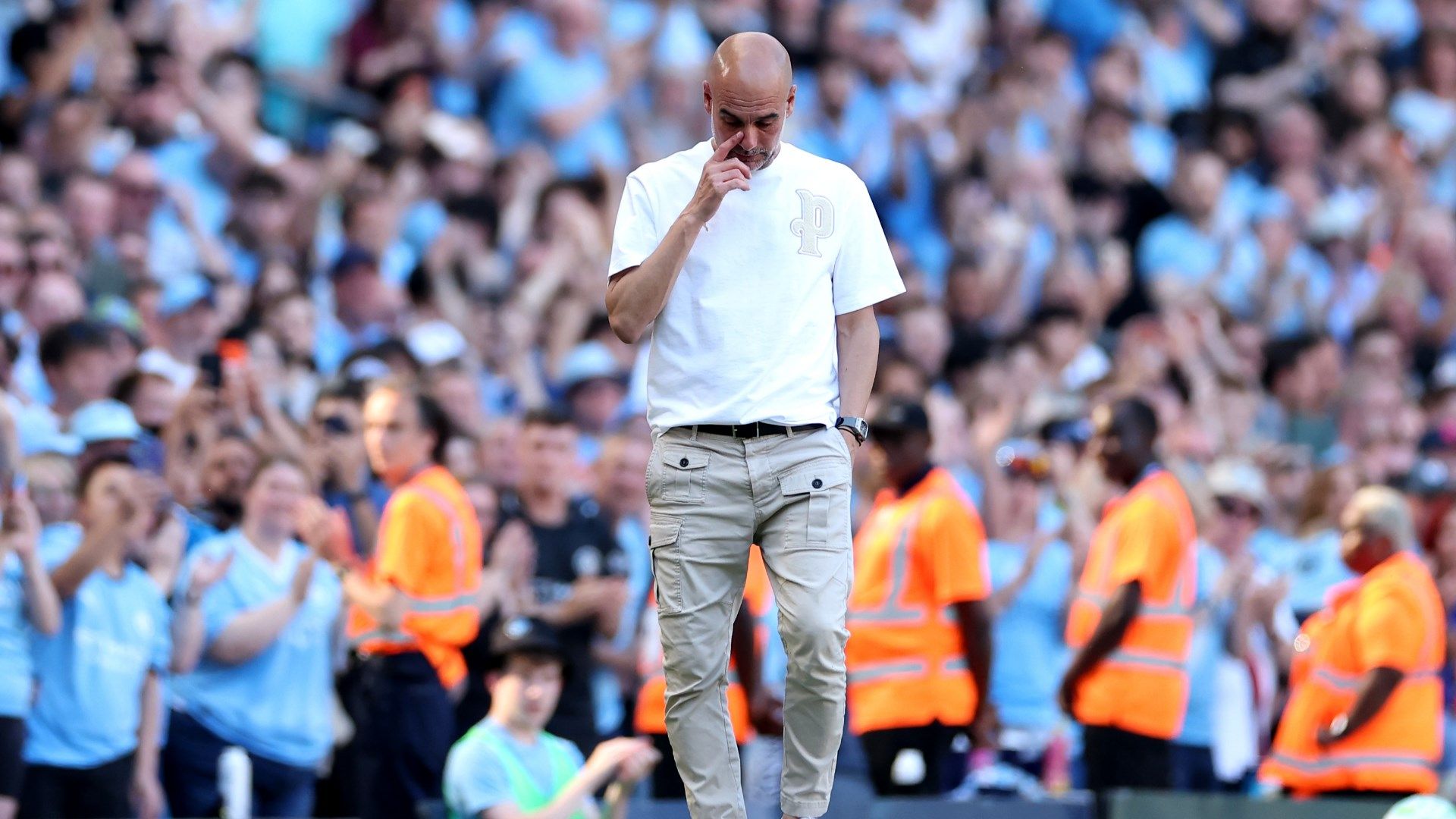
  • Pep Guardiola Manchester CityGetty

    Was there any other candidate the U.S. should have considered?

    TH: B.J. Callaghan should be the USMNT manager right now. That he isn't might cost them dearly in the long run.

    AL: Unless Pep Guardiola was available, which clearly he wasn’t after turning down Italy, Pochettino is the best option for right now. That’s not to say Matarazzo, Callaghan or Bradley aren’t strong future candidates, but the U.S. need to build off what they did right in the World Cup. Pochettino gives them the best chance to do so.

    RT: Obviously, yes, but it's hard to imagine them landing on a more qualified one than Pochettino, who will walk right back into the role without having to spend any time dealing with growing pains. He spent 18 months molding the culture to his liking, which means he can now spend four years building on that foundation. Any other coach would have had that onboarding process, and the truth is that there are few better coaches out there than Pochettino. Because of that, it all made too much sense.