
.png?auto=webp&format=pjpg&width=3840&quality=60)
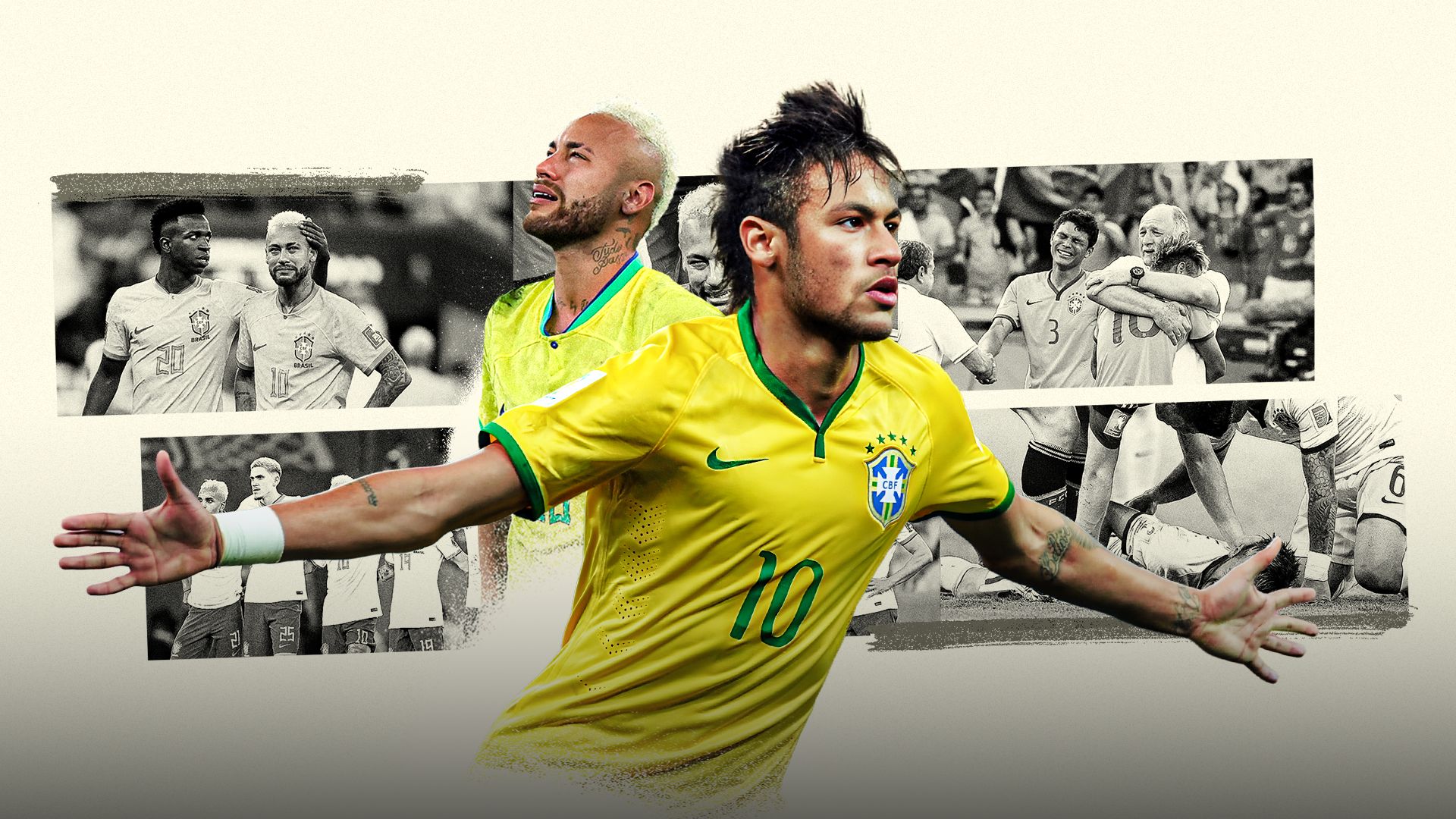
Hands on hips, distant gaze. Tears of sadness, of pain. Even though Neymar’s eight World Cup goals put him alongside Rivaldo, and ahead of champions like Rivellino, Bebeto, Romario and Garrincha on Brazil's all-time scoring list, the image that defines him in the greatest of all football tournaments isn’t one of celebration. It’s a picture of melancholy that also mirrors Brazil’s disappointing campaigns through 24 long years of drought since the 2002 title.
It’s impossible to place the entire weight of almost a quarter-century without a trophy on Neymar’s shoulders alone. He didn’t play in 2006 or 2010, after all. The greatest Brazilian talent since Ronaldinho didn’t inherit a torch from anyone, either. There was no symbolic scene of a legend passing the baton to the new prodigy from Santos, showing him the way forward, much like Pele did to Rivellino or Romario did to Ronaldo.
When Neymar began his story in Brazil’s famous yellow shirt in 2010, he found an empty throne - thrones, in fact. Almost by chance, a break in tradition had left a national team that was once overflowing with attacking leaders suddenly abandoned. Ronaldinho and Adriano were in decline, and Kaka was never the same again after a series of hip injuries. With no one else ready to share the burden, Neymar had no other option but to unify all that responsibility into one single reign.
It was the only possible path. And that’s also where part of the problem lay.
The only thing that truly kept Brazil’s World Cup hopes alive between 2014 and 2022 was the presence of one player, as if the most successful team in history had been reduced to a small European side that produces a genius only once every half-century.
Now, ahead of the 2026 World Cup, Neymar is far from the player he once was. Though still revered, he no longer plays the same role for a Brazil team that is full of doubts heading into the tournament in North America.


