
.jpg?auto=webp&format=pjpg&width=3840&quality=60)
What are the World Cup tiebreakers?
Tiebreakers at the World Cup will work slightly differently to previous tournaments, as there will be a mechanism for the eight best third-placed teams to progress, as well as the top two in every group. That means that 32 teams will advance from the group stages, into a new Round of 32, before that is whittled down to the Round of 16, the quarter-finals, the semi-finals and, lastly, the final.
The tiebreakers will be established as follows in the group stage:
- Group points
- Group goal difference
- Group goals scored
- Head-to-head record
- Fair play record
- Drawing of lots
Of course, to begin, teams are likely to be separate by points gained from each game. Then, the next factor will be the group goal difference; each team's goal difference is calculated based on how many goals they scored, minus the amount of goals they conceded.
If goal difference is equal, FIFA disregards goals conceded, and will merely look at goals scored. If two or more teams are level on points, goal difference, and goals scored, they are ranked on head-to-head record, from the game they played against each other. The winner will go through, but if there was a draw, and the points, goal difference, and goals scored are the same, the group would instead be decided by a fair play record.
Should two teams somehow also have the same fair play record, as well as the same amount of points, goal difference, goals scored, and an equal head-to-head record, progression would come down to the drawing of lots or, as it is otherwise known, pure luck. Two balls will be placed into a pot and an impartial member of the FIFA organising committee will draw one ball from the pot; whichever team is pulled out will progress.


Thus far, the drawing of lots has only occurred at one tournament, at Italia 90. In England's group, the Republic of Ireland and the Netherlands were both due to progress but they were tied for second and third-place, so Sepp Blatter, then-FIFA president, drew lots to determine which teams they would face in the knockout rounds. Ireland played Romania, the Netherlands faced West Germany.
How do the group points work?
As is now standard across association football, teams will receive three points for a win, one point for a draw, and zero points for a defeat.
The top two teams will all go through, but the eight best third-placed teams will also progress into the expanded knockout stage.
The teams who will hope to win the World Cup are likely to be aiming for nine points from a possible nine in their three group games, but seven should be more than enough to progress. In the 2022 tournament, no team won all of their games. The teams to take seven points, from two wins and a draw, were the Netherlands, England, and Morocco.
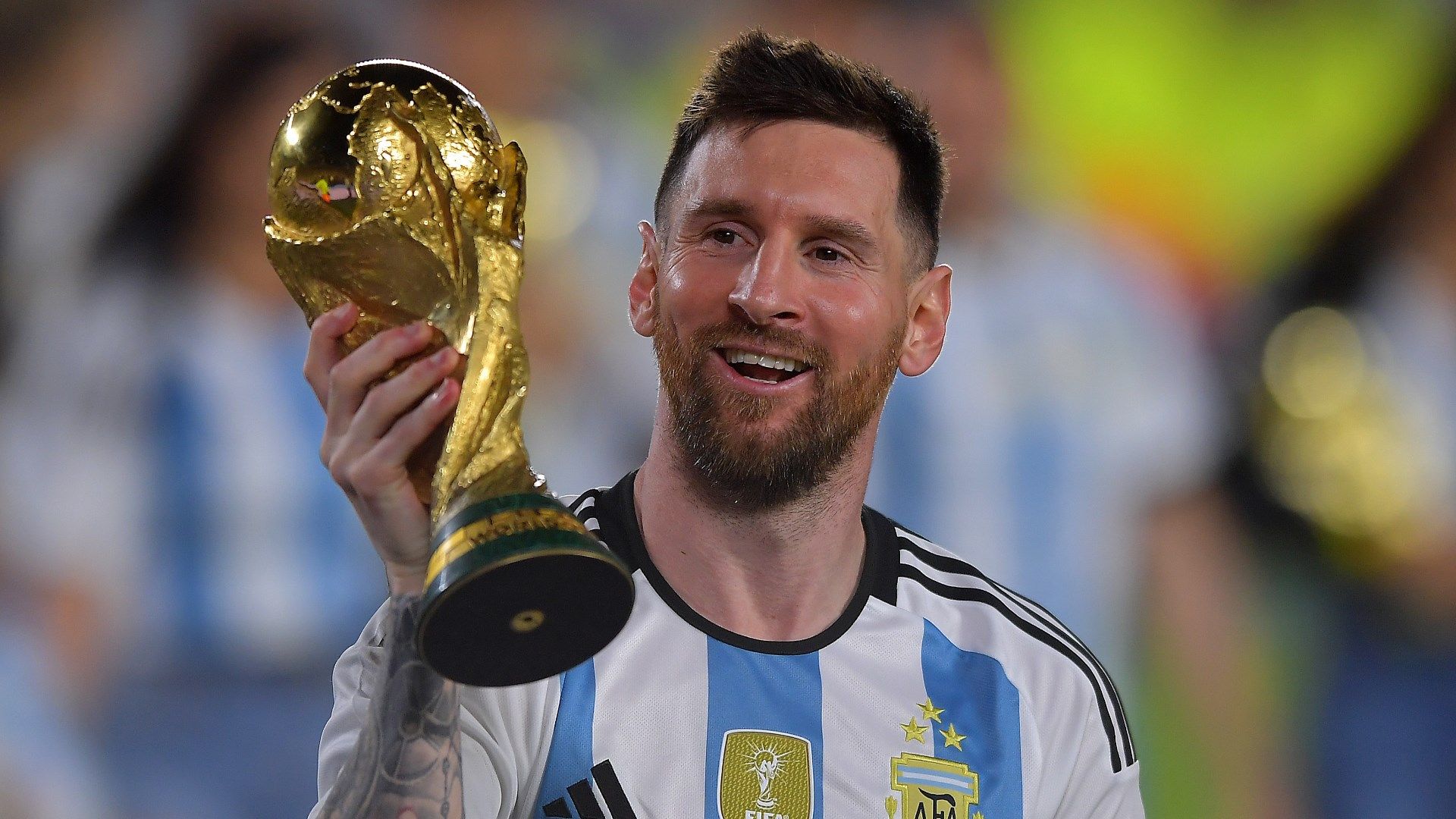
Eventual winners Argentina lost their opening game to Saudi Arabia but then won their next two, progressing with six points from a possible nine.
What is goal difference?
Goal difference is calculated remarkably simply.
A team's goal difference is found by subtracting the amount of goals conceded from the amount of goals scored.
At the 2022 World Cup, for example, eventual winners Argentina came through their group with a goal difference of three, having scored five goals and conceded two.
England had the best goal difference in that tournament's group stage, scoring nine goals and conceding two.
It is also possible to have a negative goal difference. At the 2022 tournament, England's group stage opponents Wales recorded a goal difference of minus five, as they scored one goal and conceded six.
How is team conduct score calculated?
The FIFA team conduct score is established through each side's disciplinary record.
Teams receive minus one point for a yellow card, minus three points for an indirect red card (received via two yellow cards), minus four points for a straight red card and minus five points for a yellow card followed by a direct red card for the same player. The team with the highest score would be ranked higher. This system was utilised at the 2018 tournament in Russia, as Japan and Senegal were locked level on four points, a goal difference of zero and four goals scored. They also drew their game 2-2. Japan had a higher fair play score, of minus four, while Senegal's minus six saw them eliminated.
What is the FIFA ranking?
As FIFA explains it, their world ranking is calculated as follows: "The FIFA World Ranking is determined using the Elo Model. This method adds or subtracts points for matches to or from a team's existing point total. The points which are added or subtracted are partially determined by: relative team strength, match importance, match result, expected match result."
The top 10 are as follows ahead of the tournament in 2026:
- Spain
- Argentina
- France
- England
- Brazil
- Portugal
- Netherlands
- Morocco
- Belgium
- Germany