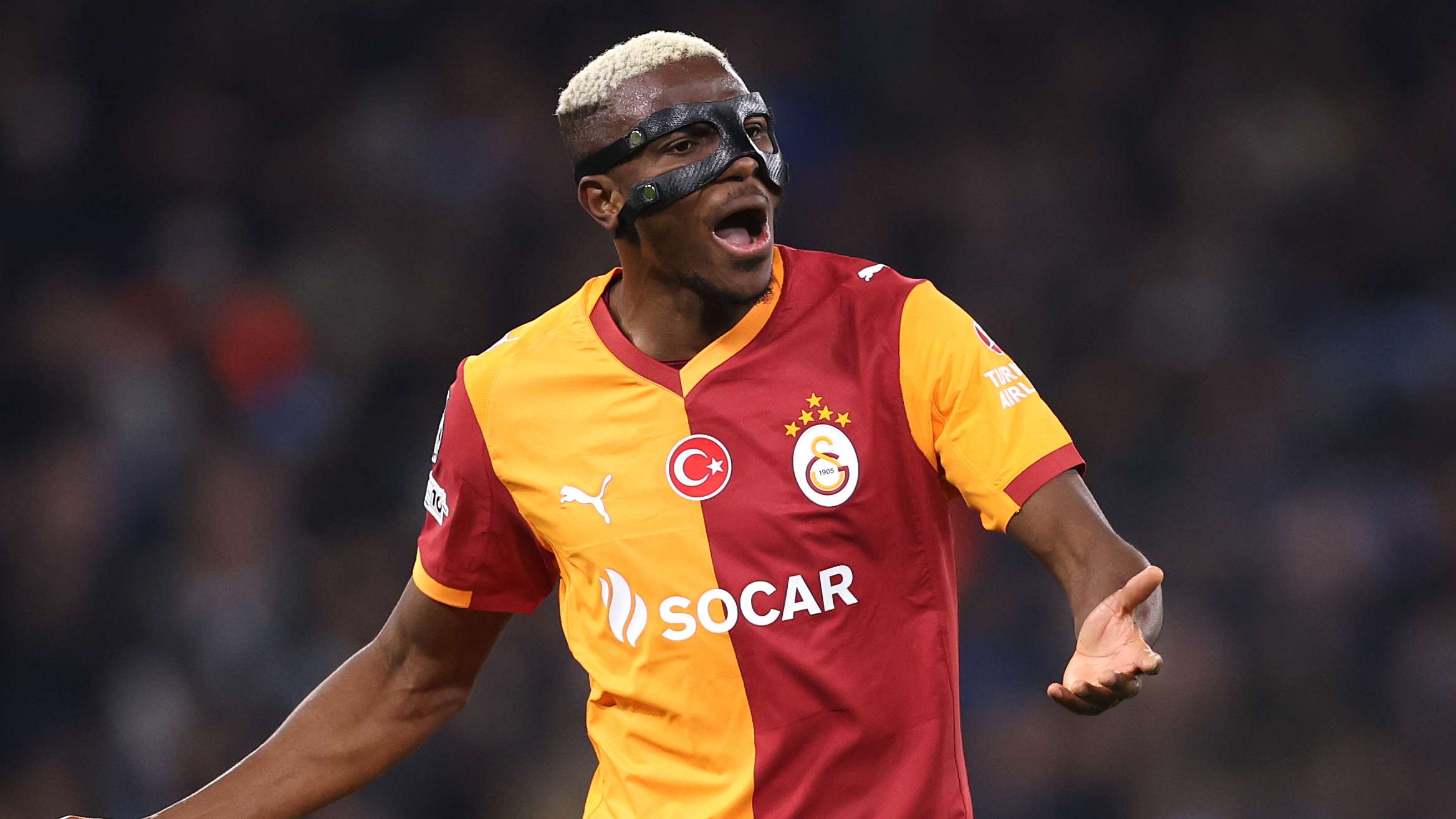
Victor Osimhen a évoqué ce moment douloureux qui l'a presque poussé à abandonner le football. L'attaquant de Galatasaray s'est souvenu de son passage à Lille, alors que la santé de son père se détériorait au Nigeria. Alors qu'il tentait désespérément de rentrer chez lui, il raconte que ses anciens agents se sont plutôt attachés à conclure un transfert de plusieurs millions d'euros, une situation qui lui a causé un immense bouleversement émotionnel.
Trois des six représentants de Premier League ont sombré cette semaine, concédant des défaites par trois buts d'écart. Existe-t-il une réelle valeur ajoutée à miser sur un renversement de situation au retour ?
Malgré une phase de championnat péniblement longue qui s'est étalée sur les cinq premiers mois de la saison et des barrages riches en rebondissements, pour beaucoup, la Ligue des champions ne commence véritablement qu'avec les huitièmes de finale. Et après une semaine mouvementée de matchs aller à travers l'Europe, le tableau des potentiels vainqueurs du tournoi a été bouleversé.
Victor Osimhen était submergé par l'émotion avant le match aller des huitièmes de finale de la Ligue des champions entre Galatasaray et Liverpool mardi soir. Quelques instants avant le coup d'envoi dans un Rams Park en effervescence, les supporters locaux ont dévoilé un immense tifo émouvant représentant le portrait de l'attaquant nigérian aux côtés de sa défunte mère. La banderole était accompagnée d'un message fort qui a clairement touché l'attaquant de 27 ans : « Nous sommes une famille et la famille est tout ».
Victor Osimhen a été l'architecte d'une soirée européenne mémorable à Istanbul, où Galatasaray a pris un avantage crucial (1-0) sur Liverpool lors du match aller des huitièmes de finale de la Ligue des champions. La superstar nigériane a fourni une passe décisive sublime à Mario Lemina pour marquer le seul but du match, laissant les géants de la Premier League avec beaucoup de travail à faire lors du match retour. Après le coup de sifflet final, Osimhen a averti les Reds que les champions turcs avaient les moyens de terminer le travail à Merseyside.
Cela fait un peu plus de deux ans que Victor Osimhen a révélé qu'il avait pris sa décision quant au club qu'il rejoindrait après Naples. Trois jours plus tard, le président du Partenopei, Aurelio De Laurentiis, révélait que l'attaquant « rejoindrait le Real Madrid, le Paris Saint-Germain ou une équipe de Premier League ». Osimhen a finalement atterri à Istanbul, où il joue pour Galatasaray, le plus grand club de Turquie, mais pas exactement la destination que l'international nigérian avait en tête lorsqu'il a annoncé son intention de quitter Naples.
Manchester United, often simply referred to as "United," are one of the most iconic and successful football clubs in the world, based in Old Trafford, Greater Manchester, England. The club was founded as Newton Heath LYR Football Club in 1878 by the Lancashire and Yorkshire Railway depot at Newton Heath. The team changed its name to Manchester United in 1902 and moved to its current home, Old Trafford, in 1910.
Famous players
Manchester United have been home to some of the greatest footballers in history. Sir Bobby Charlton, a World Cup winner with England in 1966, is arguably the most iconic figure in the club's history. Other legendary players include George Best, known for his flair and skill, and Eric Cantona, who brought a winning mentality to the club during the 1990s. More recent stars like Cristiano Ronaldo, Wayne Rooney, and Paul Scholes have also contributed significantly to the club's success.
Honours
Manchester United are one of the most decorated clubs in English football, having won a record 20 Premier League titles (formerly the First Division). They have also lifted the FA Cup 12 times, the League Cup five times, and the UEFA Champions League three times. The club's dominance in English football was particularly evident during the 1990s and early 2000s under manager Sir Alex Ferguson.
Managers
Sir Alex Ferguson is undoubtedly the most successful manager in Manchester United's history. He spent 26 years at the club, leading them to an unprecedented era of success. Before Ferguson, managers like Matt Busby and Wilf McGuinness played crucial roles in shaping the club's identity. More recent managers, including David Moyes, Louis van Gaal, and José Mourinho, have faced the challenge of maintaining the club's high standards.
Stadium
Old Trafford, often referred to as the "Theatre of Dreams," is one of the most famous stadiums in the world. With a capacity of roughly 75,000, it is among the largest football stadiums in the United Kingdom. The stadium has hosted numerous major matches, including UEFA Champions League finals and FIFA World Cup matches.
Location
Manchester United are based in the city of Manchester, which is located in the northwest of England. The club's home ground, Old Trafford, is situated in the Trafford borough. Manchester is a major industrial city with a rich footballing heritage.
Owners
In February 2024, British billionaire Sir Jim Ratcliffe's company, INEOS, acquired a significant 25% stake in Manchester United. This acquisition granted Ratcliffe sporting control over the club, placing him in a position to influence key decisions related to its operations.
Ratcliffe has already made a substantial financial commitment to Manchester United. His large investments demonstrate his dedication to the club's success and his willingness to provide the necessary resources for its growth.
Questions fréquentes
When were Sunderland founded?
Initially founded as Sunderland and District Teachers A.F.C. in 1879, the club was renamed to Sunderland A.F.C. in October 1880. The club turned professional a decade later, when it joined The Football League ahead of the 1890-91 campaign.
Who are the owners of Sunderland?
Kyril Louis-Dreyfus (64% stake) and Juan Sartori (36% stake) are the co-owners of Sunderland. The former first acquired shares in February 2021, joining the latter who has been associated with the club since 2018.
What is Sunderland's stadium called?
Sunderland's home stadium is known as The Stadium of Light, which replaced the iconic Roker Park in 1997. Roker Park served as Sunderland's home ground for almost a century, from 1898 to 1997.
What is Stadium of Light's capacity?
The Stadium of Light has a capacity of 49,000, making it England's ninth-largest football stadium.
How many trophies have Sunderland won?
Sunderland have won a total of nine trophies, which includes six top-flight titles as well as two FA Cups.
How many Premier League (top flight) titles have Sunderland won?
Sunderland have clinched the English top-flight title on six occasions. Their first win came in the 1891-92 season, while they haven't won a single league title since going all the way at the end of the 1935-36 campaign.
Who has made the most appearances for Crystal Palace?
Former English goalkeeper Jimmy Montgomery holds the record for making the most appearances in Sunderland history. Montgomery made 627 appearances between 1960 and 1977 and was a part of the Sunderland team that won the 1973 FA Cup.
Who is Sunderland's all-time top goalscorer?
The Sunderland faithful will never forget the contributions of legendary striker Bobby Gurney, who churned out 228 goals in 390 appearances in what is a club record.
Which famous players have played for Sunderland?
Charlie Hurley, Simon Mignolet, John O'Shea, Jordan Pickford, Jermain Defoe, Bobby Kerr, and Jimmy Montgomery are among the most prominent players to have donned the Sunderland shirt.
Which famous managers have been in charge of Sunderland?
Bob Kyle, Roy Keane, and Sam Allardyce are among Sunderland's most famous managers.
What is Sunderland's nickname?
Previously known as The Rokermen when they played at Roker Park, Sunderland are now officially nicknamed The Black Cats based on 10,000 votes cast by the supporters through the official magazine in 2000. The nickname originates from the names of battery guns which protected the mouth of the River Wear in the 18th century.