Goal.com
Live
+18 | Commercial Content | T&C's Apply | Play Responsibly | Publishing Principles
KSA 1 Legacy GFXGOAL

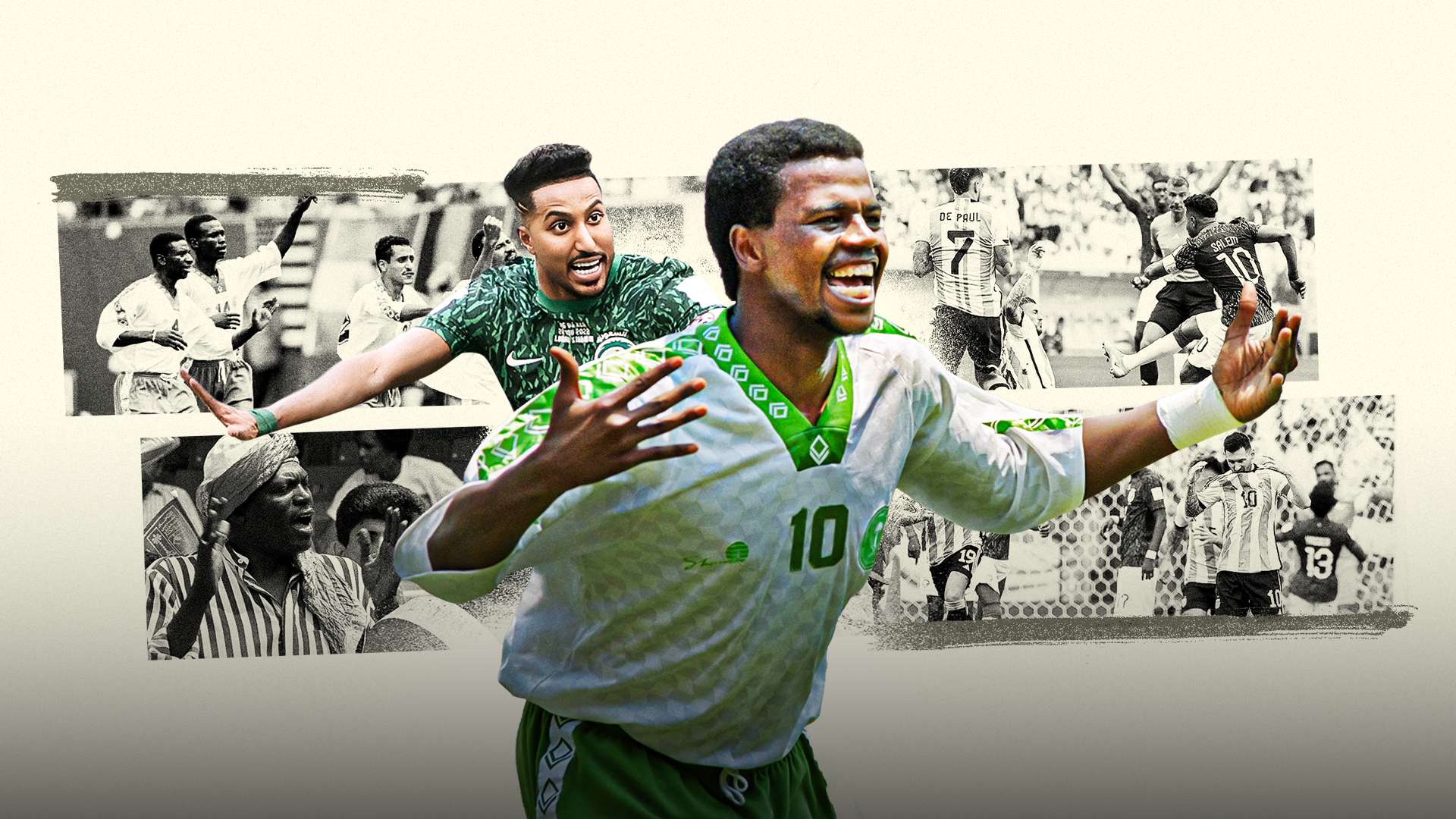
LEGACY: Saudi Arabia's World Cup journey - from the 'Maradona goal' to stunning Lionel Messi and Argentina

The dressing room door closes, the breathing heavy, faces tense, and every eye is fixed on the man standing in the middle: Herve Renard. The Frenchman in his iconic - and, so he believes, lucky - white shirt stands before his Saudi Arabia players at half-time of their opening game at the 2022 World Cup in Qatar, his voice shaking the walls.

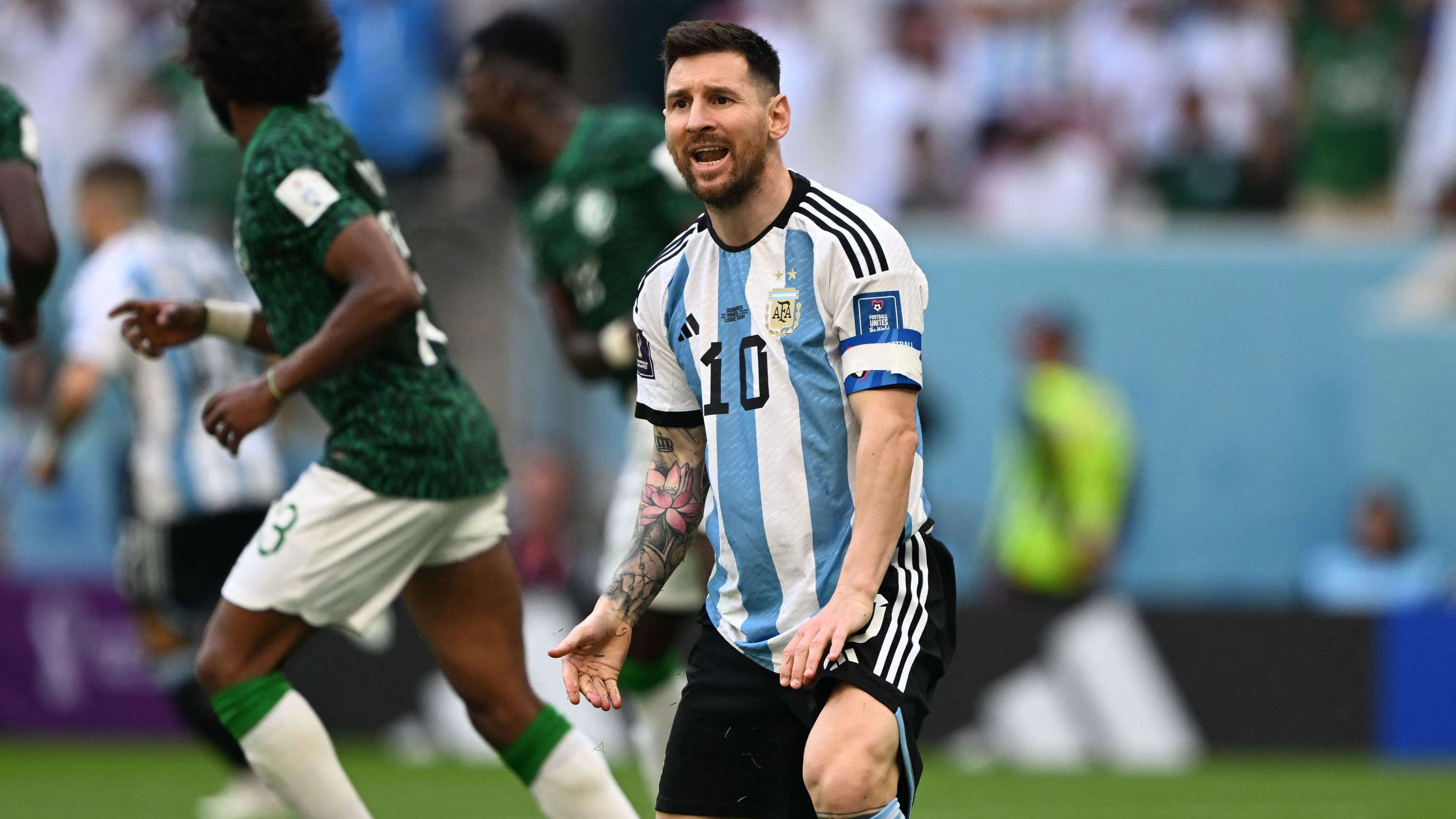
"What are we doing here? Is this pressure?," he asks. "Pressure means not being afraid… Last time [Lionel] Messi was in the middle with the ball, you stood in front of the defence waiting for Ali Al-Bulayhi to step out and press him? Take your phone and take a picture with him if you want! When he has the ball, you must press him and chase him.

"With the ball, we are good. Did you see what you did? Come on, guys, this is the World Cup! Give everything you have!"

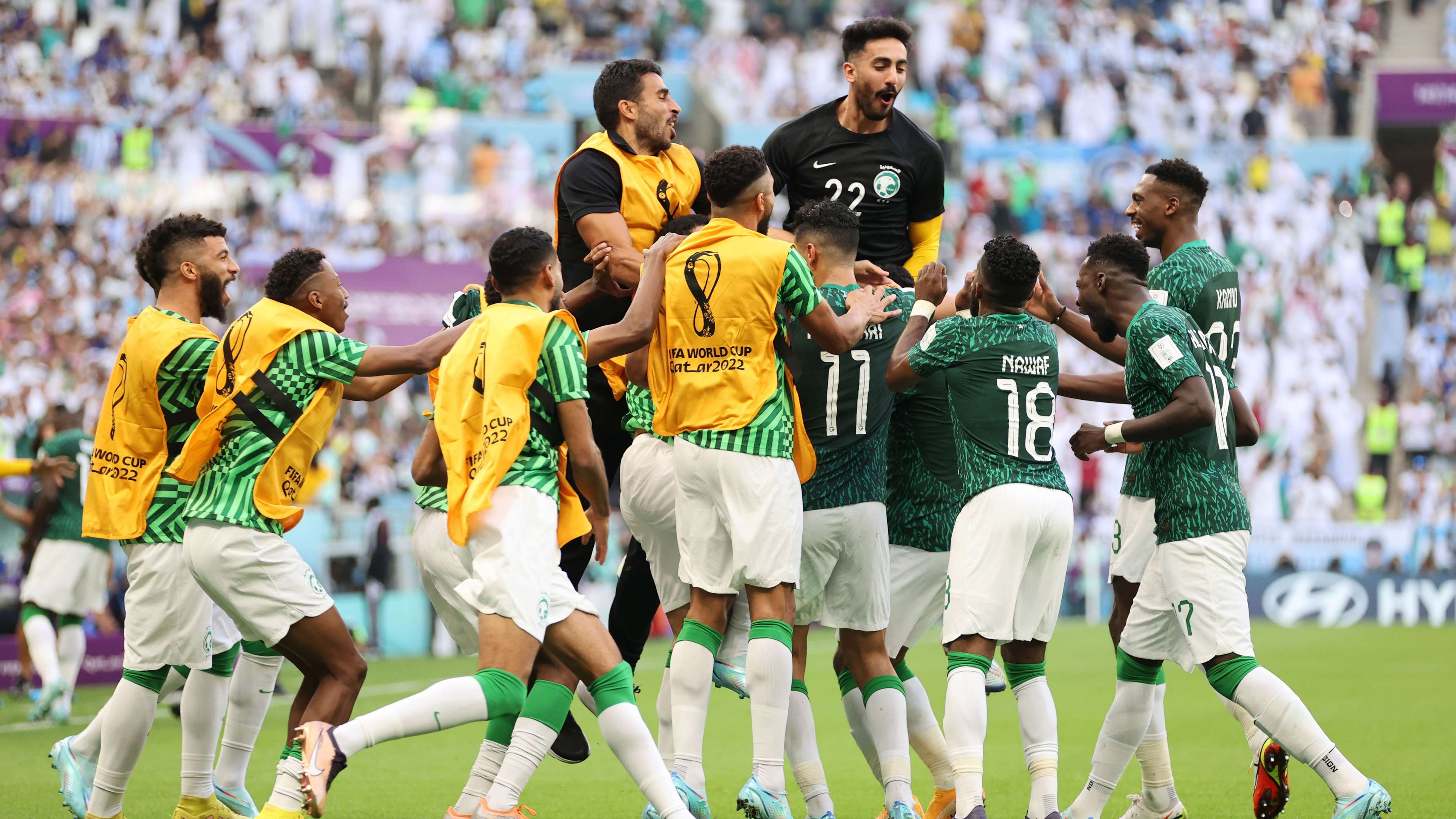
The first half had ended with Messi scoring Argentina’s opening goal, but what came next was the story of the Green Glory. Saleh Al-Shehri began the fairy tale by netting a beautiful equaliser before Salem Al-Dawsari wrote himself into the history books with a thunderous second goal.

The stadium shook while the world was stunned. Messi stood frozen, unable to grasp what madness had just unfolded. Saudi Arabia had defeated Argentina 2-1. This wasn’t a dream - it was a reality that shook both the host nation of Qatar and the entire globe.

Saudi Arabia’s victory wasn’t just a surprise, it was a declaration of the birth of a new generation that was unafraid of giants, a generation that believed in itself, its land, and its flag.
  • FBL-WC-2022-MATCH08-ARG-KSAAFP

    'Where's Messi? We broke his pride'

    ‘Messi Wainu?’ could be heard throughout the tournament even as the Argentine icon answered the Saudi fans emphatically by not only reaching the final but lifting the one trophy that had previously eluded him. Regardless, that chant will forever mark what was an unforgettable Saudi triumph in their World Cup history, a symbol of national pride and one of the greatest Arab moments in tournament history.

    It also marked the best-ever start for Saudi Arabia to a World Cup, but not every beginning gets the ending it deserves. Expectations were raised after the shock victory on matchday one, but the Green Falcons could not build upon it, losing 2-0 to Poland and 2-1 to Mexico in their subsequent games to exit at the group stage.

    At this juncture, it’s worth looking back to how Saudi Arabia reached the point where they could stun the greatest player the world has ever seen…

  • Advertisement
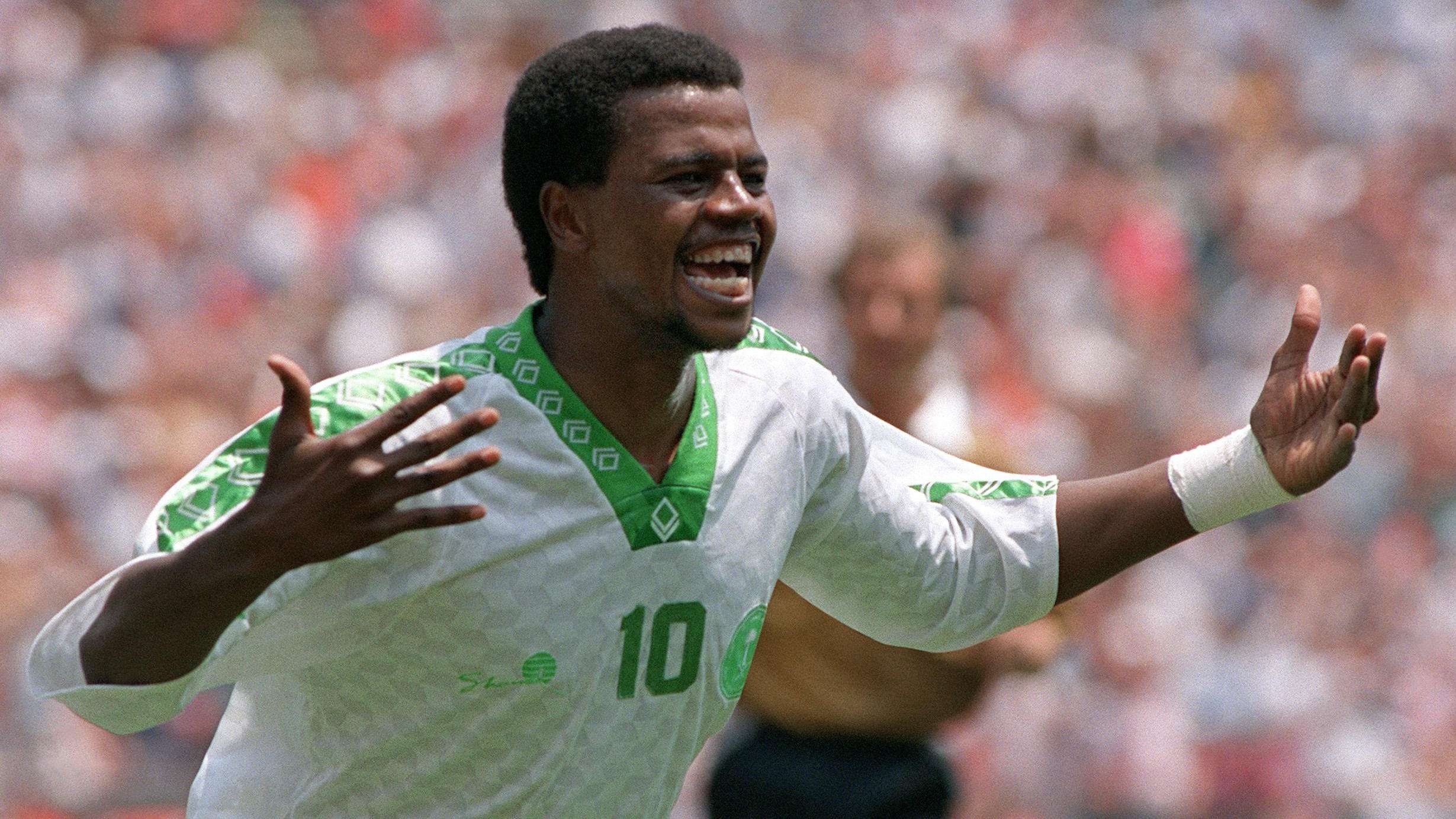
  • Saeed Al-Oraiwan Saudi Arabia 1994Getty Images

    Beginning of the dream

    In the heart of the Arabian Peninsula, between sand and stars, a dream was born. An entire generation chased one idea: Reaching the World Cup. And in 1994, the dream came true. Under coach Mohammed Al-Kharashi, Saudi Arabia’s football team flew to a land they had never stepped on before: The United States.

    A dramatic 4-3 win over Iran booked the Green Falcons’ place at the tournament, but no one expected the team from the Middle East to ignite the competition as they did. Drawn into a group containing the Netherlands, Belgium, and Morocco, Fuad Anwar ensured the perfect start when he opened the scoring against the Dutch. Though the Saudis went onto lose that game 2-1, there was now a belief that they could compete.

    In the Arab derby against Morocco, Sami Al-Jaber opened the scoring, and though Morocco equalised, Fuad Anwar again stepped up to make history and secure Saudi Arabia’s first World Cup victory.

    Then came the unforgettable moment. Belgium expected an easy win, but Saeed Al-Owairan had other plans as, in just the fifth minute, he took the ball from midfield, darted forward like an arrow, dribbled past three defenders and fired home. From Riyadh to Jeddah to Dammam, Saudis screamed - this wasn’t just a goal, it was a collective awakening that the dream had become reality. Dubbed ‘The Maradona Goal’, it was Saudi in spirit, Arab in soul, and Asian in pride.

    Al-Owairan’s wondergoal proved to be the winner, and Saudi Arabia qualified for the round of 16 as a result. From the heroic goalkeeper and solid defence led by Ahmed Jamil, to captain Fuad Anwar, the Green Falcons carried the Arab flag high while earning respect from around the globe.

    Then the train stopped against Sweden. A 3–1 loss, but a proud farewell, for those men had written the first lines of glory. This wasn’t an ending; it was the beginning of a legend, a nation that saw in a small ball a big dream, and followed it until it became reality.

    From the sands of Arabia to the stands of America, a legacy was born.

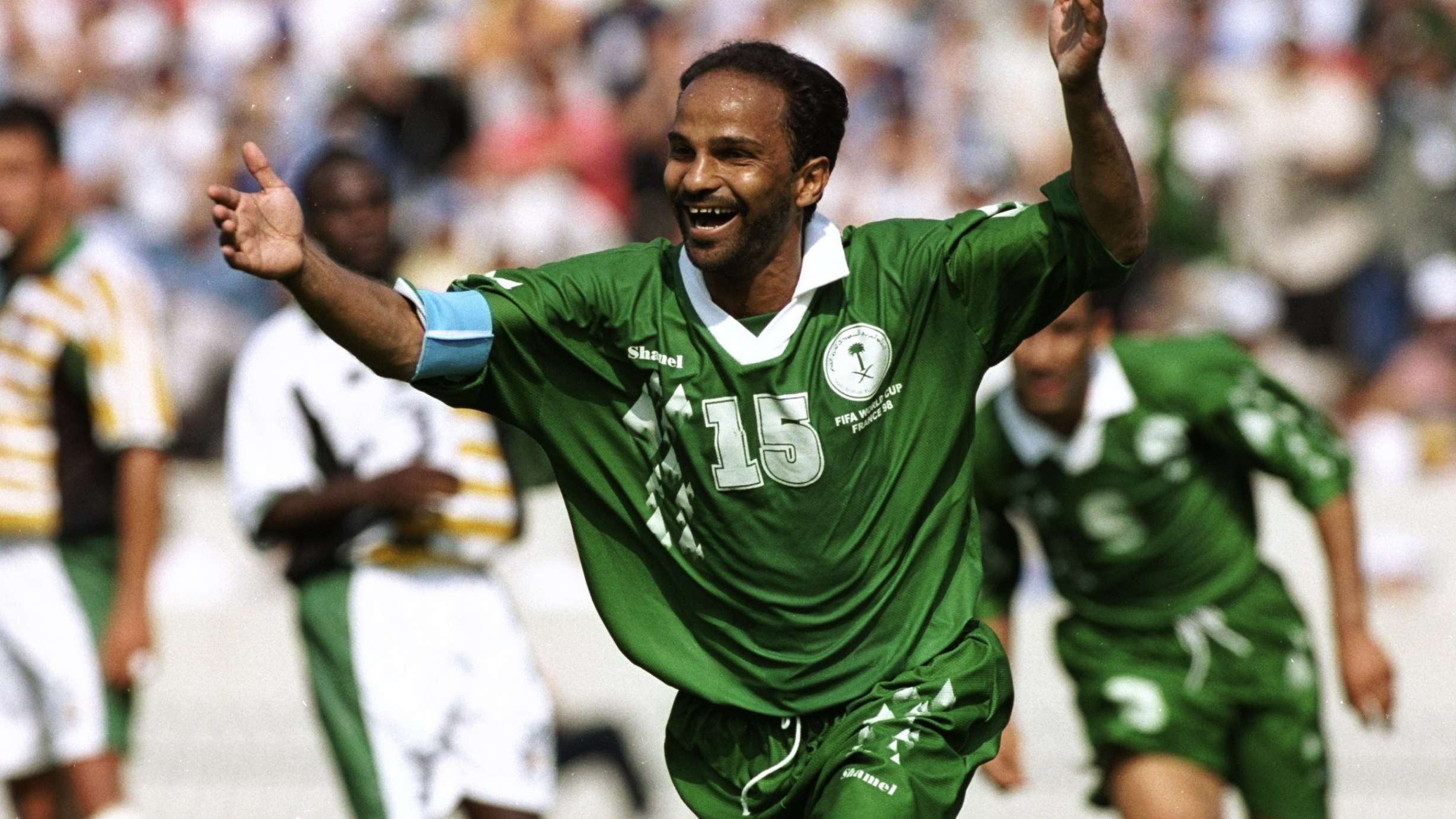
  • Youssef Al Tunian Saudi Arabia 1998Getty Images

    New generation

    Four years on, the Saudi team arrived in France with some of their heroes of 1994 having retired or been moved on. The new generation, however, carried the same dream.

    Yet the winds didn’t blow in the Green Falcons’ favour. Against Denmark in their opener, they missed numerous chances before succumbing to a 1-0 loss. Then came the hosts - and eventual champions - France, who delivered a painful 4–0 defeat that ended Saudi Arabia’s campaign with a game to spare.

    Still, the players refused to surrender. In their farewell match against South Africa, Sami Al-Jaber scored Saudi Arabia’s first goal of the tournament, and captain Yousuf Al-Thunayan then added a second. Hope smiled again, but destiny was cruel, as a last-minute penalty stole the victory away.

    Within every wound, there are lessons, and the Green Falcons learned that the World Cup shows no mercy for mistakes, and that small details separate glory from collapse. With each defeat, Saudi Arabia planted another seed of experience, maturity, and resolve. The generation changed in France, but hope never did.

  • ENJOYED THIS STORY?

    Add GOAL.com as a preferred source on Google to see more of our reporting

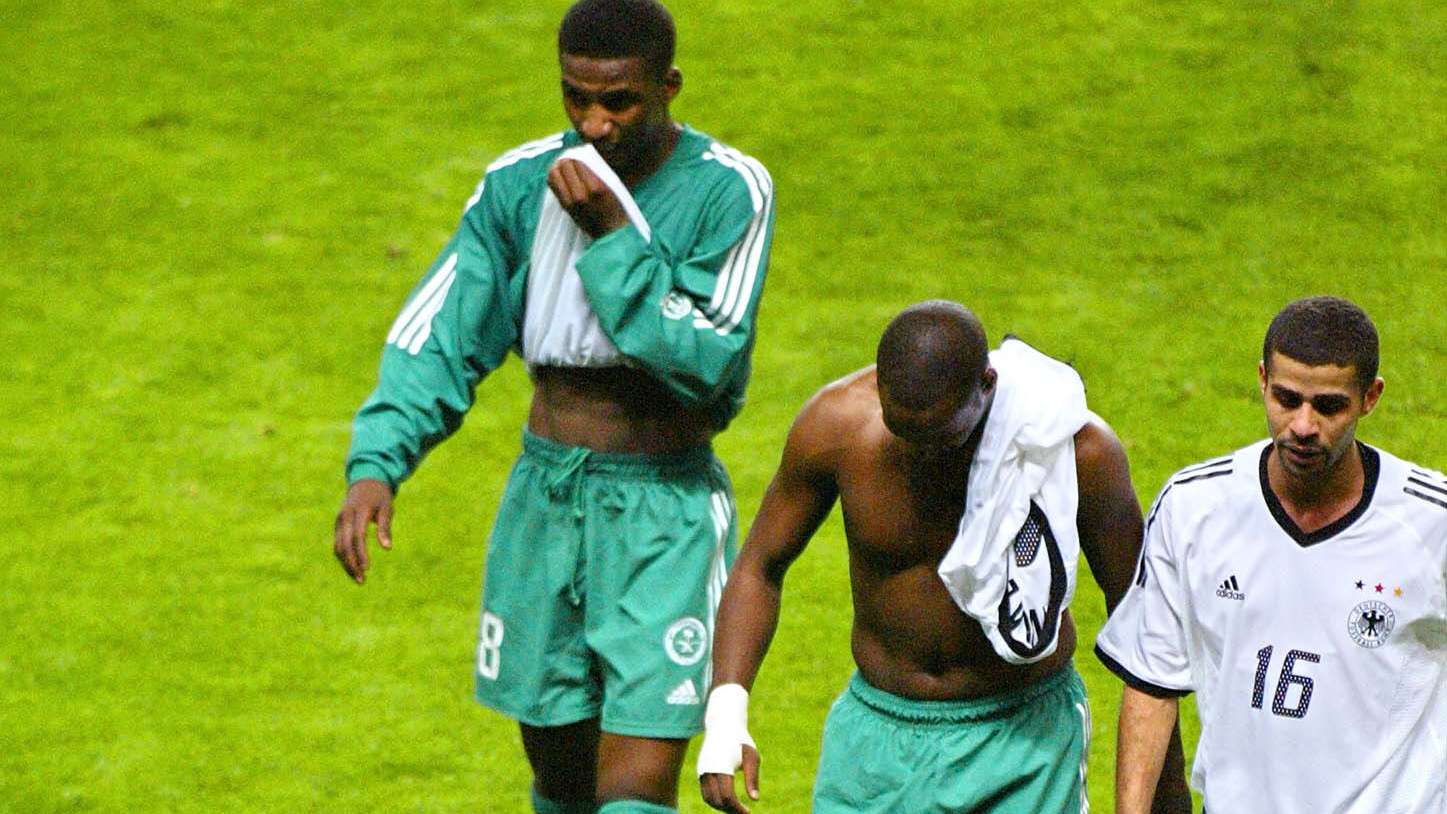
  • (From L-R, background) Saudi Arabia's midfielder MAFP

    The great embarrassment

    Asia would host the World Cup for the first time in 2002, and it felt poetic that Saudi Arabia would be able to produce on the grandest of stages within its own continent. What transpired in Japan and South Korea, however, could not have gone worse.

    On June 1, 2002, the Green Falcons faced Germany. It proved to be a historic night, but one everyone associated with Saudi Arabia was keen to forget. A storm of crosses and shots rained in on the Saudi goal, the shocked faces of players and fans in disbelief at what was happening.

    The 8-0 defeat carved a deep scar into Saudi football history, but as they say, ‘every bitter night will pass.’ The wounded Falcons carried on, losing to Cameroon via Samuel Eto’o’s lone goal before going down 3-0 to Ireland. They would exit the World Cup having lost all three matches without scoring a single goal. No joy, only silence and tears.

    From that pain, Saudi Arabia learned a hard lesson, that football doesn’t forgive the unprepared, and reputation alone wins nothing. However, they did not die. Rather, those who know the taste of defeat are the ones who truly savour the sweetness of return.

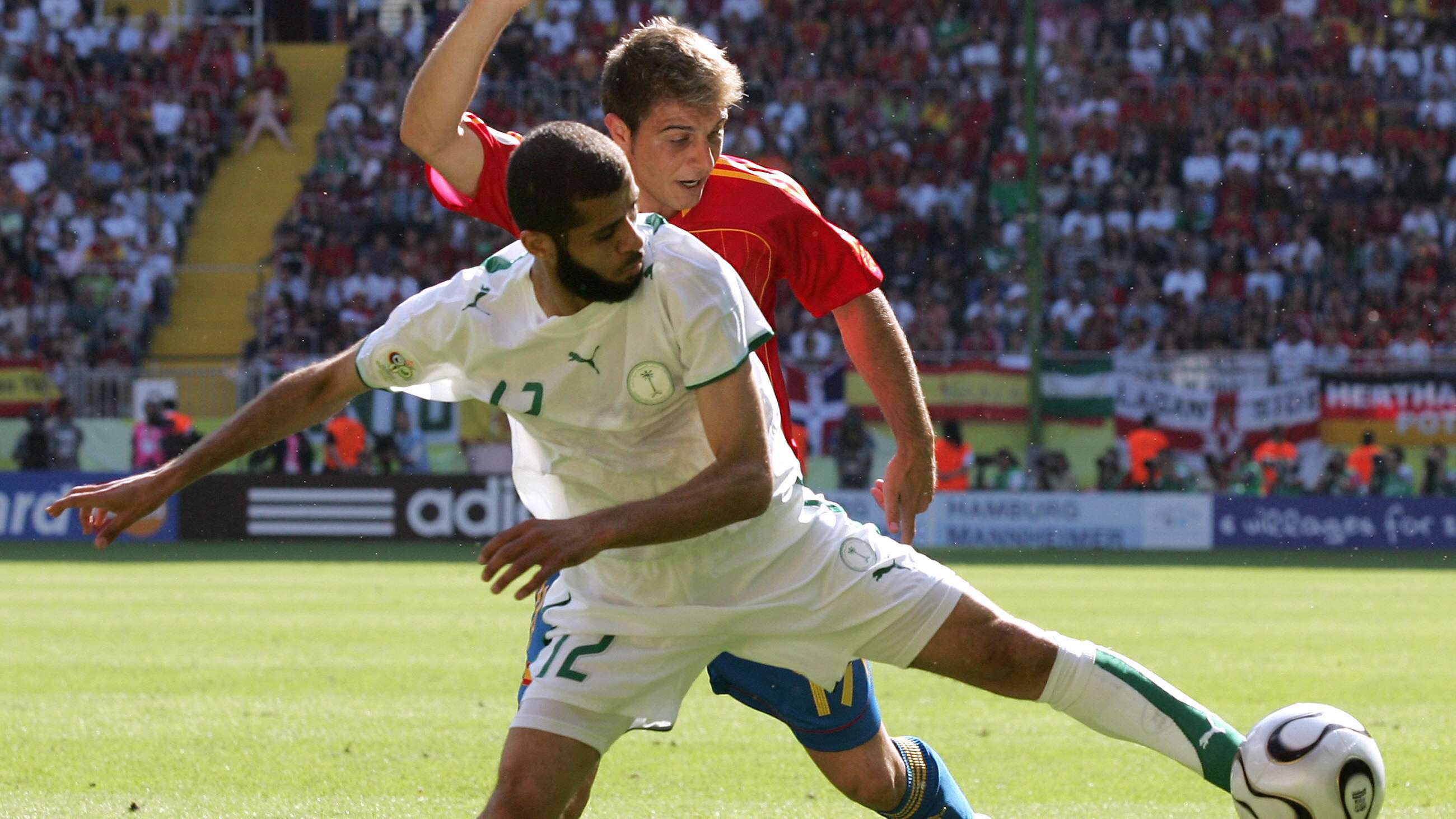
  • Spanish midfielder Joaquin (behind) viesAFP

    Last hope

    In 2006 in Germany, the Green Falcons returned to the grand stage with a mix of youth and wisdom under Brazilian coach Marcos Paqueta. Led by rising star Yasser Al-Qahtani, there was a belief that a repeat of 1994 was on the cards.

    Saudi Arabia opened their campaign against Tunisia in an all-Arab encounter, and six minutes from full-time, Sami Al-Jabert ignited hearts and awakened memories of 12 years previous when he broke the deadlock. But as football so often does, it smiled briefly before offering betrayal, as Tunisia equalised in stoppage time.

    From there, a 4-0 loss to Ukraine was followed by a respectable 1-0 defeat to Spain, but again the journey ended at the first hurdle. Not that they knew it at the time, this would be different to those that came before it, as 2006 marked Saudi Arabia’s last World Cup appearance for 12 long years…

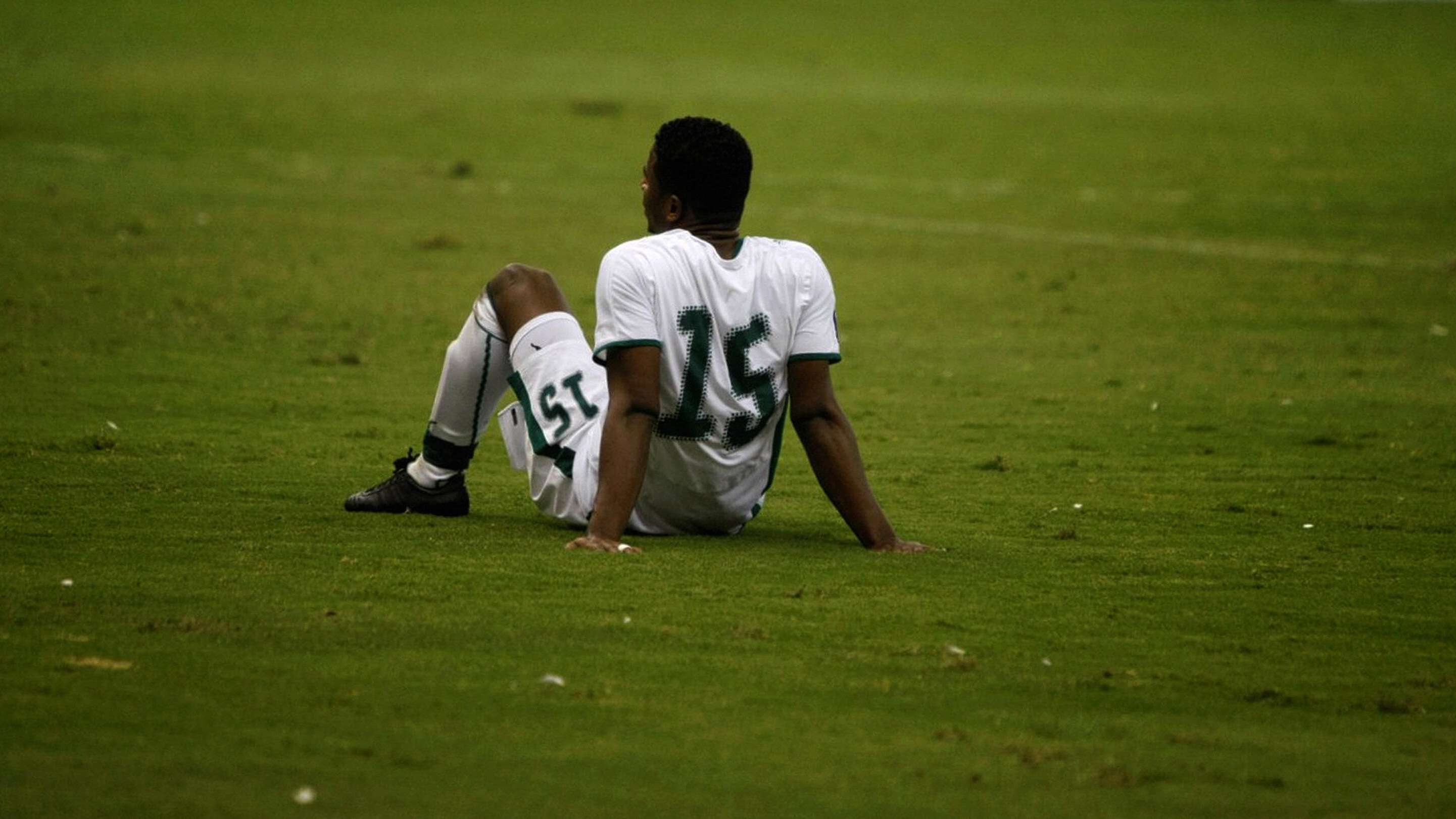
  • Dejected Saudi player Nasser al-ShamraniAFP

    Bahrain pain

    Everyone associated with Saudi football believed the path to South Africa 2010 would be routine, and in fairness, the Green Falcons started strong, marching confidently toward a fifth-straight World Cup appearance, only to slip up against North Korea and be forced into a two-legged play-off against Bahrain.

    After drawing the away leg 0-0, the two teams would face off in Riyadh with everything to play for. With the scores locked at 1-1 heading into stoppage time, Hamad Al-Montashari put the home side ahead. The stands erupted, hearts overflowed; Saudi Arabia’s dream of a fifth World Cup appearance was alive.

    Or so they thought. In a single second, the world flipped upside down, Bahrain’s 94th-minute equaliser meaning they, not the Saudis, would progress via the away goals rule. Silence fell on the stadium like a heavy curtain; joy turned into shock, shock to tears.

    Thousands of faces stared blankly at the green grass while players lay on the ground in disbelief. That last-minute goal was a dagger through the dream, a nightmare from which there was no awakening.

    It wasn’t just the loss of a tie, it was the loss of a national moment of joy. Four consecutive appearances stopped that night, and for those who have tasted glory, it’s hard to accept the bitterness of loss.

    But perhaps this absence was necessary, as for every pain, a new beginning is born. Since that night, the Green Falcons entered a phase of self-reflection, searching for the meaning of the shirt, for the spirit that never surrenders.

  • FBL-WC-2018-MATCH34-KSA-EGYAFP

    Emerging from the shadows

    When World Cup 2014 qualifiers came around, hope tried to rise from the rubble - but again, fate refused to cooperate. Coaches changed and tactics shifted, meaning consistency vanished and Saudi Arabia were knocked out before even reaching the final stage of qualifiers.

    The second absence from the finals felt heavier. Fans felt as if they had gone 20 years backwards, when World Cup qualification was but a distant dream, when just hearing the Saudi anthem at the tournament was a triumph. It was a time of silence and reflection as Saudi football stepped into the shadows to rebuild and rediscover its soul.

    Behind the scenes, however, something new was taking shape. A young generation, led by Salem Al-Dawsari, Yasser Al-Shahrani and Abdullah Al-Mayouf, began to rise, heralding a coming dawn worthy of the kingdom’s legacy.

    And in 2018, they were back. Twelve years away had fuelled their hunger, and Saudi Arabia was back on the global stage, this time in Russia.

    Drawn to appear in the opening match, a 5–0 loss to the hosts was painful, and was followed by defeat to Uruguay. But something had changed in the Green Falcons’ spirit; they no longer bowed their heads in shame.

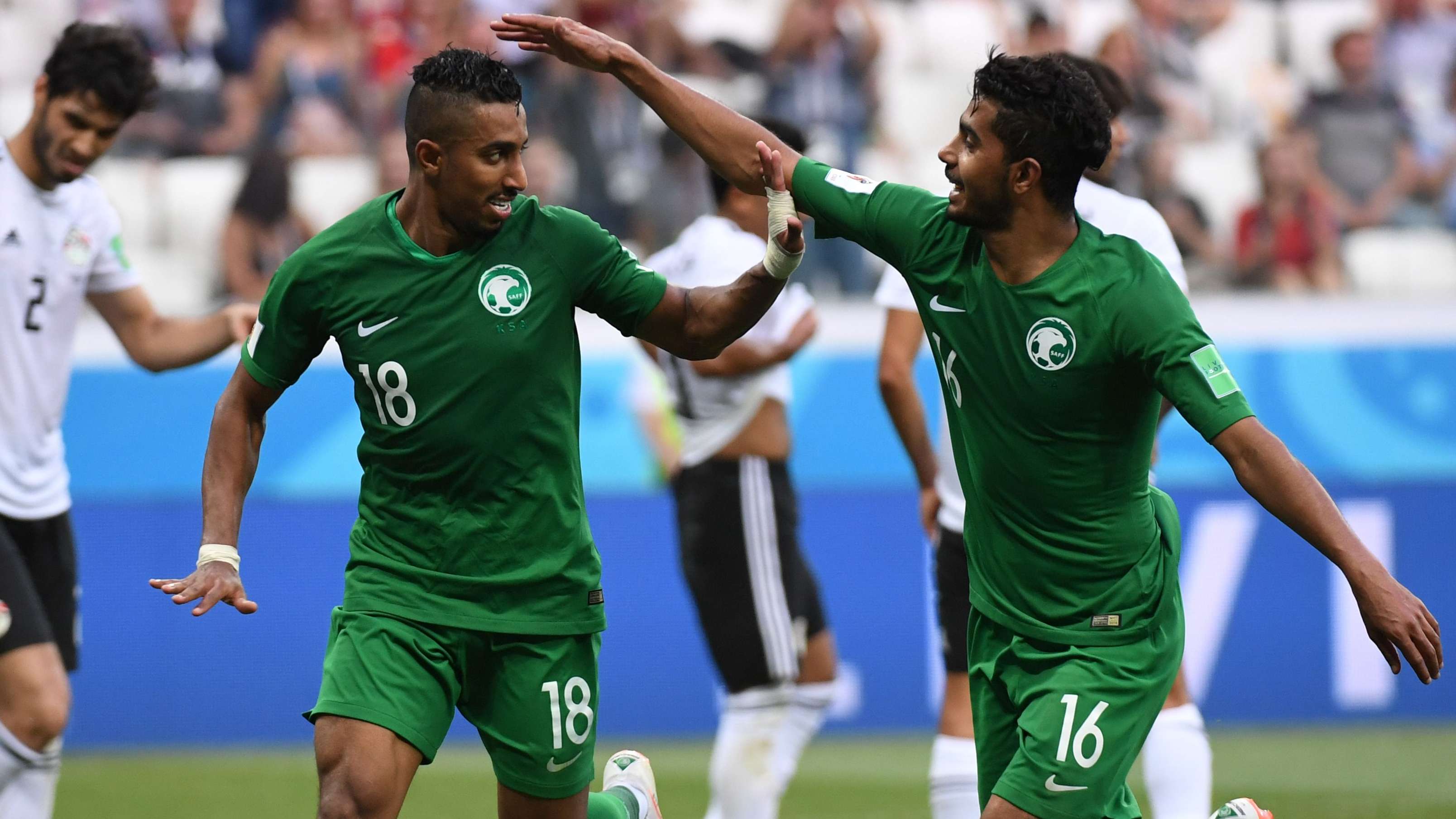
    Against Egypt in their final match, legendary goalkeeper Essam El-Hadary stood tall, saving a penalty to make World Cup history as the oldest man to do so. Then, in stoppage time, Al-Dawsari shot, the net shook and the fans roared again.

    That win wasn’t just three points - it marked the rebirth of Saudi spirit. A message had been sent to the world: Saudi Arabia had returned not merely to participate, but to compete. From the pain of Bahrain to joy in Russia, the Green Falcons learned that every fall is not an end, but the beginning of another rise.

  • Argentina v Saudi Arabia: Group C - FIFA World Cup Qatar 2022Getty Images Sport

    Legacy that never dies

    From Al-Owairan’s goal that enchanted the world, to Al-Dawsari’s strike that humbled Messi and his team-mates in Qatar, the Green Falcons remain a story that never ages. The story of a nation that knows no impossibility; that rises every time it falls, and returns stronger every time it fades.

    Saudi Arabia’s World Cup journey was never just about goals or results, but about a dream that has been alive since 1994. Today, all eyes turn towards 2026 where the Green Falcons are preparing to write a new chapter in their eternal tale.

    A new generation carries the same dream, and a coach in Renard who believes glory isn’t coincidence, but is built by determination and will. The Frenchman who led Saudi Arabia to topple the world champions is now seeking to repeat the success of last time the Green Falcons were at the World Cup in North America by guiding them to knockouts once again.

    But this time, the stage is different, the ground more prepared than ever. Today, Saudi Arabia no longer walks alone, with its domestic league now the home to superstar players and coaches such as Cristiano Ronaldo, Karim Benzema, Riyad Mahrez, Joao Felix, Simone Inzaghi, Jorge Jesus and Sergio Conceicao, to name just a few. Those names have brought with them a global spotlight, raised ambition, and turned Saudi stadiums into laboratories of future glory.

    The world may forget many goals, but it will never forget Al-Owairan sprinting like Maradona, nor Al-Dawsari’s strike that felled Messi, nor the tears of fans as the Kingdom’s flag fluttered high.

    Football in Saudi Arabia is not just a game; it’s the mirror of a nation, a chapter of its modern history told on the green field before the eyes of the world. And so, Saudi Arabia marches toward 2026 carrying its glorious past, its promising present and the momentum of a league bursting with stars with an unbreakable faith that the best is yet to come.