Goal.com
Live
+18 | Commercial Content | T&C's Apply | Play Responsibly | Publishing Principles
GFX Spain Legacy 2010GOAL

LEGACY: Barcelona back at the heart of Spain's World Cup hopes after combining with Real Madrid for 2010 triumph

2010 - a year that still echoes in the hearts of Spanish football fans. Barcelona and Real Madrid dominated the global stage, not only at club level but also within the national team.

The World Cup in South Africa saw Spain crowned world champions, and much of that success rested on the shoulders of players from these two Liga giants. It was a year of talent, strategy, and vision. Spain proved that the right combination of playing philosophy, individual quality, and collective cohesion could rule the world.

Today, 16 years later, as we approach the 2026 World Cup, a question resonates across Catalunya and all of Spain: Is this now Barcelona’s moment? Can the Catalan club consolidate itself as Europe’s best team and become the backbone of the Spanish national side once again?

  • TOPSHOT-FBL-WC2010-MATCH64-NED-ESP-TROPHYAFP

    Foundation of a champion team

    To understand the impact of Barcelona and Real Madrid in 2010, one must look closely at the Spanish national team. Twelve of the 23 players called up by La Roja for that World Cup came from these two clubs, and this concentration of talent allowed Spain to play balanced, dominant football with a clear identity.

    From Real Madrid, the pillars were Iker Casillas, a goalkeeper with supernatural reflexes and unquestionable leadership; Sergio Ramos, a defender with an imposing presence, capable of leading from the back and stepping up in key moments; Raul Albiol and Alvaro Arbeloa, reliable tactical pieces who provided balance; and Xabi Alonso, a maestro in midfield who was able to control the tempo of the game with precise passes and vision.

    From Barcelona, the influence was equally decisive, made up of Víctor Valdes, a goalkeeper known for his security and clean ball distribution; Carles Puyol, the heart of the team as an example of effort and commitment; Gerard Pique, a central defender with tactical intelligence and leadership skills; Sergio Busquets, the perfect pivot, responsible for recovering possession and distributing play; Xavi Hernandez and Andres Iniesta, the architects of Tiki-Taka, capable of managing possession, generating space, and controlling the game’s tempo; and Pedro, a fast winger with great finishing ability who was capable of changing the course of a match in seconds.

    Vicente del Bosque knew how to combine the best of both worlds, Barcelona’s precision and control with Madrid’s strength and solidity. Spain controlled possession, pressed across the pitch, and capitalised on every opponent’s mistake. This combination made Spain practically unstoppable.

    The world title was no coincidence; it was the result of meticulous planning, world-class talent, and a perfectly executed style of play. For Barcelona, that 2010 season marked the beginning of a golden era that it now seeks to replicate, this time with young Spanish players heading towards the 2026 World Cup.

  • Advertisement
  • TOPSHOT-FBL-EUR-C1-FINAL-ESP-ENG-BARCELONA-MANUTD-CUPAFP

    Setting the standard

    While the national team triumphed, Barcelona was the absolute benchmark in club football. The Blaugrana had just achieved a historic sextuple in 2009, winning La Liga, the Copa del Rey, Champions League, Spanish Super Cup, UEFA Super Cup, and Club World Cup. Although they would not win another Champions League in 2010, the club maintained its status as a world leader.

    Their football was not only effective, but also beautiful. Every pass, every movement, every transition reflected a football philosophy that combined beauty and precision. This style turned Barcelona into a model for the entire world.

    However, there was a challenge to overcome: Their dependence on Lionel Messi. His genius was undeniable, but the departure of local players capable of assuming leadership left the club vulnerable in the long term. It was evident that to maintain its hegemony, Barcelona needed to develop young Spanish talent that was capable of leading and sustaining the project beyond Messi.

    Barcelona had strengthened its squad with elite signings such as Maxwell from Inter and Dmytro Chygrynskiy from Shakhtar Donetsk, but their star signing was Zlatan Ibrahimovic, transferred from Inter for €49 million plus Samuel Eto’o, making it the most expensive deal in the Blaugrana’s history.

    In addition, Pep Guardiola continued the trend of using promising young players such as Pedro and Jeffren Suarez.

  • FC Barcelona v Dinamo Kiev: Group E - UEFA Champions LeagueGetty Images Sport

    Post-Messi fall

    Messi’s departure marked a complex period for Barcelona. The Argentine’s presence had masked certain structural problems: the transition between generations, the integration of young talents, and the club’s financial stability.

    "I always said I wanted to finish my career here and that I wanted to stay," Messi told GOAL in a world exclusive interview in 2020. “I wanted a winning project and to win titles with the club to continue building Barcelona’s legend. The truth is, it’s been a long time since there’s been any project or plan; they’ve just been doing juggling acts and patching things up as they go. As I said before, I’ve always thought about what’s best for my family and for the club."

    In the years that followed, Barcelona suffered both sporting and financial ups and downs. The Champions League became elusive, La Liga was more tightly contested, and the Spanish national team began to diversify its call-ups. The lack of a consolidated generation of Spaniards in the Barca first team exposed vulnerabilities that had been long hidden by Messi’s brilliance.

    This was a harsh lesson in the need for strategic planning and sustainable development of local talent, without depending on individual stars. The fall also tested the resilience of the club and its fans, who watched as a golden era came to an end.

  • ENJOYED THIS STORY?

    Add GOAL.com as a preferred source on Google to see more of our reporting

  • FC Barcelona v Villarreal CF - La Liga EA SportsGetty Images Sport

    Reconstruction & redemption

    The arrival of Hansi Flick changed the club’s trajectory. With a focus on Spanish talent, tactical discipline, and international projection, Barcelona began to show signs of recovery.

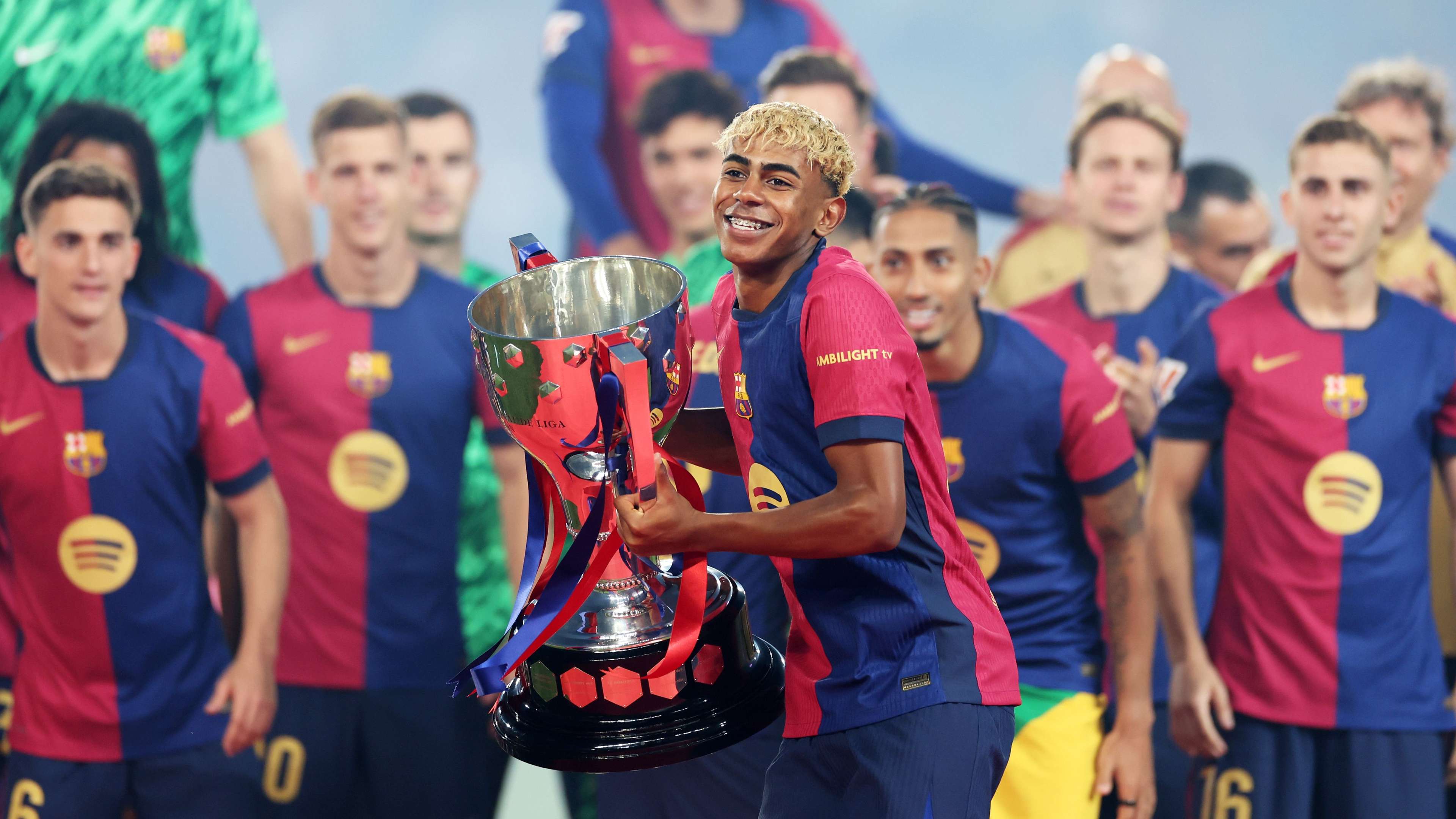
    The 2024–25 season became an example of redemption and resilience. Despite financial problems and roster limitations, the team demonstrated cohesion, creativity, and competitiveness. Under Flick, Barcelona won La Liga, the Copa del Rey, and the Spanish Super Cup, defeating their eternal rivals, Real Madrid, in each of those tournaments. It was a clear message: The Catalan club was once again a protagonist.

    It was almost unthinkable that one of their key figures in this return to prominence would be Wojciech Szczesny. After an injury to Marc-Andre ter Stegen, Barcelona brought the Polish goalkeeper out of retirement. Known for his controversial lifestyle that often mirrored his performances on the pitch, Szczesny remained unbeaten after his comeback, becoming one of the team’s unexpected pillars.

    But the story wasn’t without drama. In the Champions League, Barcelona reached the semi-finals where they faced Inter in a tie that is already considered one of the most iconic of recent times. Despite being eliminated, the team showed character, intensity, and moments of top-level football, making it clear that it was once again ready to compete among Europe’s elite.

  • Spain v France - UEFA Nations League 2025 Semi-finalGetty Images Sport

    Barca the new backbone

    Historically, Barcelona and Real Madrid have been much more than clubs; they are the heart of Spanish football. They have always provided the majority of players to the national team, and their performances directly influence the quality of La Roja.

    This mutual dependence creates a delicate balance; the competition between both clubs ensures player standards remain high, and the success of one strengthens the national team. If either Barcelona or Real Madrid experiences a sporting or institutional crisis, Spain feels it on the international stage. That is why Barcelona’s rebirth under Flick has a positive effect not only on the club, but also on La Roja’s aspirations towards 2026

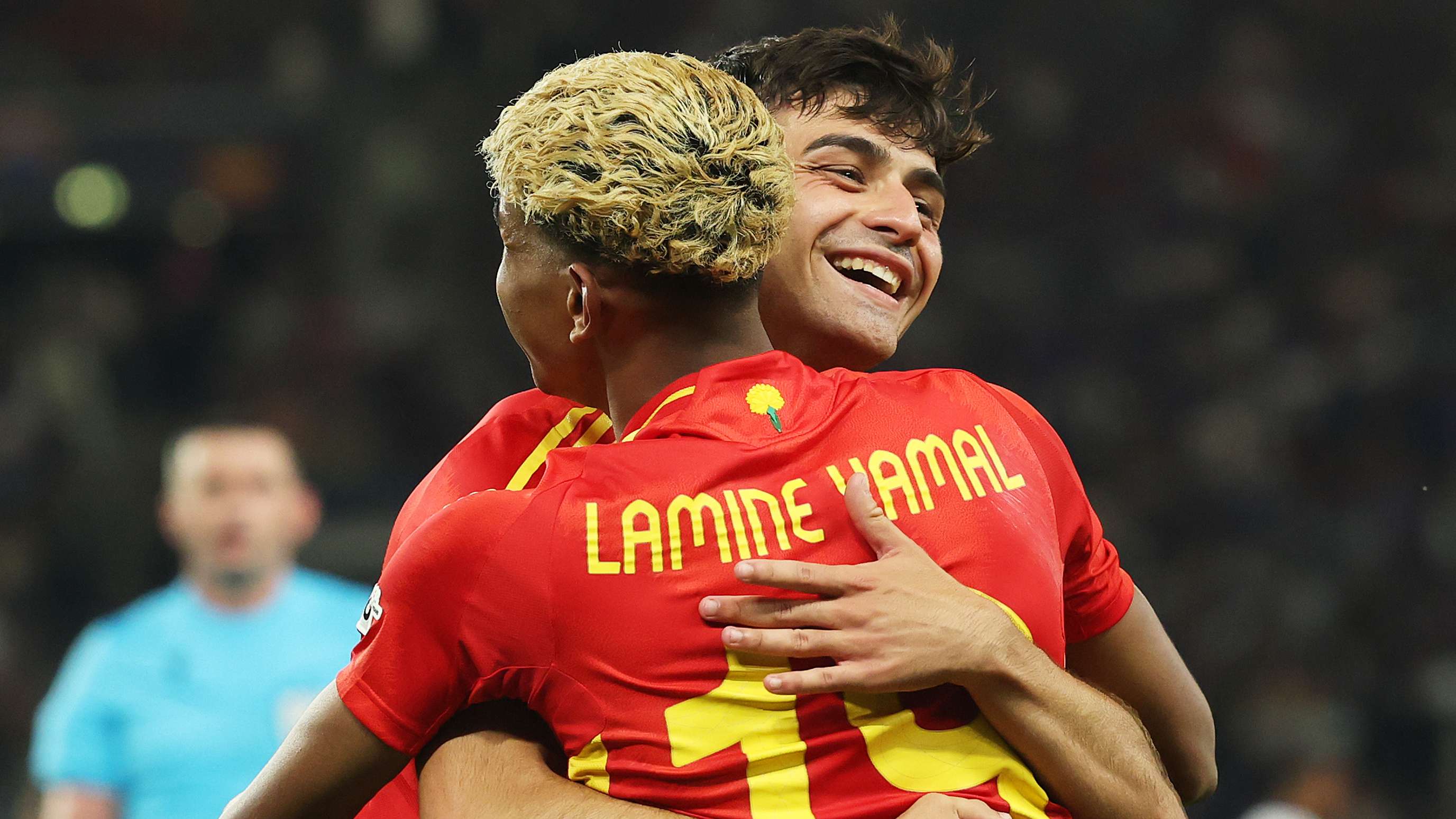
    Just as in 2010, Barcelona seeks to be Spain’s backbone. The combination of young talent and a clear playing philosophy could provide Spain with a solid core for the 2026 World Cup, led by Pedri and Gavi, who are responsible for controlling the midfield, maintaining possession, and driving the attack; Dani Olmo, a creative player who is capable of arriving from the second line; Ferran Torres and Lamine Yamal, providing attacking imbalance and goal-scoring ability; and Joan Garcia, who has become secure between the posts and a leader from the back.

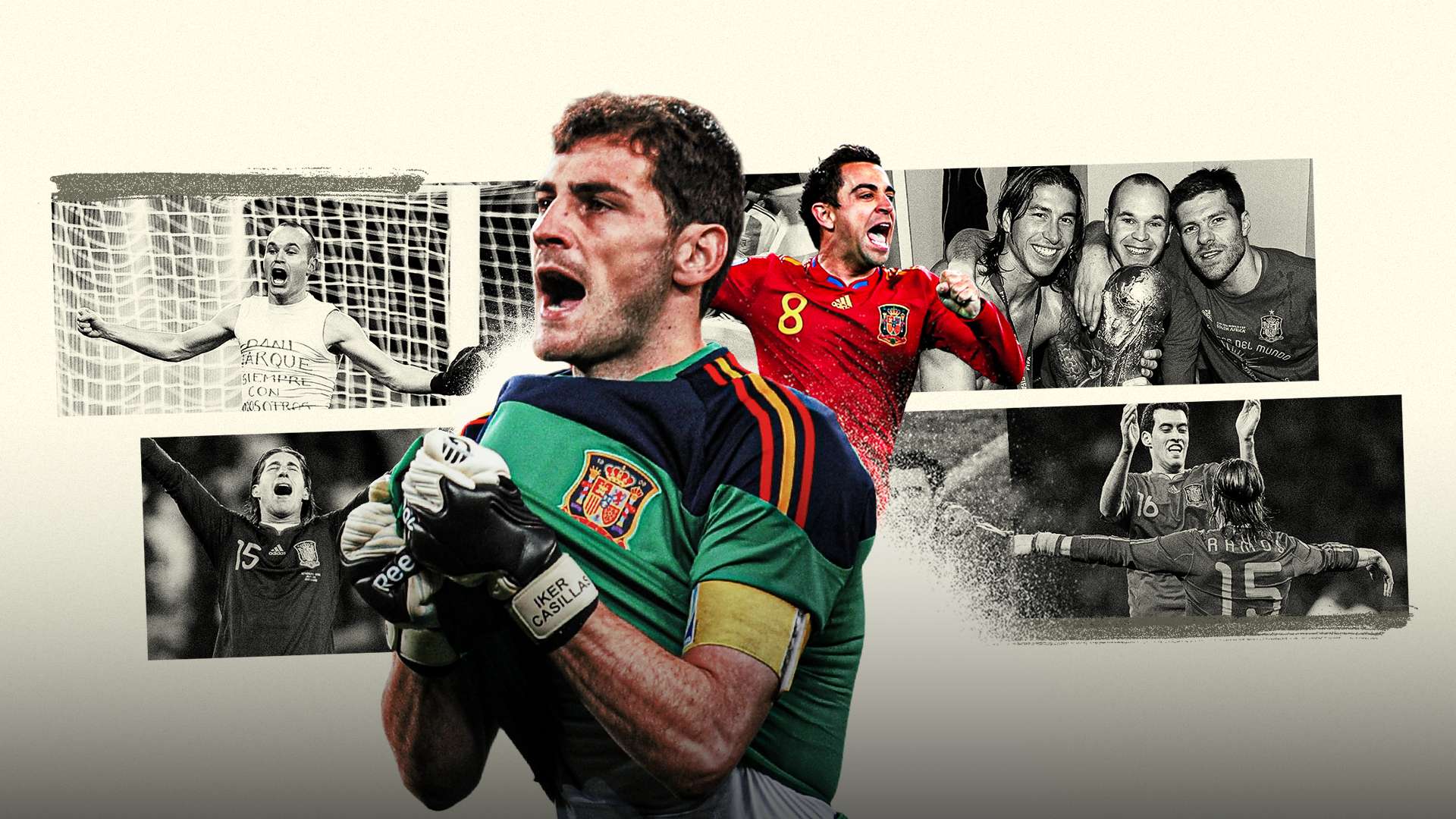
    From the three Barcelona players who were part of the Euro 2008 squad, Del Bosque raised the number to eight in South Africa two years later, seven of them starters in the final against the Netherlands. It was Barcelona’s two central defenders, one pivot, two midfielders, and two forwards under Guardiola who started the most important match in Spain’s football history, playing Tiki-Taka as they did every weekend.

    Xavi and Busquets revolutionised the midfield, shining with remarkable passing efficiency, complemented by Puyol’s forward surges, and Iniesta and Pique’s presence. La Roja had an unmistakable identity, where ball possession and quick transitions were paramount throughout the World Cup, strengthened by absolute technical quality. Spain took the initiative and displayed wonderful football led by Iniesta.

    The goal is clear: To replicate the 2010 formula with Barcelona players, ensuring chemistry, tactical understanding, and a strong collective identity that allows Spain to compete at the highest level.

  • FBL-EURO-2024-MATCH49-ESP-FRAAFP

    Ultimate test

    Back in 2010, Xavi and Iniesta controlled the midfield, while Pedri and Gavi fulfill that role today; Puyol and Pique led the defence, while Garcia has now emerged as a modern defensive leader; Pedro and David Villa brought attacking spark where in 2026 Yamal and Ferran perform similar functions. These parallels show that today’s Barcelona seeks to replicate the formula for success, adapted to modern football, with Spanish players ready to lead the national team toward 2026.

    The World Cup will be the ultimate test. Barcelona aspires to consolidate itself once again as Spain’s foundation, providing players who share tactical identity and can execute strategy with precision.

    If Pedri, Gavi, Yamal, Olmo, Ferran, and Garcia reach their best form, Spain could have a cohesive, creative, and competitive team capable of reclaiming the dominance that began in 2010. Planning is essential to maintain identity, protect young talents and ensure the club remains competitive at the European level. Only then will La Roja have a solid core to compete at the highest level.
  • FBL-WC-2026-EUR-QUALIFIERS-TUR-ESPAFP

    Back on top?

    2010 was historic: Real Madrid and Barcelona dominated both club and national football, leaving an indelible legacy. The combination of styles, talent, and tactical vision took Spain to the summit of world football.

    Today, Barcelona faces a similar challenge as it rebuilds after Messi’s departure while overcoming financial issues and consolidating young Spanish talent. With Pedri, Gavi, Yamal, Olmo, Ferran and Garcia, the club has the tools to write a new golden chapter where it dominates Europe and provides the base for the national team at the 2026 World Cup.

    The question remains: Is this Barcelona’s moment? The answer will depend on sporting, tactical, and economic management. The excitement is alive, and the world is watching. The clock is ticking, the 2026 World Cup is approaching, and history seems ready to repeat itself. This time the protagonists will be young Spaniards, prepared to take Barcelona and Spain back to the top.