+18 | Commercial Content | T&C's Apply | Play Responsibly | Publishing Principles
This page contains affiliate links. When you purchase through the links provided, we may earn a commission.
MLS Salary FeatureImagn/GOAL

'In terms of governance, we'd probably change things' - Is the focus on parity, salary cap in MLS preventing the league's ability to grow new fans and have a global reach?

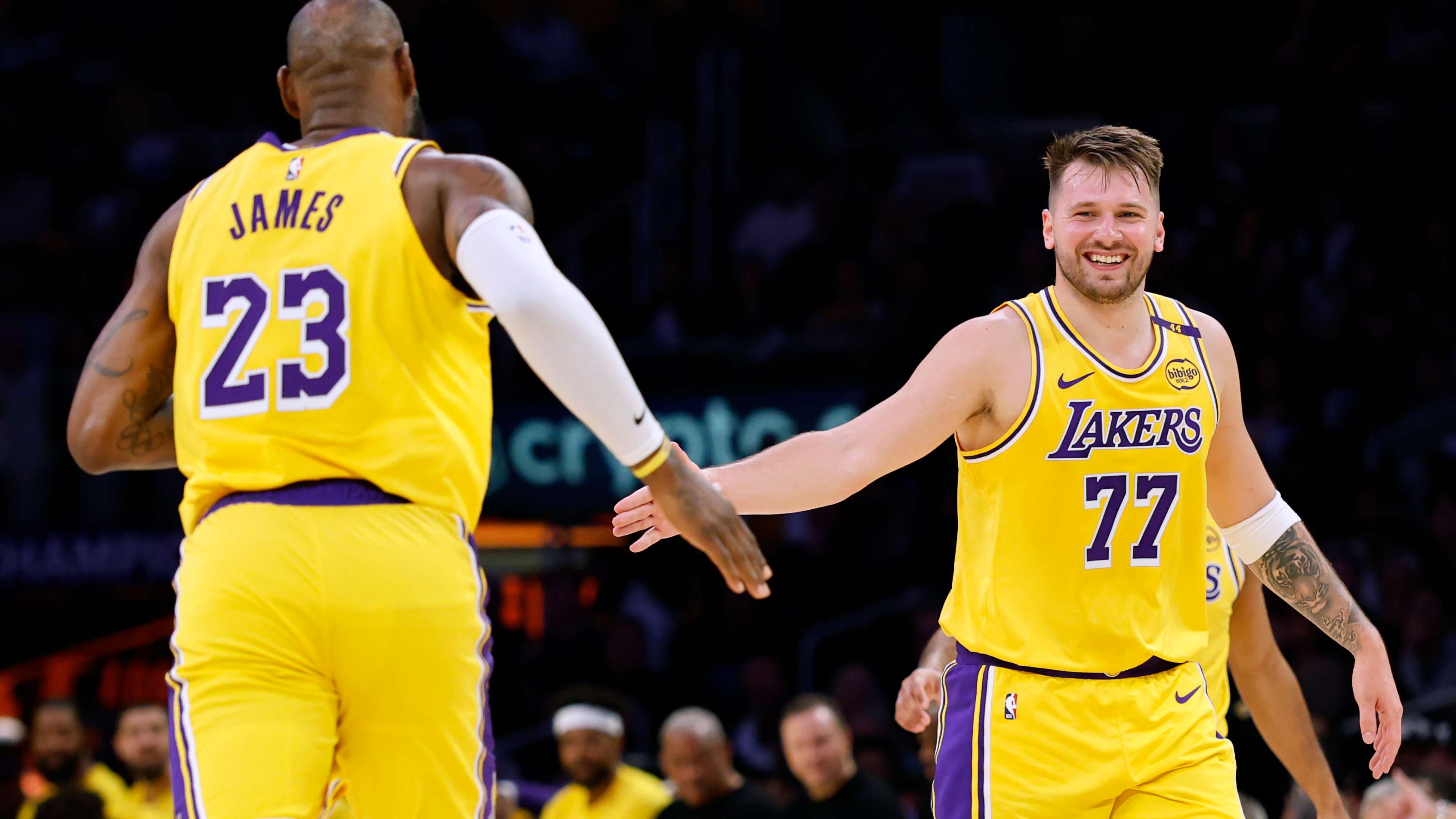
It's June 2025. Lebron James and Luka Doncic have just dethroned the Boston Celtics in the NBA Finals. Lebron has averaged 30, seven and seven. Doncic scores 25, puts up three triple doubles and hits the game winner at the buzzer to seal what might be James' final NBA title.

And then ... Lakers General Manager Rob Pelinka is forced to blow up the whole thing. Lebron goes. So do a number of key role players. The locker room is, more or less, barren. The Lakers have to overpay to rebuild, and bring in a handful of agreeable yet inferior replacements. They start the next season slowly, and watch as their title defense falls apart within a month.

Sound far-fetched?

That is more or less what has happened to the LA Galaxy this season. They were excellent last year. And despite the fact that Inter Miami set a new MLS points record, it was the Los Angeles side who were most well-balanced, and best positioned to win. That proved to be the case, Greg Vanney's side comfortably navigating the playoffs and winning their first MLS Cup in 10 years.

But rather than be rewarded for their success, the Galaxy have had to restructure their roster, trade away key pieces, and are struggling as a result - winless through five games, minus-six goal differential, sitting 14th in the Western Conference. Indeed, their shortcomings this year can be partially attributed to a restrictive system, one that has not only dampened one club's title defense but also speaks to a larger problem of continuity within the league that perhaps limits its global appeal.

  • Vancouver LA Galaxy 2025IMAGN

    A broken offseason

    First, a review of the Galaxy's transfer moves. Since lifting MLS Cup, the Los Angeles side have been forced to, effectively, disassemble their roster. Gone is star striker Dejan Joveljic - sent to Sporting KC for $4 million despite the team's reluctance to let him leave. Crucial midfield piece Mark Delgado has left. Gaston Brugman, MLS Cup MVP, was traded to Nashville.

    Factor in an ACL tear suffered by Riqui Puig in last year's western conference finals, and the title winners are down three key pieces from a title winning side. It is something of a miracle, meanwhile, that they managed to hold on to MLS Newcomer of the Year Gabriel Pec, who proved himself worthy of a European move on the back of an impressive rookie season.

    Their incomings? A slew of low-budget but necessary moves that don't jump off the page. Matheus Nascimento, a young Brazilian forward, has been brought in on loan from Botafago. He looks a fine player who could have an impact, but is admittedly raw. Christian Ramirez, from Columbus Crew, arrived for a meager $250,000. He might yet be an impact striker, but he is also 33, and has hit double digit goals in MLS just once.

    And this isn't just a run of poor luck or mismanagement. In fact, Taylor Twellman, former MLS MVP and now Apple TV analyst, saw this all coming.

    "What happens in MLS with your salary cap and how it works is when you're successful, more often than not, your players have bonuses that roll into the salary cap, and it makes it a little difficult to navigate that," he told GOAL. "And you've seen some of those moves with [Dejan] Joveljic and [Gaston] Brugman - I think that's going to be interesting."

  • Advertisement
  • Atlanta United v Inter Miami CFGetty Images Sport

    Playing by the rules

    Piece it all together, and LA are markedly weaker than the side that won MLS Cup last year. And they don't really have a choice, either. For all of the good vibes about the league brought about by Lionel Messi's arrival in MLS, the salary cap rules remain immensely restrictive.

    And they really are far more complicated than they should be. The maximum total roster size in MLS is 31. As of 2025, the MLS salary cap is $5.95 million. That would seem financially improbable for professional athletes. And it is.

    So, MLS has elected to make things tricky. The first 20 players on the roster, if used - some clubs will only employ 18 - have to fit under that number. The maximum allowance is $743,750. Simple enough so far. There are further rules here for homegrown products, Generation Adidas signees, minimum contracts, as well as players under 24. Most teams are able to check all of those boxes.

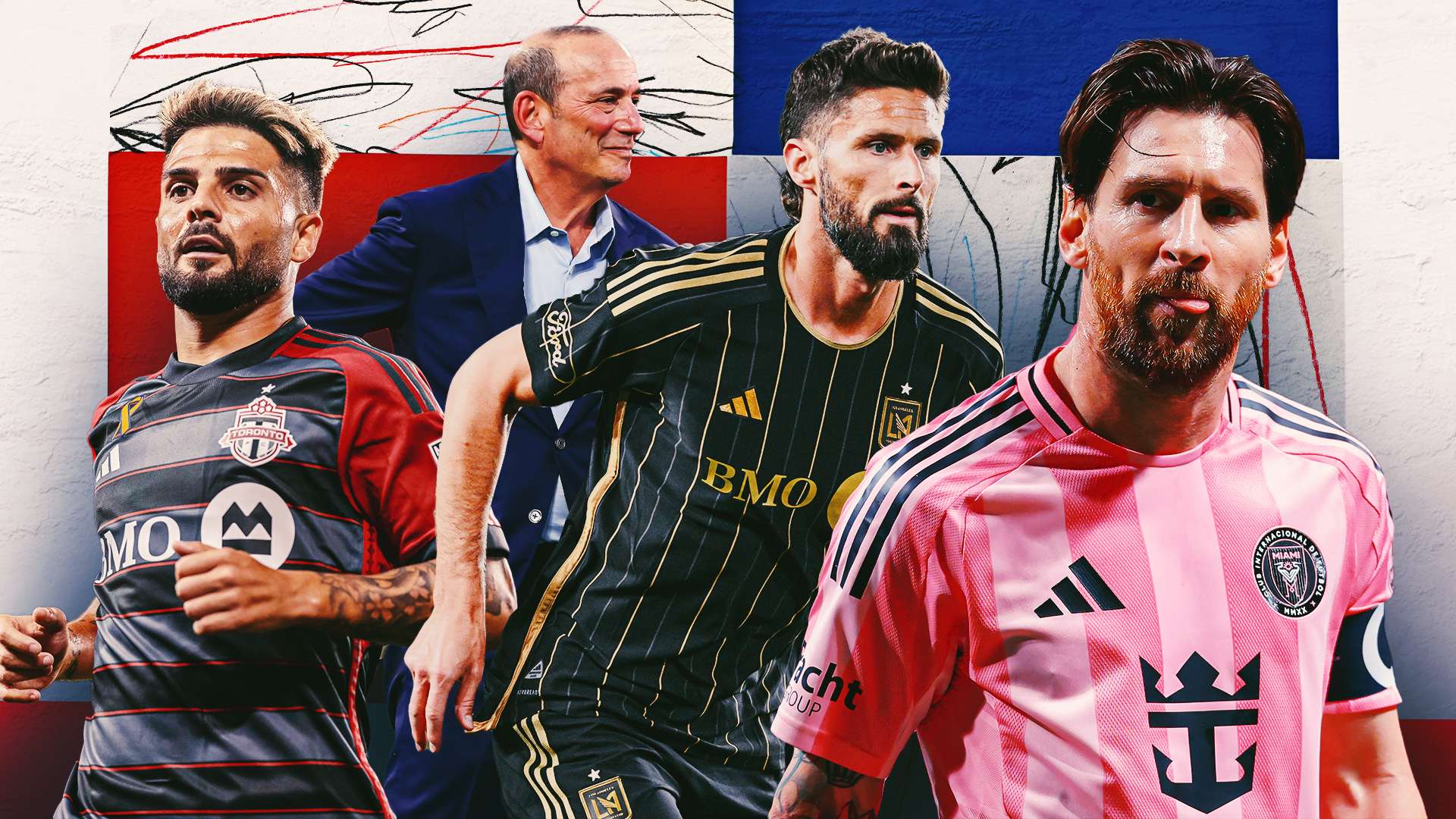
    Outside of the standard salary cap, MLS has allowed something resembling flexibility. There are six additional roster spots that exist outside of salary cap rules that allow for freer spending. Clubs can either elect to tag three players as "designated players" and three as part of an under-22 initiative, or tag two as "designated players" and four under 22s, and also receive $2 million in extra money on the side. It's how LAFC managed to spend so much on Olivier Giroud, and Toronto FC shelled out big for Lorenzo Insigne.

    Got all that? And this is where it gets really complicated. Clubs are also allowed two other types of cash: General Allocation Money (GAM) and Targeted Allocation Money (TAM.) GAM is an annual allotment given by MLS that owners can spend to adjust the salaries of designated players and work around restrictions. In 2025, it totals just under $3 million, and can be traded by clubs (according to information released by the league earlier this month, LA have exactly $0 left to spend.) TAM does much of the same, and cannot be traded between teams.

    Confused yet? This is all needlessly tricky.

  • Don Garber, MLSImagn

    Why the rules exist

    This isn't necessarily intentionally designed to constrict teams. In abstract, the rules were shrewd moves that protected clubs as MLS expanded. Don Garber has overseen immense growth as MLS commissioner, but, in turn was forced to limit overspending, and ensure that clubs control their finances.

    Reckless financial mismanagement could have brought about significant issues. These are protective measures. There is also the fact that MLS owners don't necessarily have the same financial power as European clubs. Getting them to spend big, in the early days, was far more difficult. It wasn't until David Beckham's arrival in 2007 that restrictions were loosened.

    It is also worth pointing out that the league has made strides in steadily changing things. The new cash-for-player rule, which allows teams to trade players for unlimited money, has brought about movement around the league. The likes of Evander, Lucho Acosta and Jack McGlynn were all facilitated by the initiative.

    "Probably the biggest innovation we’ve had has been cash trades within the league," Garber told Sports Business Journal before the start of the season. "Think of it almost as an internal transfer market, which is something that’s new. We had Jack McGlynn as the best example of that."

    Garber admitted, too, that it might be time for the salary cap to be lifted - even if it has some clear benefits.

    "In terms of governance, we'd probably change things: maybe not have strict salary caps, maybe not have a centralized entity like the league office making a lot of learned decisions based on committees and the like," Garber said. "But I think we have a model that has driven our success, and I think if that model was adapted around the world, football would be in much, much better shape."

  • Pep Guardiola, Ruben AmorimGetty Images

    Working outside of the global sphere

    This, in isolation, wouldn't necessarily be problematic. After all, parity is, objectively, a good thing. It breeds competition and brings about unpredictability. In theory, when everyone is at a roughly equal level, then anyone can win this thing on any given year. Storylines are rife, and chaos tends to ensue. Apple TV analyst Kaylyn Kyle has asserted that it might be the league's greatest strength.

    "It's one of the most exciting [leagues], because you genuinely don't know who's going to win every single weekend. Whereas when you're you're looking at the Prem, you're looking at La Liga, you have those top, top, top teams that seem to get the job done," Kyle told GOAL.

    But is that really what fans want? Part of the appeal of global soccer, in particular, is that there are both dynasties and perennial strugglers. It's what gives fans something to root for - or against. Manchester City, love them or hate them, have captured the imagination worldwide for their dominance of the Premier League. A lot of their fans may live outside of the Northwest of England, but their rise - and subsequent struggles - is a fascinating storyline.

    Going further back, their cross-city rivals, Manchester United, have undergone a similar thing. Under Sir Alex Ferguson, they were the dynasty that pretty much everyone else loved to hate. Yes, Arsenal and Chelsea occasionally broke into the picture, but their dominance of English football made the Premier League one of the most watchable and captivating things every year.

    It also bred a worldwide fan base. Right or wrong, there are a whole generation of supporters who consider themselves United fans based on prior success. The same can be said for Barcelona and Real Madrid in La Liga, as well as Bayern Munich in the Bundesliga. And when those teams do fall out of favor - United's struggles since Ferguson retired have been particularly amusing for some - then it only gets more interesting. "Hate watches" as the cool kids call them, can bring eyes, too.

    More broadly, it leads to a sense of brand building. These clubs are built on stars and success. They are good at what they do, and have the big names to latch onto. Don't know who to root for as a casual fan? Chances are, your eyes latch onto the team with the most bursting trophy cabinet or best players.

  • Lionel Messi Inter Miami Atlanta United 2025Getty

    Dynasties in MLS

    Yet that is pretty much impossible in MLS. Over the past 10 years - a decade in which the league has enjoyed exponential growth - no team has won more than two MLS Cups. No one has gone back-to-back. The only team to raise the trophy twice, Seattle Sounders, had to wait three years between their two victories, effectively ushering in a new generation of talent to win.

    So, for new fans, that makes it genuinely difficult to find someone to watch. In recent years, very few teams can claim to have the kind of consistency worth rooting for. There are always good sides due to smart ownership or solid coaching. Seattle will always make the playoffs in some form. The Crew have played in three finals. LAFC have been good throughout - and did have a chance to win two in a row in 2023 before the Crew handed them a 2-1 battering in the championship game.

    But none of those teams have enjoyed consistent stars that span a generation. The best players in the best teams in MLS seldom stay at one club for more than two or three years. Cucho Hernandez managed three full campaigns in Columbus. Not since 2014 has the Landon Donovan MVP winner played on the MLS Cup winning team - when Robbie Keane claimed both trophies for LA Galaxy (ironically, but certainly not coincidentally, he was the last real star player to spend more than four full seasons at his club.)

    As a result, it's hard to see MLS ratings and national appeal grow as a result. It is part of the concern attached to Messi's inevitable retirement. What happens then? His star power alone captures the attention of millions. Will those fans stick around when Miami are forced to rebuild?

  • Minnesota Timberwolves v Los Angeles LakersGetty Images Sport

    The alignment with other American sports

    The easy point of comparison here are other American sports. The NBA and NFL, for example, both have salary caps. It is pretty much impossible to stack one team with the kind of star power able to both win and stay marketable (recent history in basketball, in fact, has shown that the idea of a "big three" tends to be detrimental, with the Golden State Warriors the last to pull that off).

    But the crucial exception in basketball is that owners arepermitted to work outside salary cap rules - as long as they are willing to pay extra financial penalties for doing so. Yes, you can overspend, just prepare to see your own club's overall finances take a hit as a result. That, in itself, is a calculated risk.

    The business benefits of assembling a winning team are far more significant than the punitive measures of the so-called luxury tax. So, it's a risk that many owners are willing to make. This season, 10 teams paid extra for spending outside of the normal roster limits. The Phoenix Suns are $44M above the salary cap.

    The NFL isn't quite so liberal with its finances. Teams are not permitted to exceed the cap, but there is enough star power, deep-rooted American fan bases and global appeal to the sport to ensure that the best teams stay relatively competitive. It helps, too, that the cap is in the hundreds of millions.

    The Kansas City Chiefs have been, by some distance, the most consistent team in the league in recent years. That is mostly because league rules have allowed them to hold onto Patrick Mahomes, who will undoubtedly retire as one of the best quarterbacks in the game. His talent allows the Chiefs to assemble around him, and also captivates a global fan base.

    Major League Baseball is arguably more flexible, with all-but uncapped spending allowing the New York Yankees and Los Angeles Dodgers to pretty much sign whoever they want - at whatever price they see fit - in any given year. In no other sport would a team as deep as the eventual World Series winners LA be allowed to sign generational talent Shohei Ohtani to a long-term contract so lucrative - a cool $700M over 10 years - that he has little interest in moving anywhere else.

    So, if that is the American model, MLS hasn't exactly followed suit.

  • Messi Suarez GFX HIC 2-1Imagn

    The potential solution

    There have been calls around the American soccer sphere for the salary cap to be lifted entirely - allowing the league to invest, regardless of cost.

    "MLS has to heavily invest in star players to drive interest," former USMNT midfielder Stu Holden told GOAL. "Look what Caitlin Clark has done for the WNBA - it's insane. Lionel Messi is one star, but he needs others to duel against. Imagine: Messi vs. Harry Kane live on FOX, or Messi taking on Erling Haaland and New York City FC."

    That would certainly address some problems. Allow the big stars to come to New York and Los Angeles, and, in theory, the talent might soon proliferate. Short term inequity would be inevitable - with Europeans drawn to big markets - but it was Sporting KC, remember, who were in serious negotiations with Cristiano Ronaldo before he signed for Al-Nassr of the Saudi Pro League.

    Unchecked spending would lead to issues, of course. Some small market clubs would simply be left in the dust. Franchises already starved of success would seem to be less inclined to open up the checkbook. Perhaps only the threat of relegation would force some action, but that seems immensely unlikely in the current state of the league.

    Maybe the best option, then, is to mimic the NBA. Teams should be restricted in some way. There cannot be entirely unchecked spending. A baseline of some sort of parity can only be considered a good thing. Yet there should be flexiblity for owners who already spend big to have the chance to spend bigger.

    A system of that nature might bring Neymar to Miami - a move that was long-rumored but ultimately quashed by MLS restrictions.

    "We cannot talk about Neymar because we have nothing," Inter Miami manager Javier Mascherano said at MLS Media Day. "Obviously Neymar is a great player. Every coach in the world wants him but at the moment, but you know the MLS rules around the salary cap. So for us in this moment, it's impossible to try to think about him,"

    Or, more simply, it might just allow a good team to continue to be good. And maybe capture a few more eyeballs as a result.