+18 | Commercial Content | T&C's Apply | Play Responsibly | Publishing Principles
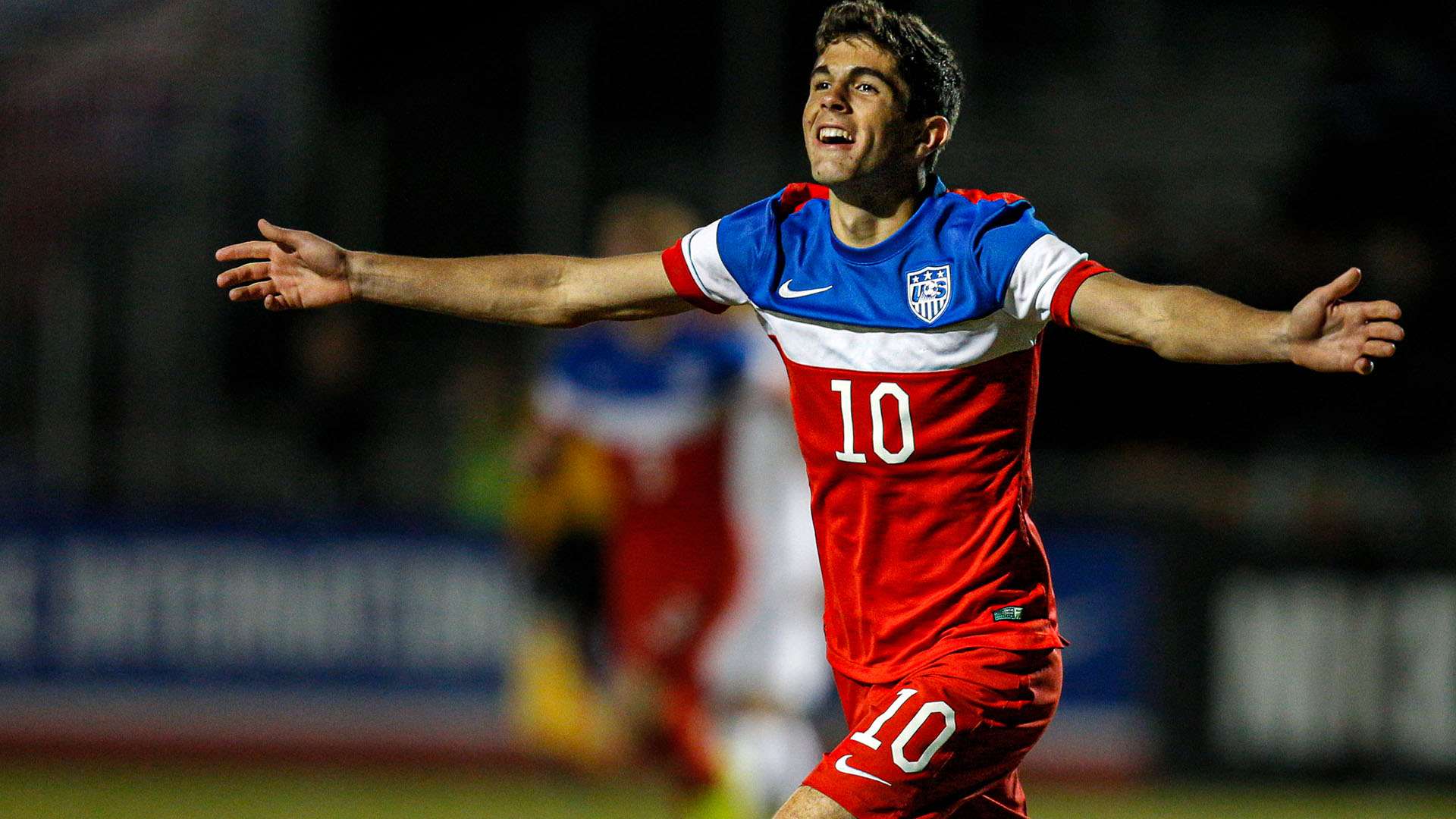
Christian Pulisic 2014 United States youth tournamentGetty Images

How to raise a U.S. youth soccer star: Christian Pulisic, Gio Reyna, Tyler Adams & the complicated paths from childhood to USMNT selection

Youth soccer in the United States is a maze. A very expensive maze. One featuring a dizzying number of developmental paths, and loaded with "arrogant" parents and coaches with misplaced priorities. Often, the well-being of kids is an afterthought.

"Everyone knows access is a problem and soccer is largely viewed as a rich, white kid sport,” said U.S. Soccer president Cindy Cone in 2022. “I am not going to rest until every kid who wants to play our game has not only the access to our game, but the opportunity to succeed.”

The journeys of current United States men's national team stars such as Christian Pulisic and Gio Reyna show how special circumstances are often required to make it to the very top. As such, GOAL examines the ever-evolving landscape for boy's soccer through the lens of USMNT players...

NB: This is the first in a two-part series, with an article geared towards aspiring United States women's soccer players coming soon

  • Zack Steffen U.S. youthGetty Images

    Decisions, decisions, decisions

    Unlike in Europe, where most teams are subsidized, U.S. youth soccer is expensive. Pay-for-play is the standard: according to a 2022 report from the Aspen Institute, the price of a typical youth soccer season is around $1,188.

    Even parents and guardians of children below the age of 10 pay around that much for teams, worried that anything less would not get their kids regular practice, proper instruction that balances fun and skill development, and quality game action.

    Then, around middle school level, competitive pressure rises. Children can try out for free-to-participate MLS academy teams in the recently founded MLS NEXT league. Getting in there is likely the best chance a kid has to receive top-tier training without cost. But most kids, particularly those without prior connections, aren't picked for the limited-sized rosters, leaving parents and guardians to consider pricey alternatives.

    The NEXT league does include many non-MLS affiliated youth clubs, demanding a high standard of instruction for them to enter. But those organizations are pay-to-play. A league spokesperson said NEXT wants to use commercial partnerships to provide financial assistance for lower-income families on the unaffiliated teams, citing six clubs that received $25,000 in 2022 from a DoorDash-sponsored program.

    "MLS NEXT clubs are strongly encouraged to provide opportunities for financial support by offering low or no-cost options for players and their families to participate on MLS NEXT teams," they added in a statement to GOAL. "Overall, MLS NEXT requires minimal fees to play in MLS NEXT or compete at MLS NEXT events."

    Outside of NEXT, there are other local independent, rec and school teams - the ECNL is one example - but availability, quality and price vary dramatically by region.

    Around the end of high school, the very best of the very best teenagers go pro in U.S. soccer divisions such as the USL Championship, USL League One, MLS NEXT Pro and MLS, or they jump to a foreign league. Others try to play Division I college soccer, ideally on scholarship, in hopes of leaving the amateur ranks more developed physically and well-rounded mentally. The majority of kids, though, quit soccer long before their late-teens.

    The whole youth sports jungle is simply too exhausting and expensive, even in best of cases. It doesn't sit right with many American families.

    "The fundamental flaw in American youth sports, and particularly soccer, is we are sorting the weak from the strong well before kids grow into their bodies, their minds and their interests," said Aspen Institute executive Tom Farrey to NPR. "By creating these travel teams at ever earlier ages, we're pushing aside the late bloomers.

    "We're pushing aside the kid from the lower income home that can't afford the youth sports arms race or doesn't have a second parent in the home to drive them to this endless array of practices and games, some of which are two counties away or sometimes two states away."

  • Advertisement
  • Christian Pulisic Chelsea laugh 2022-23Getty Images

    Christian Pulisic

    Pulisic was born in Hershey, Pennsylvania, but blessed with an opportunity to taste youth soccer both abroad and in multiple states. His travels with his family, and connections made by his father - a professional indoor soccer player and coach - helped clear the path for him to blossom into one of the most hyped Stars and Stripes players ever.

    Pulisic's mother received a prestigious Fulbright scholarship that led the family to England, where at seven years old he competed for the Brackley Town youth team in Northamptonshire. Upon returning to the United States, his father's involvement in local soccer brought Pulisic to Michigan Rush, before he moved on to PA Classics, which is now in the MLS NEXT league.

    When Pulisic was a teenager, his parents reportedly connected with a soccer consultant in England, who helped the family figure out how he could go play in Europe. A serendipitous scouting encounter eventually brought him into Borussia Dortmund's academy.

    "As a result of my dual citizenship, I've been able to play in Europe, training at the Dortmund academy, since I was 16," Pulisic said. "Without it, I would have had to wait until I was 18. And for a soccer player, those years are everything. From a developmental perspective, it's almost like this sweet spot, where a player's growth and skill sort of intersect, in just the right way – where a player can make their biggest leap in development by far."

    Of course, like everyone who has gone on to star with the USMNT, Pulisic showed immense talent from a young age that helped attract attention. “He always had that change of speed and change of direction to always make kids miss and to strike the ball at seven or eight years old better than anybody I've ever seen,” his former Michigan Rush coach, Nick Deren, told the Detroit Free Press.

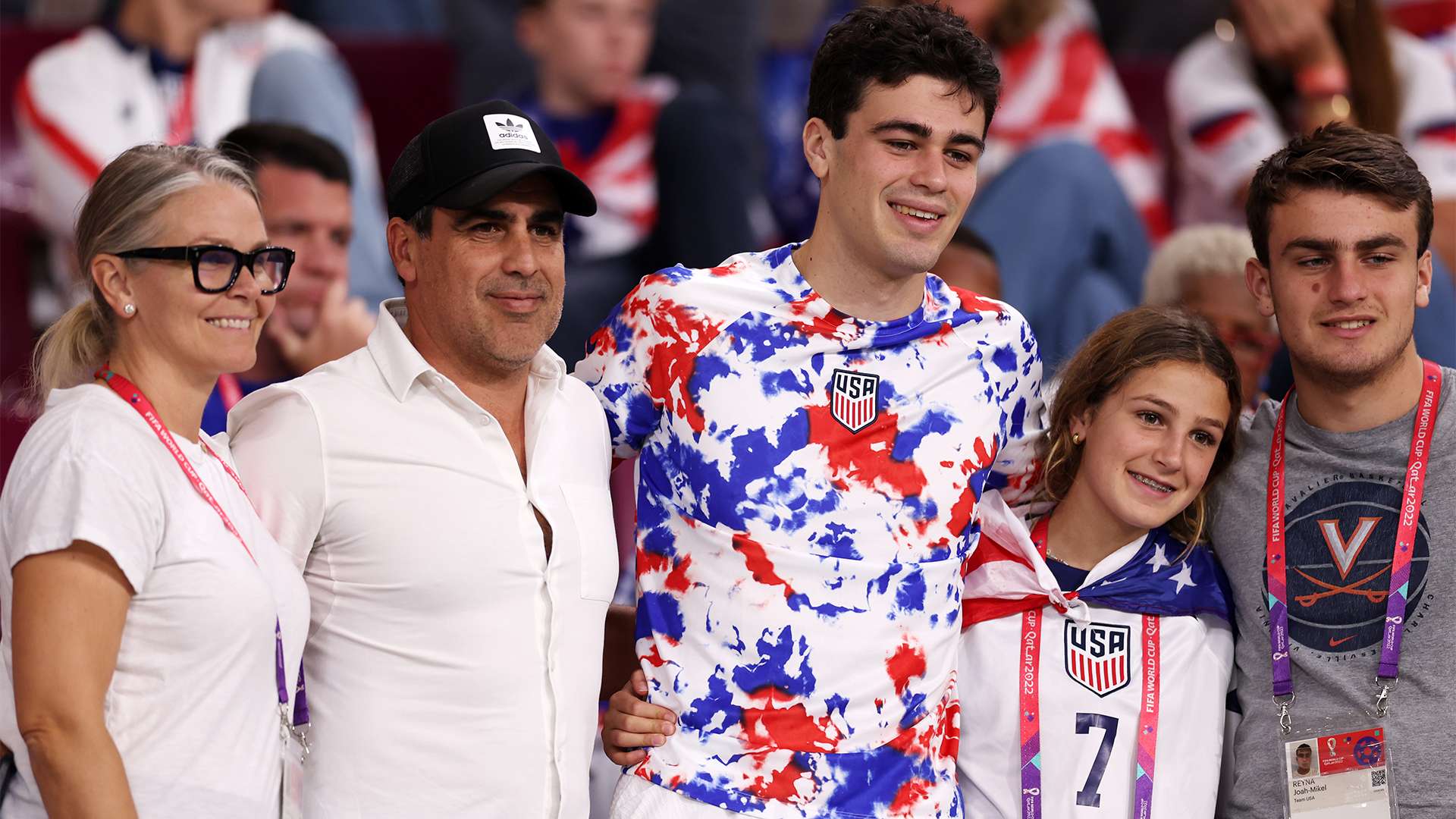
  • Gio Reyna family World Cup 2022Getty Images

    Gio Reyna

    Pulisic might have had connections in the soccer world growing up. But Reyna had CONNECTIONS.

    The now-infamous story of Reyna's hands-on soccer upbringing became public knowledge earlier this year as a result of a U.S. Soccer investigation into his family. The son of Claudio Reyna, a USMNT legend who also worked in MLS, Gio was almost always a prominent figure on his youth teams. People who tried to cross him were hammered by his father in complaints made to the very top of the U.S. Soccer hierarchy, the investigation found, a habit that continued through the 2022 World Cup.

    Gio Reyna began his development in New York City FC's academy with the help of his father, who was the sporting director there at the time. He has since continued his development abroad at Borussia Dortmund.

  • Tyler Adams NYRB 2015Getty Images

    Tyler Adams

    Adams, now the USMNT's captain, commuted 80 miles to New York Red Bulls academy activities from his pre-teen years until young adulthood. In fact, he hastily drove from an abbreviated Roy C. Ketcham High School graduation ceremony to play in a match against NYCFC. His step-father, a social studies teacher, called it a "special" day.

    Adams had the good fortune of being accepted into New York's academy in middle school, but he took full advantage of the chance to shine. As he ascended the youth system, new team-mates and coaches already knew his name - not because of family connections, but because of his on-field demeanor. "He was fearless, even as a 15-year-old kid starting his first professional game without even training with us that much,” said former Red Bulls II coach John Wolyniec to MLSsoccer.com.

    Adams benefitted from the Red Bulls academy's free-to-play structure and vowed to give back to his community later on. He also took advantage of the global resources of the Red Bulls, transferring to affiliated club RB Leipzig before joining up with American head coach Jesse Marsch at Leeds United.

    The midfielder has said playing for New York prepared him well for RB Leipzig, despite him not knowing how to speak German at the time. "The philosophy of play here is almost the same as in New York," he marveled.

    Adams and the Red Bulls would love to see his youth experiences replicated by the next generation of soccer players in the New York and New Jersey area.NYRB announced earlier this year that their pre-academy set-up designed for U11 players would also be free in addition to the regular academy. Meanwhile, Adams funded construction of soccer fields in his hometown to further boost local youth soccer accessibility.

    “Not many people from my area have become professional athletes, so I knew that would be special, and it would give me a platform to help in some way,” he explained to the Poughkeepsie Journal. “When I think of the Hudson Valley, it’s not some predominantly rich place where all the kids have access to resources they want.”

  • Brenden Aaronson dribble Union 2019Getty Images

    Brenden Aaronson

    Long before Aaronson teamed up with Adams at Leeds, he rode a similar MLS academy-fueled rise in the U.S. His father, Rusty Aaronson, became involved with influential local youth club Real Jersey FC and convinced the owner to add a team his son could play on, according to The Athletic. That helped put Brenden on the map of academy scouts.

    The Medford, New Jersey native joined the Philadelphia Union's youth set-up at 13, and after a year of what he called "regular" high school, the club convinced him to go to its affiliated YSC Sports preparatory academy where he accelerated his development.

    "The coaches are really good here in the academy, all through it," Aaronson told The Philadelphia Inquirer. "They just tell you what you need to do in that position, and it's all about what your mentality is. You want to try stuff, you want to be creative on the ball … no problem."

    Aaronson was small for his age, and the Union's keen eye for how his skills might develop anyway is an example of their renowned academy vision at work. His younger brother, Paxten, is also a recent product of the Union's youth system and is expected to play for the U.S. at the upcoming U20 World Cup.

  • Zack Steffen university of marylandGetty Images

    Zack Steffen

    Steffen is no longer first on the USMNT's goalkeeper depth chart, but he's worth noting here as an example of a different path from going pro straight from an academy. He played college soccer at the University of Maryland before making his way through MLS and heading to Europe.

    MLS NEXT actually encourages many of its academy players to pursue higher-education opportunities, said the organization's general manager Justin Bokmeyer. "We're trying to holistically develop these players, whether they've got the ability to play for an MLS team, or if college is their best pathway," he told GOAL. "The majority of our players will likely go play in college, just given the limited number of spots to play professionally.

    "We invite college coaches to come scout [our games] ... and we know that college is a big part of the pathway within the United States. And we don't ignore that and, and for some of these players, what's best for them is to go play college, and that's what we want. We want MLS NEXT clubs to have these conversations with the players to set them up for what they want to do for their future."

    Steffen still often speaks highly of the college route for the way it shaped his character and gave him room to adjust to the higher-stakes matches he would face later in his career. He has played in four levels of American soccer (MLS, USL, DA, NPSL), plus his college foray, and competed in multiple tiers in Germany and England. There's a good chance he joins a new club this summer.

  • Youth soccer New York CityGetty Images

    Multi-sport activity, life balance & more

    There are common factors in many of the USMNT player upbringings, some of them enjoying advantages that are out of reach for most families. U.S. Soccer and MLS officials have said they will try to level the playing field in the coming years so that more kids have opportunities to succeed. Parents and guardians will want to see it before they believe it, though.

    Professional and even college scholarship prospects are long-shots for any child, so industry experts are keen to remind families that kids should see their soccer teams as a source of fun and a way to make friends, rather than an added source of stress growing up. Being good enough to make it professionally, or even internationally, is a bonus.

    Additionally, research suggests that specializing children in soccer at an early age can be counter-productive. Not only does it make the sport seem like work, but it is also linked to increased injury rates and reduces opportunities to strengthen muscle groups that are not activated by soccer drills and game experience.

    "I’ll say I think there's not a single pathway in soccer," said Cone, the president of U.S. Soccer. "Take myself. I played multiple sports growing up, played basketball and soccer through high school, and I'm a youth coach now and I encourage my players to play other sports. I mean, the social development piece is often that you play different roles on different teams. It’s not just about multiple sports.

    "Whether it's playing a musical instrument or another sport, I think raising kids that are well-rounded and have multiple opportunities to experience different things in life is important."