
 Getty
GettyNoahkai Banks follows his heart to Germany over the USMNT - only time will tell what either side has lost or gained
Almost exactly one year before leaving the U.S. Men's National Team for good, Noahkai Banks sat alongside teammate Damion Downs at the team's New Jersey hotel. The center back was participating in his first USMNT camp, and he said it was starting to feel like home. Downs helped make him feel welcome. So, too, did German speakers like Chris Richards and Jonathan Klinsmann. He was even training against Christian Pulisic, a player he said was an "idol" of his growing up.
"It's great because I can still grow," he told GOAL during that first and, ultimately, last USMNT camp. "I'm still so young, so I can learn a lot from playing against Damion, Christian, Timothy [Weah], everyone. I think that helps me with my career. Yeah, it makes me better."
"For me to represent America, it's such a big honor," he added. "I've done it so much at the youth level. I love it."
That was then, though, and this is now. After months of mulling over his international future - and missing out on a potential World Cup spot in the process - Banks reportedly opted for Germany on Friday. Well, Germany's youth teams, at least. The USMNT, ultimately, wasn't the 19-year-old Augsburg center back's long-term home.
Joining Germany's U-21s for this international break will require Banks to file a one-time switch, closing the door on his U.S. career. It's a significant step. For dual nationals, these decisions can mean weighing connections to two countries, with only one shirt to wear. Banks has chosen his.
The choice is, ultimately, his alone, but with it now made, there will be no shortage of nitpicking and analyzing why he made it. Was this the plan all along? Could manager Mauricio Pochettino and the USMNT have done more? Will this be a big loss for the U.S., or just another momentary pain point in a long line of recruiting defeats that don't look so bad in hindsight?
Overall, Banks' decision is a complicated one, and not one that requires blame or credit to anyone else who was a part of it. Don't blame him for following his heart or Pochettino for not trying harder to change it. This isn't necessarily a USMNT failure or a German success.
A 19-year-old kid has made a life-changing decision, one that may or may not work out in the end. There will be some hurt by it and some celebrating it. Yet, that decision is both nothing personal and also the most personal choice a soccer player can make.
The big decision
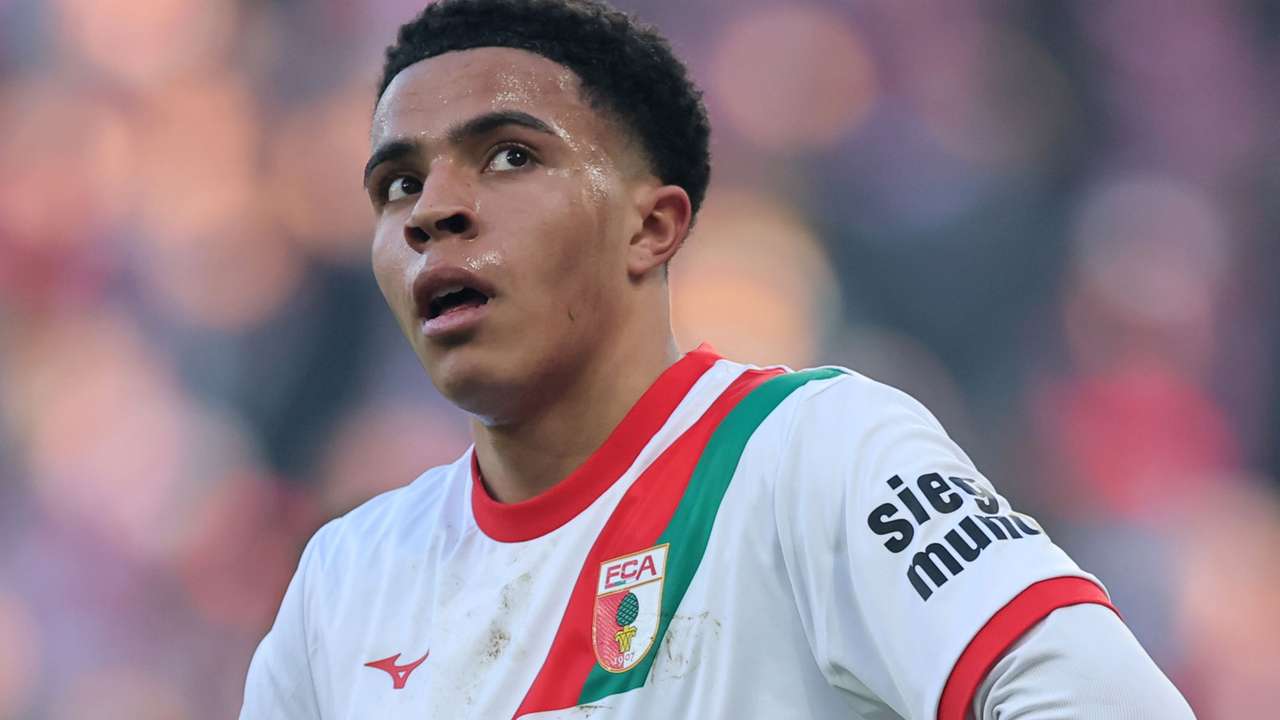
The Augsburg defender is set to play for Germany's U-21s during this international break.
It's not official until Banks' one-time switch pops up on FIFA's website, but Germany U-21 coach Antonio Di Salvo confirmed the news by calling the defender up for the team's upcoming U-21 Euro qualifiers. His squad included both Banks and Tunisian-German Ben Farhat, two dual nationals who are now committed to the German program. For Banks, that commitment is permanent. After playing for U.S. youth teams, the decision to join up with Germany requires him to forfeit his U.S. eligibility with that one-time switch.
"[They] chose to represent Germany,” Di Salvo said after selecting his team. “We’ve been in contact with both of them for a while now and had focused our efforts on them. I’m very pleased that we have been able to lay out a future pathway with Germany for them and that they agreed with it.”
That pathway, ultimately, begins with the youth teams, which is very different than what the pathway would have been with the USMNT. After earning a senior call-up in September, Banks was seemingly in line for a March call-up before it emerged that he was mulling over his own future. He continued to consider it through the World Cup, potentially costing him a chance to play at the world's biggest tournament for the host nation.
The revelation from that isn't that the USMNT didn't do enough, though; it's that there probably wasn't anything they could have done. In the end, Banks chose Germany's U-21s over a USMNT World Cup, which indicates exactly where his heart was throughout this process. And, for Pochettino, the messaging has been consistent: he wasn't going to beg anyone whose heart wasn't in it.
The recruiting process
 Pro Sports Images
Pochettino clearly wanted Banks involved, but he also wanted Banks to want it more.
Banks watched the World Cup. He said that he found himself rooting for both the USMNT and Germany, both because of his love for both countries and the relationships he'd built with those on the field.
"I watched with mixed feelings and was happy for the guys because they all made me feel so welcome back then," he told Kicker when asked about his decision to delay his international commitment. "Every now and then I told myself it would be cool to be there, but I didn't dwell on it. I'm not the type to regret things in hindsight. I made my decision with the future in mind, and it's the right one."
Pochettino was asked about Banks in the weeks leading up to his roster unveiling. He said that the defender could not be considered for a call-up until Banks himself made a choice.
"We are in contact with all the potential dual nationals," Pochettino said. "I think it's important for us to see, of course, because it's a connection and the human connection that is so important, even if they, like in the case of Noki, didn't change his mind and is waiting. Still no decision, and of course we cannot consider him for the next camp. That is the case.
"Still, we, and the organization, are working with all the dual nationals and players with the possibility of making a decision. Yes, that human connection is important because if one day they feel that they can defend, that they want to fight and to be part of our national team, and, of course, if they deserve and we consider that they deserve to be involved, of course, we are going to call. In this case, Noki is still in the same situation as before the World Cup when we talked."
Pochettino's messaging has been consistent since the beginning. Right or wrong, he isn't going to go overboard to recruit a potential prospect. It's on them, he's always said, to feel the passion and desire to play for the USMNT. If you don't feel that without a recruiting process or a series of promises, then that's on you. Pochettino would then find someone who does. He insists he's not in the business of pleading with players to join his team.
In a sense, Pochettino has a point. Given Banks' decision to effectively trade a USMNT spot for a German youth spot, it seems that, deep down, he simply wanted to play for Germany. Who could blame him? He spent his entire youth in Germany, growing up with a German mother and in German academies. The goal was always the Bundesliga. There was a connection there that, ultimately, couldn't be severed.
Down the line, though, the U.S. may end up wishing it had been, given Banks' talent and the obvious need for it in the current USMNT.
A position of need
 PRESSE SPORTS
The center back position is a specific focus for the USMNT at the moment.
During Banks' first and only USMNT camp, there were no shortage of mentors looking to help. One was Tim Ream, who put his arm around the teenage defender and looked to welcome him.
"The whole camp was great. The players, how they welcomed me, how they made my life easy, was very cool, to be honest," Banks explained. "Tim Ream, the first day of training, helped me a lot. He also plays my position, so he coached me a lot and helped me get into training and into the new tactics. Obviously, it was a bit new, but all the older guys at dinner said to come sit at their table. It was great."
Ream, of course, was, and perhaps still is, the elder statesman of the USMNT. Yet, at 38, the Ream era at center back is now at an end. The options in that position are shifting. Banks could have been a part of that shift.
That was the hope, at least. It's why, ahead of that September camp, Pochettino was so full of praise for the teenage defender.
"I saw him playing in Germany, and he's a massive talent," the coach said last August. "You never know how he can explode - maybe at the end of the season he can be the best center back in Europe or in Germany."
Maybe he could. The reality is that Banks' trajectory has been a bit more up and down, as it can be for young players. He was fantastic up until the spring. Then, things took a dip. There have been good and bad moments to start this season, but there's a reason that both Germany and the U.S. wanted Banks in their program: he has the potential to be very, very good.
There are questions over how good. He could have stepped into the USMNT now, but would he have been a go-to guy in time for the 2030 World Cup? Now with Germany, given all the competition, will he ever be a meaningful contributor to their senior team? It's fair to say that the German path was the harder one, and it's the path he chose. It's a decision driven by the heart, but also a bet on himself to earn that opportunity with Germany's senior team.
That isn't guaranteed. Success on the international level never is. Several dual nationals have learned that the hard way.
Lessons from the past and a look at the future
 Nordphoto
Banks can now look ahead to his new future with whatever it holds for him.
The truth is that the USMNT hasn't lost many "recruiting battles", and the ones that the program has lost have generally not come back to bite them in the end.
Giuseppe Rossi's injuries still make him a massive "what-if" in both the U.S. and Italy. Neven Subotic would have been a great addition, but he likely wouldn't have changed the trajectory of teams in that era. Jonathan Gonzalez never made it with Mexico. Trent Alexander-Arnold and Nathaniel Brown were never anything more than pipe dreams, while Jonathan David's connection to the U.S. was nowhere near as strong as his connection to Canada.
The U.S., meanwhile, has won more recruiting battles than lost. Yunus Musah and Folarin Balogun left the England program at a time when there was still a real future for them there. Hindsight says that Antonee Robinson could have gotten England looks, too. Sergino Dest, Ricardo Pepi and Malik Tillman all became World Cup players when they could have ended up elsewhere.
These stories can only be told later on, though. Success is far from certain. For every Robinson that becomes a mainstay, there's a Julian Green, who has a brief World Cup moment before not really panning out on the international level. There are no guarantees with teenagers, no matter how good they are.
So how will we look back at the Banks story? No one knows. Was this decision the height of it all or just the start? The one thing we do know, though, is that it's the end of the USMNT ride, for better or worse.
Banks has made his choice. Whether it pays off will take years to judge. For now, he has a place in Germany's youth setup and a senior opportunity to chase. The USMNT, meanwhile, has to look elsewhere.