
Are you 24 or older?

Help us verify your age by providing an honest response. This site contains gambling advertising for 24+.

Age-restricted content

You’re not old enough to view betting content. You’ll be redirected to the homepage.

alt
Poch returns featureGOAL

Cavan Sullivan, Zavier Gozo and the USMNT’s next generation: What Mauricio Pochettino wants before handing teenagers their chance

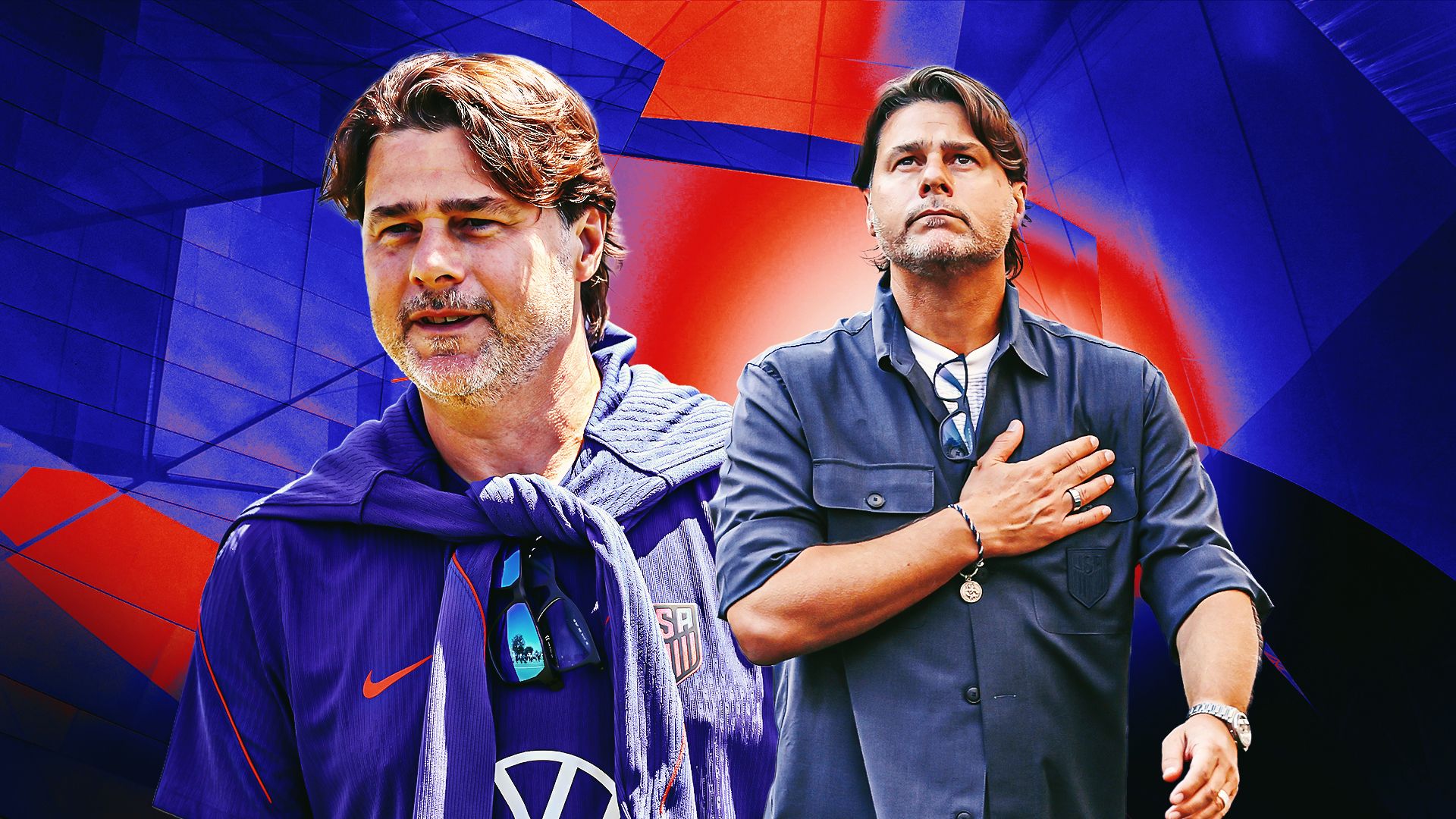
The talent is there. But as teenagers push for USMNT call-ups, Mauricio Pochettino is watching more than what they do with the ball.

  • To all of the teenagers, whether publicly or privately hoping for a U.S. Men’s National Team call-up later this month, manager Mauricio Pochettino has a message: he sees you.

    Cavan Sullivan, Zavier Gozo, Julian Hall, Adri Mehmeti, Mathis Albert, Diego Kochen - the list of rising stars drawing American soccer’s attention goes on. Pochettino is watching, too, and, by and large, he likes what he sees.

    “We are watching everything,” he says. “We are seeing everything. We are being there, with our scouting or, sometimes, us.”

    Pochettino, of course, will ultimately decide who is ready to take that next step. Perhaps now more than ever, teenagers are knocking on the USMNT door, but getting the timing right is hard. Giving a player too much too soon could derail them. Waiting too long could deprive them of crucial minutes and the confidence boost that can launch a young career.

    So, how can these young players show Pochettino they’re ready for international soccer?

    Well, it’s complicated. Few coaches have a better track record with young talent than Pochettino, who points to a few shared qualities in those who reach the top.

    “We need to be careful,” he said on Monday, “because when you are young, of course you need to be confident. You need to have the trust in yourself, the belief that you can perform and you can do well, but the thing is that there’s a limit. The balance is the most important, and one of our responsibilities is to protect these guys.”

    He added: “You need to use your confidence and your abilities to score goals and to perform every day and improve every day and be much better.”

    The big question, then, is which young players will be involved later this month. Friendlies against Peru, Chile, Mexico and Canada are on the horizon and, while they won’t be the last opportunity for American soccer’s teenage stars to break through, they will be the last games of this calendar year. 

    The chance to work with this next generation helped convince Pochettino to return after the World Cup. Now comes the harder part: deciding who is ready and how to bring them through.

    “We are very happy,” he said, “to have all these potential good players, being young and with the possibility to perform and to play.”

  • MEET THE NEXT GENERATION

    Cavan Sullivan Philadelphia Union
    Getty

    Cavan Sullivan and Zavier Gozo believe they’re ready. Pochettino will decide when their USMNT chance comes.

    Sullivan is the poster boy of the next generation and, if the last few weeks are any indication, it’s for good reason. 

    He has three goals in his last three games at just 16 years old. He’s doing this against grown men and, because of that fact, there are many who believe he’s ready for whatever’s next.

    You can count Tim Howard among those believers.

    “In the next four years, there are going to be 115 players that play for the national team,” Howard said on the Unfiltered Podcast. “Who’s better than this kid? Who’s better than this kid that doesn’t deserve an opportunity? I’m not saying he plays every game, but he should be in the conversation to be playing every game.”

    He added: “For all the naysayers out there, I’m not saying to gift this kid something he hasn’t earned on a silver platter. I’m saying we are not Brazil, Argentina, Holland, Spain, England, Germany. We don’t produce these players.”


    Sullivan, for his part, thinks he’s ready. He acknowledges that it may not always be smooth, but he has the belief that he can play and perhaps even contribute to the USMNT.

    “Thinking about that Belgium game, I think I could come into that game on the right side and make a difference,” he told Alexi Lalas’ State of the Union podcast. “You have to believe in yourself. You have to think you can help your team win. Obviously it’s not my team yet, but I’m always dreaming and hoping for call-ups.”

    Gozo is saying something similar. Unlike Sullivan, the then-Real Salt Lake winger was close to making the World Cup squad, having been named to the USMNT’s preliminary list. However, Pochettino deemed it too soon to call in the uncapped Gozo for a World Cup. Gozo has since made the move to Crystal Palace and is eagerly awaiting his own USMNT chance.

    “I do think I deserved to be there. I’m going to be honest,” Gozo told The Late Run. “But obviously it’s the coach’s choice. Maybe he didn’t think I was ready, or whatever it is, but it just put a fire under me to make the next World Cup and show why I should be there.”

    How, then, does Poch know a player is ready? It’s case by case, and it isn’t always simple.

  • WHAT POCH IS LOOKING FOR

    Fulham v Crystal Palace FC - Premier League 2026/27
    Getty Images Sport

    Pochettino believes talent opens the door, but maturity and professionalism will help determine who gets through it.

    As always with young players, there is concern about workload. Well, Pochettino, in particular, isn’t concerned. These are kids, he says. They’re physically able to play the minutes.

    “I know the mindset of the coaches,” he said, “that sometimes the coaches say, ‘Oh, I have a 17-year-old guy that plays in the MLS, but when the national team calls, we say no because they need to rest’. If you’re 17, and you need to rest? Yeah, we have a big problem.”

    Most of his concern, then, is the mental side. The first thing he looks for is maturity, and that doesn’t just apply to the on-field side. These players obviously have talent, but how do they express that talent in their everyday life? Do they continue to work hard? Are they trying to get better? Do they treat those around them the right way?

    “I think respect is the most important thing, and they need to be respectful,” Pochettino said. “And of course, we want players with talent. We want players who feel brave, feel confident, but not feel things they don't show. I think you are only entitled to talk a little bit out of order if you are Messi. 

    “If you win eight Ballon d'Ors, okay, you can talk with a certain arrogance, but even then, … if you are young and you start to talk that you can play here, you can play there, or you can play. I say, I don't believe that this is the right way to build your career in the best way, no. And that is why we need to be careful.”

    Players also need to be evaluated case-by-case, but the opportunities available matter, too. Some positions are more open than others, with a greater need for new blood. There is no one-size-fits-all answer.

    Take goalkeeper, a position Pochettino was asked about: there are plenty of options, but only one spot on the field.

    “I think we are going to give some [opportunities] to some new players, not only in that position, but in different positions,” he explained. “We’ll have the possibility to add a new player and to give them the possibility. I think for us now it’s about not only thinking about today, but also to think about the future and 2030.”

    The 2030 World Cup isn’t the only thing on his mind. The Olympic Games are right around the corner. There will soon be a Gold Cup and, perhaps, a Copa America. All will require thought and collaboration between Pochettino and Steve Cherundolo, who is leading the U.S. U-23s.

    The hope is to give a few players senior caps to prepare them for an Olympic run with that U-23 group. Don’t expect the U.S. to roll out U-23 teams exclusively for the next few months as Pochettino looks to lean even more on some of his key veterans.

  • FINDING BALANCE IN THE TEAM

    imago-sport-1079074363.jpg
    STEINSIEK.CH

    Veterans such as Chris Richards will help guide the USMNT’s next generation through the transition.

    For all the calls to throw the kids into the deep end, bringing them through needs to be gradual and planned.

    That was a talking point heading into this past World Cup. After missing out in 2018, the USMNT largely burned it down and rebuilt, moving on from veterans who might have had something left to give. It worked, of course: many of those youngsters became USMNT pillars. Still, one question lingered: what lessons did they miss without those veterans around?

    That debate intensified before and during the 2025 Gold Cup, when Christian Pulisic and Yunus Musah opted out for rest. Former players, rightly or wrongly, questioned their commitment. Underneath that criticism was a broader question: had moving on from the old guard so quickly left something missing?

    Either way, there will be little casting away in the immediate future. While some veterans will be ushered out, it will not be a sweeping process. It will be a more methodical one, which benefits newcomers but also veterans, too.

    “I'd say it's a continuation of the last two cycles I've been a part of, just because I just know that's how it works,” USMNT star Chris Richards told GOAL. “It's not like you just completely sack off the team that was at the World Cup and move on from there. 

    That continuity doesn’t mean it all feels the same, though. For Richards, having Zavier Gozo alongside him at Palace offers a different perspective: that of a young player chasing his first USMNT cap. Seeing what that goal means to Gozo has made the process feel refreshing.

    Pochettino sees it that way, too, and he sees players like Richards as crucial to helping set the tone for all of the newcomers that will be looking to stake their own claim to USMNT spots.

    “We cannot bring a whole squad of young players, no, because they need to have some guys with experience already competing,” Pochettino said. “Yes, we are going to do a mix. Our idea is we are going to do a mix between experienced players… I think experienced players and young players can fit together and start to work and see how the young kids start to manage the pressure to play in the first team in some really nice games.”

  • WATCHING IT ALL

    imago-sport-1077461769.jpg
    SOPA Images

    From match performances to everyday training habits, Pochettino is looking for signs that young players - like Julian Hall - are ready.

    Throughout his media availability, Pochettino reiterated the point: he’s watching everything, mostly the little things. Those, he says, are what really let him know if a player is or isn’t ready for the call that will, ultimately, change their lives.

    “It's important not only to see them or watch the games, the performance, but also what they are talking about in the media, how they behave with the opponent, how they behave with their teammates,” he said. “I think it's so important. We want to be a very good team. We want to build something different and be competitive.”

    That means paying attention to how they speak to coaches, when they arrive at training and how long they stick around afterward. For Pochettino, those everyday habits help reveal whether a player is meeting the standards he expects. His message to those hoping for a call? All of it matters, and he’s keeping track.

    Soon enough, he’ll be able to send the message himself - though that comes with its own unique set of challenges. 

    On the club level, he was able to deliver it gradually. He was also able to watch players grow every day until he knew exactly when the time was right. He doesn’t have a similar luxury with the national team, where training sessions are few and camps are spread out. 

    Pochettino acknowledged that the player he sees in one camp could be completely different by the next, which is why a player may not quite be ready for September, but could be a star come March.

    The next calls come in a few weeks, but these decisions will shape the entire 2030 cycle. Young players are pushing for places. Veterans still have something to give. It’s up to Pochettino to find the balance - and know when the next generation is ready.

    “We need to create a group of players that are really being professional and competing in the way that we expect,” he said. “They all need to compete with the talented players and young players that we have ahead.”