The moment Ferran Torres roofed his shot into the net to win the World Cup, he joined one of soccer’s most exclusive groups. Only three other living men - Geoff Hurst, Andres Iniesta and Mario Gotze - have scored an extra-time winner in a World Cup final. Only they know the euphoria that comes with delivering the game’s biggest trophy on its biggest stage.
“You also need to speak to [Andres] Iniesta,” Gotze told GOAL with a laugh a month before Torres added his name to that list.
Even now, 12 years later, there isn't a day that goes by when Gotze doesn't get asked about his own moment at the 2014 World Cup. It came when he was 22 years old. On that night in Brazil, Gotze became legendary. On that night, he scored the biggest goal of his life. On that night, he won a World Cup for his country against Argentina, the same opponent Torres just brought down with a goal seven minutes earlier than Gotze's 113th-minute finish.
"Looking back," he says, "I mean, it's 12 years ago already. It blurs over time a bit."
In total, 497 men have gotten their hands on that big gold trophy. A new group of 26 Spanish stars lifted it on Sunday, earning their own invite to the historical club. Thousands have tried and fallen short, while millions of kids began their journey with the ball by imagining themselves with a World Cup trophy raised above their heads. The reality is that so few people know what that feels like, and those who do struggle to describe it.
That's because the World Cup is more than a mere trophy. It's a symbol of both achievement and hope. It's a unifier of countries, a statement of success and a moment in history. It's so much more than a soccer trophy; it's a moment that changes the trajectory of lives, both for those on the field and those watching at home. Everyone remembers where they were when they see their team win a World Cup, and every player lucky enough to lift it remembers exactly what it felt like the moment that the dream became real.
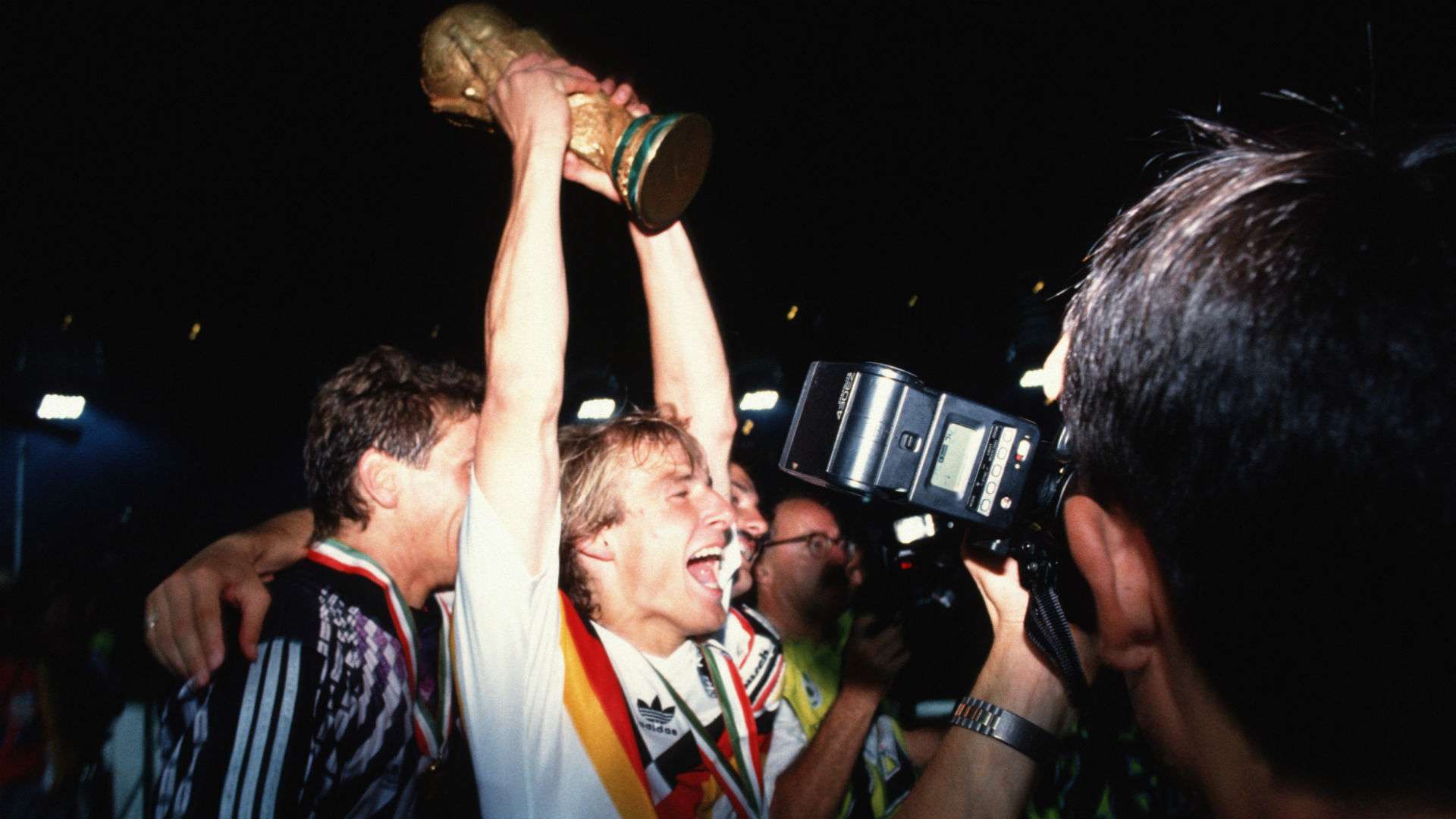
"When you actually, with your team, win the World Cup, you realize that it's something that will be with you for the rest of your life," Jurgen Klinsmann, a World Cup winner in 1990 with West Germany, tells GOAL. "When you grow up as a kid, you always kick the ball around, and you pretend to win a World Cup one day, but you can never imagine what it's like when you one day have the chance to actually win a World Cup yourself."
So what does that moment feel like? This is a look at how life changes, in the words of the men who have won the world's biggest trophy.


.png?quality=60&auto=webp&format=pjpg&width=1320)
.png?quality=60&auto=webp&format=pjpg&width=1320)
%20(3).png?quality=60&auto=webp&format=pjpg&width=1320)
%20(3).png?quality=60&auto=webp&format=pjpg&width=1320)
%20(1).png?quality=60&auto=webp&format=pjpg&width=1320)