
.png?auto=webp&format=pjpg&width=3840&quality=60)
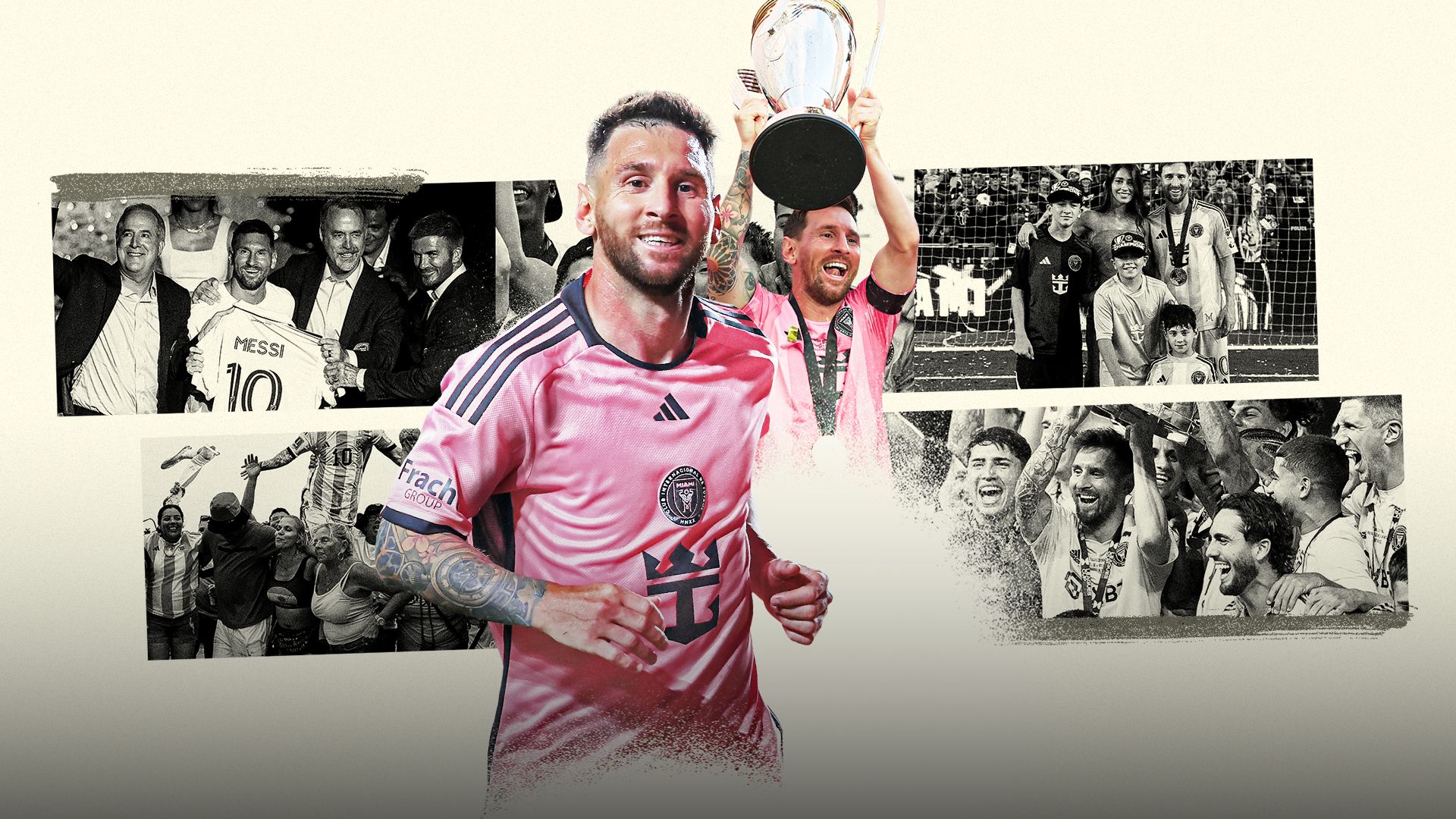
The sun beats heavily over the highway that borders the DRV PNK Stadium. It’s noon in Fort Lauderdale and the air vibrates as if someone had placed an invisible iron over the asphalt. Cars drive by with loud music, many with sky-blue and white flags stuck to their windows. On the nearby walls, Lionel Messi’s murals are already part of the landscape: One shows him wearing Inter Miami’s pink jersey, another in the sky-blue and white Argentina shirt lifting the World Cup. Reggaeton plays in the bars, where it’s enough for someone to mention the word ‘Messi’ for a smile, a comment, or a ‘Vamos Argentina!’ to appear. This is Miami.
It’s the place where borders melt. Where a Venezuelan can sell Argentine empanadas to a Colombian while, on the screen in the back, Messi decides a match against Orlando City. But since the No.10 arrived, something changed in the city.
Soccer, that sport that for years had been merely an immigrant curiosity, has become part of everyday language. ‘It’s Messi’s city,” many say without irony, because what the Argentine captain has generated in South Florida has no precedent.
His arrival at Inter Miami not only revolutionised MLS, it transformed the sports identity of an entire region. Pink jerseys sold out within hours. Ticket prices jumped from $30 to over $400. Flights from Buenos Aires to Miami increased 25 per cent during the first months of his stay.
But the most impressive thing is the symbolic phenomenon: Lionel Messi, the boy born in Rosario who conquered the world, found in the United States a second footballing homeland. And that detail, that familiar environment, that emotional territory, could be key for him succeeding again at the 2026 World Cup.


.png?quality=60&auto=webp&format=pjpg&width=1320)
.png?quality=60&auto=webp&format=pjpg&width=1320)
%20(3).png?quality=60&auto=webp&format=pjpg&width=1320)
%20(3).png?quality=60&auto=webp&format=pjpg&width=1320)
%20(1).png?quality=60&auto=webp&format=pjpg&width=1320)


