
Every sport has its own unique lingo - its words that are often exclusive to the game being played. If they are used in regular discourse, they can seem a bit forced and uncomfortable.
Soccer reaches the most people out of all sports (numbers in the billions), so it's easy to assume that the vocabulary is incredibly extensive. From simple words that replace the names of objects or equipment to more technical phrases that explain plays in the game, there is a second language that simply cannot be ignored.
With the World Cup barely two weeks away, it's time to go to school and have casual fans learn these specific phrases and for those who know them to refresh themselves on what will be heard thousands of times over in South Africa.
Here's a random selection of 15 that will constantly be on the lips of commentators during the month-long tournament.
1. Getting booked(verb) - When a player commits an offense that warrants a yellow or red card, the referee will produce and show said card, then record the players name and number in his little book. For examples, watch Argentina.

2. Against the run of play (clause) - This is what happens when a team scores a goal when the other team was dominating the match. Soccer is a game about possession and control, and when you score a goal against the run of play, you clearly aren't the better team at that point in the match.
3. Offside(noun) - Probably the most confusing of all the game's rules, offside occurs when a player strays past the opposing team's deepest defender and receives the ball. The easiest way to describe it is cherry-picking, but that doesn’t really do it justice as even longtime admirers of the sport struggle with it sometimes. Simply put, if you can figure out offside, you deserve numerous gold stars and a box of freshly-baked cookies.
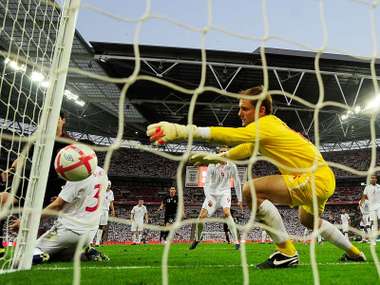
4. The onion bag, or bulging of(noun, verb) - Used far too often by ESPN commentator Tommy Smyth, this is a genius reference to the net the goalkeepers try to defend. When it has been 'bulged,' well, someone has put the ball into it and caused it to pull at the sides.
5. Advantage, the playing of(verb) - This occurs when one player commits a foul, but the team who was fouled tactically still can make something from the situation and are pushing forward. The referee decides to 'play the advantage' in order to keep the game flowing rather than stopping for a free kick. Only the best zebras do it well.
6. Fixture(noun) - This is a game, a match, what's on the schedule. It seems to be more related to mounting shelves or that new ceiling fan, but it's what the soccer world calls a team's games.
7. Square ball(noun) - Bust out your rulers, everyone...we're getting mathematical. When one player plays a square ball to another, they are simply passing the ball parallel to the goal line, instead of forward or backward.
8. Near & far post(nouns) - Simple stuff here: near post is the big white stick in the ground that is closest to where the ball is currently situated. The far post is the goal post that is further away.
9. Handball(verb or noun) - If you're Irish, you know what this is. English, too. Unlike American 'football,' you aren't allowed to touch the ball with any part of your hand or arm. If you do, the ref will blow the whistle and call a foul and if it happens inside your 18-yard area (mini-definition: the big box that surrounds each net). It's a penalty kick for the other team.
10. First touch, or any touch thereafter(noun) - First touch is a very important part of being a successful soccer player. It is also quite literal as it is the first touch a player has on the ball when receiving a pass or cross. Players with excellent first touch often times make defenders miss. For examples of this, watch Brazil.
11. Tracking back(verb) - In soccer, even if you play a forward position, you still need to play defense. Tracking back is when a player who is advanced up the field will chase the ball as their opponents move towards the other end of the pitch. Lazier forwards often to tend to avoid this honorable act.
12. Knock or niggle(noun) - Players don't get hurt, they take knocks. They aren't hampered by injuries, they suffer from niggles. These are simple replacement words for when a tackle is a bit more painful than expected.
13. Stoppage time(also called injury or added time) (noun) - The clock never stops ticking in soccer and, because of this, the referee keeps track of the seconds that go by when the ball goes out of play or if there is an injury. Then he determines how much should be added to the end of each half. It's usually between two and four minutes.
14. Cheeky(adjective) - Used in numerous instances. When something is described as cheeky, it's usually to show that the player did it (a foul, shot, goal, pass) with intention and that it's their way of showing off their skill or lack thereof. Often subterfuge or slight of hand is involved.
15. WAG aka Wives and Girlfriends(noun) - Almost as important as the players themselves, the WAG community is an exclusive group populated by the best players' significant others. WAG you know: Victoria "Posh Spice" Beckham. She's the queen of the WAGs. There are many more just like her.
And there you have it. 15 phrases you'll hear repeatedly at this summer's World Cup in South Africa. There are a ton more, but this is a solid base that should get you started and will maybe reaffirm those you already know.
Good luck, you may need it.
The 2010 World Cup is fast approaching, so keep up to date with all the news at Goal.com's World Cup homepage and join Goal.com USA's Facebook fan page!
Soccer reaches the most people out of all sports (numbers in the billions), so it's easy to assume that the vocabulary is incredibly extensive. From simple words that replace the names of objects or equipment to more technical phrases that explain plays in the game, there is a second language that simply cannot be ignored.
With the World Cup barely two weeks away, it's time to go to school and have casual fans learn these specific phrases and for those who know them to refresh themselves on what will be heard thousands of times over in South Africa.
Here's a random selection of 15 that will constantly be on the lips of commentators during the month-long tournament.
1. Getting booked(verb) - When a player commits an offense that warrants a yellow or red card, the referee will produce and show said card, then record the players name and number in his little book. For examples, watch Argentina.
2. Against the run of play (clause) - This is what happens when a team scores a goal when the other team was dominating the match. Soccer is a game about possession and control, and when you score a goal against the run of play, you clearly aren't the better team at that point in the match.
3. Offside(noun) - Probably the most confusing of all the game's rules, offside occurs when a player strays past the opposing team's deepest defender and receives the ball. The easiest way to describe it is cherry-picking, but that doesn’t really do it justice as even longtime admirers of the sport struggle with it sometimes. Simply put, if you can figure out offside, you deserve numerous gold stars and a box of freshly-baked cookies.
4. The onion bag, or bulging of(noun, verb) - Used far too often by ESPN commentator Tommy Smyth, this is a genius reference to the net the goalkeepers try to defend. When it has been 'bulged,' well, someone has put the ball into it and caused it to pull at the sides.
5. Advantage, the playing of(verb) - This occurs when one player commits a foul, but the team who was fouled tactically still can make something from the situation and are pushing forward. The referee decides to 'play the advantage' in order to keep the game flowing rather than stopping for a free kick. Only the best zebras do it well.
6. Fixture(noun) - This is a game, a match, what's on the schedule. It seems to be more related to mounting shelves or that new ceiling fan, but it's what the soccer world calls a team's games.
7. Square ball(noun) - Bust out your rulers, everyone...we're getting mathematical. When one player plays a square ball to another, they are simply passing the ball parallel to the goal line, instead of forward or backward.
8. Near & far post(nouns) - Simple stuff here: near post is the big white stick in the ground that is closest to where the ball is currently situated. The far post is the goal post that is further away.
9. Handball(verb or noun) - If you're Irish, you know what this is. English, too. Unlike American 'football,' you aren't allowed to touch the ball with any part of your hand or arm. If you do, the ref will blow the whistle and call a foul and if it happens inside your 18-yard area (mini-definition: the big box that surrounds each net). It's a penalty kick for the other team.
10. First touch, or any touch thereafter(noun) - First touch is a very important part of being a successful soccer player. It is also quite literal as it is the first touch a player has on the ball when receiving a pass or cross. Players with excellent first touch often times make defenders miss. For examples of this, watch Brazil.
11. Tracking back(verb) - In soccer, even if you play a forward position, you still need to play defense. Tracking back is when a player who is advanced up the field will chase the ball as their opponents move towards the other end of the pitch. Lazier forwards often to tend to avoid this honorable act.
12. Knock or niggle(noun) - Players don't get hurt, they take knocks. They aren't hampered by injuries, they suffer from niggles. These are simple replacement words for when a tackle is a bit more painful than expected.
13. Stoppage time(also called injury or added time) (noun) - The clock never stops ticking in soccer and, because of this, the referee keeps track of the seconds that go by when the ball goes out of play or if there is an injury. Then he determines how much should be added to the end of each half. It's usually between two and four minutes.
14. Cheeky(adjective) - Used in numerous instances. When something is described as cheeky, it's usually to show that the player did it (a foul, shot, goal, pass) with intention and that it's their way of showing off their skill or lack thereof. Often subterfuge or slight of hand is involved.
15. WAG aka Wives and Girlfriends(noun) - Almost as important as the players themselves, the WAG community is an exclusive group populated by the best players' significant others. WAG you know: Victoria "Posh Spice" Beckham. She's the queen of the WAGs. There are many more just like her.
And there you have it. 15 phrases you'll hear repeatedly at this summer's World Cup in South Africa. There are a ton more, but this is a solid base that should get you started and will maybe reaffirm those you already know.
Good luck, you may need it.
The 2010 World Cup is fast approaching, so keep up to date with all the news at Goal.com's World Cup homepage and join Goal.com USA's Facebook fan page!