+18 or +21, depending on state | Commercial Content | T&C's Apply | Play Responsibly | Publishing Principles
Jurgen Klinsmann and Mauricio PochettinoGetty Images

'Ready to go further in a World Cup than ever before' - Wednesday Convo with Jurgen Klinsmann on Mauricio Pochettino, managing USMNT and why there's reason to believe

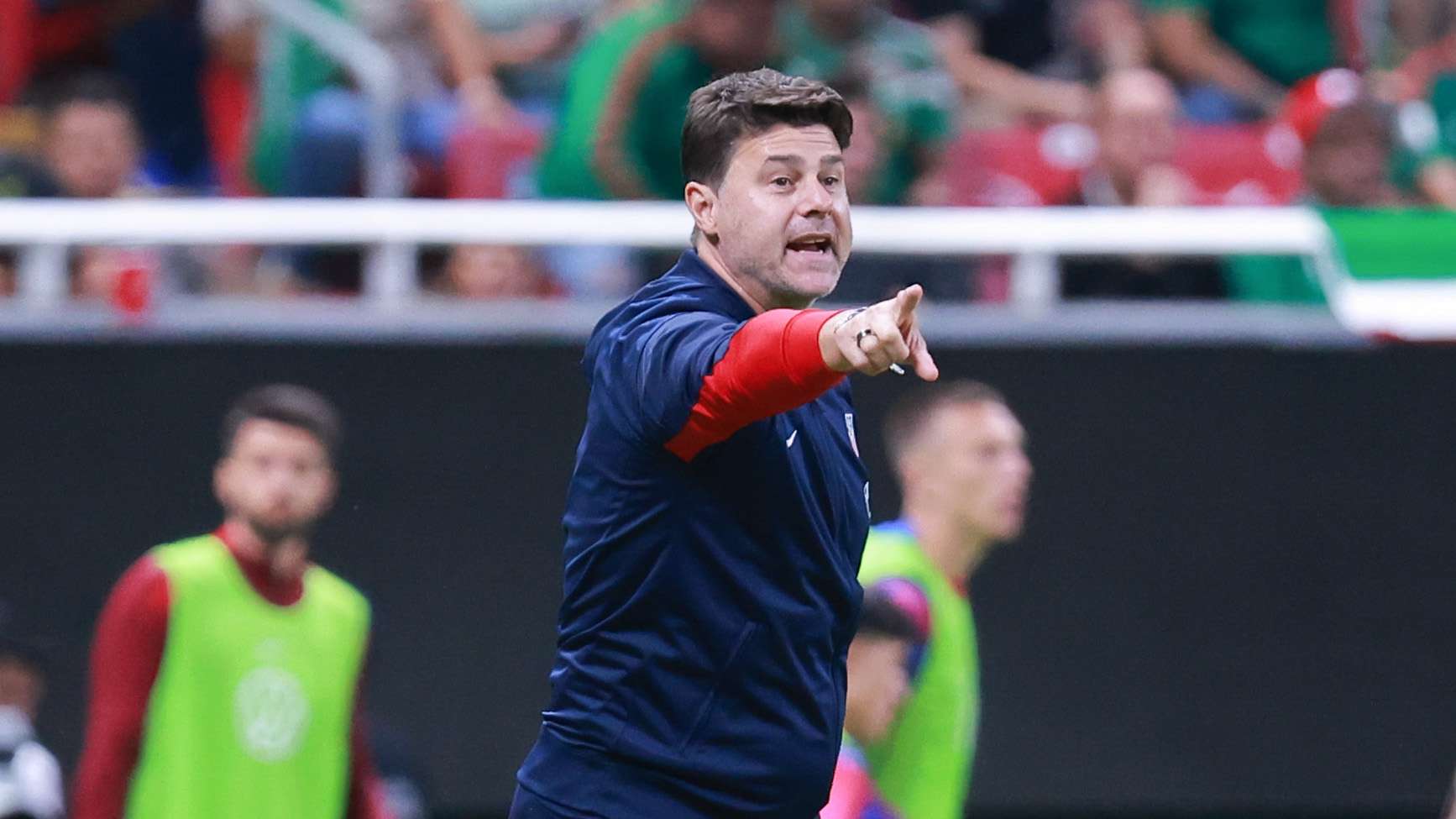
There are only a handful of people who can properly understand the weight that has been placed on Mauricio Pochettino's shoulders. Maybe less than an handful. That's because Pochettino wasn't just hired to be the U.S. men's national team head coach, but also the face of men's soccer in America.

He's a big-name, experienced, successful coach brought in to both redefine a sport and culture while navigating all of the quirks and nuances that make this sport in this country it so unique. Oh, and he's also doing so with a World Cup looming.

It does sound familiar, doesn't it?

While no one can quite speak to the job ahead for Pochettino, who will lead the U.S. into the World Cup on home soil in the summer of 2026, there is one man who can offer first-hand perspective on what it's like to be appointed as American soccer's game-changer. There is one coach who knows what it's like to bring a combination of fame and experience into that locker room, hoping to use it to change the game for the better.

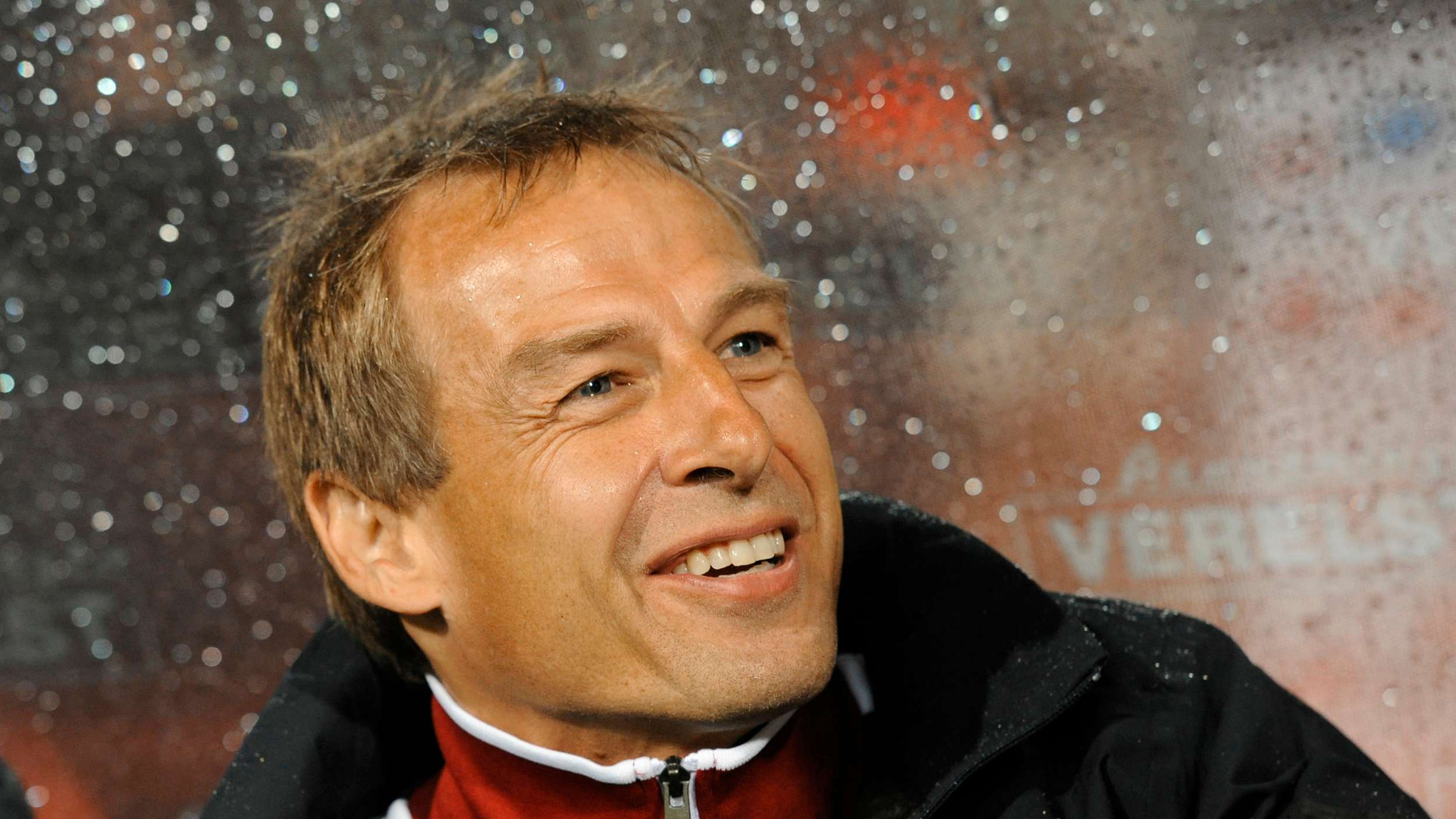
That man, of course, is Jurgen Klinsmann. And just like everyone else who follows American soccer, the former USMNT coach is paying close attention, eager to see where Pochettino can take this team. Klinsmann, who led the U.S. from 2011-16, was one of the coaches that laid the foundation for this program - and even in an ever-evolving national team, that foundation is solid. Parts are always being painted over or chipped away, of course, but the base remains.

And even though the Pochettino era is just two games in, Klinsmann believes the foundation is stronger than ever before for a coach who has the skill, reputation and belief to reach new heights.

"It's a really fulfilling job," Klinsmann tells GOAL. "It's fulfilling because you share it with a lot of your colleagues, your staff and the fans. You realize that it means a lot to not only fans but to people all over the United States, whether they coach youth soccer or work in the professional game. I've never seen so many text messages on my phone in my life as the night we beat Mexico in Mexico City in 2012. I realized at that moment, 'Woah, that's how much it means to American soccer people to finally beat Mexico on their ground.'

"Year by year, I learned a lot and, for Mauricio, it's an even faster learning curve because he has a deadline. The deadline is June 2026, opening game. He has to prepare them quickly, in a very short amount of time, in the best way possible."

And that's the mission, plain and simple. U.S. Soccer and Pochettino have publicly outlined their objectives for 2026: reach the quarterfinals of an expanded World Cup, at minimum. More if possible. And Klinsmann thinks that's achievable.

"I think every one of the coaches that had the opportunity over the last few decades, if it's Bruce [Arena], if it's Bob [Bradley], if it's now Mauricio, if it's Gregg [Berhalter], you want to have a feeling that this country is ready to go further in a World Cup than ever before," Klinsmann said. "I think a lot of players now share that feeling. They feel it's doable."

GOAL sat down with Klinsmann to discuss Pochettino, the USMNT coaching role, and all that comes with it in the latest Wednesday Convo.

NOTE: This interview has been lightly edited for brevity and clarity.

  • U.S. Men's National Soccer Team Head Coach Jurgen Klinsmann - Press ConferenceGetty Images Sport

    ON THE USMNT COACH'S RESPONSIBILITIES

    GOAL: When you're USMNT coach, you're not just a coach, you're also a figurehead and a representative of American soccer. What's that like?

    Klinsmann: I looked at it as a huge learning experience, but also an opportunity to build something. National team programs are a little bit different than club teams and it depends a lot on what you're doing and your relationship with the people that lead them - the Federation. I had a fantastic relationship with Sunil Gulati and Sunil also wanted stuff to happen off the field. He wanted to change things in coaching, education connecting with the college system, connecting globally. He wanted the program to measure itself with the Europeans, the South Americans, and so he had a bigger picture view. I shared that.

    You can work 36 hours a day in it and go crazy or you can limit it to a few hours and say, 'I just focus on the main things'. I think for Mauricio, the focus is on the main things. "I have the team now under my guidance, and I have to prepare them for the biggest World Cup in history with 48 teams, so I have to figure out what is the demand once the World Cup starts. How do I prepare that team? What are the opportunities I get in terms of friendly games?" Because that's one problem, obviously, with Mexico and Canada, too, is you don't play real competitive games, really. It's tough. That's what I was fighting for all the time. I said, "Send me to Europe, send me to South America, let me give me a Copa America." I was begging them all the time.

    It's a fascinating job. It's a job that fills you with a lot of pride because it's a unique country. Everybody is looking at the United States, no matter if it's in an economical way, in political way or in an athletic way. This country is discussed up and down everywhere in the world, good sides and the bad sides. It is a huge honor at the end of the day, too, and I hope that he takes it all in, that he enjoys every day of it and, obviously, we keep fingers crossed that he's making it successful as well.

  • Advertisement
  • US head Coach Jurgen Klinsmann smiles duAFP

    ON THE FIRST CAMP

    GOAL: Pochettino just finished his first camp. What were your first camps like and how did you set your expectations?

    Klinsmann: My own expectations are always the same: I want to go into every game and win it. No matter if I play in Italy or Brazil or wherever, I want to win the game. I'm not going there to tie. My approach was always that when we go to Honduras or we go to Mexico, we try to win it, and then if, in the end, it's a tie, then it's a tie. You get a lesson, which we did get a couple of lessons against Brazil, for example, and Argentina! Then take those lessons and understand the difference between those situations. I had to learn these lessons over those couple of months quickly.

    I sensed it then, that in a certain way, it was always OK to get a tie away from home. I couldn't live with that. It was not me. No, we go and if you lose, which we did in Honduras again, then we lost it, that's fine. What's the difference between zero and one point? It's not much difference, but if I can go for three points and bring home three points, that equals three ties!

    I tried to change that. I tried to tell them, "Listen, we are good enough to win anywhere we want to if it's the right day and we do what we want to do and we just try it." I wanted to build a higher level of confidence in a certain way.

  • Howard Klinsmann USMNTUSA Today Sports

    ON COACHING IN AMERICA

    GOAL: What was it like leading a country as unique as the U.S., both on and off the field?

    Klinsmann: What makes the U.S. job so fascinating is that you have to deal with so many different characters and backgrounds of players. It's just fantastic. You get the kid from Texas, you get the kid from New Jersey, you get the California kid...It's just so cool, you know?

    Then, when you are in camp, I enjoyed camp so much with these guys, because they were all characters. Like DaMarcus Beasley is such an entertainer. Oguchi Onyewu... you had so many fascinating characters in there like the Kyle Beckermans and Nick Rimandos of the world. You get the people from MLS joining the European group and so on. I think Beasley played in Mexico at that time, too.

    You just want to hug them all day long. It's just a different chemistry. It's a chemistry of people that just want to do something different from what was done before. We all tried to do it a bit differently.

  • Mexico v United StatesGetty Images Sport

    ON QUALITY COMPETITION

    GOAL: You really pushed for the USMNT to play high-level games. That'll be hard without World Cup qualifying. How should the U.S. handle it

    Klinsmann: For Mauricio, the challenge still remains the same old story: for Mexico, Canada and the U.S. to get highly competitive games every couple of weeks. September, October, and November, the Europeans and South Americans, they beat the sh*t out of themselves. You watch (Lionel) Messi playing in Bolivia or in Colombia, what they do to him, but he's on the field. He goes there and he knows he's getting tortured, but he's going there because he's playing for his country, so the meaning that it has the national team is huge. This is something that you want the U.S. to reflect as well.

    Mexico, I think they know it. They feel it a bit more intense, especially when they play in Mexico. It's a different volume. I always told Sunil, "Let us play Mexico at least once or twice a year, in Mexico and not in the U.S." But obviously there's the financial thing, so it didn't make sense.

  • United States v Trinidad & Tobago - FIFA 2018 World Cup QualifierGetty Images Sport

    ON DUAL-NATIONALS

    GOAL: Dual-nationals were a big priority and success for you, as they were for Gregg Berhalter. What is that process like as coach and how is it unique in America?

    Klinsmann: For me as a first-generation immigrant - obviously my wife is American and feels it and has it deep in her DNA - but almost everyone, in a certain part of his life has been an immigrant. So I saw it as a natural part of my work to ask people that have the dual citizenship situation to listen to their heart and make up their mind their own way. Once they do, they have to give 1,000 percent.

    There's often a discussion saying that somebody coming from the outside will never have those deep emotions like somebody who grew up here in the country. I always say that 50 percent of his parents, and most likely with us, it was the dad coming from a military situation, made those kids. That dad, he's 1,000 percent American, actually fighting for his life, for his country, in real life.

    It's always something that you have to try to open up to these players and give them the thought process, and give them a little push and say, "Talk it out at home, but if you come to us, we would be thrilled." Then the performance is what matters. You have to be good. You have to be better than the other one, than somebody I leave behind in that moment. If there's somebody else better at that moment, you don't get taken to the World Cup. That's the job of a coach: to make the decisions.

  • Pulisic Milan Brugge 22102024Getty Images

    ON THE ROLE OF CLUB TEAMS

    GOAL: You advocated for players to play in Europe, and now there are so many USMNT stars on big teams. Some are thriving, some are struggling. How do you view that progression?

    Klinsmann: It makes me just happy because you have to challenge yourself no matter what you're doing and what element you're doing it in. You have to challenge yourself and look upwards and say, "Where's the limit?" These players now play all over Europe, and they find their way through.

    They come off the bench sometimes, they have injuries, and then they suffer, but it will toughen them up. It will make them stronger as people. It will make them look at things with a bigger picture than if it would go the easy route and just play comfortably in a team where they are guaranteed their starting spot, where maybe they are the big fish in a small pond.

    The fascinating part of soccer in our country is it will melt with MLS. MLS has done its own fairytale story and has done a fantastic job over these three decades. All leagues have their place here but, ultimately, if you get the opportunity to go to Europe to test yourself out ... you need to have the guts and do it. If it doesn't work out, it's cool, no problem. There are many reasons why it doesn't work out. Sometimes you need a coach on your side. Maybe it's not meant to be for you, and that's OK.

    Come back home and play in the U.S., play in MLS, which is at a level where every year is higher and higher. Now it's a level that I think is better than Liga MX. It's grown organically with the help of a lot of good people, but this level of competition that you experience in Europe and the leagues there will prepare you far better for a World Cup, because you're out of your comfort zone. When you play the World Cup, you will be out of your comfort zone, even if it's the World Cup in your own country! Those games have high intensity, so you have to figure out a way to play not only one or two good games, but hopefully four, five, or six.

  • Mauricio Pochettino USMNT MexicoGetty Images

    ON USMNT EXPECTATIONS

    GOAL: What is your hope and expectation for the USMNT going forward?

    Klinsmann: I said in Brazil, if you are able to knock out Ghana and Portugal in the group stage, why shouldn't we knock out Belgium or whoever else in the knockout phase? I think that the big step for the U.S., and for Mexico too, is to have this extreme desire and belief that you do the same job in the knockout phase that you already do in the group.

    It's something that always kind of bothered me because I thought we should have beaten Portugal. If it wasn't for the last-minute goal, we would have had six points ahead of Germany in that group. We tied, Germany win that group, but when you play big nations, the difference between where they go in the final four or final eight in that tournament is that they are capable of believing, in that specific timeframe of a World Cup, that they will go far.

    It's a mental aspect of the game. The physical aspect is controlled by the club teams and the club season anyway, because they play in Europe and they play all over, but they have the experience to understand the different levels and the different types of games.

    We played Italy and Clint scored the goal in Italy, so we won 1-0. I said to them afterward in the locker room, "Sh*t, guys, we just beat Italy!" Yes, it was a friendly game, but it's not for those nations. For them, every game feels like a World Cup.

    I think the foundation is there from all the coaches that worked the last 30-40, years, especially since the '90 World Cup and qualifying with the Paul Caligiuri goal. Everybody that was fortunate enough to work with the national team program has been part of that process. But I think now, for Mauricio, the biggest task is to make them believe that they can go into the quarter and semifinals. That is the big step.