+18 or +21, depending on state | Commercial Content | T&C's Apply | Play Responsibly | Publishing Principles
Copa America final pre-match chaosGetty Images

CONMEBOL made a mess of Copa America, marring the summer soccer in the U.S. two years ahead of the World Cup

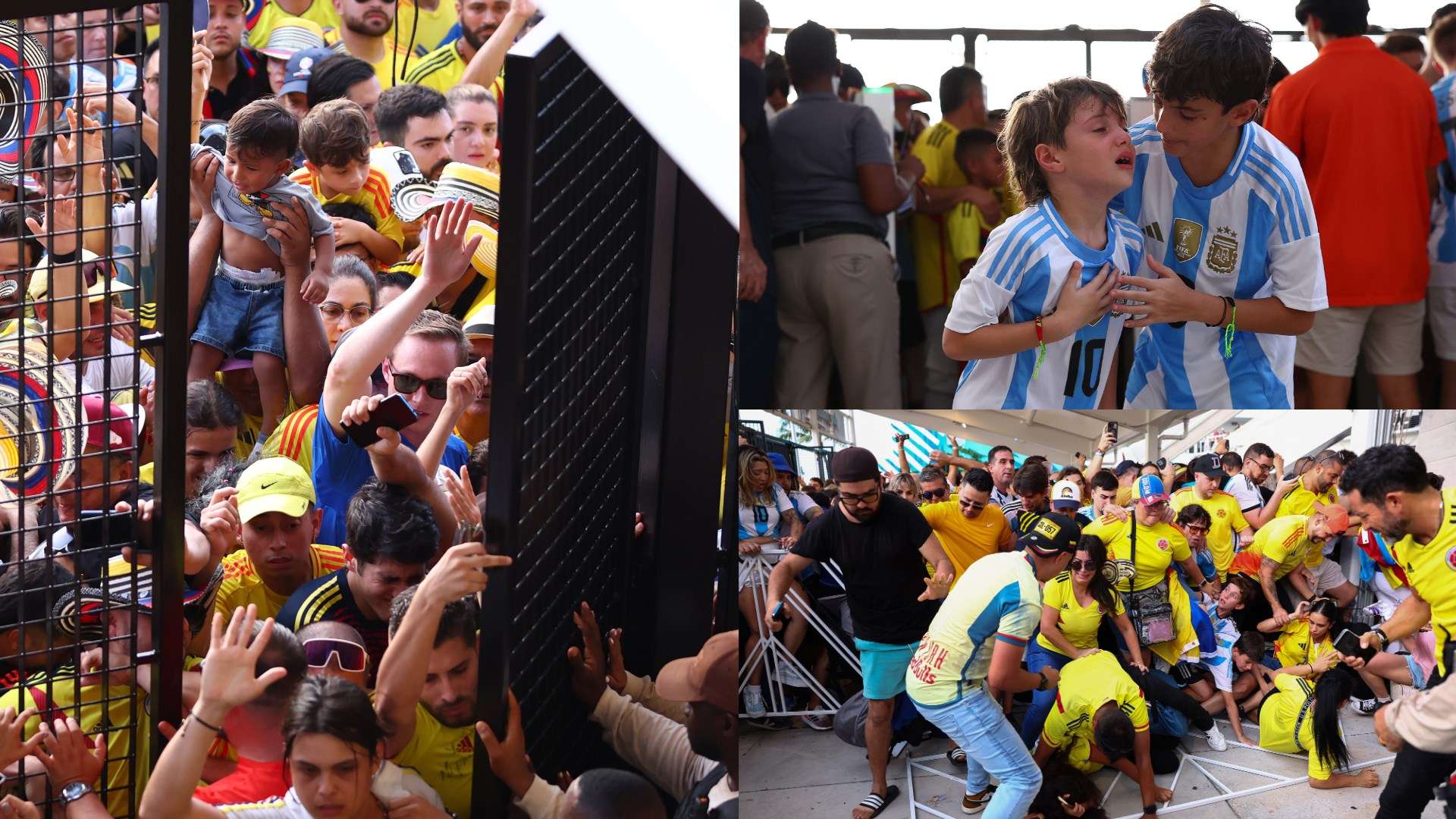
It became abundantly clear over three hours before kick off that something very troubling was developing at Hard Rock Stadium before the Copa America final in Miami Sunday night. While one group of spectators rushed the stadium, other fans were stuck outside gates - entrances that should have already been opened and crowds thickened before the barriers.

A few fans crept in, media members were allowed through, as emotions escalated. An 8 p.m. scheduled kickoff for the Argentina-Colombia match became 8:30. Then 8:30 became 8:45. Then 8:45 became 9:15. Lionel Messi didn't tap the ball back to his teammate until 9:22.

Some fans started climbing over fences to get in. Multiple reports said that an estimated 7,000 people without tickets gained entry to the stadium, and prior to kickoff, fans were crowding the aisles and walkways. Security personnel tried to clear those areas once the game started, and then were checking to see if fans without seats had tickets. Police officers were seen placing handcuffs on a fan with a Colombia flag on a ramp that leads to the stadium’s seats.

USA Today reported Miami-Dade police have made "10-15 arrests" ahead of kickoff. Miami-Dade Fire Rescue arrived to provide supports on the scene, but not before tensions rose.

Miami-Dade County Mayor Daniella Levine Cava and chief public safety officer James Reyes then released a statement during the game saying the county assigned more than 550 police officers to the stadium detail, plus other personnel from neighboring departments.

“Let’s be clear: This situation should have never taken place and cannot happen again,” they said in the statement. “We will work with stadium leadership to ensure that a full review of tonight’s events takes place immediately to evaluate the full chain of events, in order to put in place needed protocols and policies for all future games.”

The chaos ahead of the final was the culmination of a series of issues throughout the 32-match tournament, from complaints about the playing surfaces to criticisms of officials and concerns about player safety.

And in an unfortunate reality, the Copa America final kicked off in a way befitting the events of the last month. This has been a seminal moment for soccer in the United States. This is, effectively, a launchpad for the 2026 World Cup, the dress rehearsal before the primetime show. And while there have been many points of excitement - good soccer and passionate fans chief among them - it has been ultimately marred by questionable decisions and terrible mismanagement.

What should have been a celebration of soccer's staying power in North America will now be remembered for CONMEBOL's failures as organizers as much as for Argentina's ultimate victory on the pitch. FIFA must take note ahead of the 2026 World Cup.
  • usa-team photo-concacaf nations league-20240324(C)Getty Images

    CONMEBOL vs U.S. Soccer

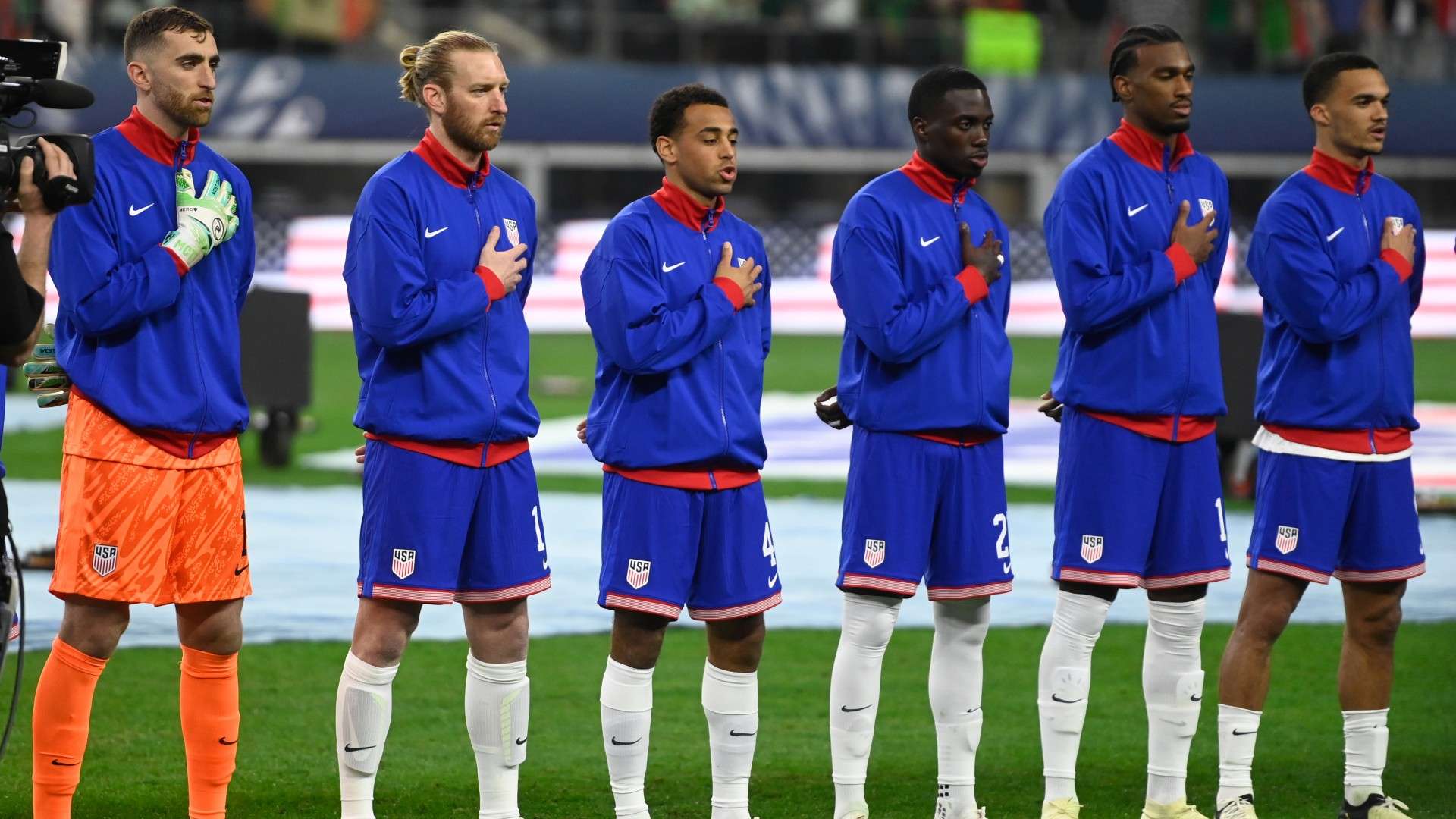
    It is worth, first of all, identifying who was making the decisions. It was announced rather hastily that this iteration of the Copa America would take place on U.S. soil. At first, it seemed a shrewd plan. After all, the U.S. is two years out from hosting the World Cup. This was going to be a way to amplify fan excitement and be a test of how the country could cope with the demands of a major tournament.

    But the idea did lead to some confusion between football federations. The U.S., remember, is a CONCACAF member, and therefore all of its stadiums, fixtures and operations fall under the remit of the federation. The 2016 Copa America, also held in the United States, was organized in conjunction with U.S. Soccer. This time around, CONMEBOL, in search of more of the revenue, went at it alone. That left U.S. Soccer as mere guests in a tournament played in their home country.

    CONMEBOL were always going to be operating in unfamiliar territory. And CONCACAF made that clear from day one, informing press and fans alike that CONMEBOL was in charge of organizing efforts.

  • Advertisement
  • Lionel Messi Argentina final Copa AméricaGetty Images

    Unacceptable field conditions

    The concerns were immediate, and CONMEBOL must take the blame. It started with the physical pitches that the teams played on. While there complaints from the very first match of Copa America, perhaps the most damning indictment came an hour into the final.

    Lionel Messi, who had already picked up a knock in the first half, was scuttling after Luis Diaz on the bumpy turf at Hard Rock Stadium. And as he lunged forward, the Argentina captain rolled his ankle on the uneven surface. He collapsed to the ground immediately and waved to the bench in distress. He knew that his tournament was over.

    But he wasn't the only one to suffer. there were countless knocks, bumps and slips from an array of bad pitches over the course of the month. MetLife Stadium was particularly egregious, the semi-final between Canada and Argentina reduced to a near-unwatchable affair as two teams of the highest quality struggled to piece attacking moves together on bobbly surfaces.

    CONMEBOL officials said those complaints earlier in the tournament were caused by the grass’ visual appearance, and they said the grass at Hard Rock Stadium would be in “excellent” condition.

    Part of the problem comes from the grass the teams play on. Many of the surfaces were made of the turf used for NFL contests, with imported grass laid over the top. U.S. Midfielder Weston McKennie admitted that the surfaces were difficult to play on, while Peru manager Jorge Fossati speculated that his captain picked up an Achilles injury from changing direction on the manipulated turf. These are simply not the facilities befitting of a major tournament, and concerns about the approach for the 2026 World Cup have heightened.

  • Adams USMNT BoliviaGetty

    Bolivia's training issues

    But it wasn't just the fields themselves that proved to be an issue. There had been rumblings before the tournament about the quality of training facilities available. And it proved to be the case. Uruguay manager Marcelo Bielsa offered a critical assessment of the tournament following his team's exit in the semi-final, launching into an explosive tirade.

    Among his complaints - and there were a multitude - was that Bolivia didn't have adequate facilities to practice in, and were unable to prepare for their group stage fixture with the United States.

    "And the training facilities were a disaster and Bolivia couldn't train but [CONMEBOL] said, 'It's fine, it's Bolivia,'" the manager fumed.

  • Kone Canada COpa America 2024Getty

    Half-full stadiums

    From the start, ticket prices were a talking point. This summer should have been a grand celebration of soccer. Instead, it felt like a party with too few on the invite list.

    Playing the Copa matches in NFL stadiums, at its core, is a challenge. Even aside from the turf fields, not every team in this competition can fill a venue of that size. Aside from Argentina, Brazil, the U.S., Colombia and Mexico, no other team can come close to reaching fan capacity at those venues. Most would even struggle to sell out an MLS stadium.

    Not all games sold out. The U.S. group opener against Bolivia at the 80,000-capacity AT&T Stadium drew fewer than 48,000 fans. The hosts also failed to sell out their second game, with 59,145 fans inside the 71,000-seat Mercedes-Benz Stadium. 

    That resulted in poor visuals on game broadcasts - rows and rows of empty seats. Compared with the Euros, defined by its capacity crowds and raucous fans, this Copa felt empty at times. And yet it was beyond the optics, and went to the fairness aspect of allowing fans to follow their teams. Part of that is unavoidable due to the cost and travel required to navigate a U.S.-wide tournament.

    According to TickPick the average price of a ticket to a Group Stage game was $187 – a 61 percent increase from 2016 ($116). For the final in Miami, the average ticket price in the secondary market was $1,100. For the most soccer fans, that's too much, particularly when you consider that the average price is weighed down by the lesser teams of this tournament. In reality, the big games cost far more.

    And while TV ratings spiked - according to Sportico, the Copa América semifinals on FS1 drew an average of 2,067,000 viewers, marking a 267% increase from the 2021 Copa América semis - the in-stadium experience was less than ideal.

    If not for the astronomical ticket prices in oversized stadiums, the product could have looked better and, more importantly, it could have welcomed in fans who deserved chances to see these teams in action.

  • Uruguay Colombia Copa scuffleGetty Images

    Semifinal chaos

    The cameras caught the brawl the moment Uruguay's players hopped into the stands, but from the pressbox, it was easy to see that the melee had been brewing for some time. It had started a bit higher up and worked its way down, eventually hitting a tipping point that led to one of this tournament's unfortunate defining images.

    That image is of Darwin Nunez, one of the biggest rising stars in this tournament, squaring up to fight Colombia fans. He and his Uruguay teammates had bolted into the crowd during a post-match altercation, later revealing that they had done so to protect their friends and family from opposing fans. Their loved ones had been swarmed by Colombia fans and Nunez and Co. believed they had acted accordingly.

    The tournament and its organizers were again heavily criticized after the melee, and CONMEBOL later released a statement condemning the violence - but added no further clarification on additional security measures for the final.

    This was, once again, totally avoidable. If security had cut off the fight in its initial stages, cooler heads might have prevailed. If security had helped usher Uruguay's friends and family out of danger, the players never would have had to take those measures. Hell, if Uruguay's family section wasn't placed right in front of the general crowd, they wouldn't have been surrounded in a way that was dangerous.

    It took a series of mistakes to lead Nunez into those stands. He and his teammates were not without fault. But the initial decisions - or lack thereof - were made by the organizers who lacked the foresight to prevent the ugly incident.

  • Copa America final Fans splitGetty Images

    A Mess in Miami

    And so we arrive at the final.

    The chaotic scene began with two or three fans entering with a group of security guards chasing. Then came the rush. Soon hundreds of fans darted towards the gate and into the stadium, and there was little that could be done to stop them.

    Security at the Copa America final barred the gates, leaving fans pushing outside. Men, women and children were crowded together in hot, humid 90-degree weather, leading to chaos, dehydration and danger.

    Many fans were struggling and hurting. From that point, security had no choice: they opted to let people in to the stadium, whether or not they have viable tickets, to prevent a crush. It was a decision that saved lives but, simultaneously created more chaos. Thousands of unticketed fans were allowed into the stadium. Aisles were full. Many fans were unable to get to their seat. Some who had paid thousands for tickets were even barred from the stadium while unticketed fans walked right in.

    Some blame will go to the fans, of course. But the responsibility for safety and order at a major sporting event falls squarely on the organizers or - in this case, the disorganizers.

    CONMEBOL and security did virtually nothing to prevent this from happening. There were no checkpoints outside of the stadium to prevent unticketed fans from getting close. There were no precautions taken to prevent those unticketed fans from rushing the gates. At the media entrance, a single security guard was fighting to keep out fans, all while reporters were corraled up against a fence.

    It was a disaster, one that should not have been conceivable in a country that hosts literally thousands of sporting events each year. Thousands of fans left home on Sunday to go see a very expensive soccer game, and, by the time that game kicked off, many left with a horror story, fearing for their safety.

    That's not what this summer should have been about. Fans shouldn't fear going to a soccer game. The chaos of the final felt almost inevitable, given the string of missteps, mismanagement and errors in execution throughout the tournament - and CONMEBOL should have seen it coming, and taken the appropriate preventative measures.

    What will change before the 2026 World Cup? Hopefully everything. If this Copa America was a dress rehearsal for what will transpire in the U.S., Canada and Mexico in two years, then it was a failed effort.

    U.S. Soccer and FIFA will be in charge then, much to the benefit of fans, players, teams and everyone involved. CONEMBOL proved that they are not willing, or able, to put fans first and stage a safe and effective tournament, and the organizing body must take responsibility.