+18 or +21, depending on state | Commercial Content | T&C's Apply | Play Responsibly | Publishing Principles
Yamal Iniesta LegacyGOAL

LEGACY: Lamine Yamal's time is now as Spain look for a new World Cup hero

In the collective memory of football, there are dates that never fade. For Spain, July 11, 2010, in Johannesburg is much more than a date; it’s the night when the entire country fulfilled a long-cherished dream. La Roja, so often frustrated, so often doubted, was crowned world champion after defeating the Netherlands in the final. It was a triumph of talent, but also of conviction; the confirmation that that generation of players, raised in the culture of the ball, was destined to make history.

Andres Iniesta’s strike in extra-time was much more than just a goal; it was a symbol. In that instant, the man from La Mancha stopped being just an exquisite footballer and became the face of a golden generation. Iker Casillas with his hands, Carles Puyol with his leadership, Xavi with his intelligence, David Villa with his goals all formed a perfect mechanism. But it was Iniesta who immortalised that feat.

That Spain of 2010 was the culmination of a process. They had conquered Euro 2008 under Luis Aragones, with a clear idea: Defend with the ball, wear down opponents through possession and patiently wait for the right moment to strike. Vicente del Bosque managed to give continuity to that style, and the result was a glorious cycle of three successive tournament triumphs.

Beyond the trophies, what remained engraved was the identity. Spain proved that you could win without abandoning the beauty of play, that you could make the world fall in love with an aesthetic and effective philosophy. That legacy became a mirror in which new generations still see themselves today.

Nearly 16 years have passed since that magical night in South Africa, and many of the heroes of 2010 are now coaches, sporting directors, or commentators. Their names belong to the great history of football, yet the echo of what they achieved still resonates. Every time a new generation puts on the red jersey, they do so with the memory that Spain was once the best in the world - and that glory can happen again.

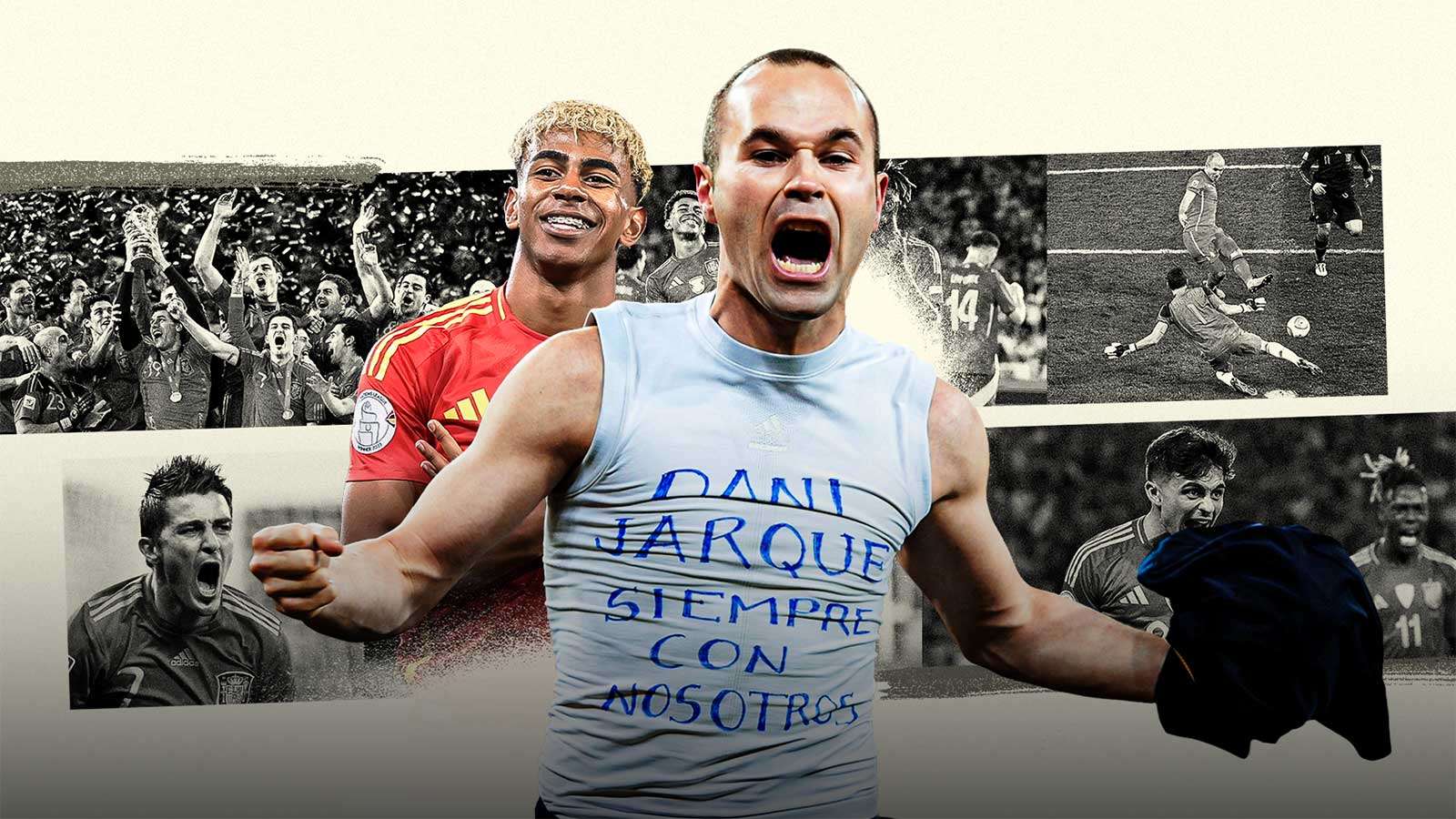
Spain will arrivea at the 2026 World Cup in the United States, Mexico, and Canada with another generation full of hope. Different, young and fresh, they do not personify the same formula, but there’s an invisible thread linking both eras - the belief that collective talent can deliver titles, as long as a figure appears to symbolise that magic. In 2010 it was Iniesta. In 2026, all eyes are on Lamine Yamal.

  • Iniesta WMGetty Images

    The weight of Iniesta

    The Spain that won in South Africa was the most recognisable team of its time. It wasn’t about names, but instead an unmistakable identity: Tiki-taka. A way of understanding football that went beyond the field, that was taught in academies, and that defined how a nation wanted to play. That identity was not only a powerful weapon, but also a flag.

    At the centre of it all was Xavi Hernandez. The Catalan was the orchestra conductor. His passes, his reading of the game, and his ability to move the ball were the team’s engine. Iniesta alongside him added unpredictability, calm, and magic. Together, they built a style of football that dominated the world.

    But the team wasn’t only its midfield. At the back stood Casillas, decisive in key moments such as the one-on-one with Arjen Robben in the final. There was Puyol, imposing with his character, radiating leadership in every play. And in attack, Villa provided the goals that broke down stubborn defences.

    Every piece had a specific role, and all complemented each other. It wasn’t a group of scattered stars, rather a finely-tuned mechanism. In fact, one of the most remarkable aspects was how players who were absolute icons at their clubs accepted secondary roles to strengthen the collective. That tactical selflessness was one of the keys to their success.

    Iniesta’s influence on that team went far beyond his goal in the final. He embodied the perfect synthesis of the Spanish style; technical delicacy, tactical intelligence, and the ability to appear at decisive moments. He wasn’t the most media-friendly or the flashiest, but he was the most influential. When Spain needed clarity, Iniesta was there. When a tight defence needed breaking, Iniesta found the opening. And when the World Cup was to be decided in extra-time, Iniesta was the one who struck.

    That’s why, when people now speak of Yamal as the heir to that role of being a ‘symbolic footballer’, the comparisons to Iniesta are inevitable. Because beyond their difference in style - one a cerebral midfielder, the other an electric winger - what unites them is the capacity to become the face of a generation. In 2010, Spain was Iniesta; in 2026, the hope is that it will be Yamal.

  • Advertisement
  • Lamine Yamal Spain 2025Getty Images

    Phenomenon

    The Spain team that is preparing for the 2026 World Cup is not the same as the one from South Africa. Times, rivals, and even expectations have changed. However, there’s a familiar air to this squad: A young, talented group arriving hungry for success. A team that relies on the ball as its main tool to dominate. And a figure destined to be its guiding light.

    Yamal is the great name of this generation. At just 18 years old, he has established himself as one of Barcelona’s and Europe’s brightest gems. His game combines speed, dribbling, creativity, and surprising maturity. Few footballers at his age have shown such an ability to shine in big games. Yamal is different - and he knows it.

    But the most striking thing is how he plays as if he doesn’t feel the weight of expectation. He enjoys himself, takes risks, dares to do the unexpected.

    What Iniesta represented in 2010 as a symbol of a style, Yamal now represents from another place, that of youthful freshness that breaks moulds. Spain no longer plays with the same patience as before; now it seeks more verticality, more surprise, and that’s where Yamal makes the difference. He can receive near the touchline, take on defenders, and create a chance out of nothing. He can invent a goal with an impossible dribble or an unexpected pass.

    The team around him is also full of talent. Pedri and Gavi in midfield are direct heirs of Xavi and Iniesta, though with their own nuances. Rodri, one of the best holding midfielders in the world, provides balance. In defence, Pau Cubarsí and other young centre-backs bring solidity. And in attack, players like Nico Williams add width and speed. It’s not just Yamal - it’s a generation for both the present and future. But within that wealth, he’s the spark, the player capable of making the difference in a World Cup.

    Spain don’t arrive as the undisputed favourites but as serious contenders. And they do so with the same premise as in 2010: Trust the identity, bet on collective talent, and wait for the magic of its symbolic player to appear when needed.

  • Nico Williams Lamine Yamal Spain 2025Getty Images

    Legacy & future

    Football’s history is full of cycles. Generations appear, conquer, and give way to others. Spain’s 2010 side marked a before and after. It changed the way the game was viewed, inspiring coaches and players around the world. Today, that heritage endures in how Spain develops its youth, in the idea that the ball is both the best defence and the best weapon.

    Yamal embodies the continuity of that legacy, but also the opening of a new chapter. It’s not about copying 2010; it’s about reinterpreting it. That Spain was the culmination of an idea; this one is the beginning of another. A concept where technique remains essential, but where verticality, speed, and improvisation have a central place.#

    If Spain go far at the 2026 World Cup, it will be because they have managed to unite those two souls: The positional-play heritage of Xavi and Iniesta with the electricity of Yamal and company. And if they become champions, the parallel with 2010 will be inevitable. Two different generations, united by the same destiny, to touch the sky.

    The future is also at stake. If Yamal confirms in 2026 what he already promises today, he could become the leader of a new era. Like Iniesta in his time, he could leave a legacy that inspires those who follow. Spain has the chance to solidify a model, one of national teams that always combine collective talent with a figure who symbolises an entire generation.

    In 2010 it was Iniesta. In 2026 it could be Yamal. And if that happens, football will have found another unforgettable story to tell.

  • ENJOYED THIS STORY?

    Add GOAL.com as a preferred source on Google to see more of our reporting

  • World Cup Winners Spain Fly Home Getty Images News

    Continuity & differences

    Comparing Spain 2010 with the Spain that will play in 2026 is an exercise that combines nostalgia, tactical analysis, and future projection. Both generations share a common thread: Faith in young talent, the idea of playing with the ball, and the conviction that a team can prevail through collective intelligence. But there are also fundamental differences that mark football’s evolution and Spain’s stylistic shift.

    In 2010, Spain was a fully consolidated team, with players in peak physical and footballing form. Xavi and Iniesta ruled the midfield, Villa moved with surgical precision, and Casillas guarded the goal with unshakable assurance. Every decision was calculated, every movement had meaning within a system that worked like clockwork. The maturity of that squad allowed Del Bosque to control matches and critical moments, even when rivals tried to disrupt Spain’s possession-based philosophy.

    Spain 2026, on the other hand, is a team still under construction. Younger, more dynamic, less experienced but more daring. Pedri and Gavi inherit the vision of Xavi and Iniesta but add verticality and pace. Rodri provides balance, while forwards like Yamal and Williams bring unpredictability. The essential difference lies in how they interpret offense; now the emphasis is on breaking lines, one-on-ones, constant surprise. It’s football that keeps its essence but adapts to modern times.

    Within this context, Yamal isn’t just another player, he’s the project’s symbol, the natural heir to the role Iniesta embodied in 2010. Where Iniesta astonished with pauses, vision, and precision, Yamal impresses with flair, speed, and improvisation. He’s a player who can decide a match on his own yet also elevate the team through movement. The comparison is inevitable: Iniesta’s goal in the South Africa final went down in history; the hope is that Yamal can create moments just as defining in 2026.

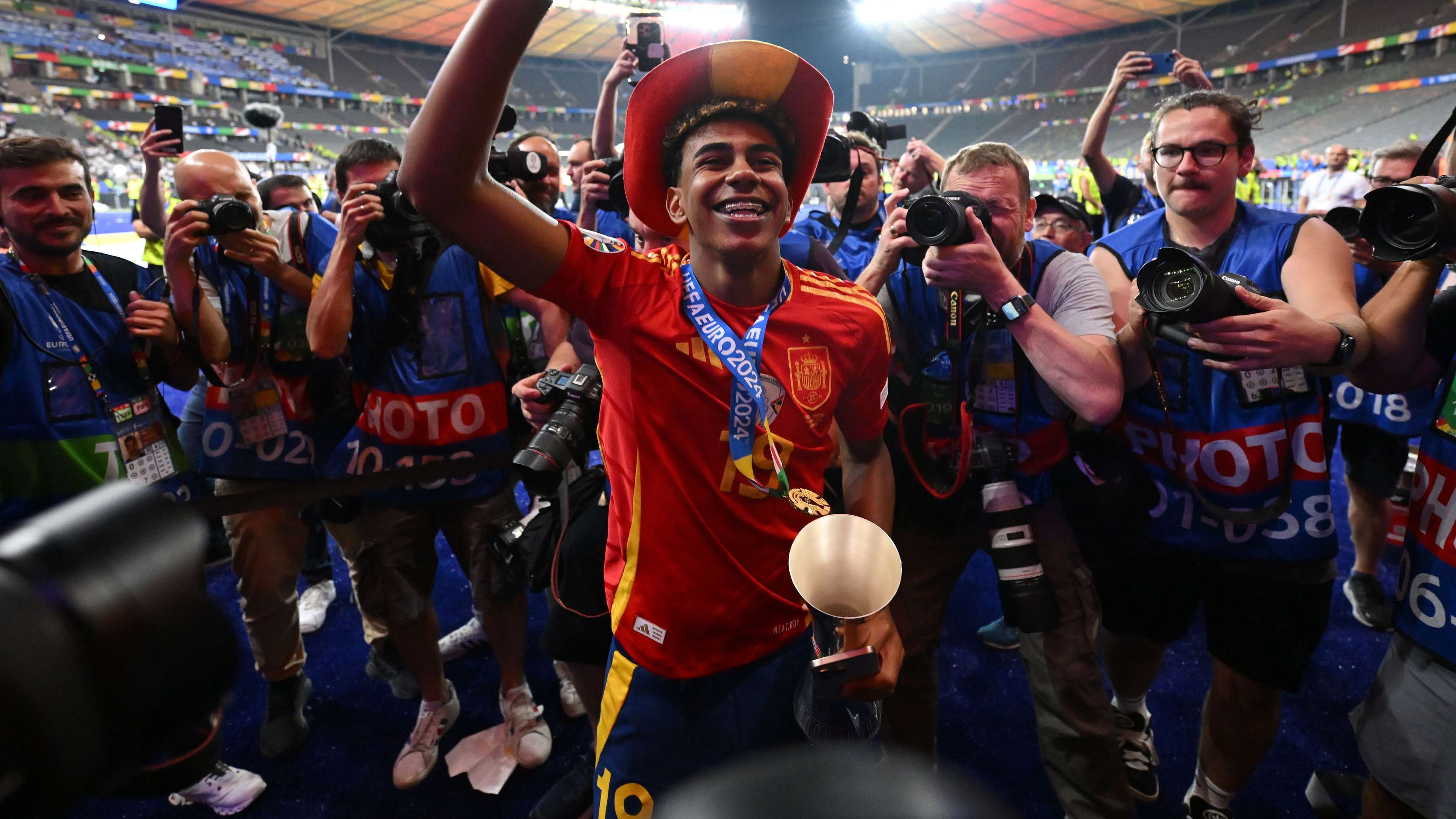
  • Spain v England: Final - UEFA EURO 2024Getty Images Sport

    Expectations

    The 2026 World Cup poses a unique challenge for Spain and Yamal. Their rivals will be strong, as many South American and European teams will arrive with consolidated squads and players at their peak. But Spain holds an advantage in that their group blends talent, freshness and a recognisable playing philosophy. If they manage to balance youth with experience - and if Yamal fulfills his role as attacking leader - the team will have every tool to fight for the title.

    The generational factor also plays in their favour. Just as Spain 2010 built confidence from winning Euro 2008, Spain 2026 arrives with players who have already proven themselves in European and youth competitions. That means that although the pressure of a World Cup is unique, the foundation is solid. The mix of a champion’s mentality, the elders’ wisdom, and the youngsters’ freshness could be the ideal recipe for glory.

    The 2026 World Cup also offers a chance to establish Yamal as the figurehead who will lead Spain in the coming years. At 18, he still has time to grow, learn, and lead. His adaptability, natural talent, and temperament make him the ideal player to assume the responsibility of embodying a generation that is destined to leave a mark.

  • FBL-WC-2026-EUR-QUALIFIERS-BUL-ESPAFP

    Projection

    The legacy of Spain’s 2010 champions goes beyond trophies. It was proof that a clear, coherent idea of play can transform a team, and an entire generation. Today, Yamal and his team-mates have the opportunity to replicate that model, but with their own nuances; more pace, more verticality, more unpredictability, yet all with the same philosophy of collective talent and individual leadership.

    If Spain manages to be crowned in 2026, they won’t just have won another World Cup, they will have proven that their model for developing golden generations works, and that there will always emerge a player capable of embodying the spirit of the team. Iniesta was the face of his generation; Yamal can be the face of his. And if he succeeds, he will not only mark the tournament’s history, but also cement the continuity of a style and a legacy that could last for years.

    History seems to repeat itself, but with new tools. La Roja has the opportunity to show that Spain remain protagonists of world football, that quality and talent never fade, and that every generation can produce heroes capable of inspiring millions.

    Yamal is not just a player. He’s a symbol of hope, the spark that can ignite a new era of glory.