+18 or +21, depending on state | Commercial Content | T&C's Apply | Play Responsibly | Publishing Principles
Japan WSL takeover GFXGetty/GOAL

Japan's Women's Super League takeover: Why England's biggest clubs are filling their squads with Nadeshiko stars

Before the 2023-24 Women’s Super League season began, there had only ever been eight Japanese players in the division’s 12-year history. Fast-forward to today, and that total has more than doubled in less than two years, with Australia, Sweden, Ireland and the Netherlands the only countries outside of the United Kingdom with more players in the WSL right now than the Asian nation.

These players are taking centre stage on a weekly basis, too. Last Friday, Fuka Nagano bagged a goal and an assist as Liverpool shocked Manchester United at Anfield. A day later, Aoba Fujino rocketed a shot beyond Chelsea’s Hannah Hampton to draw Manchester City level in the League Cup final. Then, on Wednesday, in a rematch of that clash in an all-English Champions League quarter-final, Yui Hasegawa’s remarkable composure proved vital in the move that allowed Vivianne Miedema to double City’s first-leg advantage.

At first, Japanese players only left home fleetingly, playing a handful of games in England, the U.S. or elsewhere before – in most cases – returning home to see out their careers. That has changed drastically in the last few years – and it is to the benefit of not only the WSL, but other leagues across the globe and, crucially, the national team itself.

  • Japan Women's World Cup 2011Getty Images

    Established nation

    This explosion of Japanese players in England, and overseas in general, is not because the nation is suddenly on the rise in the women’s game. Between 2008 and 2015 in particular, Nadeshiko was one of the best national teams on the planet. In that time, under the guidance of Norio Sasaki, Japan finished fourth at the 2008 Olympic Games, won the 2011 Women's World Cup, picked up a silver medal at the 2012 Olympics, won a first-ever Asian Cup in 2014 and reached the final of the 2015 World Cup. From the U.S. to Germany, they were going toe-to-toe with, and beating, the best teams in the world.

    Underneath the senior team, Japan has always had a strong system that has developed great players, too. Indeed, they've reached the last three Under-20 Women's World Cup finals, winning in 2018, and triumphed in the U17 tournament in 2014, before reaching the final again two years later.

  • Advertisement
  • Saki Kumagai Lyon Women 2020Getty

    More overseas adventures

    However, during the Sasaki years, players still mostly played in Japan. At the 2008 Olympics, not a single name on his roster was based abroad. By 2015, that had changed a little, but the number had still only grown to six. At the 2023 Women’s World Cup – Japan’s most noteworthy tournament since, owing to a quarter-final run and a jaw-dropping 4-0 defeat of eventual winners Spain in the group stage – it was at nine. However, eight players on that roster have moved to clubs in Europe and the U.S. in the aftermath.

    For Saki Kumagai, captain of the national team and a five-time European champion with Lyon, it’s a pleasant development. “Finally,” she exclaimed with a laugh, talking to GOAL. “Here in Europe we can get an experience that... If we stay in Japan, we experience a lot of things, of course, good things and bad things, but if you stay in Japan, we can't get it.”

  • Yuka Momiki Leicester City Women 2023-24Getty

    Driven to improve

    Kumagai was one of the three names on the 2012 Olympic roster who was playing abroad, then at Frankfurt. She admits it was hard, aged 20, to leave home, to move to a country with a very different language. But she knew Europe was the place to be to progress.

    Many of her biggest obstacles remain for those who choose to leave Japan today. So why does she think players are suddenly doing so at a greater rate? “When we wear the national team jersey, of course, we are not against Japanese players, we are every time against foreigners, so they want to, I think, grow up, and they also realised it's important to play every day against or with foreigners at a high level, good players,” she replied. “That's why, I think.”

    Yuka Momiki, who signed for Leicester City in January of last year and has also had spells in the U.S. and Sweden, shares similar views. “I think it's because we want to win, for example, the World Cup and Olympics,” she said. “Playing in Japan is exciting, but compared to England, it's not physical. Yeah, maybe we are technical, not physical. So, if we want to improve, you need to be more physical. That's why we come here and challenge ourselves and bring all these things to the national team.”

  • aoba fujinoGetty Images

    Plenty of quality

    There is a growing desire among Japanese players to take on these challenges, then – and it is matched by top clubs in England, Europe and the U.S. wanting to sign them. Unsurprisingly, there were players who got big moves off the back of the 2023 World Cup, with Hinata Miyazawa, the Golden Boot winner, moving to Manchester United, while Riko Ueki, scorer of the second goal against Spain, joined West Ham. But clubs have not just forgotten about that market in the time since.

    Last summer, Manchester City brought in Japan goalkeeper Ayaka Yamashita and Aoba Fujino, the lively winger who lit up the 2024 Olympics with a sensational strike against Spain. They also signed Risa Shimizu, the right-back who was already in England with West Ham, and in January, they added Aemu Oyama, a star in the youth national teams. With Hasegawa already a lynchpin in midfield, City’s squad currently features 30 per cent of all the Japanese players ever to grace the WSL.

    “Mostly, we look at the profile of what we need and we found that these players really fitted our model,” Gareth Taylor, City’s head coach at the time, explained shortly after these moves were made. “They've really been welcomed within the team and really fitted in very quickly into the system and then into the way we work.”

    Though there are also a lot of differences, City’s extremely technical and possession-based style has a lot in common with how the Japan national teams like to play. It’s the same for other clubs in Europe, too, as this approach to the game starts to become almost ubiquitous.

    “[These players] fit in super well with the way that we want to play,” Everton boss Brian Sorensen said himself, shortly after signing Honoka Hayashi for the club. “I’ve been looking at that market for quite a while.”

  • Maika Hamano Chelsea Women 2024-25Getty Images

    Bringing something 'extra'

    Kumagai believes players from Japan have the ability to make a genuine difference with their unique style, too. “I think Japanese players are a little bit…” she said, then paused, looking for the right word in one of the four languages she has picked up since moving to Europe. “I don’t know how to say it, but a little bit ‘extra’,” she continued.

    “Our playing style, there is a big difference to the European players or U.S. players, so if we can fit in the team, maybe we can do a lot of things for the team also, that's why a lot of teams want to get the Japanese players, I think.”

  • japan(C)Getty Images

    Good for Nadeshiko

    Each transfer window that passes seems to offer a blow for Japan’s WE League, which recently rebranded and became the first fully-professional women’s division in Japan, as a lot of these exciting homegrown talents make their breakthrough in the domestic league before being snapped up by overseas clubs.

    But, while it needs to continue to grow, the WE League remains an important environment for the stars of the youth teams to get senior game time. Then, if they can secure big transfers, they are only improving as players in different countries with different styles. That is huge for a national team which is back on the rise, some 14 years after its incredible World Cup triumph.

    Can Nadeshiko players see the difference these moves are making when they get together on camp? “Yes, I think so,” Momiki replied. Indeed, Japan's triumph over the U.S. to win the SheBelieves Cup last month can only be a good sign in the team's continued development.

  • Aoba Fujino Yui Hasegawa Man City Women 2024-25Getty Images

    Among the world's best

    When Kumagai first moved to Germany as a promising 20-year-old, she had the paths of Kozue Ando and Yuki Nagasato to follow, and both told her a lot about their experiences in the country as she explored her own desire to play abroad. It’s something the Japan captain has passed on to those younger than her in the years since. “If that player wants to go, I told them a lot of things,” she explained. “But if they don’t want to go, I think it’s not possible and it’s more difficult.”

    Fortunately, more and more do. When Nils Nielsen, Japan’s new national team coach, named his squad for the SheBelieves Cup in February, only three players were based in the WE League. Twenty of the names on the roster were playing abroad, including 11 in England. “I'm so happy now,” Kumagai said, reflecting on the growth of that number.

    In years to come, when players think about leaving Japan, they won’t just have Kumagai and one or two others to turn to for advice; they will have dozens of examples of Nadeshiko stars enjoying careers abroad who can give them advice - and likely even some compatriots on the team they are joining.

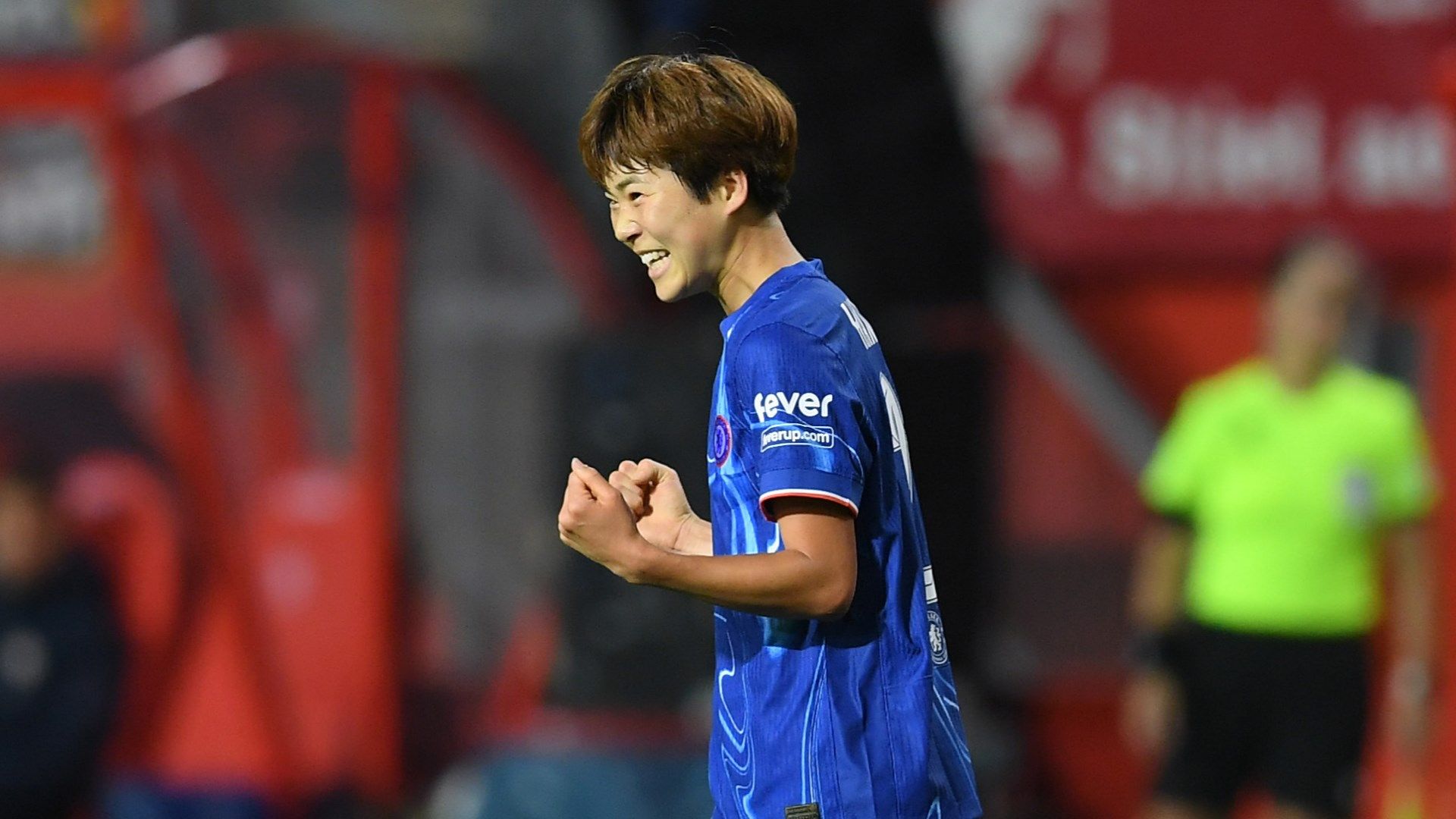
    And these players are not just settling into a new environment, learning a new language and embracing a new culture. As illustrated by Hasegawa’s growth into a world-class midfielder, Maika Hamano’s match-winning contributions for English champions Chelsea and Kiko Seike’s wonderful first season so far at Brighton, they are thriving.

    It’s not just in England, of course, but that so many are choosing the WSL as a top destination to export their talents is also a nod to the league’s growth into perhaps the greatest in the world. After all, the best players want to play in the best leagues – and Japan certainly has a lot of the former.