
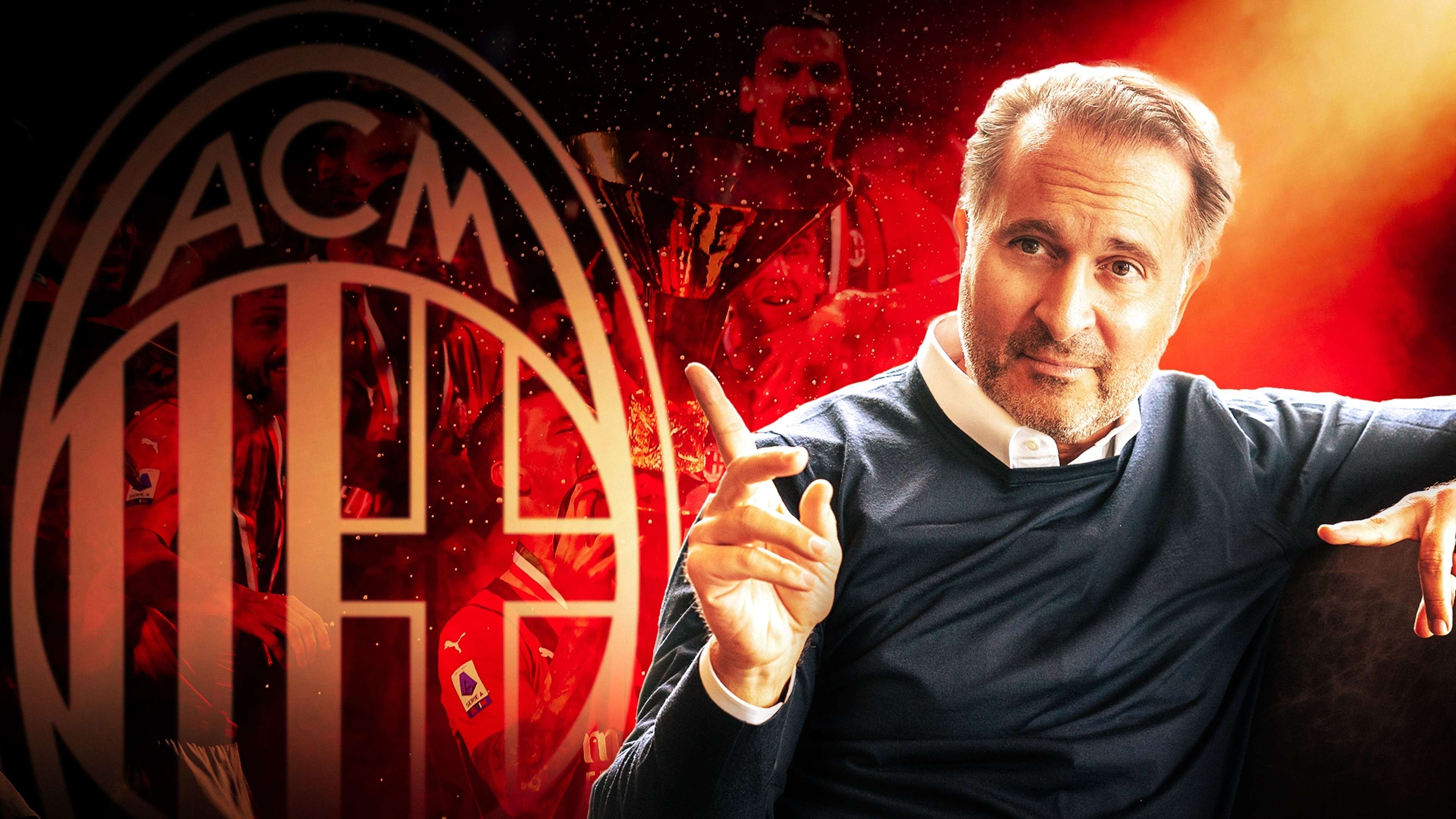
In the latest edition of Cleats & Cashflows, we examined Elliott Management’s turnaround of AC Milan, an investigation into how institutional capital stabilised and saved a distressed football club. Through financial discipline, governance reform, and a recalibrated sporting strategy, the “vultures of Wall Street” restored the Rossoneri to competitive and financial relevance. The transformation culminated in the club lifting the Scudetto during the 2021/22 season under the guidance and leadership of Zlatan Ibrahimović and its subsequent return to the UEFA Champions League, reestablishing the club within Europe’s elite both competitively and financially.
Elliott’s tenure demonstrated a principle that has increasingly defined modern football: financial stability is not merely a prerequisite for survival, but a foundation for sporting success. By reducing losses, strengthening equity, and rebuilding revenue streams, the club re-established a sustainable operating base. The return to the Champions League restored access to one of football’s most significant revenue streams, while the league title served as evidence that financial discipline can translate into on-pitch performance.

More broadly, Elliott’s turnaround reflects a structural reality within the game. Across Europe, the correlation between financial strength and competitive success has long been evident. Clubs with greater financial resources have consistently occupied the upper tiers of the football pyramid. Yet as regulatory frameworks such as Financial Fair Play (FFP) and Profitability and Sustainability Rules (PSR) have tightened, the era of unlimited owner funding has given way to a new model, where sustainable revenues must support a club’s spending power.
The era symbolised by Roman Abramovich’s Chelsea, unlimited financial capabilities unconstrained by profitability considerations, has become impossible to uphold within the current regulatory environment. Today, deploying capital effectively requires not only investment but more so the ability to generate sustainable income streams capable of supporting long-term competitiveness.


In this environment, scaling a football club is no longer simply a question of injecting capital; it requires building a sustainable economic engine capable of supporting long-term investment in sporting performance. This is precisely where private equity has increasingly found its role, applying disciplined capital allocation and operational rigour to optimise both financial and sporting outcomes.
Across European football, private equity’s involvement has been typified by a variety of approaches rather than a single uniform strategy. Black Knight’s investment in AFC Bournemouth reflects a growth-oriented model focused on Premier League participation, while Eagle Football’s involvement with Olympique Lyonnais demonstrates the complexity and execution risks inherent in multi-club strategies. Meanwhile, smaller platforms such as Estoril Praia highlight how private capital can also operate at a developmental level within football ecosystems. These examples underscore that there is no single private equity playbook; rather, ownership models vary depending on strategic objectives, market positioning, and capital structures.
In this light, if Elliott’s chapter was defined by stabilisation, the next phase of Milan’s evolution would be defined by scale. By 2022, the club had transitioned from a distressed asset into a stabilised platform with restored competitiveness and improved financial fundamentals. To unlock the next stage of growth — expanding revenues, strengthening commercial positioning, and investing in long-term infrastructure — a new partner emerged.
On the 31st of August 2022, following Milan’s title-winning season, RedBird Capital Partners completed the acquisition of the club in a transaction valuing AC Milan at approximately €1.2 billion. Where Elliott had righted the ship, RedBird’s mandate was to build upon that foundation and transform Milan into a scalable sports and media platform.
The transaction structure
The transaction that brought RedBird Capital Partners to AC Milan reflected a distinctly institutional approach to sports ownership. Rather than a conventional outright purchase financed entirely with equity, the deal was structured through a combined usage of equity, mezzanine loans and vendor financing, indicative of the institutional nature of the acquisition.
RedBird contributed approximately €681 million in equity capital to fund the acquisition. Notably, roughly half of this commitment was structured as mezzanine or preferred equity provided by U.S.-based private capital firm Ares Management, one of the most active and established lenders in European football. Ares has emerged as a first-mover in structured financing for the sector, having also extended significant credit facilities to clubs such as Atlético Madrid and Olympique Lyonnais. The inclusion of Ares in the capital stack underscores the institutional sophistication of the transaction, positioning the acquisition within a broader ecosystem of structured sports finance rather than a conventional owner-funded takeover.
The remainder of the purchase price was financed through vendor financing provided by Elliott Management, estimated at approximately €550 million. Under this structure, Elliott transitioned from controlling shareholder to primary lender to the new ownership vehicle. While relinquishing equity control, Elliott maintained two seats on the club’s board, ensuring governance continuity and retaining a degree of strategic oversight.
Crucially, Elliott structured the vendor loan so that the acquisition-related debt remained above the operating entity level. By avoiding the placement of material debt obligations directly on AC Milan’s balance sheet, Elliott sought to preserve the financial prudence and stability it had instilled during its tenure. This approach shielded the club’s operating structure from direct debt servicing pressure, reinforcing the sustainability principles that underpinned the earlier turnaround.
The vendor loan, therefore, positioned Elliott as a long-term financing partner and created continuity between the stabilisation phase and the subsequent growth strategy under RedBird. The resulting capital structure can be summarised as follows:
- Sponsor equity: RedBird Capital Partners
- Mezzanine / preferred equity: Ares Management
- Vendor debt: Elliott Management
This layered framework is emblematic of contemporary private equity ownership, with multiple institutional stakeholders positioned across the capital stack. Subsequent refinancing activity further extended maturities and adjusted the debt profile, reinforcing the long-term orientation of the ownership model.
Who actually are RedBird?
RedBird Capital Partners is a U.S.-based private equity firm founded in 2014 by former Goldman Sachs partner Gerry Cardinale. The firm manages approximately $10–14 billion in assets across more than 50 portfolio companies, with roughly 70% of its capital deployed in sports, media, and entertainment, and the remainder focused on financial services, insurance, and asset management. The firm positions itself not merely as a financial sponsor, but as a platform-oriented investor targeting scalable intellectual property within global consumer ecosystems.
As an investor, RedBird has developed a distinct profile within the sports industry. The firm combines experience in sports ownership with a broader media and entertainment investment strategy, viewing clubs not only as competitive teams but as content engines and monetisable global brands. Its approach emphasises data-driven decision making, structured capital allocation, and the systematic expansion of commercial revenues. In this framework, sporting success is important, but it functions within a wider economic architecture built around media rights, sponsorship growth, digital engagement, and intellectual property optimisation.
At the core of RedBird’s investment philosophy are five defining principles:
- Iconic IP focus – Investing in globally recognised brands and intellectual property with expansion potential.
- Entrepreneurial alignment – Partnering with proven operators and founders to accelerate growth.
- Scalable platforms – Targeting businesses with organic growth, consolidation opportunities, and synergy potential.
- Asymmetric return profile – Balancing downside protection with upside optionality through recurring revenues and operational excellence.
- Hands-on value creation – Applying an active, company-building approach to unlock long-term value.
RedBird’s positioning within the broader sports ecosystem further contextualises its strategy at AC Milan. The firm maintains a strategic partnership with the New York Yankees, owns French Ligue 1 club Toulouse FC, and has invested in Alpine F1 Team, embedding itself across multiple global sports platforms. These assets form part of a wider portfolio that allow them to operate within interconnected sports and media markets rather than treating each club as an isolated entity.
Viewed through this lens, AC Milan fits squarely within RedBird’s strategy. The club represents iconic global intellectual property with untapped commercial scalability, embedded within a sport where competitive success and financial growth are increasingly interlinked. RedBird’s thesis is therefore dual layered: strengthen sporting performance through disciplined operational management, while simultaneously expanding commercial and infrastructural revenue streams to enhance enterprise value.
Within the broader context of RedBird’s track record, reportedly generating a 2.5x gross multiple of invested capital and a gross internal rate of return of approximately 33%, the acquisition of AC Milan can be understood as part of a wider strategy to institutionalise, scale, and monetise premium sports assets within a global entertainment framework.
What did RedBird inherit — and what strategy did it deploy?
Upon completing the acquisition, RedBird inherited not a distressed club, but a stabilised platform. Under Elliott Management, AC Milan had already returned to the top of the Serie A, lifting the 2021/22 Scudetto after years of instability. The existential risks of the “banter era” had been addressed; governance had been professionalised, losses reduced, and capital discipline restored. RedBird’s mandate, therefore, was fundamentally different from that of its predecessor. The focus shifted from stabilisation to scaling, which, for RedBird, can be summarised along five categories:
- Commercial expansion
- Accelerate revenue growth
- Optimise media and sponsorship monetisation
- Sporting optimisation
- Data-driven recruitment
- Asset-value and squad management
- Governance & structure
- Centralised decision-making
- Institutional operating model
- Infrastructure development
- Stadium strategy
- Long-term revenue
- Capital discipline
- Cost control relative to income
- Sustainable reinvestment framework
Taken together, these pillars reflect RedBird’s broader investment philosophy: scaling an iconic global asset not through excess, but through structured commercial expansion, operational rigour, and long-term value creation.
Commercial growth strategy
Growing AC Milan’s top-line revenue through commercial expansion has been one of the defining pillars of RedBird’s strategy. While Elliott focused on financial stabilisation, their goal was to scale the platform with commercial revenue as the primary growth lever.
The approach has delivered measurable results. Over the past three seasons, commercial and sponsorship revenue increased from €82.1 million to €143.4 million, reflecting a structural shift in how Milan monetises its global brand. Moreover, whereas the rebound in broadcasting revenue may be attributed to the return of crowds following Covid-19, sponsorship, and commercial revenue present two sources of non-crowd dependent recurring revenue, indicating the significant positive impact RedBird has had throughout its tenure.

RedBird’s commercial strategy can be categorised along five key dimensions:
- Expansion of the sponsorship portfolio
- Global commercial partnerships
- Targeted U.S. market penetration
- Brand monetisation initiatives
- Digital and media content strategy
Sponsorship expansion
A clear priority was the strengthening and diversification of the sponsorship base. In recent seasons, Milan secured partnerships with major global brands including Coca-Cola, Emirates, and MSC, while also extending its long-term agreement with kit supplier Puma. These deals reflect both improved commercial credibility and enhanced brand positioning within global markets.
Rather than relying on a narrow group of commercial partners, RedBird’s approach has emphasised portfolio breadth, reducing dependency risk while expanding recurring sponsorship income.
Global & U.S. positioning
RedBird identified Milan’s global fanbase as commercially underleveraged, particularly in the United States. Leveraging its own network, the firm facilitated a strategic partnership with Yankee Global Enterprises (YGE), owners of the New York Yankees, which also acquired a minority stake in AC Milan. The partnership is designed to unlock synergies across media rights, branding, and commercial activation, positioning Milan within a broader transatlantic sports ecosystem.
This reflects RedBird’s platform logic: Milan is not treated as an isolated football club, but as part of a wider sports and entertainment network.
Digital & fan monetisation
The club also expanded its digital monetisation strategy, including partnerships with fan engagement platform Socios.com and early participation in NFT-based initiatives. While digital assets remain a volatile revenue stream, the broader strategy signals an attempt to monetise engagement beyond traditional matchday and broadcasting income.
RedBird’s strategy extends beyond traditional sponsorship growth. At its core lies a simple premise: AC Milan is not merely a football team, but a global intellectual property asset that can be monetised across media, sponsorship, and digital fan engagement. In this framework, the club’s revenue potential is not viewed as being realised solely through on-pitch performance or matchday activity, but as embedded within a broader ecosystem of media rights, brand activation, and digital fan engagement.
This perspective places partnerships such as the minority stake and strategic collaboration with Yankee Global Enterprises, as well as the engagement with Socios.com, into a coherent strategic context. Both initiatives reflect an attempt to unlock commercial value from Milan’s global fanbase, expanding monetisation opportunities beyond conventional football revenue streams and positioning the club as a scalable sports and entertainment platform, expanding its influence and outreach beyond its prior borders.
Sporting optimisation
“Football clubs that primarily think of doing business ahead of sporting achievements and spirit are destined to fail. Patronage no longer has the meaning of before but profiteering is negative.” — Carlo Ancelotti, June 2023
Carlo Ancelotti’s remarks followed the dismissal of Paolo Maldini as AC Milan’s technical director, a decision that marked an inflexion point under RedBird’s ownership. Maldini had spent five years in the role and was instrumental in rebuilding the squad that secured the 2021/22 Scudetto. His departure, after RedBird’s first full season in charge, symbolised more than a change in personnel; it represented a shift in governance.
The move was widely interpreted as a clear signal of a recalibrated philosophy. Under RedBird, decision-making increasingly tended towards a structured, data-informed model, one that some observers have characterised as a renewed “Moneyball” approach. The broader influence of Billy Beane’s advisory role has also reinforced the “Moneyball” perception of a structured, data-informed recruitment strategy.
While the club’s commercial operations have produced measurable growth, the sporting trajectory has been more nuanced. On-field results have fluctuated, raising questions about how to balance financial optimisation with competitive continuity.
RedBird’s on-field approach can be summarised along the following lines:
- Continued data-driven recruitment
- Focus on players in pre-peak or peak age brackets
- Emphasis on squad depth rather than star concentration
- Maintenance of wage discipline relative to revenue
- Capital recycling through player trading
- Reinvestment of transfer proceeds into diversified assets
The dismissal of Maldini, followed by the non-renewal of successful head coach Stefano Pioli, reinforced the perception of a structural reset at the board level. RedBird’s subsequent internal promotion of Geoffrey Moncada further clarified the direction of travel.
Moncada, who began his career as a freelance scout before eventually becoming chief scout at AS Monaco at just 29, joined AC Milan in 2018 during Elliott’s tenure. Unlike many traditional sporting directors, Moncada does not come from a professional playing background. His methodology is reportedly grounded in a blend of qualitative scouting and quantitative analysis, often consulting multiple independent reports before assessing a player profile. In interviews, he has suggested that certain talent pools, such as Brazil, may command inflated premiums, advocating instead for value identification in underexploited markets, including segments of Africa and the French ecosystem. Moncada’s comments underscore the Rossoneri’s renewed emphasis on data-driven and financially disciplined sourcing, fitting well within the wider trend of financial sustainability that RedBird prioritises.
The additional post-Maldini new hires further institutionalised this approach. Chief executive Giorgio Furlani retains ultimate decision-making authority, while Moncada leads identification, data analysis is conducted under Hendrik Almstadt, and advanced analytics input is sourced from Luke Bornn’s Zelus Analytics. Whether this model maximises competitive upside in the short term remains debated; however, its alignment with RedBird’s broader investment philosophy is unmistakable.
Mixed sporting outcomes
Yet the sporting results over the past three seasons remain mixed. The club finished 4th in 2022/23, 2nd in 2023/24, before falling to 8th in 2024/25. During this period, Milan cycled through four head coaches, a level of managerial turnover that contrasts with the stability typically desired by elite European clubs.
Recruitment outcomes similarly present a dual narrative.
Several acquisitions, including Reijnders, Pulisic, Pavlovic, Ricci, Jashari and de Winter, align closely with the stated framework: data-driven profiles, pre-peak age brackets, controlled wage structures, and resale optionality.
Conversely, signings such as Morata, Nkunku, Estupiñán, Emerson, Santiago Giménez and Modrić reflect a different risk profile: higher acquisition costs, limited resale value, and greater emphasis on immediate performance or leadership.
Transfer sustainability
From a financial perspective, the aggregate transfer balance raises additional questions. Over the last three seasons, Milan reportedly spent approximately €440 million on transfers while generating roughly €304 million in player sales. On a standalone basis, this suggests a net outflow that requires sustained revenue growth to remain manageable.

Yet, it is important to contextualise this. During Elliott’s tenure, Milan also operated with negative transfer balances. The broader strategic question, therefore, is whether transfer profitability sits at the core of RedBird’s model, or whether player trading functions as one component within a larger commercial scaling strategy.
Short-term volatility vs. long-term thesis
Taken together, the evidence presents a nuanced picture. Commercial revenues have grown significantly, yet the sporting return on capital remains less definitive. However, on-field performance is structurally more volatile than commercial income streams. Match outcomes, managerial changes, and squad cohesion introduce variables that cannot be modelled with the same predictability as sponsorship or broadcasting revenue. Therefore, given the relatively short time horizon under RedBird’s ownership, definitive conclusions may be premature. While commercial scaling has delivered measurable results, the sporting verdict remains open. In a long-term investment framework, the evaluation window must extend beyond seasonal league positions.
For now, the jury remains out.
Governance continuity and organisational evolution
While RedBird introduced a new strategic direction, it did not dismantle the governance framework established under Elliott. Instead, it preserved much of the institutional discipline that had stabilised the club, while recalibrating leadership and decision-making structures to align with its own operating philosophy.
At its core, RedBird’s governance model reflects a hands-on ownership approach, but not operational micromanagement.
As Gerry Cardinale has stated:
“We don’t select players for the Boston Red Sox, Liverpool, the New York Yankees or AC Milan; those decisions are left to the management of these assets who have the expertise and record in these areas.”
Organisational pillars under RedBird
- Continuity of Elliott-era governance discipline – Financial prudence, structured oversight, and institutional reporting standards remain intact.
- Leadership evolution – Giorgio Furlani’s appointment as CEO formalised a more corporate-style executive structure.
- Centralised decision-making authority – Final authority rests with executive leadership.
- Professionalised decision processes – Increased integration of data analytics, structured evaluation frameworks, and cross-functional coordination.
- Clear role separation between ownership and operations – Ownership sets strategic direction and monitors performance; day-to-day sporting and operational decisions remain with appointed management.
Recent months have demonstrated a more visible presence from Cardinale, including increased visits and direct engagement, yet without a shift toward direct operational control. The result is a governance structure that resembles sustainable corporate architecture rather than personality-driven patronage. The strategic vision originates with RedBird, execution rests with management, and accountability is formalised through defined reporting lines.
In this sense, Milan’s governance today reflects a self-sufficient, scalable model, one designed to endure beyond individual executives and aligned with modern institutional ownership standards.
Infrastructure as a strategic revenue multiplier
If commercial scaling represents one pillar of RedBird’s strategy, unlocking the stadium (infrastructure) potential presents the complementary pillar.
Despite strong fan demand, AC Milan and city rivals Inter continue to lag behind Europe’s elite in matchday revenue. In 2023/24, Milan generated approximately €69.3 million in matchday income, up from €32.5 million in 2021/22 and slightly down from the €72.8 million in 2022/23. While recovery from COVID drove part of this increase, the absolute level remains modest relative to its top-tier European peers, a league where AC Milan sees itself belonging to. For instance, Tottenham Hotspur (~€150 million) and Real Madrid (~€233 million), both clubs with a newly built stadium realised significantly more revenue.
Moreover, the revenue gap is not driven by attendance, with both Milanese clubs consistently attracting over 70,000 spectators per game, which is among the highest averages in Europe. Rather, one of the temples of modern football stands as the source of the problem: San Siro.
The structural limitation: San Siro
One finds the biggest issue in San Siro’s age and configuration limit, which limit:
- Premium hospitality development
- VIP and corporate inventory expansion
- Integrated commercial real estate
- Non-matchday event monetisation
- Naming rights optimisation
In modern football economics, these elements are central to maximising revenue per seat. The RevPEPAS metric provides a more complete picture of the stark contrast between the Milanese clubs and their European peers. As indicated in a Football Benchmark analysis, Revenue per Event per Available Seat (RevPEPAS) highlights Milan’s structural disadvantage:
- AC Milan: €40.2
- Inter: €41
- PSG: €136.5
- Real Madrid: €123.7
- Juventus (2018/19 peak): €72.7
Even at their commercial peak, Juventus, operating in a modern, club-owned stadium, generated nearly double Milan’s current revenue per seat. PSG and Madrid generate more than three times as much. As such, the issue is therefore not brand size, nor fan base, but rather it is the historic but outdated San Siro.
The stadium strategy
A modern, club-controlled stadium represents the single largest long-term revenue lever available. A source of recurring revenue, providing a solid base and collateral for further expansion of the team’s operations.
Full stadium control would allow:
- Full control of matchday income
- Naming rights monetisation
- Expanded hospitality and premium seating (higher margin revenue)
- Year-round event programming (concerts, NFL games, exhibitions)
- Integrated commercial and residential development
Looking at the Football Benchmark analysis, this suggests that with a RevPEPAS target of €80, a realistic midpoint relative to European comparables, and a stadium capacity exceeding 70,000 seats, annual matchday income could exceed €150 million per club. This would effectively double Milan’s current level. The following even excludes naming rights, stadium tours, museums, and corporate events, which provide an additional annual upside that could approach €100 million.
Project pathways: San Donato vs San Siro
As of now, two parallel stadium projects have emerged for the Rossoneri, the San Donato Project and a new shared project with city rivals Internazionale.
San Donato project
RedBird has reportedly invested approximately €55 million into development efforts at the San Donato site. While initially framed as a standalone stadium project, its ultimate configuration remains uncertain, with media reports suggesting alternative development possibilities, including broader training or youth facilities.
Redevelopment of the San Siro area
More recently, Milan and Inter secured council approval for a €197 million land acquisition related to the San Siro area. The project envisions a new, shared 71,500-seat stadium designed by Foster + Partners and MANICA, supported by financing arranged by Goldman Sachs, JPMorgan, Banco BPM, and BPER Banca. This revived shared-stadium model reflects a potentially clearer regulatory path forward, though strategic questions remain around shared versus sole ownership.
Financing considerations
From a capital markets perspective, stadium development could be structured through long-dated project finance instruments, potentially including U.S. private placements (USPPs) or underwritten debt facilities, mechanisms increasingly utilised in European football. Proper structuring would allow infrastructure leverage to remain off the club’s balance sheet, preserving operational stability.
Note: For further insight into USPPs, check out my prior piece on Wolverhampton.
Strategic Implication
For RedBird, infrastructure is not merely a facilities upgrade, it presents a structural value driver. A new and modern stadium:
- Enhances predictable recurring revenue
- Expands EBITDA margins
- Strengthens enterprise value
- Improves financing optionality
- Aligns the asset with institutional ownership standards
In contrast to sporting performance, which is inherently volatile, stadium revenue is contractual, recurring, and scalable. Therefore, if commercial growth built the first layer of Milan’s scaling strategy, infrastructure represents the structural foundation for long-term value creation.
Financial sustainability and capital discipline
If infrastructure represents the long-term revenue unlock, financial sustainability remains the operating constraint within which RedBird’s strategy must function. Under RedBird control, the club has continued with the financially sustainable approach by Elliott management, far removed from the periods under Berlusconi and Li Yonghong, in which AC Milan accumulated fifteen seasons of consecutive net losses. To illustrate, the club’s previous positive results date back to 2006, a trend now reversed:
- 2022/23: +€6 million
- 2023/24: +€4 million
- 2024/25: +€3 million
Since RedBird acquired the club in summer 2022, Milan has posted three consecutive net profits, a historic departure from the prior cycle of recurring deficits. What’s more, looking at Milan’s balance sheet further provides an indication of its financial health. The club’s debt stands at a modest €93 million, although increasing by €43 million on a year-on-year basis. Yet, while debt has risen modestly, leverage remains controlled relative to revenue scale. Crucially, the club is no longer structurally dependent on shareholder funding to sustain operations. The club’s equity position is even more impressive, standing at a positive €199 million. The positive equity position reflects accumulated profits in recent years and, importantly, the €565 million of capital injections provided during Elliott’s tenure to recapitalise the club.
The refinancing of ownership-level debt, including the transition away from Elliott’s vendor financing structure and the introduction of new financing arrangements (including facilities with Comvest), further professionalises the capital structure and reduces concentrated lender influence, providing RedBird with increased operational flexibility in the future.
Cost discipline: Wage management as the anchor
One of the clearest indicators of RedBird’s financial philosophy lies in its cost management. For a football club the biggest cost comes from squad cost, defined as player wages plus amortisation of registration rights. In the case of the Rossoneri, a comparison to its two main domestic competitors presents a useful benchmark:
- Juventus: €337 million
- Inter: €280 million
- AC Milan: €244 million
Even more telling is AC Milan’s wage trajectory relative to revenue growth since 2019/20:
- Wage expenditure increased modestly from €145 million to €160 million
- Revenue increased from €164 million to €411 million
In other words, revenue growth has materially outpaced salary growth. Even as transfer spending increased under RedBird, wage discipline remained intact. This dynamic is critical under modern regulatory frameworks (FFP, PSR), where salary-to-revenue ratios serve as a primary constraint. It is this approach to financial sustainability that Cleats and Cashflows argues is the unique value proposition that institutional owners offer within European football.
A further comparative lens reinforces Milan’s financial recalibration.
- Juventus has now recorded eight consecutive losses, with cumulative negative results approaching €1 billion.
- Inter posted a €35 million profit in 2024/25, but this followed years of significant deficits (–€246m in 2020/21, –€140m in 2021/22, –€85m in 2022/23, –€36m in 2023/24).
Milan, by contrast, has delivered three straight years of profitability while maintaining competitive squad cost levels. Whereas sporting volatility may fluctuate season to season, their renewed emphasis on both commercial and infrastructural present two sources of recurring and sustainable revenue that fit perfectly within RedBird’s emphasis on financial sustainability. As such, since Elliott, reinforced under RedBird, Milan operates within a self-sustaining financial framework rather than in an owner-funded cycle.
The club’s competitive future will ultimately depend on whether this model can simultaneously maximise sporting output. From a financial perspective, however, the architecture is no longer fragile.
Conclusion: From turnaround asset to institutional platform
Modern football has evolved into an industry where financial architecture increasingly determines a club’s competitive trajectory. AC Milan’s journey from Elliott’s stabilisation phase to RedBird’s scaling strategy illustrates this transformation with unusual clarity. Between FY2021/22 and FY2023/24, revenue increased from €297.6m to €456.9m, while the club moved from a €66.5m loss to consecutive profits. Commercial revenues expanded structurally and the balance sheet strengthened through rising equity and controlled leverage. At the same time, governance professionalised further, acquisition financing was refinanced into institutional debt, and infrastructure strategy shifted toward long-term stadium control as a structural revenue unlock.
Sporting performance, by contrast, has proven more volatile — fluctuating league finishes, managerial turnover, and a mixed transfer record highlight the inherent unpredictability of on-pitch outcomes. Yet this volatility exists within a markedly different financial framework than in previous eras. Unlike the cycles of owner-funded losses under prior regimes, Milan now operates within a self-sustaining model: wage growth remains anchored to revenue expansion, capital allocation follows structured discipline, and infrastructure investment is treated as a long-duration enterprise-value lever rather than a vanity project.
The critical question is no longer whether Milan is financially stable — that foundation has been restored and reinforced — but whether this institutional model can consistently convert structural financial strength into sustained sporting success. RedBird’s thesis is clear: build recurring revenue, institutionalise governance, optimise asset value, and allow competitive success to compound atop financial solidity. In an era defined by regulatory constraint and capital discipline, AC Milan has become less a benefactor-backed club and more a financially engineered sports platform.
On the pitch, the verdict is still pending. Financially, however, the transformation is already complete.