Goal.com
Live
+18 or +21, depending on state | Commercial Content | T&C's Apply | Play Responsibly | Publishing Principles
Allen Hopkins Jr GFXBlack Players for Change

‘There’s a lot of firsts still to be accomplished’ - Allen Hopkins on Black Players for Change’s growth through adversity

Black Players for Change was forged in the fire

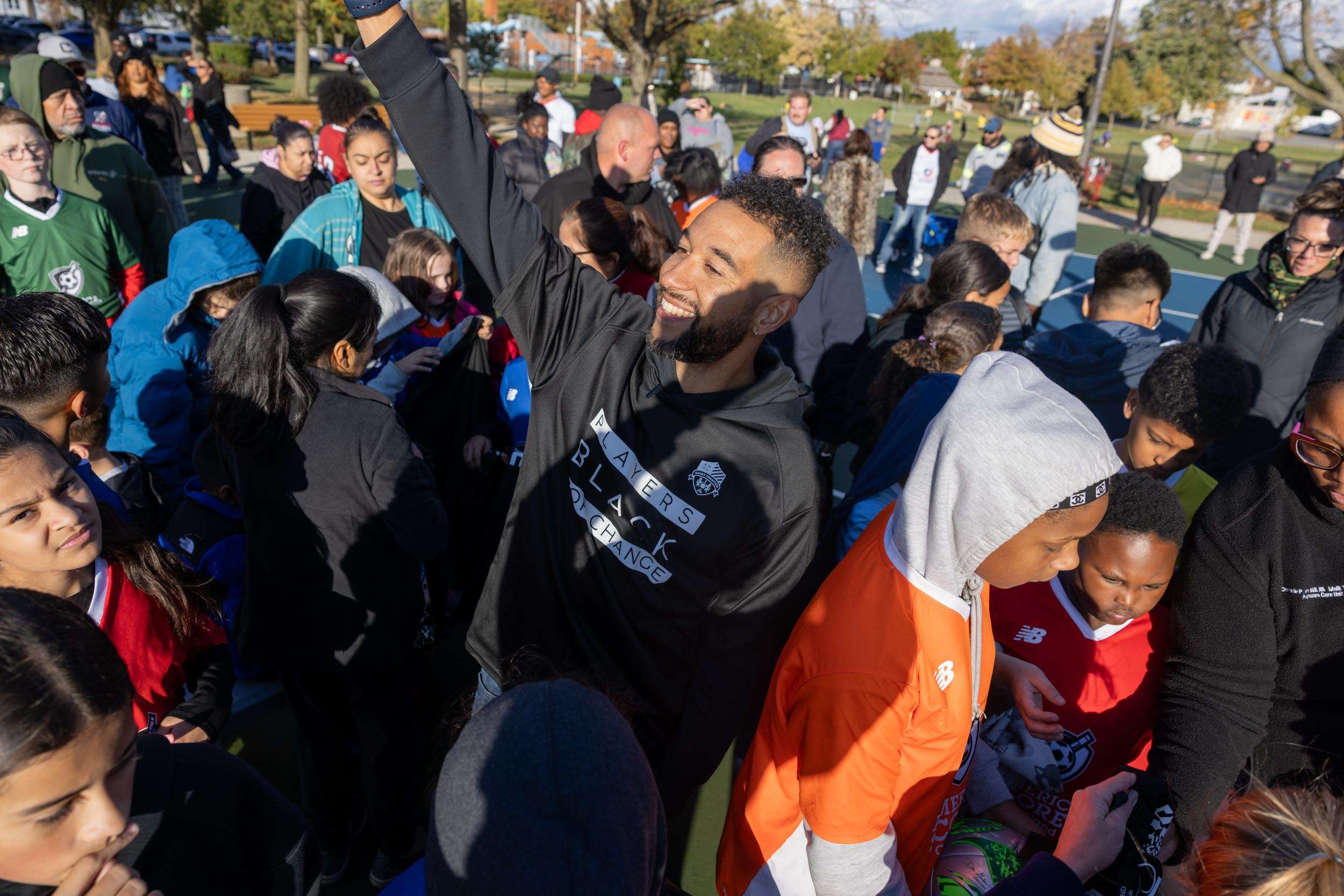
The non-profit was first formed by a group of footballers following the killing of George Floyd and the rise of the Black Lives Matter movement in the summer of 2020. Back then, it was a space for conversation and advocacy, where Black MLS players connected, talked, and worked with the league to amplify their community. That, remarkably, was nearly six years ago now. These days, Black Players for Change is so much more, a fully-established non-profit that is a major player in the soccer space. Other organizations have come and gone. BPC has not only stayed alive but also grown.  

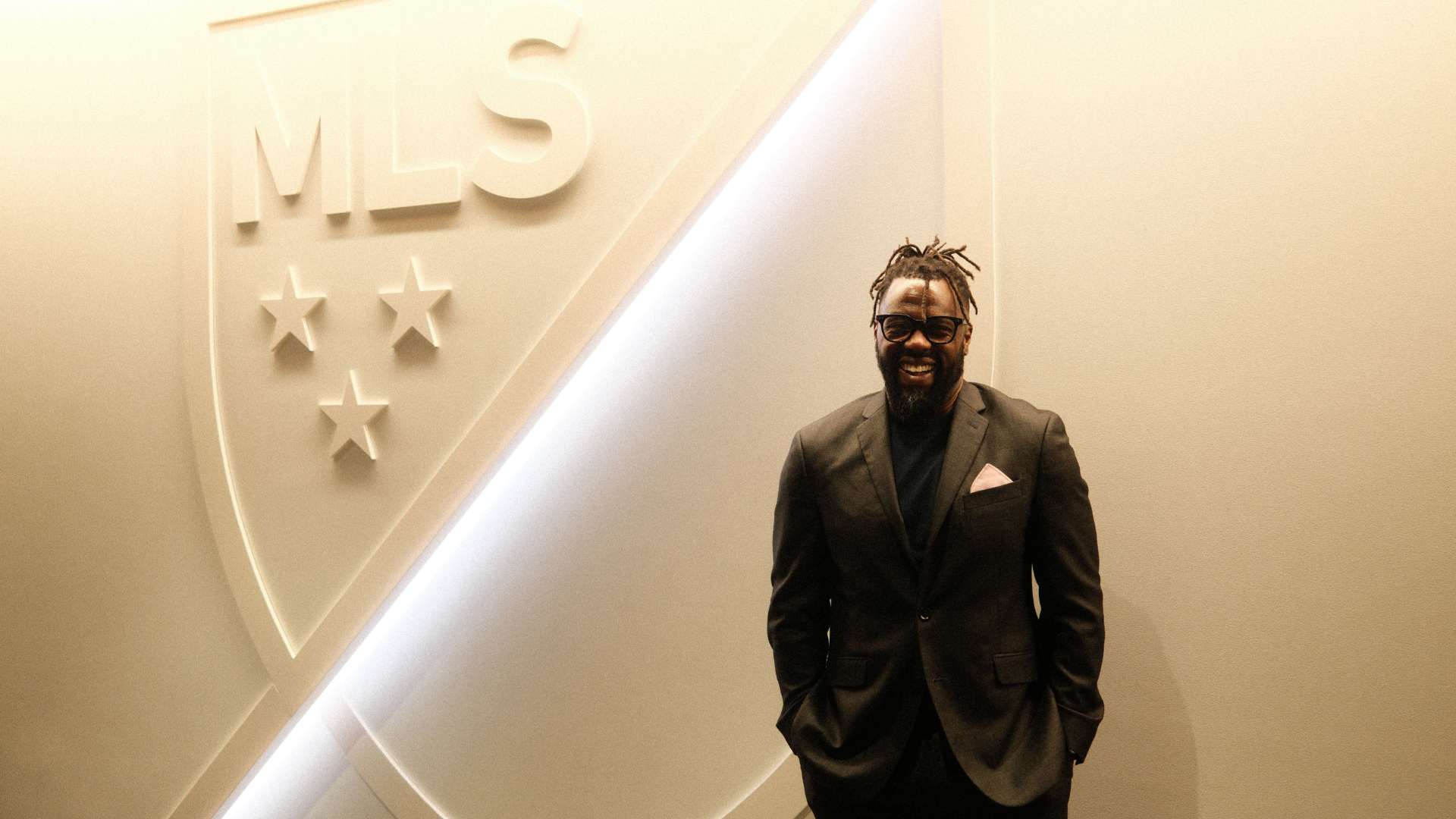
"We're still doing the work. And I think in a climate, and atmosphere in environments, that are what they are, I think it's a testament to how the organization has started, stayed, and has now built new momentum that's going to allow it to be sustainable for a lot longer now," Executive Director Allen Hopkins Jr. tells GOAL.

Indeed, for some time now, Hopkins and his colleagues have been able to think about the future. These days, BPC is about community, representation, and amplifying Black players and the work they're doing in communities - no matter how big or small.

"We now have this heat map of support that we've given, from Minnesota to Columbus to Austin to Washington, to Charlotte, through Hometown Heroes and the MLS All-Star game. But we also support people in some of the blackest communities in Florida, in Georgia, in Los Angeles, in Cleveland, Ohio, and in Indianapolis. We have such a great footprint of success," Hopkins said.

There is name value here. Miles Robinson, Justin Morrow, and Jeremy Ebobisse all have roles in the organization. But they are also a major player at the highest levels of American soccer, working with senior decision makers in MLS - right up to Commissioner Don Garber. 

To be sure, there are headwinds. Organizations with similar goals have lost funding. There will always, unfortunately, be detractors to their cause. 

"Sometimes it still feels like there's a lot of firsts out there to be accomplished," Hopkins admits. 

Still, that is challenge that BPC embraces, not runs from. It has survived. And with a World Cup four months away, it's time to think about growth. 

To mark Black History Month, GOAL is launching a series featuring four leading Black executives whose influence continues to shape soccer in America. The series opens with Hopkins, discussing BPC, diversity in the sport, and what the World Cup moment means for the game’s future.

NOTE: This interview has been lightly edited for brevity and clarity.
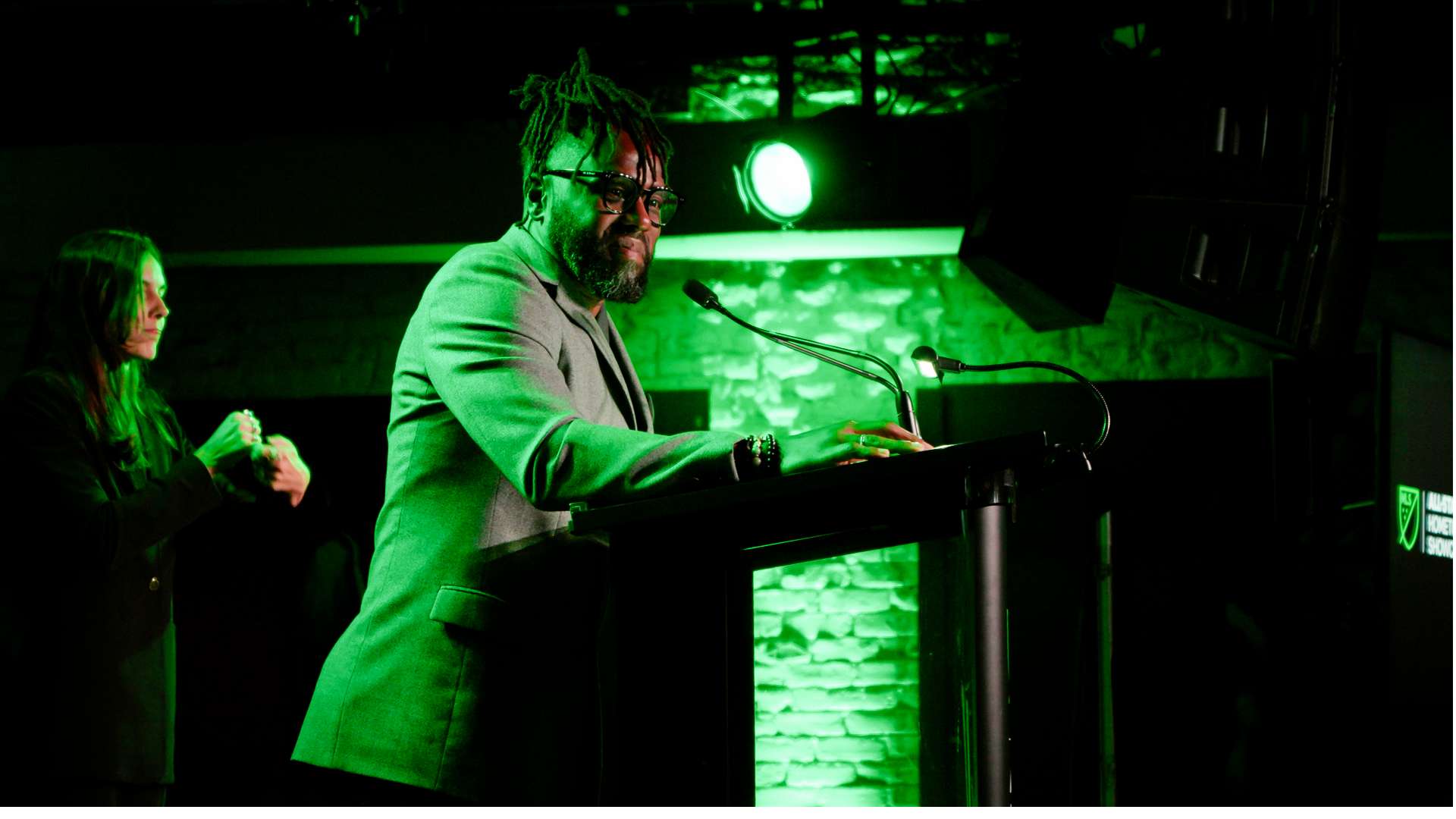
  • Allen HopkinsBlack Players for Change

    ON THE SUCCESSES OF BLACK PLAYERS FOR CHANGE

    GOAL: What are the successes of BPC, and diversity in MLS at the moment? What gives you a positive buzz? 

    HOPKINS: What gives me a positive buzz about the work that BPC is doing, that we're still doing the work. And I think in a climate, and atmosphere in environments, that are what they are, I think it's a testament to how the organization has started, stayed and is now built new momentum that's going to allow it to be sustainable for a lot longer now. And I think the resiliency that we've had to show as an organization is there time and time again. You know, this organization was forged in the fire, yeah, and it's living in that fire every day. And I think there's something to be said for that sort of baked in excellence, of perseverance, of being steadfast in the mission to build a community and to connect with others that allow them to be seen in all the spaces in this game.

    GOAL: When this whole thing started, did you have a vision that five, six years later, this would still be going? I suppose the specific conversations are different, but they never change. Does that make sense?

    HOPKINS: Well, I think there's something to be said for still being in the game, when you think about the reduction and the redaction of organizations that have similar charters and initiatives like BPC, however they were labeled as a "catch-all." The idea that the organization is still here and still has an important seat at the table with Major League Soccer and U.S. Soccer, the entire ecosystem, I think, speaks a lot to what is happening in terms of the allyship, the advocacy for those who are still doing the work, together in a community. And another thing is real is a community we've built, and the connection we have to players, the "OGs", the MLS greats, the young guys, everyone throughout the entire ecosystem: coaches and everyone. 

    I think we've consciously built amazing relationships that can be described as nothing but impactful, important, filled with humility, and all about living to serve other people. And you can't always quantify those things, so I think that's an important aspect. But I would also just say, for anyone who's continuing to do the work, it's, "Can you find allyship in the communities in which you're serving?" And for me, what BPC has done very, very well is amplify the work of others in their communities....

    And what I am hopeful for is that as people begin to really double click on the organization, they'll see the wonderful players right doing work. It's not just the wonderful and talented Justin Morrow. It's Jeremy Ebobisse, it's people like Jalil Anibaba, it's people like Malik Pinto Pinto and Miles Robinson, and there are so many people that are doing just really good work in their own way that's impactful. And my goal is to harness and aggregate all that together so everyone can really understand, day or night, when they look under the hood of BPC, they know it's an incredible organization.

  • Advertisement
  • BPC IIBlack Players for Change

    ON THE CHALLENGES THAT BLACK PLAYERS AND EXECUTIVES FACE

    GOAL: In your eyes, and from what you see, when you look at the landscape, what are the biggest challenges, for Black players, executives and anyone involved in the game? What is it like? What are people not seeing?

    HOPKINS: I would say people are not seeing the opportunity to innovate, to grow the game, because when I think about diversity or inclusion. It's about the opportunity to be a part of these groups, or a part of whatever system. And for me, it's just a missed opportunity for someone to discover someone that they never knew, that could be so successful, that was so talented. And when you just go from the same reservoir of people, you're going to get more of the same. When I think about how we can really grow this game, it's including as many different people in the game as possible. And for me, yes, the work we do is prescriptive and for the black community, but the work we do is for everyone. 

    You want to create an apparatus that helps every coach who's underrepresented, who hasn't had a chance to necessarily shine. So it's about relationships, honestly. We have to have strong relationships, not only in the front offices, but in ownership groups. But I would say what I've really tried to do is help reframe the narrative in the sense that we're still pioneering. There still has not been a Black MLS head coach born in America. So for me, it's still going. It's still like being one of one. It's still being and supporting those people, almost in a bespoke way, in a curated way, so they can be pioneers in their communities, in their neighborhoods, in their markets, in their homes, because that's still kind of what it is. Sometimes, it still feels like there's a lot of firsts out there to be accomplished. 

  • Allen Hopkins MLSBlack Players for Change

    ON RELATIONSHIPS WITH MLS

    GOAL: I wanted to come on to the World Cup. But for now, what can the league do? MLS, or people in positions of power? What would you call on them to do?

    HOPKINS: I wouldn't call on the league to do anything, because I think the league has shown itself to be there throughout. They continue to have a stake in this work they do. It continues to be important to have people specifically in around these roles in the C suite, to oversee and to lead and to guide this work. That constancy is amazing. I'm appreciative of those relationships, with Commissioner Don Garber, with [EVP, Chief Engagement and Inclusion Officer] Sola Winley, and [VP, Inclusive Performance and Club Engagement] Chris Busey. There are some people there who have done amazing work to ensure that BPC not only has a seat at the table, but they are also a real partner. So, for me, I think it's about almost taking it to the streets, like, how can we take the partnership that BPC has and MLS has and bleed that over or lend that over to all the other parts of the soccer sphere. How can we have relationships with [Elite Clubs National League] ECNL? How can we have stronger relationships with U.S. Soccer? How can we be more tied to whoever is a key stakeholder in this space? Because for me, I want to do work now that lives forever and ever. I'm in my legacy era.

    GOAL: That's the best quote I've heard in some time...

    HOPKINS: The headwinds are real, so it's very important to be calm. And I go back to what my dad said. I said this at the rookie symposium. My dad taught me so much. I've hosted the rookie symposium basically every year since 2015. And I have more gray hairs now. I said a lot of different things, but one of the things I come back to is you have to have this ability to understand that it's all going to be hard. You have to be good at hard....So I'm built for this. I love the challenges, I love the grind, but I also know these are my gifts, connecting with people. I love people. I love the chance to be in service for people. And that will always remain, no matter.

  • ENJOYED THIS STORY?

    Add GOAL.com as a preferred source on Google to see more of our reporting

  • Weston McKennie USMNTGetty Images

    ON DIVERSITY ON THE U.S. NATIONAL TEAMS

    GOAL: I love what you say about ECNL and youth soccer. If you look at the men's and women's national teams, a lot of the players are Black or people of color. What do you think the value of having a diverse national team is, especially for kids who are just consuming the game?

    HOPKINS: A national team should be reflective of our nation. All national teams should be reflective of the nations, no matter how they're constructed, no matter who's from where and who has been there, that's what it is. So I love the beauty of the World Cup, because it's the time where you can really be proud and be prideful for your country in a way that is agnostic and apolitical. And for me, I think about being able to see yourself for the first time? To have moments where we see ourselves in the first time in a mirror that is a performer or an event or television or whatever it is. 

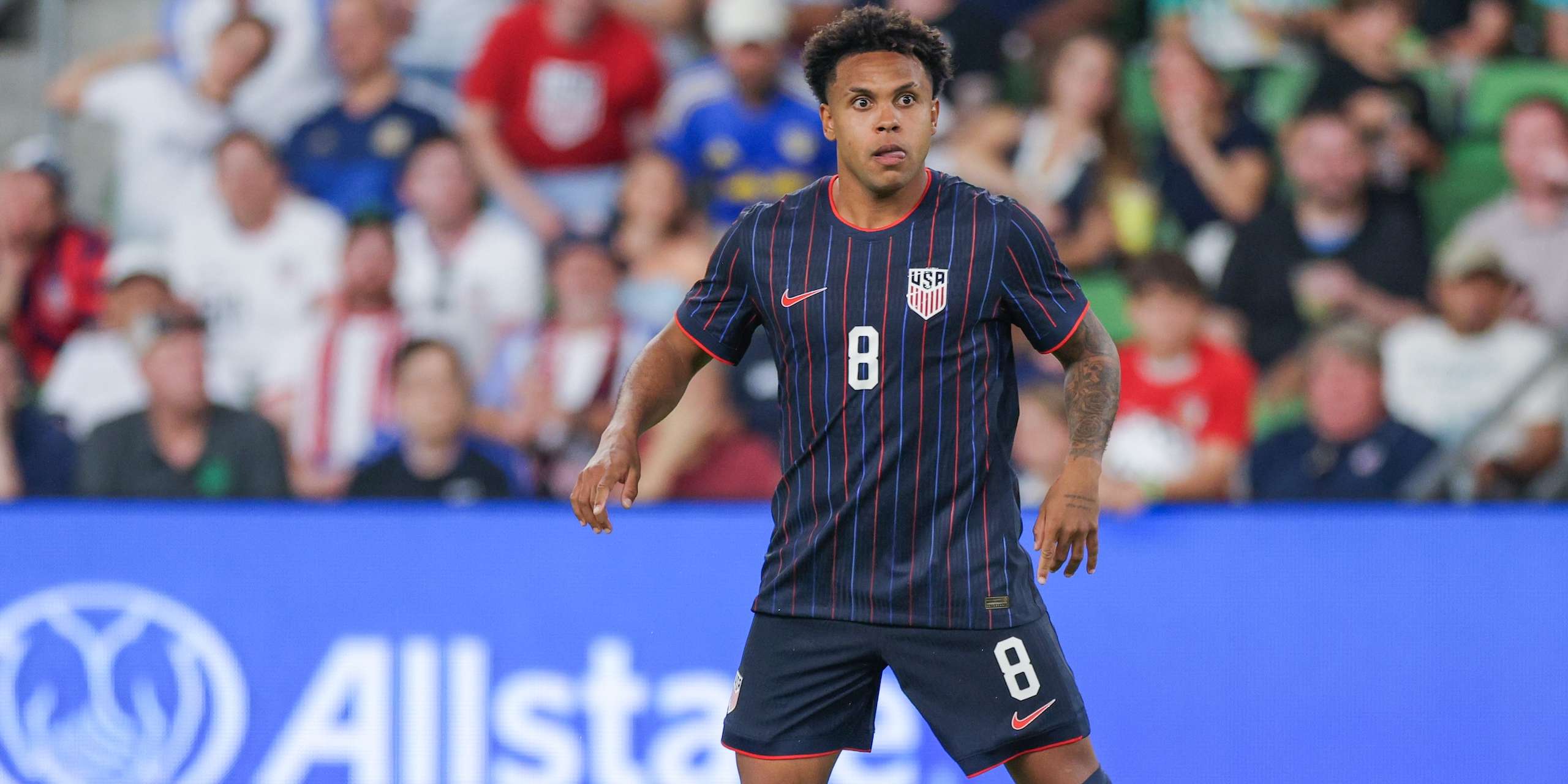
    And that's the beauty of having teams where there's something for everyone. I tell this to people all the time. A really great club, for example, they find a way to represent every part of that community. I think that's what the value is. And I think too, as you continue to aspire and create those connections to Black and brown communities, being a model, seeing someone that looks like you, that has your hair, or whatever it may be, those things are very, very important. So I can't even quantify what it would mean for any boy or girl to see themselves when they're watching the U.S. Men's or U.S. Women's National Teams, of seeing themselves and in that moment, dreaming and aspiring to have a life that fits what they've just seen. To me, that's the beauty, that's the work. That's what I'm living for.

  • Folarin Balogun, USMNT HIC 2-1Getty Images

    ON THE WORLD CUP

    GOAL: Let's talk about the fun stuff to finish it off. The World Cup, what does it bring to BPC? You mentioned you've got two seasons, like a before and an after? Talk to me about that.

    HOPKINS: We're excited about what we're doing in partnership with the Seattle local organizing committee, and around the Juneteenth match between Australia and the U.S. And we think we have a great opportunity to do something that hasn't been done before. So look, it's been coming for a long time, and I just think the World Cup is such a magical time. It's special. It's a lot of fun. We all get behind it, and I'm really looking forward to being a part of that. And for us, it's how can we introduce the game to as many people as possible from our communities? Can we also bring real resources? Which we're doing with partners in terms of education, STEM opportunities, small business support, and connecting Black C-suite leaders and ERGs in the Seattle corporate and tech space up there. 

    It's just a great opportunity to do some work that we know has a real chance to have that legacy feel that will always feel like we did this for a long time. So we're looking forward to it, and I think we all are looking forward to seeing what the net wins are after a great tournament, and we know that part of that formula is the U.S. having a good, strong run, and we want to be supportive of that and and everyone else that's coming to our to our country to partake in this great event, which I hope brings out the best in who we are and what we do as citizens.