Goal.com
Live
+18 or +21, depending on state | Commercial Content | T&C's Apply | Play Responsibly | Publishing Principles
Legacy México Copa do MundoGOAL

LEGACY: Mexico - the land of goals that has hosted more World Cups than any other nation

Mexico. A land of history, of sunshine, of joy… And of a passion that knows no borders.

In 2026, the world of football will return to North America. Three nations will play host to the biggest tournament on the planet: Canada, the United States, and Mexico. Of those, only one has hosted twice before, and is thus about to become the only country to host the World Cup on three separate occasions: Mexico, the eternal host of the beautiful game.

  • Argentina Captain Diego Maradona with Trophy 1986 FIFA World Cup FinalHulton Archive

    Pride in history

    When the ball first rolled at the 1970 World Cup, Mexico didn’t just open its stadiums, it opened its soul. The first World Cup ever held in Latin America outside of Brazil, with it came icons such as Pele, Franz Beckenbauer, Jairzinho and Tostao.

    The world discovered the Estadio Azteca, a cathedral of concrete and echoes. There, in the warm June air, one of football’s most legendary teams was crowned, as Pele’s Brazil lifted their third World Cup. The Azteca thus became sacred ground.

    Sixteen years later, in 1986, destiny chose Mexico once again. A country that was still scarred by the earthquakes of 1985 was regardless overflowing with hope. Subsequently, that World Cup was about more than football; it was resilience.

    It was also Diego Armando Maradona dancing past the English, touching the ball with the Hand of God and the heart of a genius. It was the smile of millions of Mexicans who, despite everything, poured into the streets with flags on their backs and dreams in their hearts. And while the world talked about Maradona, the Mexicans talked about hope. Because that World Cup wasn’t only played on the pitch - it was played in the streets, in the hearts of people who needed to believe that joy could return.

    Two World Cups; two unforgettable stories. Now, in 2026, it returns once more.

  • Advertisement
  • FBL-MEX-WC 2026-DRAWAFP

    The party returns

    When FIFA announced that Mexico, alongside the U.S. and Canada, would host the 2026 World Cup, it wasn’t just a logistical decision. It was a recognition of passion, of culture, of a people who live football as if it were a religion.

    For the third time, the world’s eyes will turn towards the land of chillies, mariachis and goals shouted at the top of one’s lungs. Mexico will become the only country in history to host three World Cups - and that is no small feat.

    This World Cup will be different, with 48 teams, 16 groups and 104 matches. But for Mexicans, every game played on home soil will be an emotional pilgrimage. From the monumental Estadio Azteca in Mexico City, to Monterrey’s BBVA Stadium, to the Akron Stadium in Guadalajara - three stages, three hearts beating in unison.

  • Aerial Views Of Banorte Stadium Ahead 2026 FIFA World CupGetty Images Sport

    Perfect stage

    Mexico doesn’t just offer stadiums, it offers atmosphere. Here, football isn’t watched, it’s felt. From the cries of '¡Si se puede!' echoing through the stands, to children kicking a worn-out ball down the street, the sounds of the game are truly visceral.

    Estadio Azteca, with its nearly 90,000 seats and decades of history, will once again be the epicentre of emotion. But it won’t just be a stadium; it’ll be a portal to the past. Every brick, every step, every corner of the Azteca holds a story told a thousand times, between grandparents and grandchildren, between tears and embraces.

    The BBVA, sleek and modern, with Monterrey’s mountains rising in the background, will show the world a contemporary Mexico. And the Akron, in Guadalajara, with its futuristic curves, will stand as the meeting point between tradition and modernity.

    Each city will offer something unique. Mexico City, the heart that never sleeps; Guadalajara, cradle of mariachi and tequila; Monterrey, a symbol of effort and innovation. Three faces, one passion.

  • ENJOYED THIS STORY?

    Add GOAL.com as a preferred source on Google to see more of our reporting

  • TOPSHOT-FBL-MEXICO-WC2026-BBVA-STADIUMAFP

    Magical host cities

    Each Mexican city hosting the World Cup will bring not just stadia, but a distinct way of feeling the game.

    In Mexico City, football borders on myth. It’s the pulse of a metropolis that never stops. From the tamale stalls that awaken the morning to the car horns that mark the rhythm of life, everything in the capital seems to beat to the tempo of the ball. Matches here aren’t mere fixtures; they’re a reflection of the nation itself.

    The Estadio Ciudad de Mexico will take centre stage, but all around it, every neighbourhood, every cafe screen, every humble fonda will become an extension of that collective roar.

    In Guadalajara, football blends with art and tradition. The ‘Pearl of the West’ has breathed the game since the glory days of Chava Reyes and the golden Chivas. Mariachi serenades and strolls down Chapultepec will set the scene for fans from around the world. There, the Akron Stadium will showcase a modern, vibrant Mexico; one that looks forward without losing sight of its roots.

    And Monterrey, ‘the Sultana of the North’, a city that stands for hard work, ambition, and faith in progress. In the stands of the BBVA Stadium, with the Cerro de la Silla rising behind, the chants will echo like thunder between steel and sky. The Monterrey crowd doesn’t just cheer; they push, they embrace, they demand, they make the team their own.

    Three cities. Three ways of understanding a country. In each one, football will feel different, but the message will be the same: Mexico is ready to make history once again.

  • Aerial Views Of Banorte Stadium Ahead 2026 FIFA World CupGetty Images Sport

    Temple of football

    When we talk of venues in Mexico, there is one that needs no introduction. A giant of concrete that breathes history, that has seen generations and legends pass through its gates, the Estadio Ciudad de Mexico, historically known as Estadio Azteca, is far more than a stadium; it’s a sanctuary of world football.

    Here, in 1970, Pele lifted his third World Cup, sealing Brazil’s status as the greatest team of its era. Here too, in 1986, Maradona defied the laws of football with the Hand of God and the greatest goal ever scored. Two geniuses, two immortal moments, one stage.

    Now, almost 40 years on, the colossus - renovated, modernised, yet still as magical as ever - will open its doors to the world once more. The Estadio Ciudad de Mexico will again feel the roar of the fans, the echo of the chants, the emotion of an entire nation beating as one.

    It’s no coincidence that this temple returns to the spotlight, for its turf has witnessed the moments that defined the modern game. And when that opening whistle blows in 2026, it won’t just mark the start of a match, it will be the world’s reunion with history.

    The Estadio Ciudad de Mexico won’t just host the World Cup; it will feel it, breathe it, relive it. Because there are places where football is merely played, and others - like this one - where football lives forever.

  • Saudi Arabia v Mexico: Group C - FIFA World Cup Qatar 2022Getty Images Sport

    Soul of the game

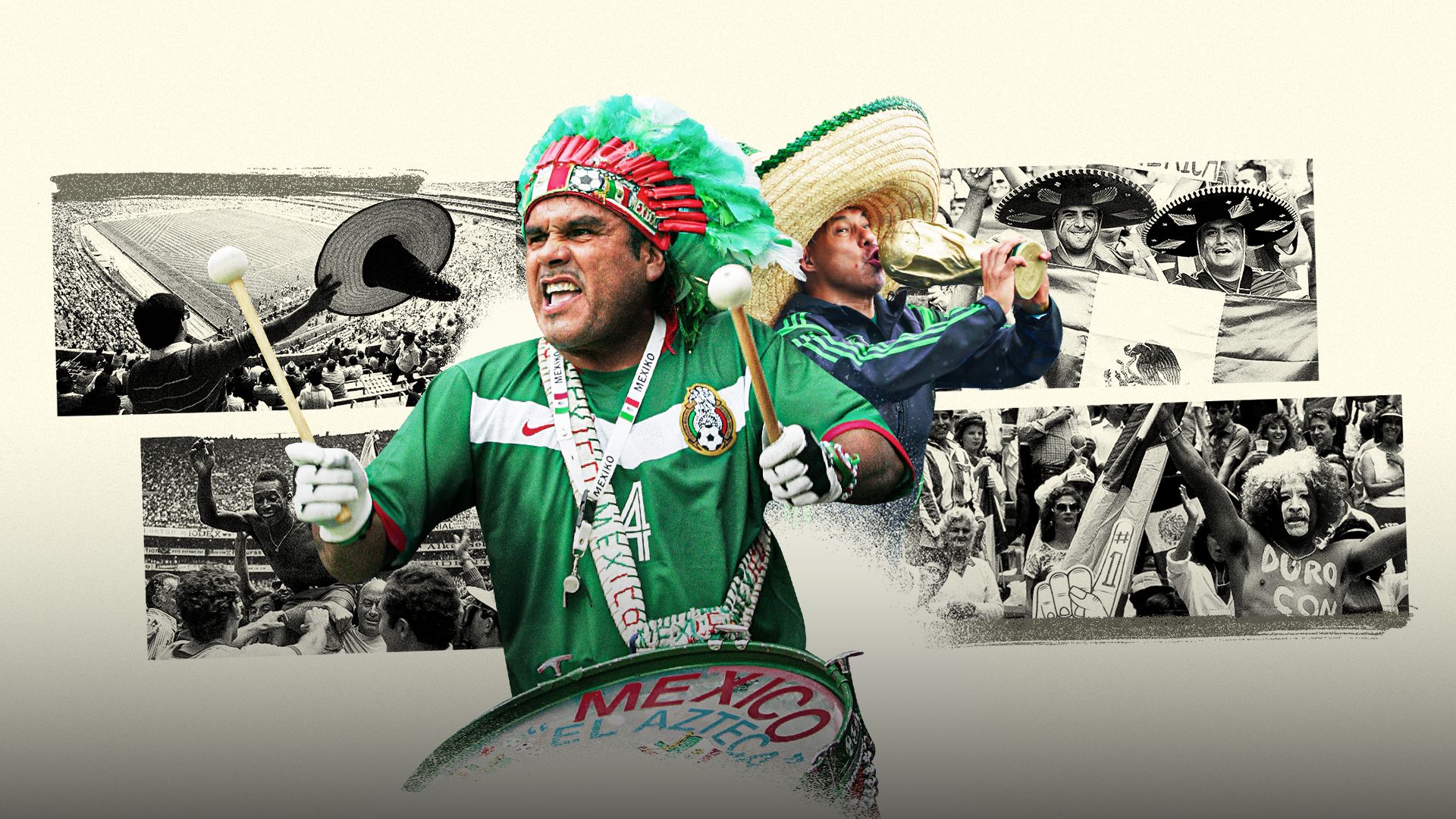
    To speak of a World Cup in Mexico is to speak of its people, those fans who turn football into a multi-sensory experience, who travel thousands of miles to follow their team while painted, dressed up, laughing and crying. Mexicans don’t go to a match, they go to celebrate life. They’re the ones who turn the stands into a carnival, who wave the flag until their voices give out, who sing ‘Cielito Lindo’ even when the score isn’t kind.

    In Russia, in Qatar, in South Africa; they were always there. And whether Mexico wins or loses, the show in the stands is theirs. They’re the fifth-largest group of fans at World Cups, but perhaps the first in passion. Because for them, football isn’t just a sport, it’s an identity, a way of telling the world: ‘Here we are, we are Mexico’.

  • FIFA World Cup 2026 Official DrawGetty Images Sport

    Co-hosts

    For the first time ever, three countries will share hosting duties in 2026. Canada, the U.S., and Mexico; three cultures, three visions of the game.

    In Canada, football is still carving out its space between hockey and baseball, while in the U.S. it’s an expanding spectacle amid a giant market with limitless potential. In Mexico, football is a language everyone speaks before they can even walk.

    This combination will be fascinating; the cool precision of the north, the grand stagecraft of the U.S., and the warm, passionate chaos of the south, all together, creating a World Cup that will be bigger, more diverse, more human than ever.

    And though the matches will be spread across a continent, there’s something only Mexico can offer: Soul.

  • FBL-MEX-WC 2026-DRAWAFP

    Legacy

    Every World Cup leaves a mark, but in Mexico, that mark always becomes history. The tournament of 1970 brought modernity: New stadiums, infrastructure, tourism. Nineteen-eighty-six left memories: Painted streets, children dreaming of becoming Maradona or Hugo Sanchez. In 2026, the legacy is likely to be ‘connection’.

    It’ll be a chance to show a more global, more technological, more open Mexico so as to attract visitors, investment, and culture, too inspire a new generation that never lived those legendary tournaments, but will grow up watching this one with wide eyes.

    And above all, to prove that football remains a tool for unity. Because if there’s one thing that defines the Mexican people, it’s their ability to find joy in the midst of chaos.

  • Tijuana v Chivas - Torneo Apertura 2024 Liga MXGetty Images Sport

    New idols

    On every neighbourhood pitch, there’s a child in a green shirt dreaming of scoring at the Azteca, a child who doesn’t know what 1970 or 1986 were, but who will soon live a World Cup of their own.

    For them, this tournament will be a mirror providing a reflection of what they can become. Because football isn’t only played on the field; it’s played in the minds of those who dream.

    And who knows? Perhaps among those children is the next great Mexican idol, the one player will make a nation tremble with a goal, carry its hopes, and lift it to new heights. The 2026 World Cup won’t just be a celebration of the past, it’ll be a promise of the future.

  • MEXICO-SOCCER-FANSAFP

    Colour, sound and soul

    Few countries in the world can turn a sporting event into a national celebration like Mexico can. From the murals that will cover the cities to the taco stalls packed with people watching on television, from the mariachis playing outside the stadiums to the vendors shouting '¡Fría la chela, fría!' - that’s the essence of Mexican football.

    Chaotic, vibrant, sincere; a constant carnival that infects even the visitors. For many foreigners, it will be their first Mexican World Cup experience, and when they see that explosion of colour, they’ll understand why Mexico is the most passionate football nation on the continent.

  • Mexico v Paraguay - International FriendlyGetty Images Sport

    Challenges

    Of course, there’s another story, that of the Mexican national team. A side that is equally loved and doubted, worshipped and criticised, but always followed.

    El Tri heads into 2026 under pressure to make history, because if there’s one thing Mexican football has yet to achieve, it’s going beyond the infamous fifth match at a World Cup. This time, though, things could be different. Playing at home, with their people behind them, with their history echoing in every cheer might be the push they’ve always needed.

    The challenge isn’t just sporting; it’s emotional. It’s about proving that talent, passion and discipline can come together; that Mexico doesn’t just host World Cups, it can win them.

  • WC2002-MEX-ITA-CELEBRATIONAFP

    Different kind of World Cup

    The 2026 World Cup will be the biggest ever, with more teams, more matches and more stories to tell. But also, more opportunities to connect cultures. Imagine Japanese fans dancing with mariachis, Canadian families trying tacos for the first time, Mexican supporters singing in English alongside Americans in the stands.

    It will be a meeting of worlds, a bridge between cultures, and at the centre of it all, the ball. That round object that speaks no language, yet unites millions.

  • Aerial Views Of Banorte Stadium Ahead 2026 FIFA World CupGetty Images Sport

    World looks to Mexico

    In 2026, when cameras from around the globe show those first close-ups of the Azteca, millions of hearts will beat as one. And when the whistle blows, the echoes of 1970 and 1986 will be heard once again.

    The world will remember why Mexico is special, because here, football isn’t entertainment, it’s an identity. Because here, a goal isn’t just a shout, it’s a way of existing.

    Mexico doesn’t need to prove anything; it simply needs to be. To be that country that turns every match into a celebration. To be that people who sing even in defeat. To be that flame that never goes out.

  • TOPSHOT-FBL-WC-2022-MATCH40-KSA-MEX-FANSAFP

    Passion that never dies

    Three World Cups. Three generations. One single passion. Mexico, the host that embraces, the country that sings, the heart that beats to the rhythm of the ball.

    Because in this corner of the world, football isn’t just seen, it’s lived; it isn’t explained, it’s felt. And when the whole world looks towards the Azteca in 2026, it will witness more than a football match. It will see an entire nation fall in love again with the game that defines it.

    Mexico: The land of football; the land of passion; the land that, once again, will make history.

    Auto translated by GOAL-e