+18 or +21, depending on state | Commercial Content | T&C's Apply | Play Responsibly | Publishing Principles
World Cup Legacy Germany No.9Getty/GOAL

LEGACY: Searching for the heir to Gerd Müller and Miroslav Klose - Germany's longing for a centre forward fit for the 2026 World Cup

Looking through German-tinted glasses, it is clear that the national team's greatest success this millennium also marked the beginning of a rather fundamental crisis. At least, that is easy to say with the benefit of hindsight.

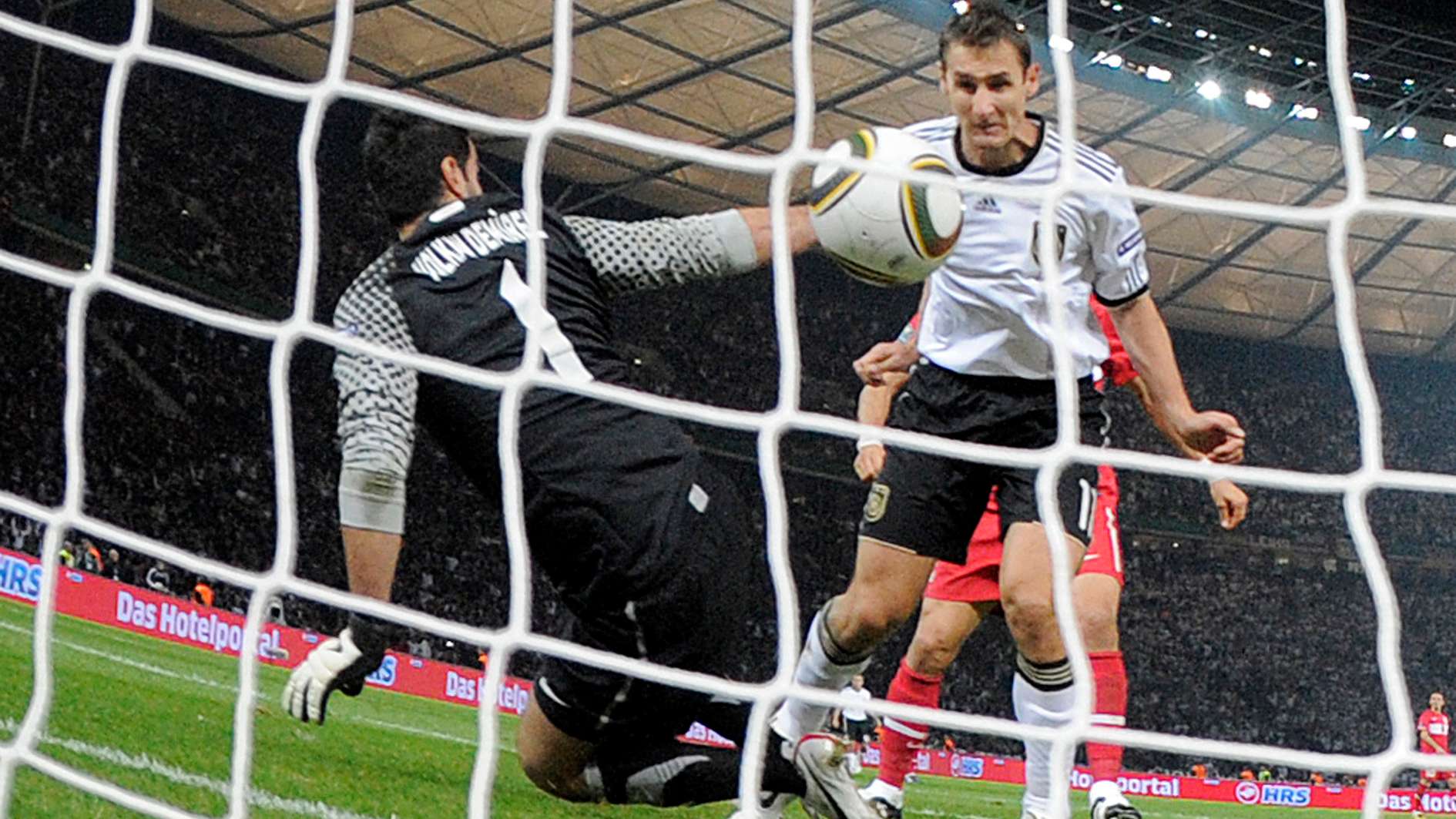
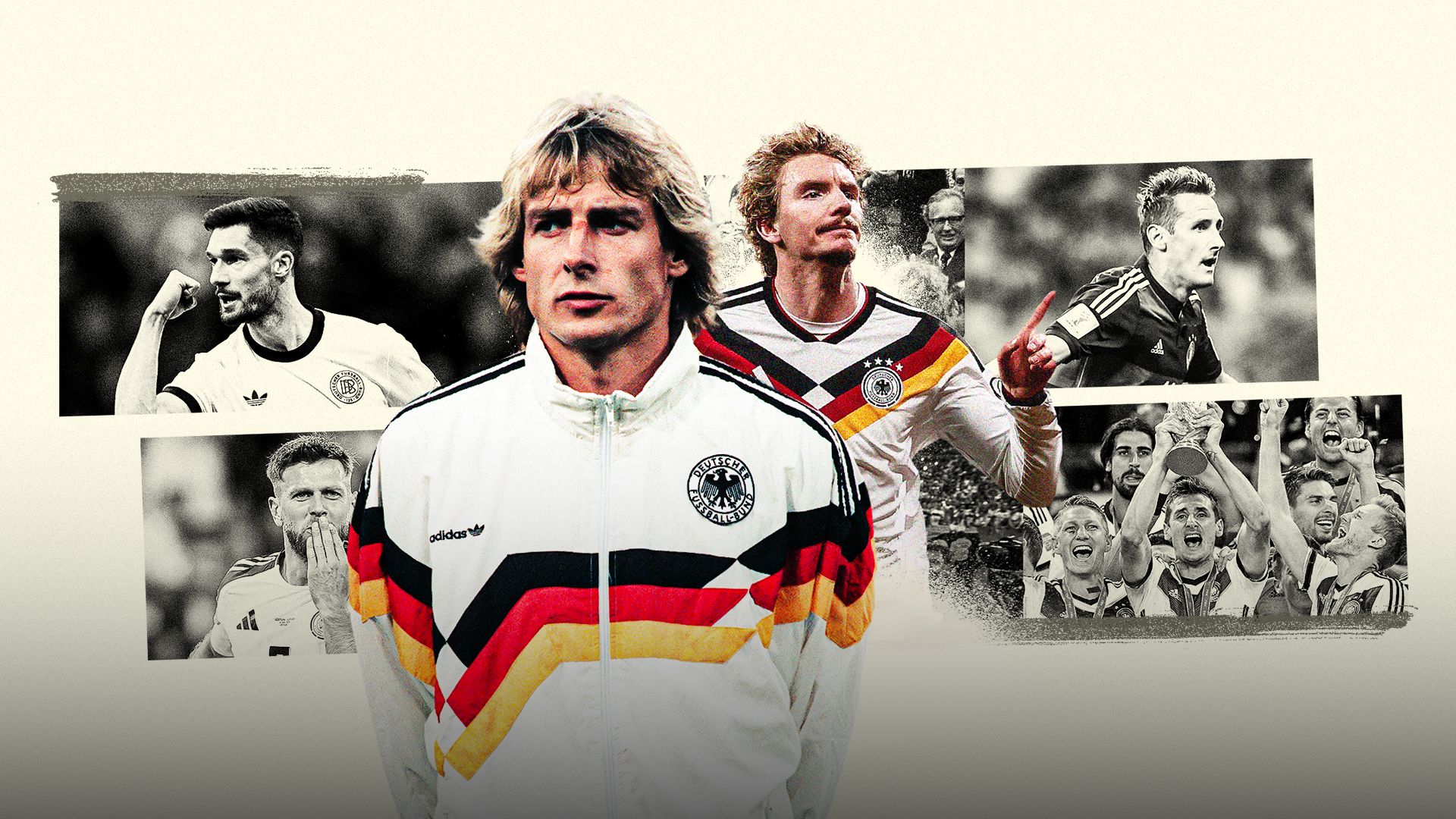
When Miroslav Klose scored his 16th World Cup goal in the memorable 7-1 victory over Brazil in the semi-final in Belo Horizonte in 2014, becoming the tournament's all-time leading scorer, a record that remains unbroken to this day, he not only ended his personal international career, but he also put an end to the era of the so-called ‘classic German centre-forward’, among whom Uwe Seeler, Gerd Müller, Klaus Fischer, Horst Hrubesch, Rudi Völler, Jürgen Klinsmann and Oliver Bierhoff are just the most famous names.

For over 13 years – or 137 international matches and 71 goals – Klose was considered the epitome of ruthless efficiency and instinctive goal-scoring. Klose, whose star rose internationally with his five goals at the 2002 World Cup, was Germany's last world-class striker. His departure from the national team after the triumph of 2014 meant the loss of a clear identity in the front line. From then on, the role of the German No.9 was mostly vacant, replaced by many tactical experiments and the search for a suitable successor.
  • TOPSHOT-FBL-WC-2018-MATCH43-KOR-GERAFP

    Search for a successor

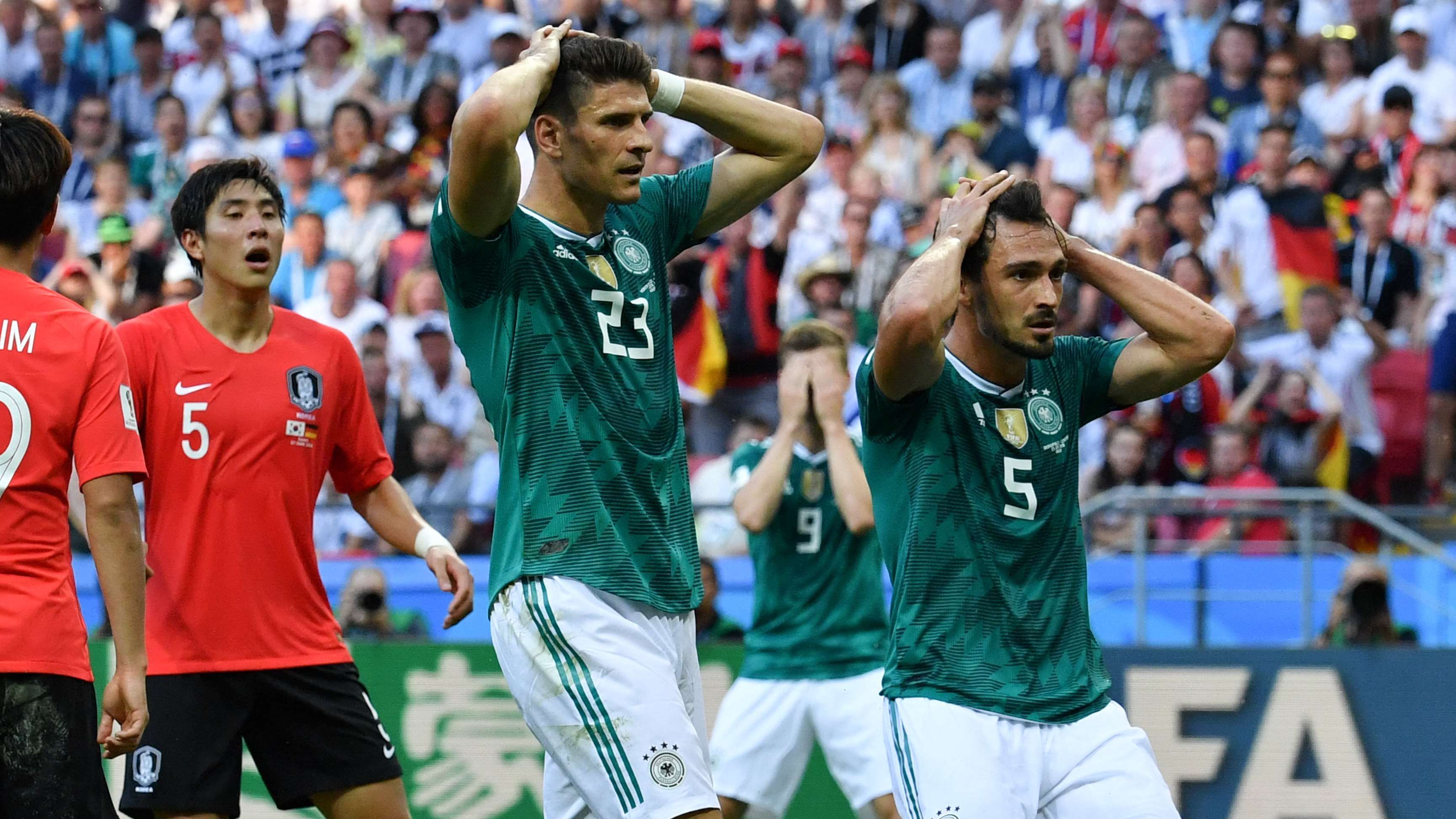
    Mario Gomez, who stood in Klose's shadow for a long time, could have been the one. He also played as a target man, bringing with him a good goal-scoring instinct and finishing ability, while at the same time not differing too much from Klose in terms of physical presence and heading ability.

    But Gomez and the national team never really clicked. The long-time striker for Stuttgart and Bayern Munich always struggled to convert chances in the national jersey, going almost three years without scoring in competitive matches. When he somehow managed to miss the goal from close range in the match against Austria during the group stage of Euro 2008, shooting the ball over the bar instead, he had to contend with the mockery from German fans for a long time.

    Without Klose, Germany tried for a while to achieve success with so-called false nines. They converted No.10 players or played with wingers through the centre. Mario Götze, Thomas Müller, Serge Gnabry and Kai Havertz were just a few of those who had to try their hand as false nines. These were all attempts to replace Klose's power with finesse in combination play. Three disastrous tournaments later – the 2018 World Cup, Euro 2021 and the 2022 World Cup – it was clear that this swap had not worked out.

    Since then, and especially with a view to the 2026 World Cup, the question that has been hanging over the heads of various DFB officials for years has become increasingly pressing: Where has the historic DNA of the German striker gone?

    The attempt to answer this question leads to the philosophy of youth development over the last decade-and-a-half, combined with the hope of finding a good solution by adopting international trends. The youth academies of German professional clubs generally produce versatile attacking players who are expected to combine, interpret space and participate in pressing. Players like Götze, for example. He brought Germany the World Cup victory in 2014 with his goal and played for Borussia Dortmund and Bayern Munich, but his career nevertheless remained slightly unfulfilled.

  • Advertisement
  • Spain v Germany: Quarter-Final - UEFA EURO 2024Getty Images Sport

    Relic of the past

    The training of pure, robust finishers was seen more as a relic of the past and was no longer really pursued explicitly. The invaluable ability to have a genuine goal-scoring instinct or to develop it in a more targeted manner in order to be able to prevail against two defenders, to be a fraction of a second quicker to the ball and to force a goal with the entire body in the manner of Gerd Müller – this power was sacrificed in favour of technical flexibility.

    The desire was for attacking players who could participate in the game, partly because the supposedly static centre-forward was perceived as a tactical ‘brake’. He was denigrated as a figure who only disrupted the flow of possession and would have required ‘simple’ solutions such as a cross, which in those years was considered a rather underdeveloped offensive strategy.

    The consequence of this ideological aberration was a systematic impoverishment of one of the most important positions in the game. Where once Gerd Müller, Völler, Klinsmann and later Klose stood and tied up defensive lines or wore down opponents with their mere presence, there was suddenly a void. The next generation of players, including Thomas Müller, Götze, Timo Werner, Havertz and Gnabry, were able to run into space in a tactically sophisticated manner. However, they often lacked the final touch at the moment of decisive confrontation in the penalty area.

  • FBL-EURO-2012-GER-TURAFP

    'Worst of the top nations'

    The fundamental mistake in training was the assumption that the physical toughness and killer instinct of a ‘real’ No.9 could be learned later, while in younger years the cognitive and technical skills of a No.10 or winger were prioritised.

    But Klose's success was based not only on his continuous presence and constant duels with his opponents, but also on his total focus on the goal. That is simply skill, no question, but it is also a mental attitude that can be trained over many years and must be consolidated. Otherwise, a striker cannot be the successful end point of a team's attack in theory or in practice.

    In Germany, young, physically strong striker talents were often encouraged to drop back, make themselves available for passes instead of exploiting their physical advantages in the most dangerous area of the pitch. Training was dominated by the fear of losing the ball and the love of perfect structure.

    Chance, improvisation, and perhaps even raw power in the penalty area – all things that are part of the striker gene of a classic No.9 – took a back seat. Hannes Wolf, director of development at the DFB since summer 2023, quickly recognised this tactical error in the structure of the youth academies. He recently put it bluntly in the Frankfurter Rundschau: ”We have trained poorly, there's no point in kidding ourselves. We were the worst of the top nations in terms of player development.”

  • ENJOYED THIS STORY?

    Add GOAL.com as a preferred source on Google to see more of our reporting

  • Germany v France - UEFA Nations League 2025 Third Place MatchGetty Images Sport

    Commitment to pragmatism

    That was a harsh slap in the face for the entire training philosophy, and Wolf has set himself the task of revolutionising it. With regard to the training of genuine attackers, he has already said: "If we take an 11-a-side game, the striker has 30 touches of the ball in 90 minutes. If he trains for half an hour, he has 10 touches of the ball, if you do the maths. How are you supposed to develop strikers through pure 11-a-side, through a large game format? It doesn't work. It used to work, but they didn't grow up in training. They grew up on the pitch."

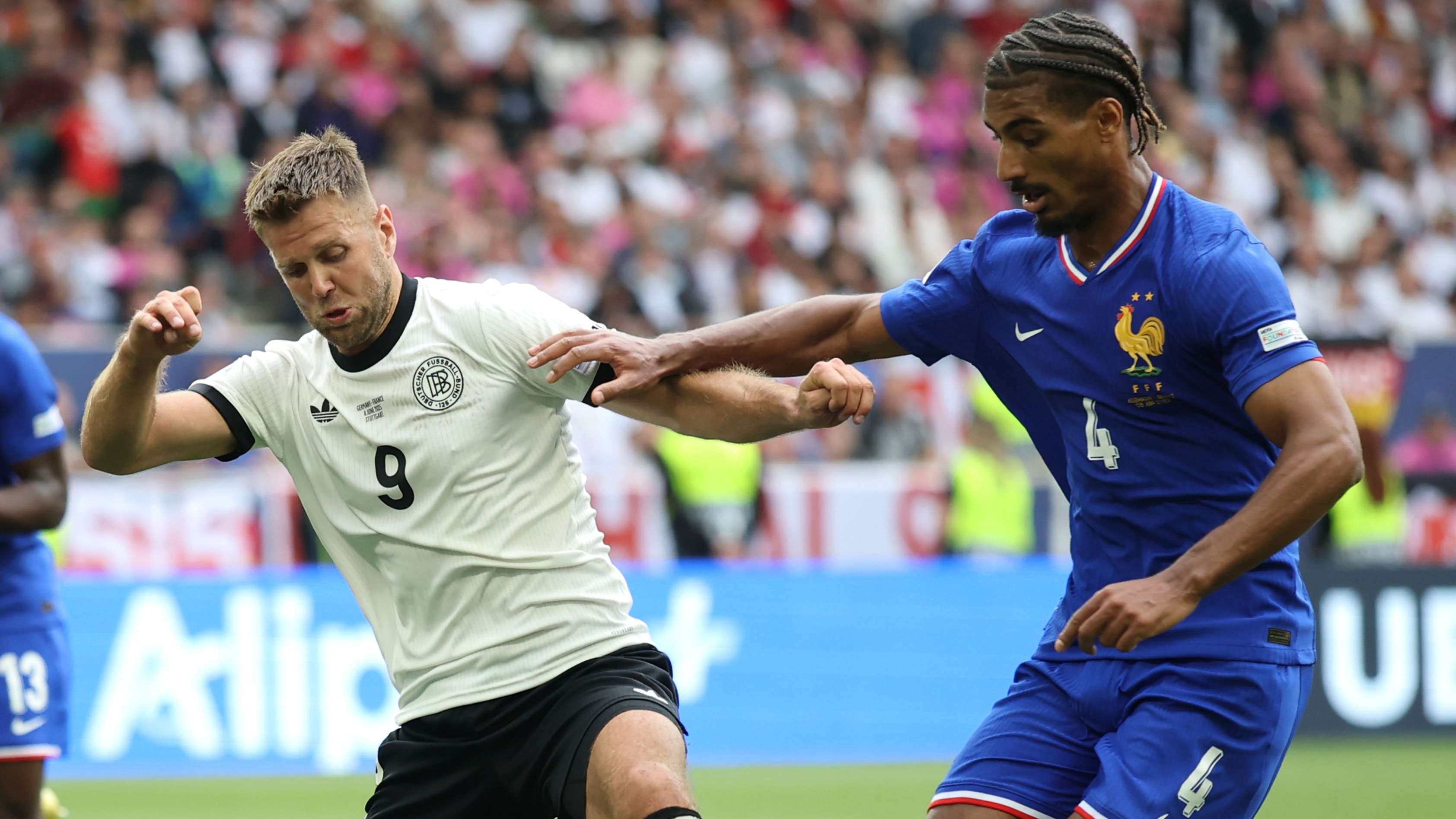
    The consequence of the impoverishment of the German striker pool is that the DFB squad is still searching for a pragmatic solution on the road to the 2026 World Cup. A ‘German Harry Kane’ or a talent who could one day become world-class is simply not there. The late discovery and first call-up of Niclas Füllkrug in November 2022 marked the clearest end to the ideology of the false nine. When the then Werder Bremen player made his Germany debut, he was the oldest outfield debutant since Martin Max in 2002, at 29 years and 280 days.

    Although not at world-class level, Füllkrug brought exactly the qualities that Klose had perfected: Physical presence, heading ability and finishing skills. His call-up was a commitment to pragmatism. This necessary departure from the supposed aesthetic ideal was also supported by the management.

  • Germany v Italy - UEFA Nations League Quarterfinal Leg TwoGetty Images Sport

    'We don't have a huge number of top strikers'

    DFB sporting director Rudi Völler, himself a legendary striker, knows only too well that, especially in tournaments, you need a man who can score goals that are sometimes simple but powerful.

    “I have repeatedly emphasised that we need this type of striker who guarantees goals and is also willing to do the dirty work,” said Völler, later making it even clearer: “Of course, we would prefer to have a world-class centre-forward, but we don't have one at the moment. We all know that we don't have a huge number of top strikers. We don't have that many, and we have to nurture and care for them. We have to get the best out of them.”

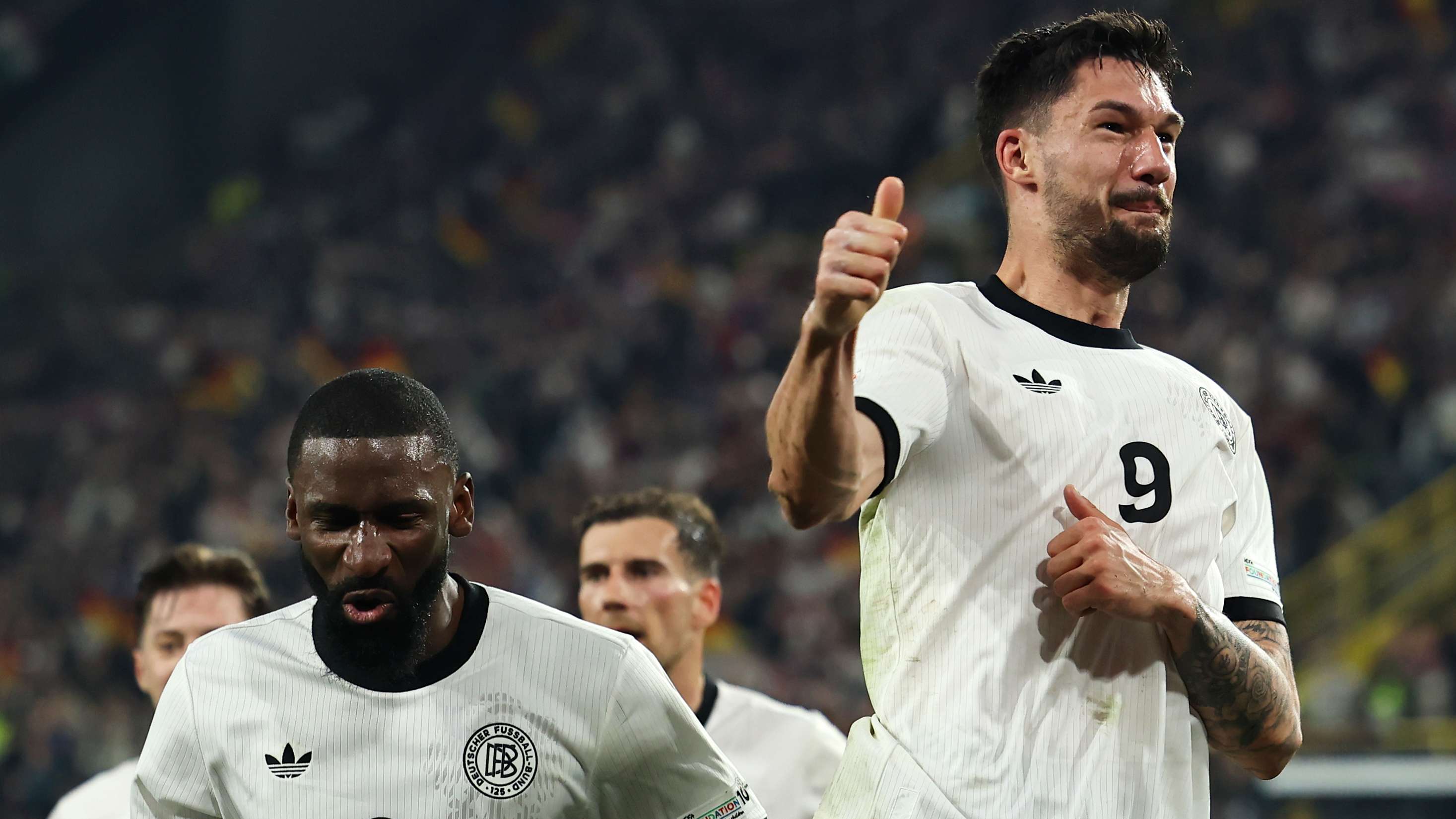
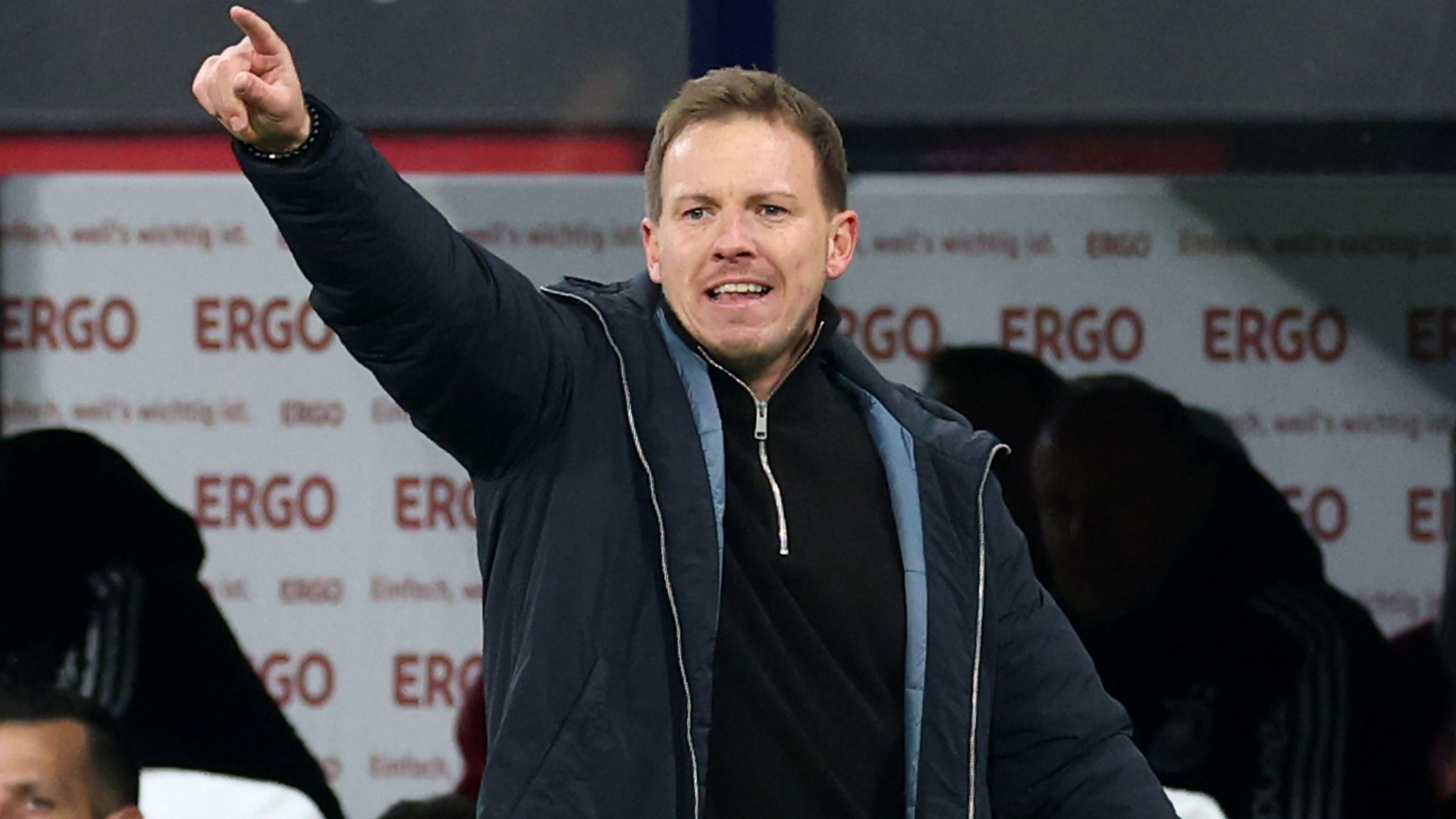
    The emergence of Tim Kleindienst from Borussia Mönchengladbach, whom national coach Julian Nagelsmann first called up in October 2024 as a replacement for the injured Füllkrug at the age of 29 years and 41 days and who also impresses with his physical strength, served as further evidence of this return to form, as well as proof that the tactical change in Germany has not worked.

    Now the team was trying again with players like Füllkrug and Kleindienst, who offered the team a real vertical option, took some of the pressure off the midfield and provided the wingers with a clear target man. They also brought back some much-needed toughness. After all, neither Füllkrug nor Kleindienst are delicate magicians. But they are masters of the first touch in the box, can secure a long ball with their backs to goal and have the determination to stick their foot in when others hesitate. However, Füllkrug and Kleindienst are far from world-class.

  • Germany v Slovakia - FIFA World Cup 2026 QualifierGetty Images Sport

    Rise of Woltemade

    Over the years, the DFB has had to realise that the classic striker type cannot be replaced, but must be revitalised. The big challenge now is not to force new talents into the wrong roles again, but to promote their natural strengths. Whether this will result in a ‘new Klose’ remains to be seen, but the direction of travel must be right.

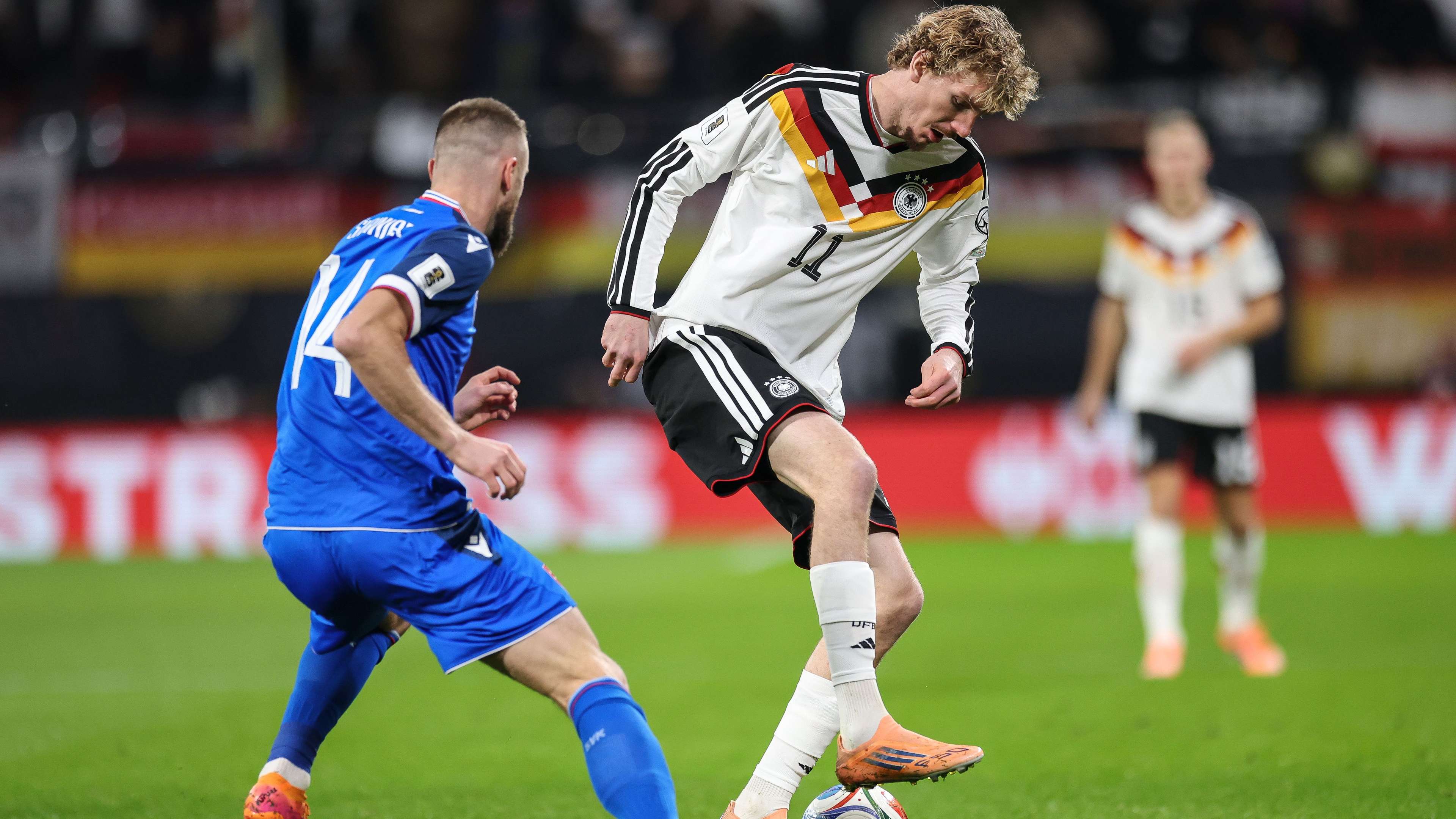
    Nick Woltemade is currently the player who best embodies the physical dominance of the classic striker combined with the modern requirements of the game. At just under two metres tall, the 23-year-old is predestined for the role of target player, but at the same time possesses remarkable technique and simply enormous talent. He is a candidate who, given the appropriate further development, can play at a world-class level.

    When Nagelsmann and Völler saw Woltemade, who has since moved to Newcastle United for a transfer fee of up to £69 million (€90m), shine for Stuttgart in the DFB Pokal final last May, they were able to observe “his technical skills and the elegance with which he can dribble past opponents.”

    Woltemade's “power and understanding of the game” are “top notch,” explained Völler, adding: ”Despite his height, he still has room for improvement in his heading, but these are things that can certainly be learned and trained. If he improves by a few per cent, he has a great career ahead of him.”

  • Germany v Slovakia - FIFA World Cup 2026 QualifierGetty Images Sport

    Litmus test

    Woltemade could be the one to bridge the gap between Klose's legacy and today's demands of top-flight football, a striker whose primary weapons are his physicality and instinct, but who also has the tactical intelligence to fit into the pressing and combinations of Nagelsmann's system – and who is also extremely agile and has fine technique. Woltemade's development is, in a sense, the litmus test for the DFB's new philosophy.

    Nagelsmann was recently quite satisfied with the progress made by the now-eight-time international: “I think he did quite well. He still has a few steps to take, but he's on the right track.”

    The national coach's words can also be understood as instructions to Woltemade to use his talent and adopt the right attitude in order to make regular progress.

    The development of more players like him now requires a rethink at all levels. Youth coaches must once again allow specialisation in the striker position. There needs to be more individual training that focuses exclusively on shooting and heading techniques under extreme pressure. The repetition rate of these specific situations, which Wolf describes as essential, must increase exponentially in order to ideally preserve the instinct that distinguished someone like Klose.

    With the help of Wolf's work, Germany must ensure that strikers learn once again to master the moment of decision in the penalty area, as the prominent examples of the past were able to do intuitively. It is a matter of correcting what has been forgotten in the era of possession hype.

    Only in this way can the German national team, which continues to have a wealth of technically-skilled midfielders, find one of its potentially last pieces of the puzzle for success. The hope is vague, but the necessity is clear: The continuity of the German goal-scoring tradition must be restored in order to compete at the top globally.