Goal.com
Live
+18 or +21, depending on state | Commercial Content | T&C's Apply | Play Responsibly | Publishing Principles
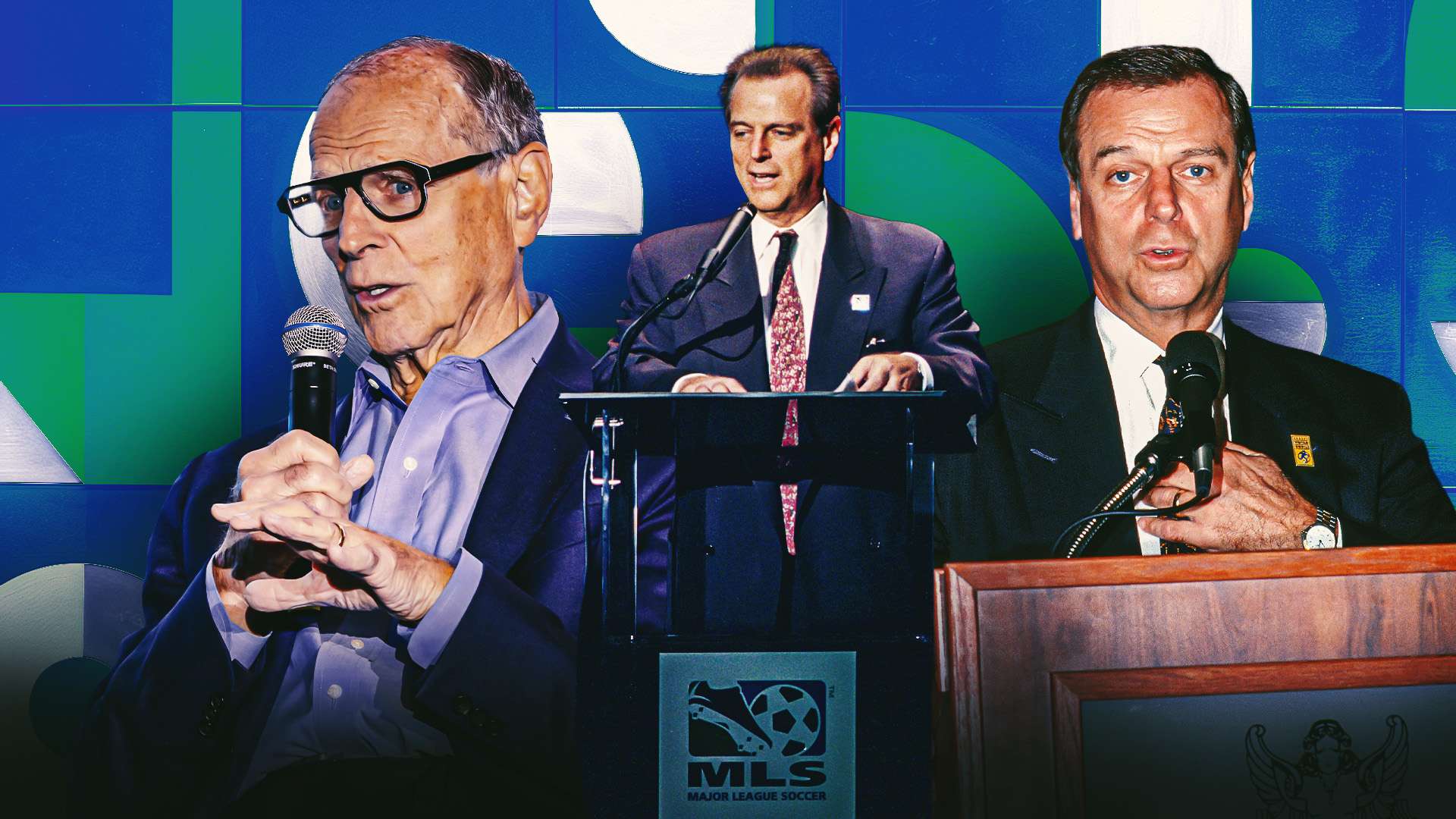
Alan Rothenberg GFXGOAL

From helping build the Showtime Lakers to launching two World Cups: How Alan Rothenberg reshaped American soccer forever

Alan Rothenberg got into soccer because no one else wanted to. 

It was 1980, and the lawyer, who worked in Los Angeles, made it clear that he wanted to help, in any way he could, with the 1984 Olympics. But he also didn’t want to put too much effort in. 

“I was motivated by just basically being a good citizen in Los Angeles. And I was interested, honestly, in soccer, because it would take the least amount of work before the tournament,” Rothenberg told GOAL. 

And so the journey of who many consider to be American soccer’s founding father began. 

“I didn’t have a vision at the start,” he admitted. 

For a guy who grew up in the Midwest and spent his life following traditional American sports, this was an unexpected career pivot. Make no mistake, Rothenberg didn’t need soccer. He had already been pretty successful. He helped build the showtime Lakers - brokering deals for Kareem Abdul-Jabbar and Magic Johnson to land with the team (a duo of moves that sparked the Lakers into eventually becoming the most valuable franchise in the NBA). He represented Olympic sprinters, LPGA champion golfers, and World Series champion baseball players. His work was instrumental in bringing the Clippers to Los Angeles in 1984. 

So, Rothenberg had United States soccer thrust upon him. And he stuck with it. His story is one of investment, interest, and then, over time, true love. What started with an agreement to organize an event took him to stadiums in Spain, meetings with then FIFA General Secretary Sepp Blatter in Los Angeles, and a seat at the table as the United States hosted the 1994 World Cup. It saw him play a central role in the expansion of the women’s game and help found Major League Soccer. Indeed, there is a line to be traced from Rothenberg’s original agreement, through dusty, volunteer-filled rooms in Colorado Springs - the early home of the USSF - right into the cavernous stadiums of the 2026 men’s World Cup. Rothenberg, whether he wanted to be or not, is the architect of soccer in the United States.

  • Johan Cruyff NASLGetty

    'It started at zero'

    But that doesn't mean he knew much about the sport.

    “It started at zero. I was a Midwestern guy growing up in the 50s and 60s. I love sports, but it was all the traditional American sports,” he said. 

    He wasn’t a complete novice. He did flirt with soccer here and there - at least, for business purposes. Rothenberg had part-owned the NASL’s LA Aztecs from 1978 to 1980. He was involved in a business plan to negotiate with Cuba’s longtime leader, Fidel Castro, on Cuban-American relations. The politics fell apart, but a friendly between the Cuban National team and their Aztecs was brokered. A photo of Castro and his wife is a family heirloom of sorts. 

    “One of the papers called her the Henry Kissinger of sports,” Rothenberg pointed out.

  • Advertisement
  • 1984 olympics soccerGetty

    'We didn't have any great expectations for soccer'

    Many who want to look for that signature inflection point where soccer started in the United States will point to the 1994 World Cup. It’s a fair assumption. After all, that’s when the global game descended on North America in full. Rothenberg rejects that notion. That’s because he was there when it really began. 

    It was 1980, and Rothenberg wanted to get involved in the Olympics in Los Angeles. He was a lifelong resident of the city, and, in effect, felt a civic duty to give back. He knew people in the IOC, and made it clear that he could help. Soccer, in effect, was assigned to him. He was told, basically, to plan men’s soccer, quite the task given that it was set to be the first year the International Olympic Committee added professionals to the Games. 

    Rothenberg was a massive sports fan and knew how to put on a show. He had dabbled in ownership. But the nuances of the sport? Not necessarily his forte. 

    “I knew there was something called soccer that they played over there [outside of the U.S.]. And I had heard of Pele, mostly because how could you not have heard of Pele?” Rothenberg said. 

    What followed, then, was an education. The 1982 World Cup, held in Spain, is not one that lives long in the memory of most fans. Still, Rothenberg was there in Iberia, undergoing what was, in effect, a crash course in the beautiful game. There are, it must be admitted, worse places to learn how soccer works - and, more importantly, how fans are connected with it. 

    Armed with his newfound knowledge, Rothenberg went about setting up soccer for the Olympics. It was the first time the sport had allowed professional players in the tournament, which meant that some rules had to be laid out. Crucially, Rothenberg and his team ensured that the tournament would be U-23 only, such were the fears that the Soviet Union - then armed with a fine generation of talent in their prime - would come to the United States and claim gold (it worked). 

    And then there was the problem of ticketing. Sure, Rothenberg had been to a World Cup. He had seen the buzz that big NASL signings such as Pele, Johan Cruyff, and Franz Beckenbauer could generate. But Olympic soccer, a traditionally amateur sport? That was harder to gauge. 

    “We didn't have any great expectations for soccer in the Olympics, because we made the under-23 rule, trying to basically stop the Russians, the [then] communists, from letting their top pro players in. So it was never one of the major sports,” he said. 

    It is impossible to count how many people got into the opening game with illegal tickets, or without buying one at all. But Rothenberg puts the number at more than 20,000. They printed 35,000 for the event, a group stage clash between Italy and Egypt. In truth, the assumption was that they might have a few spare by the end of the night. But the lines grew and grew in the sprawl of canyons and parking lots around the Rose Bowl, thousands descending on the iconic stadium tucked gently just outside Pasadena, Calif.

    The eye test suggested his calculations were wrong. But he also couldn’t tell thousands of soccer fans to go home. So, they printed tens of thousands of rolls of fake tickets or handed out old ones from movie theaters. The official attendance for that game is listed at 37,400. Rothenberg estimates, from his home in Los Angeles, some 40 years later, that it was well north of 50,000. 

    “By that time, obviously, we were pretty excited. It was a pretty big deal,” Rothenberg said. 

    They amended their mistake by the next game, printing 60,000 for the remainder of the group stage. But even they couldn’t have expected the furor that came with the final. 100,000 people showed up at the Rose Bowl, making it the highest attended soccer match in U.S. history at the time. 

    Perhaps more importantly for Rothenberg’s career, Blatter -  future FIFA president - was in the bleachers, watching on as the famous Mexico-inspired wave rippled around the stadium. The tournament finished with an appropriately extravagant fireworks show. Rothenberg knew that he had sold FIFA on the idea of a World Cup - even if that wasn’t his original aim. 

    “And that,” Rothenberg said. “Was the turning point for soccer in the United States.”

  • Alan Rothenberg 1994 World CupGetty

    'People were scared to death'

    By 1990, Rothenberg was no longer a full time lawyer. His day-to-day in the early 1980s had been a mix of legal cases and piecing together plans to host soccer in Los Angeles. Now, he was in a dusty trailer in Colorado Springs, doing unpaid work for what was then the U.S. Soccer Federation. It wasn’t the best financial situation. In fact, a financial advisor, who conducted a review of the finances, ruled that they were officially broke. 

    Rothenberg, then, got paid leave from his firm - if only to keep the lights on in his Los Angeles home. His remit? Figure out how the United States could host the 1994 World Cup. He worked for free, and negotiated a contract in which he would make a tidy bonus should the tournament be successful. 

    “People were scared to death that the World Cup was going to be a financial disaster. And so I didn't want to contribute to the noise, if you will, by taking a salary,” he said. 

    Rothenberg did not, as he often emphasizes, bring soccer to the United States. No, that deal was done before him. Rothenberg, instead, had to put the finishing touches on it all, and get the logistics sorted. Sure, his predecessors pitched, dreamed, and did the bigger picture stuff. But it was on Rothenberg to actually make it all play out. 

    By the end of it all, things had gone well. The 1994 tournament was the highest attended World Cup in history, drawing 3.6 million fans, and an average of 67,000 people per game (a mark which doubled the numbers of the 1982 tournament Rothenberg attended). The U.S. side, which made it to the quarterfinals and birthed a whole generation of soccer fans. 

    Rothenberg, in hindsight, thinks it was close to perfection. 

    “I’m sure there were little things here and there [that went wrong],” Rothenberg said. “But nothing all that significant.” 

    Proof was handed to him at the final. The game itself was a famously drab affair, yet those who had been looking for faults found nothing, as the sports editor of the LA Times outlined to him. 

    “He said: ‘Alan, I gotta hand it to you. I had reporters in all nine venues looking for something bad to write. And I couldn’t find anything,'” Rothenberg recalled.

  • ENJOYED THIS STORY?

    Add GOAL.com as a preferred source on Google to see more of our reporting

  • Alan Rothenberg Major League SoccerGetty

    Helping create MLS despite reservations...

    One of the stipulations of the U.S. hosting the World Cup, of course, was the founding of a professional soccer league. It made sense at the time. How could the U.S. be a soccer country if it hadn’t codified soccer as part of its professional sports landscape? Part of Rothenberg’s remit was getting buy-in from would-be owners. 

    And there wasn’t tons of interest early on. 

    “This was before sports was an investment sector as it is now. So your typical owner was just a wealthy person in the community. You didn't have corporate ownership and you didn't have private equity. So we had to go around in the old-fashioned way and just approach people to invest,” he said. 

    He heard “no” a lot. The original draft for MLS was ambitious - ultimately a little too optimistic for the good of the league. They wanted nine franchises, each with soccer-specific stadiums. That meant convincing nine owners to build new facilities, from scratch, for a league that didn’t exist yet. 

    “They were saying, ‘Look, it's risky enough to be investing in a startup soccer league. It's been tried and failed, who knows how many times. I might be willing to take that risk. But if you tell me I have to build a stadium, and if, for some reason, the soccer league is a failure, I would be stuck with this white elephant of the stadium,’ so we pulled it out of the ultimate draft business plan,” Rothenberg said. 

    So, they pushed it through with 10 franchises, all of which played in NFL or college stadiums. But one owner changed things. Lamar Hunt, whose name is now on the U.S. Open Cup, elected to build a soccer-specific stadium in Columbus. It was, by some distance, the smallest market. But Hunt’s attention to detail - and ability to construct something that echoed the cathedrals of soccer sprinkled across Europe - gave owners across the country an easy model. 

    “Columbus was our smallest city, and immediately went to the top in attendance. And that sort of sparked everything. It made the then investors and new investors realize that having a soccer-specific stadium was essential,” Rothenberg said. 

    The idea of being commissioner was put to Rothenberg in the early days, but he declined. 

    “My analysis was, there's a five to 10 percent chance that we're going to catch lightning in a bottle… but there was also five to 10 percent that we would trip and fall,” he said. “And then the other 80-90, my analysis was, we're going to have some real struggles, and it won't take long before either the owners get frustrated and fire me, or I get burned out and resign.” 

    So, Rothenberg decided to watch from afar. He was right about the struggles and triumphs. MLS went through its ups and downs. Franchises came and went. But Rothenberg, by that time, had walked away for the most part. He watched from afar as it grew into the global power it has become today. And of course, the numbers look good. 

    Franchises are now valued in the billions. Without his efforts, there would be no Lionel Messi, no David Beckham, no Son Heung-Min gracing pitches across North America.

  • Brandi Chastain USWNTGetty Images

    'They were just an incredible group of women'

    And then, there were the women. 

    The United States won the inaugural women’s World Cup in 1991. No one seemed to mind all that much. There weren’t tons of press. The whole thing was run off with a budget of $400,000. 

    “Honest to God, when I got elected, I didn’t even know there was a women’s team,” Rothenberg said with a laugh. “I thought the money was enough to maybe have a per diem and wash their laundry.” 

    But there was energy around the Americans after they won that tournament. The women had a swagger and a passion that the men’s game had not yet brought to the States. Led by Anson Dorrance and featuring a team of immensely likable athletes, the women were not only winning but also compelling. 

    “They were just an incredible group of women. I mean, not only great players, but also great personalities,” he said. 

    Rothenberg, the businessman and by now soccer fan, convinced the International Olympic Committee to bring women’s soccer to the Olympics in 1996. He also lobbied for the U.S. to host the 1999 Women’s World Cup. 

    He got both. Still, at first, FIFA didn’t show much interest. Their original agreement was a Women’s World Cup in the States, but only hosted in the Northeast - mostly at tiny college stadiums or ones that didn’t fit FIFA regulations. 

    But after they saw the success of the ‘96 Olympics, football’s governing body reluctantly agreed to let the tournament span the nation. Still, they didn’t offer much financial support themselves. This thing was sponsored and marketing-driven. And behind a massive campaign, orchestrated by Rothenberg, a ground swell of energy saw the women’s game take off in the United States in a way very few thought it could. 

    “That really was, I think, a seminal moment for women's soccer, if not women's sport, in the fact that we were having a sold-out Rose Bowl again, for a women's game, which also had a dramatic ending,” Rothenberg said. 

    The image of Brandi Chastain, sliding with her shirt clenched tightly in her right fist, remains one of the most iconic shots of women’s sports to this day - a moment that would have been impossible without Rothenberg’s impact. And the constant growth, accompanied by further World Cup victories? That would have been a pipe dream.

  • Alan Rothenberg 2025Getty

    Watching the 2026 World Cup unfold

    These days, Rothenberg keeps himself busy. Since leaving soccer, he has founded and sold a bank and kept various businesses ticking along. He was the President of a commission that oversaw the remodeling of the Los Angeles International Airport. He continues to be involved in his agency that consults, values, and sells sponsorship rights for stadiums. He sold the company four years ago, but is still involved in some of the day-to-day. He has written a memoir, The Big Bounce: The Surge That Shaped the Future of U.S. Soccer. He doesn’t really know how to stop working. 

    “I don't fish, I don't hunt, I don't paint, I don't sculpt, I rarely play golf. My hobby is being in the middle of things and working, hustling. So I started a bank, started a sports agency, and jumped into a whole bunch of community activities. It's been a fun life,” Rothenberg said. 

    Of course, he will travel for the World Cup. The plan is to be at every game in Los Angeles (there are eight in total). He also hopes to go to the final - and won’t rule out any other big games along the way. 

    And there, in each of those contests, he will be able to watch the sport he fell in love with, and perhaps revel in the version of soccer he helped create.