+18 or +21, depending on state | Commercial Content | T&C's Apply | Play Responsibly | Publishing Principles
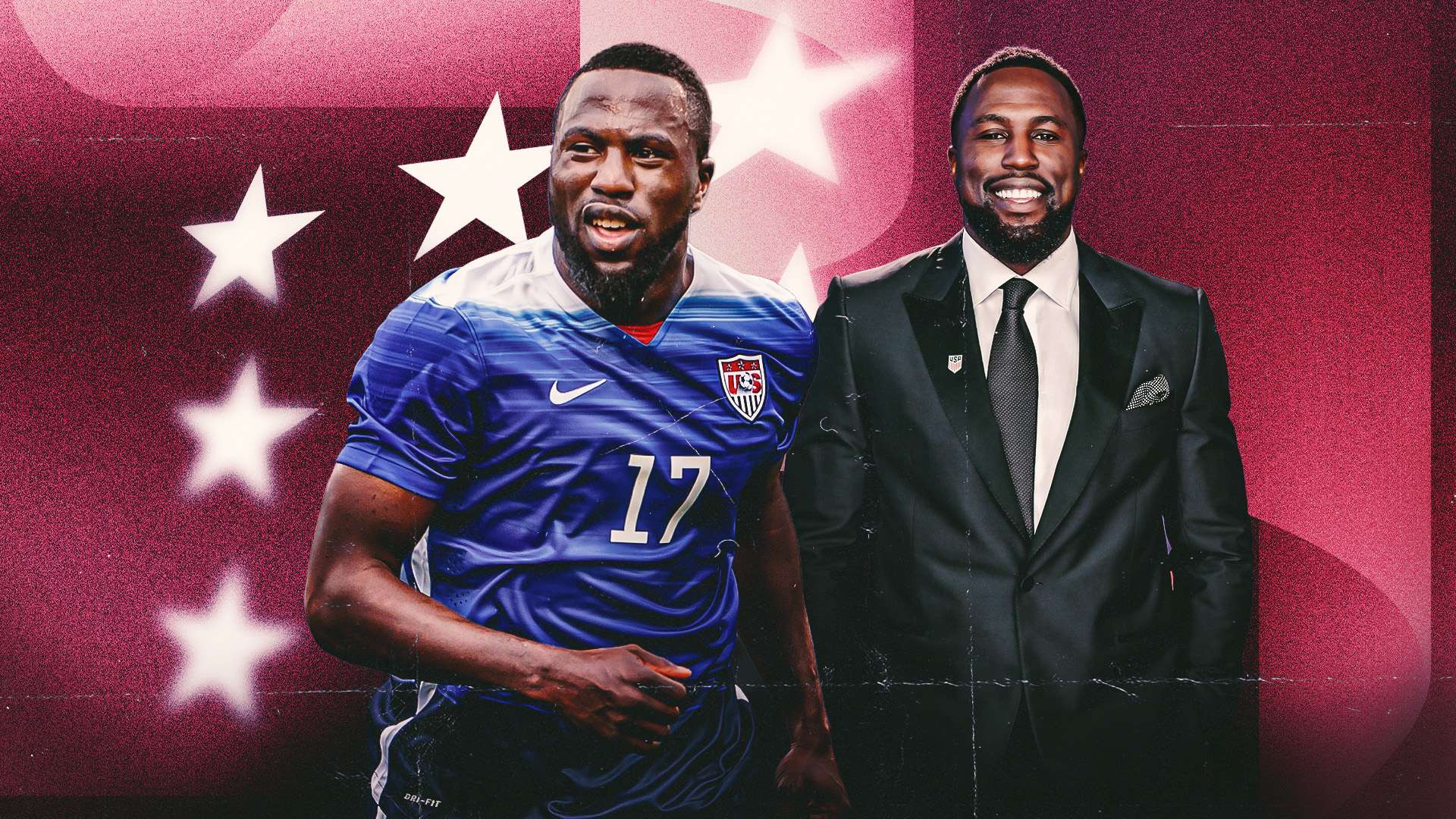
Jozy Altidore, USMNTGOAL

‘Nobody can take that away from you’ - USMNT icon Jozy Altidore breaks silence on complicated legacy and life after soccer with the Buffalo Bills and Sogility

A clip went viral recently, one featuring Michael Jordan explaining life after basketball. Despite his status as his sport's defining figure, Jordan acknowledged that, until a recent chance encounter, he hadn't picked up a basketball in years. Something about shooting that ball had become painful, like it was a reminder of an old life that he would never quite experience again.

"I wish I could take a magic pill, put on shorts and go out and play the game of basketball today," Jordan told NBC, "because that's who I am."

Jozy Altidore gets it. He can understand that feeling. Altidore tasted his dreams. He transcended what he thought was possible. He became peers with his heroes. He did everything he ever set out to do, and significantly more. He does, however, respond with one big caveat: "I'm no Michael Jordan, my friend." 

But now, still just 36 years of age, Altidore's time as a soccer player is past. It ended two years ago. There was no big goodbye, no emotional farewell; just an exit out the back door for a player that so often led from the front. It was a complicated end for a player whose legacy still divides fans - a figure who, to this day, remains one of the most discussed in U.S. Men's National Team history. 

So, where does Altidore fit in American soccer these days? Well, the discussions have raged on even after his retirement. So, too, has Altidore's passion for soccer. That passion, though, hasn't come with the ball at his feet.

"I don't really enjoy playing pickup or stuff like that," Altidore tells GOAL. "It's still a little bit difficult because you definitely would love to still be out there playing. It's a weird feeling. I don't play much soccer at all. I haven't in the past couple of years, but I do enjoy watching." 

When asked about his own legacy and where he thinks he stands with the game, Altidore uses that one big word himself: "Complicated." The world, of course, is eager to boil that down. Such is the nature of social media: everyone has their own thought or their own way to make a complex thing simple. 

Summing up any career or life, especially Altidore's, isn't an easy feat. He is, at his core, a complicated person, one who is now reflecting on the moments and memories that, in the end, really mattered. There's a part of him that wishes he were still out there, of course, and how couldn't there be? There are also memories of the past that comfort him, and a new way, a new path, that is allowing him to continue to impact the game in new ways.

"It's complicated, but I just try to focus on the fact that I got to fulfill my dream," Altidore says. "I got to play at this level, and nobody can take that away from you. I got to play against some of the very best players, and I see them now, and we can talk about the moments and memories we had. That, for me, is the biggest thing. I couldn't care less about the public stuff. The memories? That, to me, is everything."

For American soccer, more memories are on the way. Now a fan, Altidore is watching on like everyone else, living and dying with the USMNT’s every kick. He’ll be locked in for friendlies, training sessions, World Cup draws - anything tied to the national team. He still loves those moments, even if they're no longer his, in a sense.

This, then, is a look at Altidore’s fondest memories, how they shaped him, and how they continue to stay alive - even as his relationship with soccer continues to change.

  • Panama v United States: Group D - 2019 CONCACAF Gold CupGetty Images Sport

    'That's the biggest joy'

    Despite all he accomplished, Altidore is aware of the negativity. It comes in spite of everything he achieved. Throughout his career, he played at the highest levels in the United States, Spain, England, Turkey, the Netherlands, Canada, and Mexico. Internationally, he played in two World Cups and, to this day, remains the USMNT's third-leading goalscorer with 42 goals in 115 caps.  It was the type of career any player would dream of, but it wasn't perfect. 

    He can admit that. The 2018 World Cup qualifying mishap is on his resume, even if it is often unfairly pinned on him and several other teammates more than most. Throughout his career, there were criticisms about his style of play, and injuries derailed his World Cup dreams in 2014 when he was at the peak of his powers. All of that combined to make him a lightning rod, one with a more complex legacy than some of the teammates he battled alongside with the USMNT.

    For many, he's a legendary USMNT goalscorer. He's behind only legendary teammates Clint Dempsey and Landon Donovan on those goalscoring charts, and both played significantly more games than him. There's a very real argument that Altidore is the best goalscorer the USMNT has ever seen. Dempsey, Donovan, Brian McBride - these are the only players that can hold a candle to Altidore, and there's a very real argument that, as a pure goalscorer, he was better than them all.

    For others, though, he remains something of a question mark. Injuries robbed him at some of the worst possible moments. For every high on the club level, and there were many, there also seemed to be a corresponding low. Throughout his career, Altidore was often the subject of intense criticism, some deserved but most, ultimately, not. Those criticisms, too, are part of his legacy.

    Legacy, though, doesn't always represent real life. What fans and pundits say on social media doesn't always match up with the actual tangible interactions that occur beyond the screen. That's what Altidore's learned, anyway. His legacy isn't what fans say about him on social media; it's what they say to his face when they cross paths. 

    "It's funny because, for me, that's been the biggest surprise: whether it's dropping off at school or walking to the grocery store, people approach you every now and then and just say, 'Hey, that goal you scored' about a game that, for me, is gone and forgotten. They'll say that their dad was going through something, and that was a moment they shared together. I didn't anticipate, and this may sound stupid, too, but being a part of so many people. I didn't anticipate it. That's not something that I ever thought about: how you make people feel. 

    "The fact that you can make people feel and remember, that's the biggest joy. People can talk good or bad about me, that's fine, but I know that my real interactions are genuine. It's been cool to have those interactions because, when you're playing, that's the last thing you're thinking about. You think nobody's watching. Like, you know that people are watching the games, but you don't think it affects anybody like it does you or your mother or your close friend. That, to me, sometimes I get emotional because I get caught off guard, but the fact that I gave some people these moments means the world to me. That's more than enough. I don't care how people look at me as long as I've helped some people, brought them joy or maybe some good memories."

    Altidore, too, has been reflecting on those memories a bit more recently, even as life has gotten busier. He often runs into old teammates or opponents throughout his various travels. In those interactions, he's free to reminisce and relive the best moments alongside those who were there for most of them.

    "Playing soccer was a dream, and I got to do it and represent the United States National Team," he says. "There are millions of people, and you were one of the very best, and those are things nobody can take away. You played with some of the very best, and they know you. That's what matters most to me. Nobody can take those moments away. We had some amazing times."

    Times are different now. While Altidore's best moments as a player came in a USMNT shirt, his best moments as a fan have come watching from afar as he keeps a close eye on a new generation that, to him, doesn't feel so new.

  • Advertisement
  • ALtidore Pulisic USMNTImagn

    Mentor to USMNT's current stars: Pulisic, McKennie and Weah

    Last November, the USMNT was gearing up for a big CONCACAF Nations League clash with Jamaica. In the days leading up to the game, Altidore was in town and stopped by training. One by one, players ran up to catch up and, in truth, to show respect. Christian Pulisic, Weston McKennie, Tim Weah - all ran over to greet a player who they acknowledge is one who helped pave the path they now walk on.

    Six years after his last USMNT run, the team still features plenty of Altidore's old teammates. Pulisic and McKennie have become the faces of the modern generation, but six years ago, McKennie was actually captaining the USMNT in Altidore's final game. That camp also featured the likes of Tim Ream and Cristian Roldan, both of whom are still going strong after having their own career renaissance to get back into the picture. Ream is, funnily enough, two years older than Altidore, pushing for one last World Cup run.

    That part of it is a little difficult, Altidore says. These aren't a new generation leading American soccer somewhere; these are his friends. 

    "It's a little bit of mixed feelings because, even now, I watch and still feel like I can play," he says with a laugh. "There's always that feeling, and sometimes it's tough, especially because you got to play with them. I played with Christian and Weston early on, and we clicked right away, so I watch them now, and I can only imagine, man. I would have made this run or given it to Weston this way because I know how we played together. That part is difficult. 

    "The other part is exciting because this is the same team that we've all played for, and these guys are pushing that team further now with what they're doing. Is it the way everybody likes? Maybe not, but to say that they're not pushing us forward would be a lie. It's tough because you want to be out there backing them up, fighting for them sometimes, but that's part of being an older player: sharing those feelings as time goes on but still supporting the team."

    Altidore has moved gracefully into his role as an experienced veteran of the game. At a time when several of his ex-teammates have made headlines for taking shots at the new era, Altidore is hesitant to even compare. There's no point in turning this into a "U.S. vs them", in his eyes. The only thing he wants to do is support. It's not because he has to, but because he wants to. More than anything, he wants this team to be better, even if that means seeing players achieve more than he did.

    "Is it perfect? No, but I'll be damned if I'm going to criticize those guys who do what I did in terms of challenging themselves and taking it all a step further," he says. "You can criticize them for a lot of things, but I can never criticize that. I only applaud them and cheer them on. I'm actually disappointed that I haven't been over to Europe yet. I need to get over there and start watching these guys play because I love to see it. 

    "I love spending time with them. I love seeing how they've grown as people. That part interests me so much: to see them as people, how they've grown, and how they continue to do that."

    Altidore is growing, too. He's found a new side of himself that is now blossoming during his life after soccer.

  • 2025 Billboard Latin Music Awards - ArrivalsGetty Images Entertainment

    Life after soccer

    For years, Altidore's daily routine was pretty similar. From 2006-2023, he was a professional athlete and lived that life: wake up, train, eat right, travel, play. It was highly regimented and always busy. These days, though, life is a little different. These days, he wears a few more hats: ex-pro, father, husband, investor, fan. Mornings now are about phone calls and school runs. Life has changed, but it hasn't slowed down.

    "When I got waived [by the New England Revolution], it was right around the fall, so I had time to prepare and decide what I wanted to do next," he says. "To be honest, right from the jump, I turned into dad mode. I wanted to be more present in my son's life and make sure that I'm around to be with him and take him places. That was my first thought: I'm going to be more available for him. I took that and ran with it. When you're playing and travelling, you miss a lot, and there's nothing you can really do about it. It's the nature of our work: we miss a lot of milestones. That was the easiest thing for me: just being like, 'Okay, now I have more time with my son'. That was a no-brainer.

    "I've always been this type of way where I'm incredibly focused and motivated on what I'm doing, so, for me, ever since I've stopped playing, I've spent a lot of time in the investment world. I've wasted no time getting knee deep into that. Every morning is an assortment of calls and things I have to do."

    Those calls take him across a variety of businesses. He's a part-owner of the Buffalo Bills, having joined the ownership group in 2024. He's involved in golf through TGL Golf and sailing through SailGP. He hasn't completely left soccer, either. He's an investor in Bay FC of the NWSL and spends plenty of time with his player development company, Sogility, as Chief Strategy Officer and co-owner.

    "I love soccer," he says.  "I wanted to work in the youth soccer area, but didn't want to start a club where people are poaching players. Sogility, for me, fell in really nicely because I was able to train with kids and be a resource for young families and players. You help them improve, but you also send them back to their respective environments. 

    "I want to find a way to affect the game at the grassroots level and change that retention number because I think at 14 or 15, we're seeing a lot of kids not take it as seriously or drop out of the game. At that age, I was playing and starting as a professional. How can I give back in a way where we're meeting kids where they're at in their development? How can I help them improve and have fun? That's the new challenge for me."

  • US striker Jozy Altidore reacts after miAFP

    Achieving dreams

    Despite all of the moments he lived during his career, Altidore can still pinpoint the exact one that mattered most. It came at the very beginning. Few reach the highest of highs at 20 years old, but Altidore did. By simply walking onto a field at the World Cup, he'd done everything he'd set out to do. 

    It wasn't the event that made it special. It wasn't the spectacle in South Africa, the national anthems, or the game itself. It was who he locked eyes with as he was walking out of the tunnel.

    "I had already gotten to do everything my dad and I had talked about," he said. "I already debuted, played in the Premier League, and was now going to be walking out and playing in a World Cup. That's how I got into soccer, and a big part of it was my dad. He had taped all of the 94 World Cup games. So, for me, that moment was really emotional: just walking out, finding them in the crowd, and living that moment in real life. I'm so happy I got to share that with them. I'm so happy my mom and dad got to be there.

    "It was just a culmination for me. When I look at my dad and his story and what he'd gone through? He came here from Haiti and hustled his whole way. To do what he was able to do with the resources and continue elevating, it's one of those things where I'm always going to be his son. I have that mindset now in how I live my life and how I have to work."

    Even all these years later, that moment, in some ways, defines Jozy Altidore. He is so much more than that split second, of course. There were higher highs and surely lower lows. He scored so many goals, broke so many records, and saw so many things in the years that followed it. But that moment, that one singular freeze frame, is what explains Altidore's own legacy to himself. Everything else is just noise. That moment is who he is.

    "I just view myself as a part of my family," Altidore says. "This is our dream, and this is my way to piggyback off of that. That's how I saw myself, even in the moment: I was always just little Josmer Altidore, the son of Haitian immigrants. I didn't ever see myself as anything more."

    What you see in Altidore, then, is left up to you. Soccer, in many ways, still defines him even as he continues to stay away from the ball, but this is a new version of Jozy Altidore, one that, the more he thinks about it, is a lot like the old one, too.

    As this interview ends, Altidore has one last thing to say, one last message for those reading.

    "When I see this World Cup opportunity, I think it falls on all of us: media, ex-players, all of us," he says. "There's plenty of time to be negative and miserable, but let's try and get behind this and really celebrate all that everybody's putting into this summer. Hopefully, we play inspiring soccer, and then we're all recipients of the boom that comes after the World Cup. 

    "I just hope we can all sit around the campfire, enjoy the game, smile, and really celebrate. There's always so much negativity around things, but I'm just excited to celebrate."