Goal.com
Live
+18 or +21, depending on state | Commercial Content | T&C's Apply | Play Responsibly | Publishing Principles
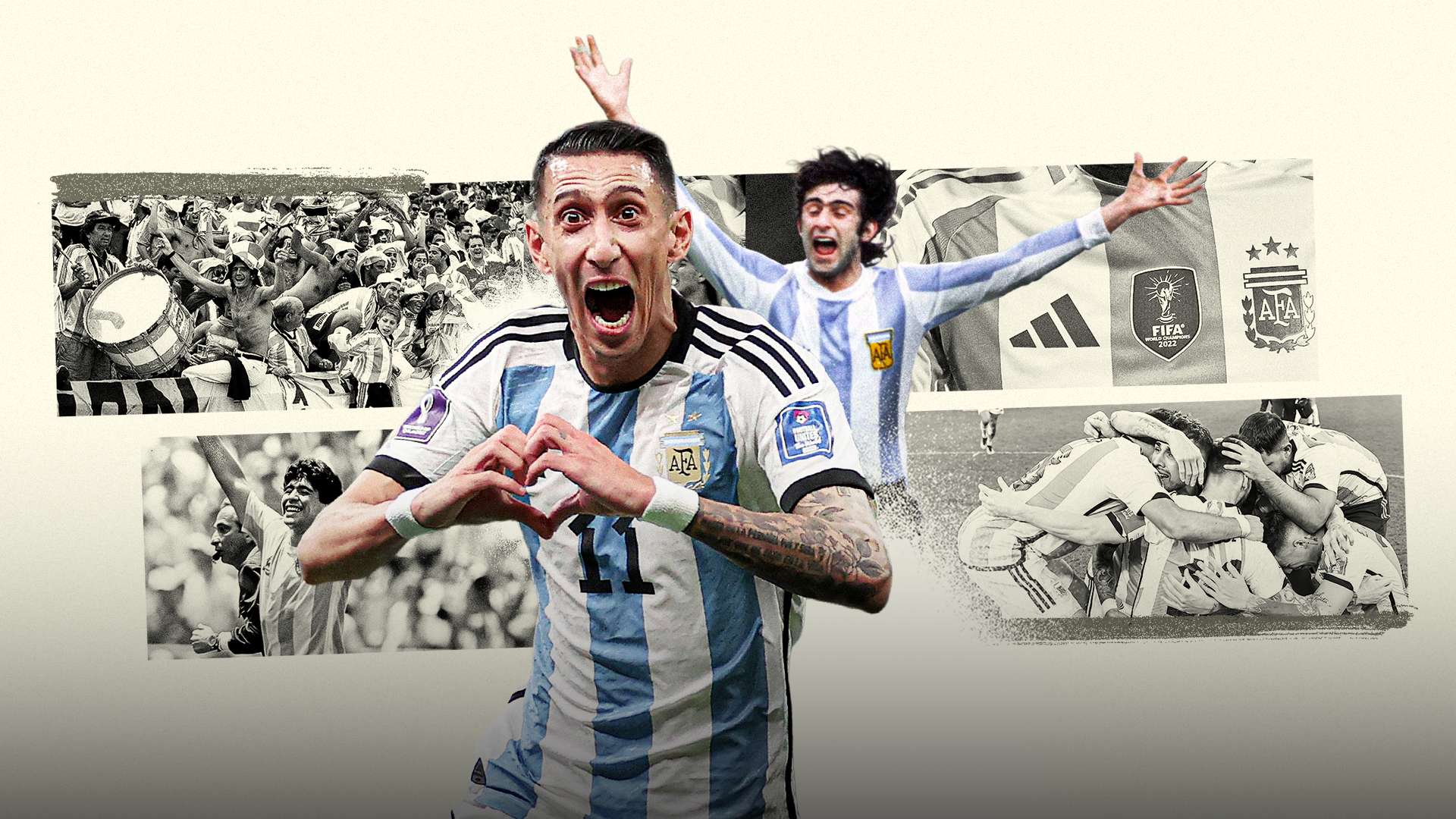
Argentina Legacy ArtGOAL

LEGACY: Argentina - from wounds of passion to World Cup glory

Argentina not only competes, it beats as one. It doesn’t just play, it transmits. The Argentina national team has built a legacy that transcends results; it has turned the World Cup into an emotional territory, a testing ground for the soul. Where others see a tournament, Argentina sees destiny. Where others see a match, Argentina sees history.

That legacy is not measured only in titles, but in what those titles mean - and also in the defeats that hurt, because it was those that forged the character, the identity, the narrative that culminated in Qatar 2022. It is impossible to understand the coronation of Lionel Messi lifting the World Cup without first walking the paths that led him there; the frustrations, lost finals, criticism and anguish.

For decades, Argentine football lived a tension between talent and suffering, between hope and heartbreak, until that passion, wounded so many times, decided to turn itself into destiny.
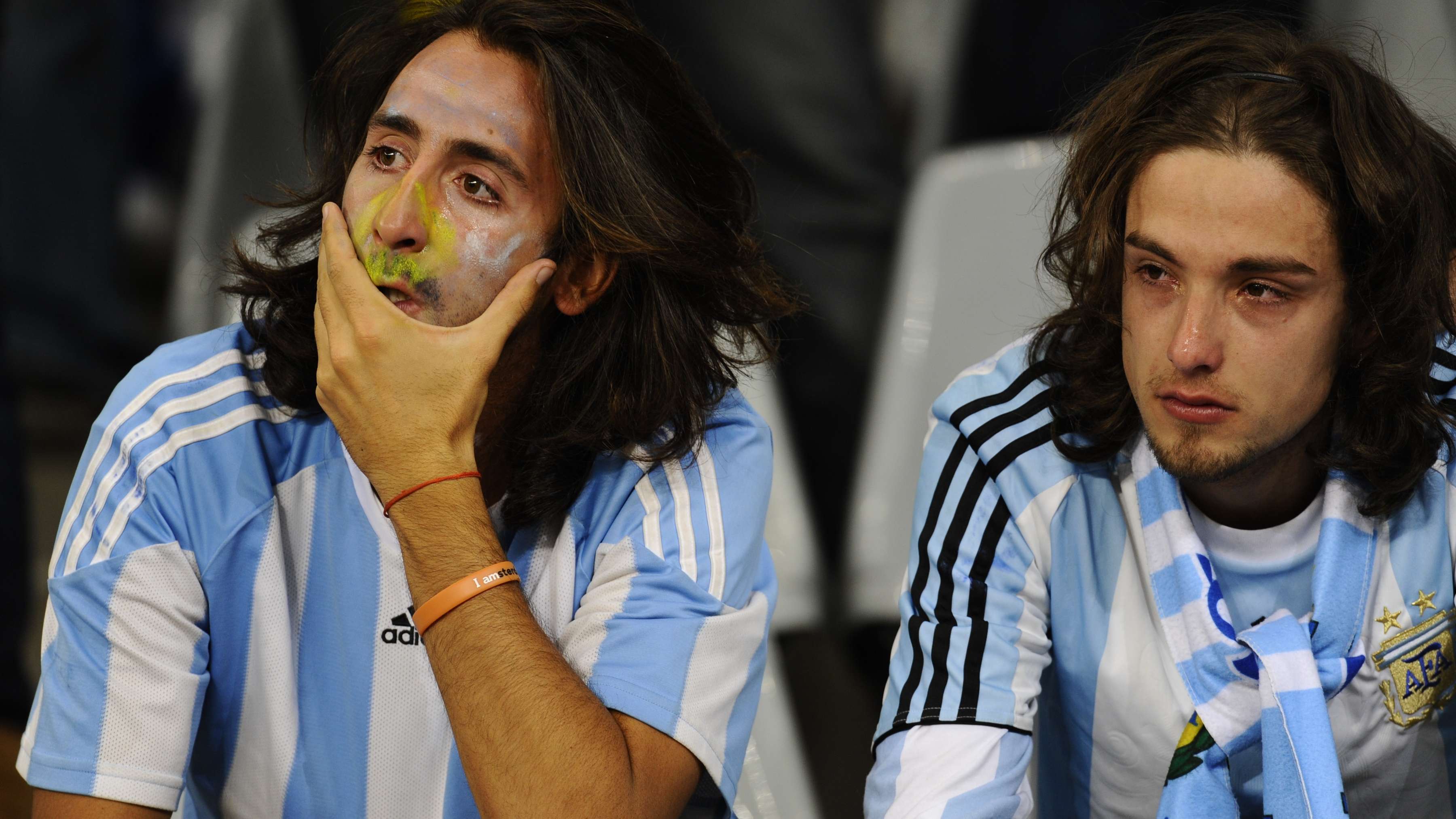
  • Supporters of Argentina cry after their team's loss at the end of the 2010 World CupGetty Images

    Forged in fire

    Argentina entered World Cup history as one of the most temperamental, most visceral teams. As early as 1930, the Albiceleste showed its combative nature; it wasn’t just football, it was pride. But it wasn’t until 1978, and especially 1986, that Argentina ignited the sacred fire of its global feats. There the contemporary myth was born: The country that produces geniuses and warriors, that turns football into collective identity.

    But after Diego Maradona came the wounds: Italy 1990 and the agonising final against Germany; the abrupt ending of the dream in the United States in 1994; France 1998 and the cruel elimination against the Netherlands; Korea-Japan 2002 and the most unexpected blow in the group stage; Germany 2006 and South Africa 2010, the ceiling always at the quarter-finals.

    And so while the world admired Argentine talent, it also noticed a constant: Drama. Argentina played with its heart, yes, but that heart so often broke when it dreamed the most.

  • Advertisement
  • FBL-WC-2014-MATCH64-GER-ARGAFP

    Lost finals to internal collapse

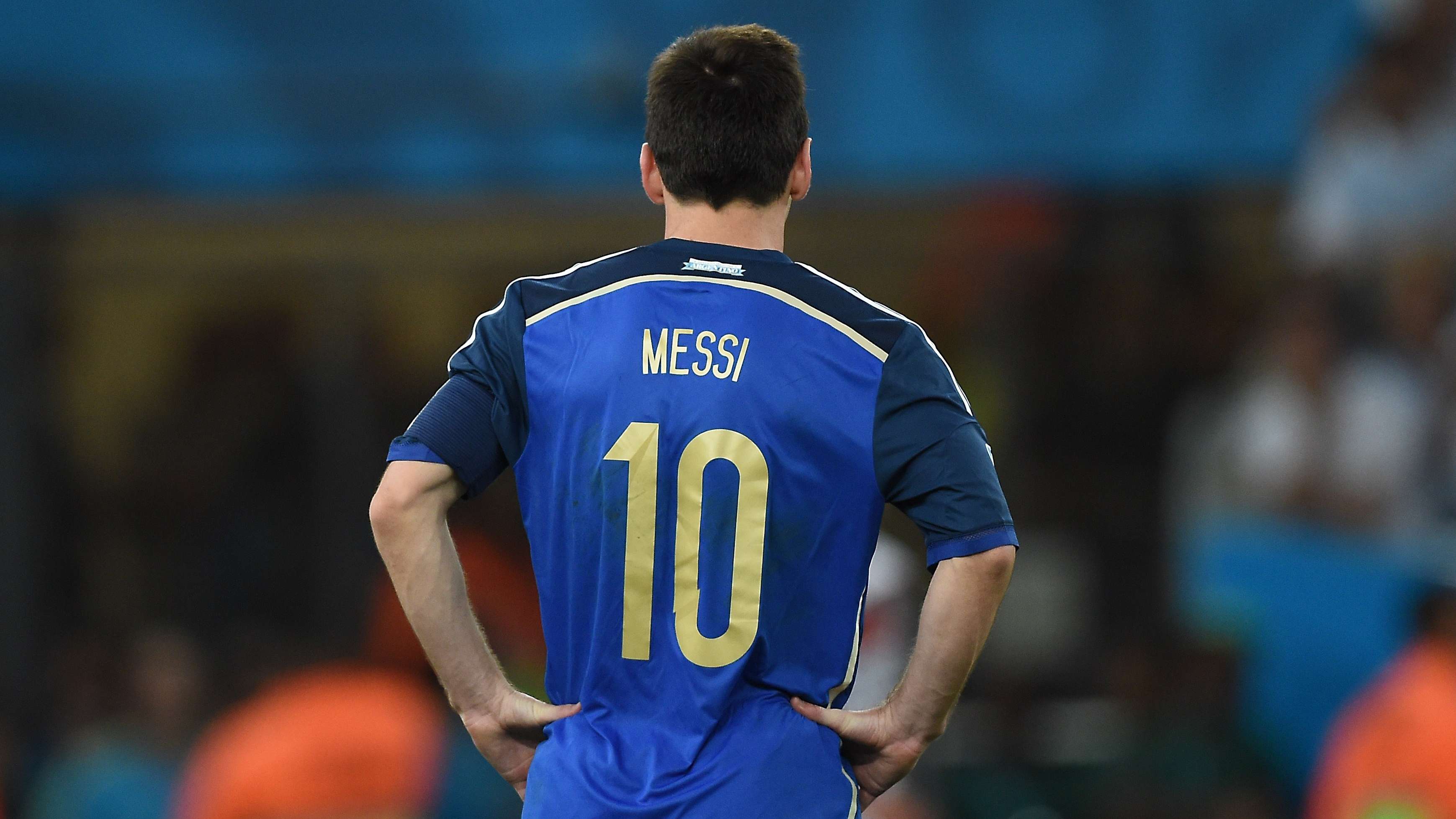
    The 2014-2016 cycle was the most painful and, at the same time, the most transcendent chapter of this story. Three consecutive finals - World Cup 2014, Copa America 2015 and Copa America 2016 - but three defeats. Three times the Argentina national team came close to touching the sky and ended up embracing the abyss. That image of Lionel Messi, alone, from behind, looking at the Maracana, is still part of the Argentine collective DNA.

    It was at that moment that the country faced its worst ghost: Internal criticism. The national team was accused of lacking grit, of not knowing how to win, of staying at the door. For many, the players were ‘millionaires without balls’. No other national team in the world carries as much emotion as Argentina, and in those years passion became pressure. It wasn’t just football, it was identity, wounded pride, entire generations wondering if destiny was cursed.

    However, it was precisely there that the character that would explode years later in Qatar was born. The team did not break; it hardened. Pain, far from fracturing the side, instead united it.

  • FBL-WC-2022-MATCH64-ARG-FRAAFP

    From fear to destiny

    Qatar 2022 began with an earthquake: Defeat against Saudi Arabia. But, unlike other cycles, Argentina did not collapse. Something was different. Behind that team there was a group, a conviction, an intimate promise: ‘This time we won’t die on the shore’.

    That phrase, never said publicly, floated above every training session, every trip, every team talk. It was the urgency of the last dance, the last attempt for Messi to conquer the only title that still haunted him.

    In Qatar, passion stopped being a wound and became a force. It was no longer a paralysing weight but an unstoppable engine. The matches against Mexico and Poland marked the rebirth. The epic battle against the Netherlands, filled with controversy, tension, and overflowing pride showed a team that was unafraid of drama, and rather willing to go through it. The subsequent semi-final against Croatia was a symphony of liberation.

    The final against France, with its insane script, heart-stopping pauses, and supreme glory, not only crowned the world champions, but it sealed a historic transformation. Argentina stopped being the country that almost made it, the one of tears and what-ifs, to become what it always dreamed of being: The champion. The one who finishes the story. The one who shouts. The one who restores passion to its purest form: Happiness.

  • ENJOYED THIS STORY?

    Add GOAL.com as a preferred source on Google to see more of our reporting

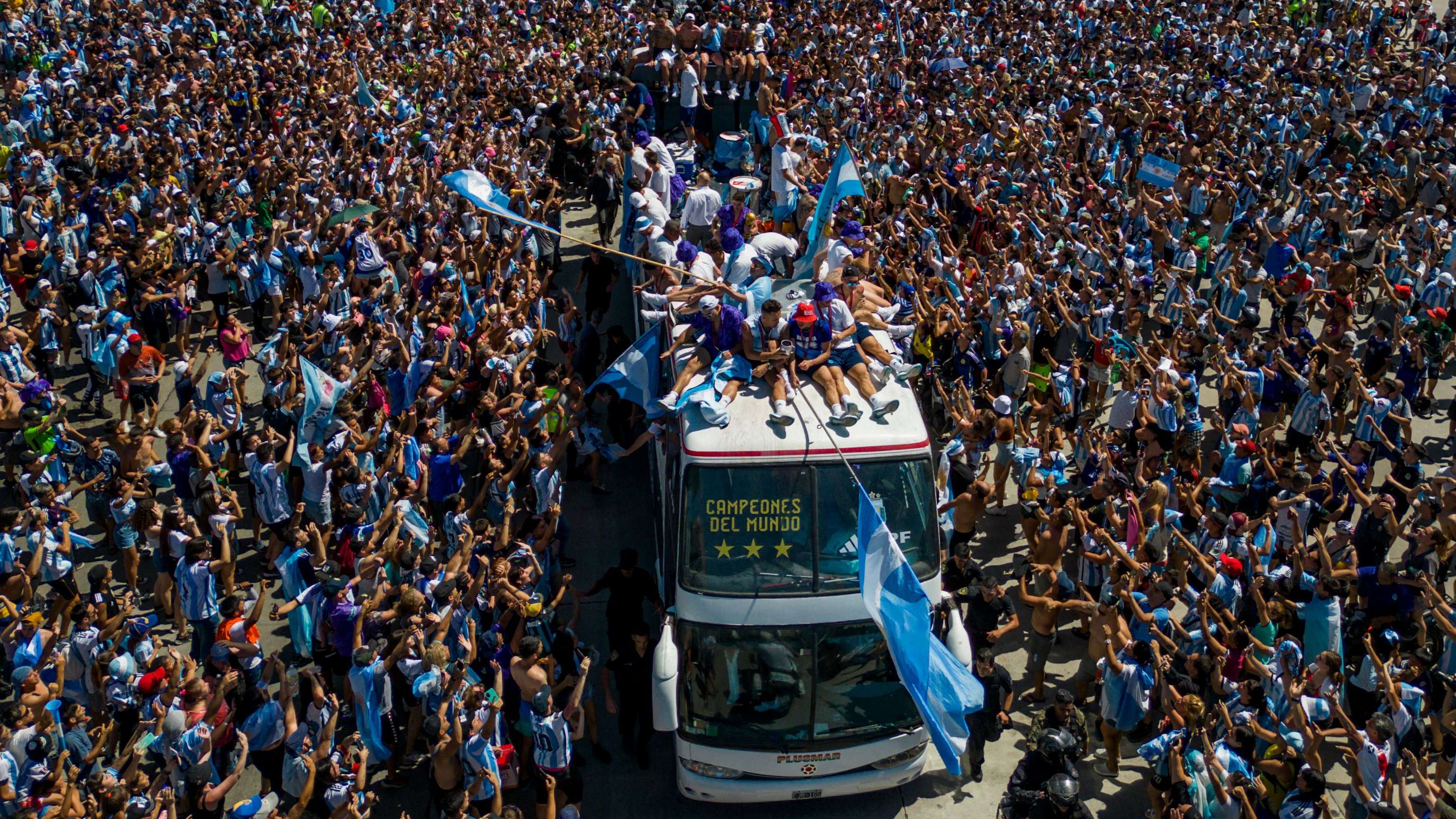
  • Argentina Fans 2022Getty Images

    Persecution to prophet

    For years, Messi was the incomplete hero. Admired, but misunderstood. They asked him to be Maradona when he was Messi. They asked for fury when he offered silence. But in Qatar, something extraordinary happened; the national team no longer played for Messi, it played with Messi. They no longer sought for him to be the saviour, but the standard-bearer.

    In Qatar, Messi ceased to be a genius and became a spiritual leader. His outburst against the Netherlands in the direction of Wout Weghorst - "What are you looking at, fool? Go over there!" - was more symbolic than any dribble. For the first time, the world saw the Messi that Argentina knew, and the entire team aligned itself under that fire.

    The title not only consecrated him as world champion, it transformed him into something even greater: The heir of the Argentine legacy. Maradona lifted the World Cup at Mexico 1986, Messi lifted it at Qatar 2022. Different paths, same eternity.

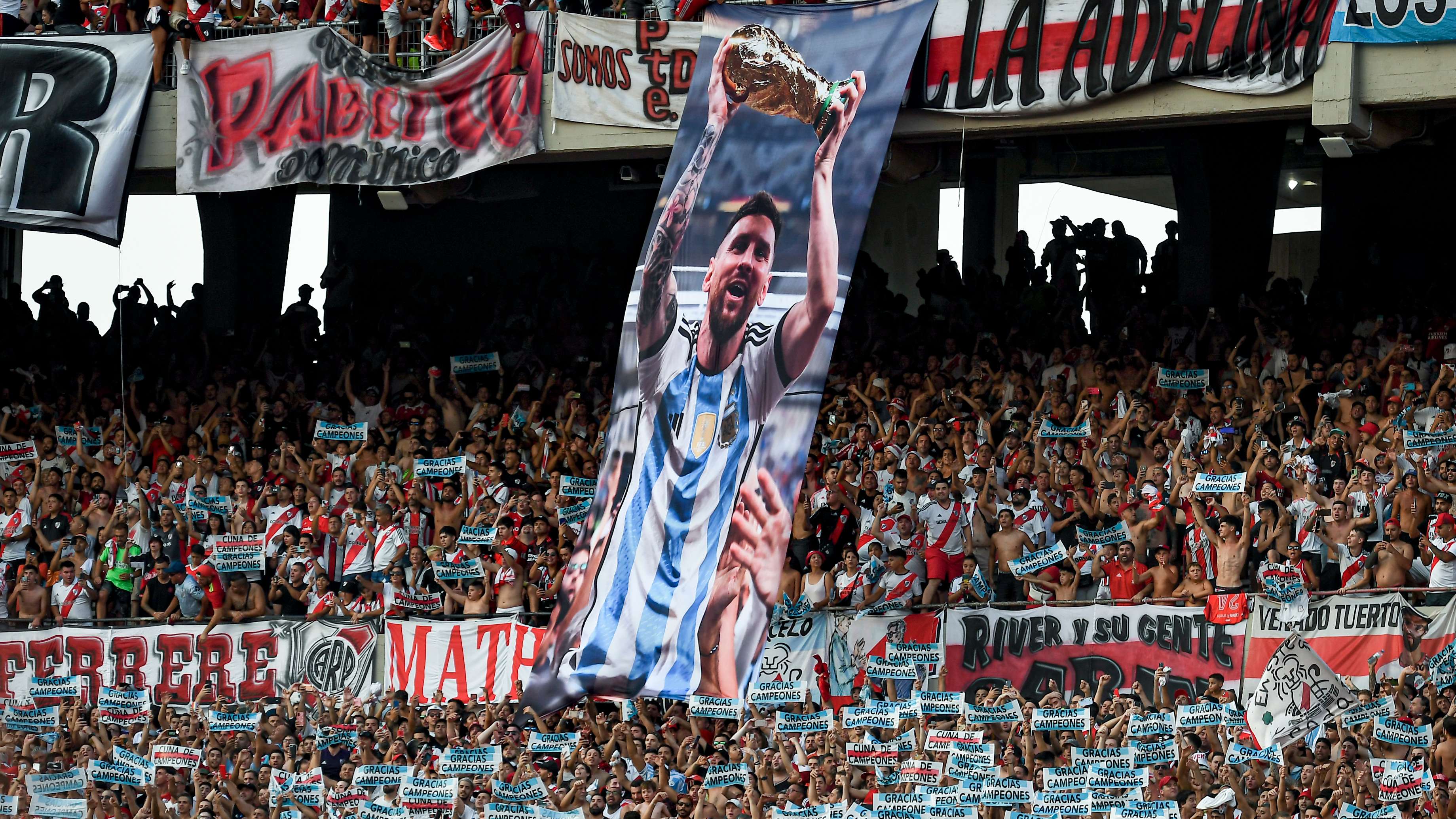
  • Argentina Fans CelebratesGetty Images

    Conquering fanbase

    No national team mobilises like Argentina. It isn’t a fanbase, it’s a pilgrimage. In Qatar, the stadiums were dyed sky blue and white as if the tournament were being played in Buenos Aires. The streets, the metros, the markets - everywhere became a stage for endless chants. The Argentine songs dominated the World Cup. 'Muchachos' was not just a chant; it was a global anthem.

    There, Argentina’s greatest legacy became evident: Its people. It has always been said that Argentina has fans; in Qatar it was proven that Argentina is fans. For Argentines, football is not a show - it’s identity.

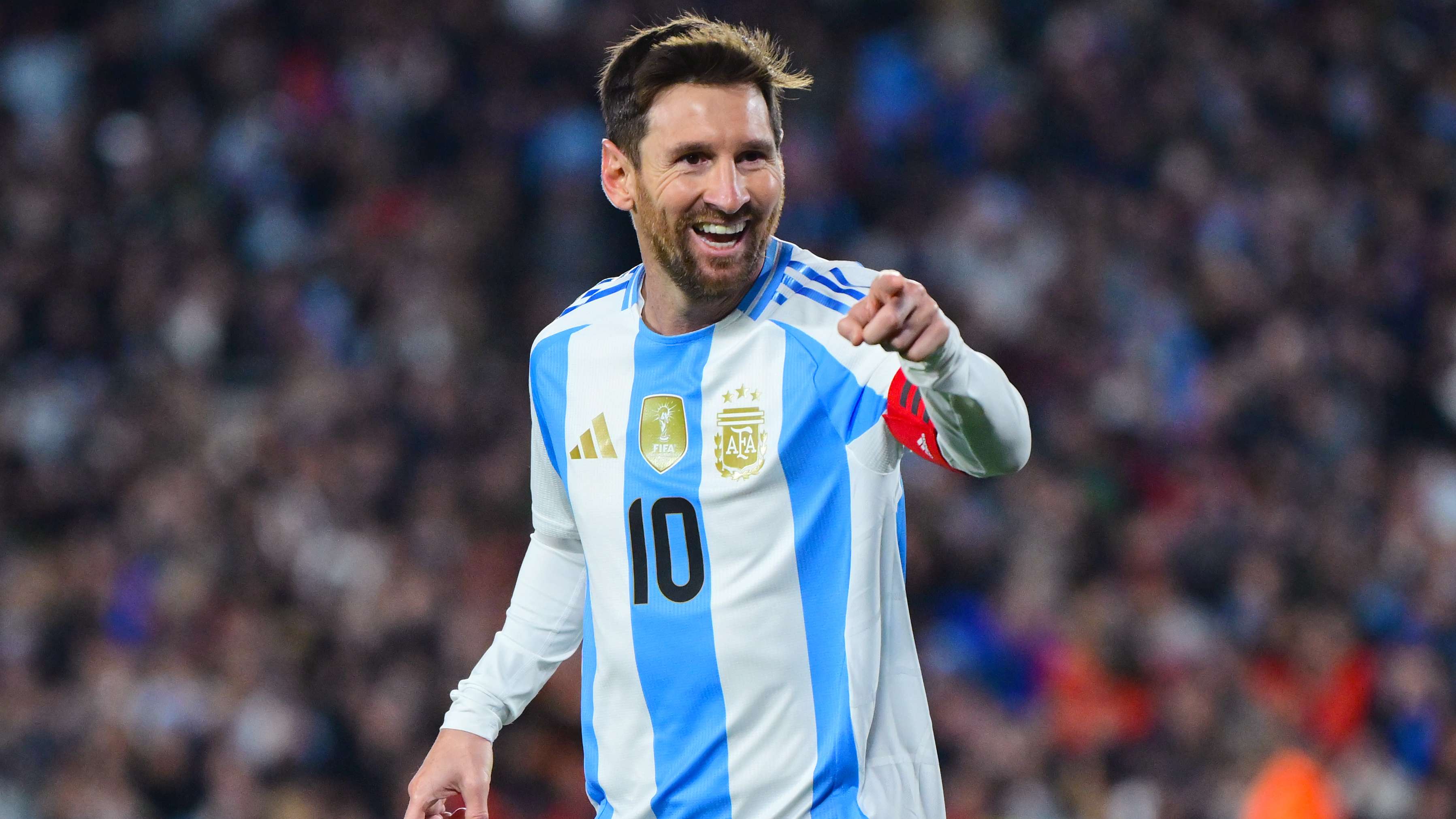
  • Messi Argentina 2025Getty Images

    Eternal contender

    Today, Argentina does not arrive at a World Cup as a hopeful, but as the team to beat. The title in Qatar didn’t close a story, but opened another. There are no more inner ghosts. The memory of what was lost no longer weighs. The national team arrives in the United States with a clear message: ‘We come to defend what’s already ours’.

    The world, which once doubted them, now fears the Albiceleste because it knows this team - formed in pain and consecrated in glory - no longer plays to redeem itself. It plays because it knows how to win.

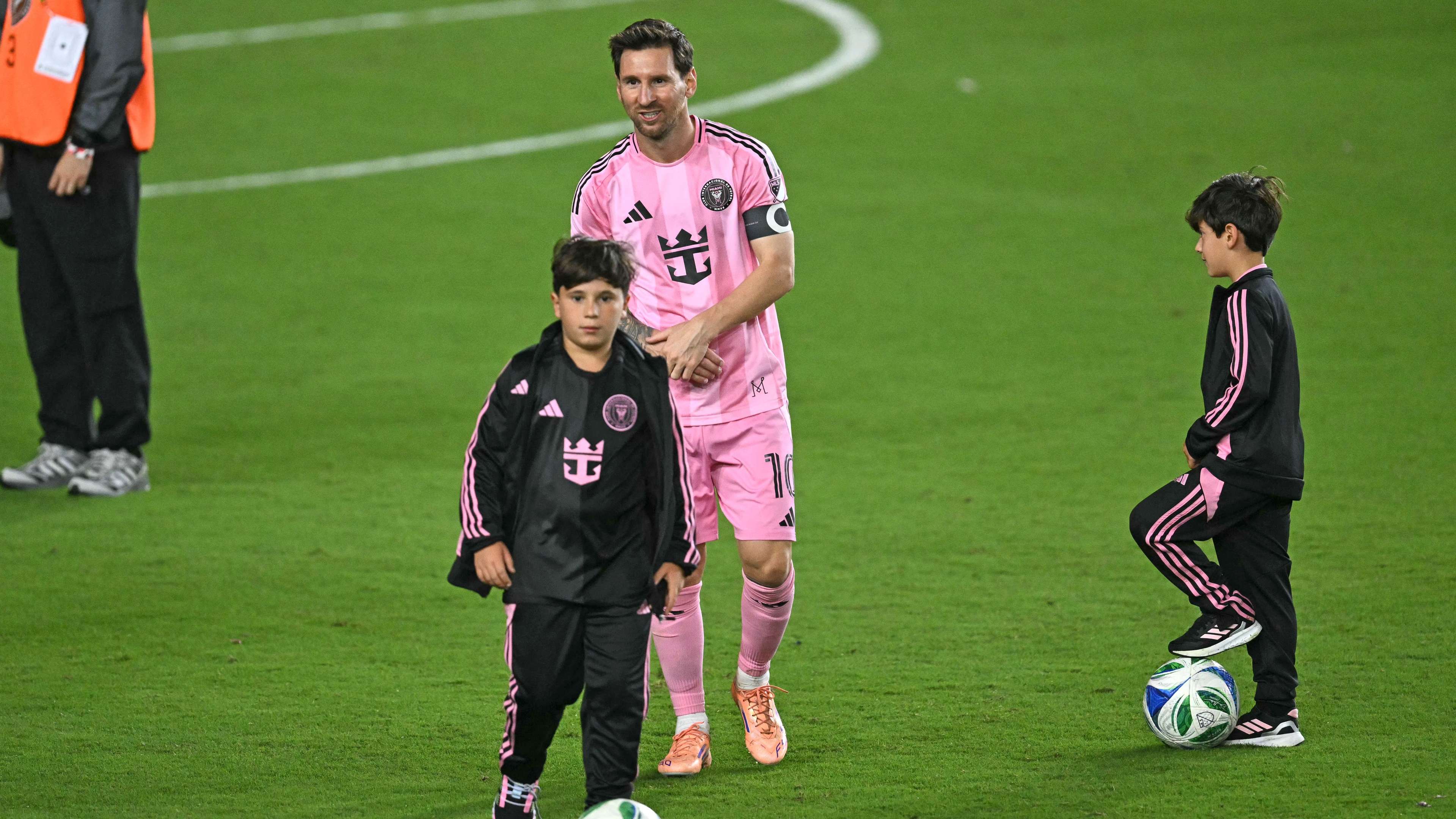
  • FBL-MLS-USA-MIAMI-NEW YORKAFP

    Messi's adopted home

    The next World Cup will be held in the United States, and there is something deeply symbolic in that. Messi is no longer just Argentina’s captain, he is a global icon who lives and plays on American soil. Inter Miami has become, almost unintentionally, an emotional embassy for Argentina.

    The fields where Messi plays are filled with sky-blue-and-white flags, jerseys with the number 10, and children shouting his name in Spanish. And that is not just because of football; it is the extension of a legacy that Argentina has built for almost a century through sweat, tears, and an unconditional love for the ball.

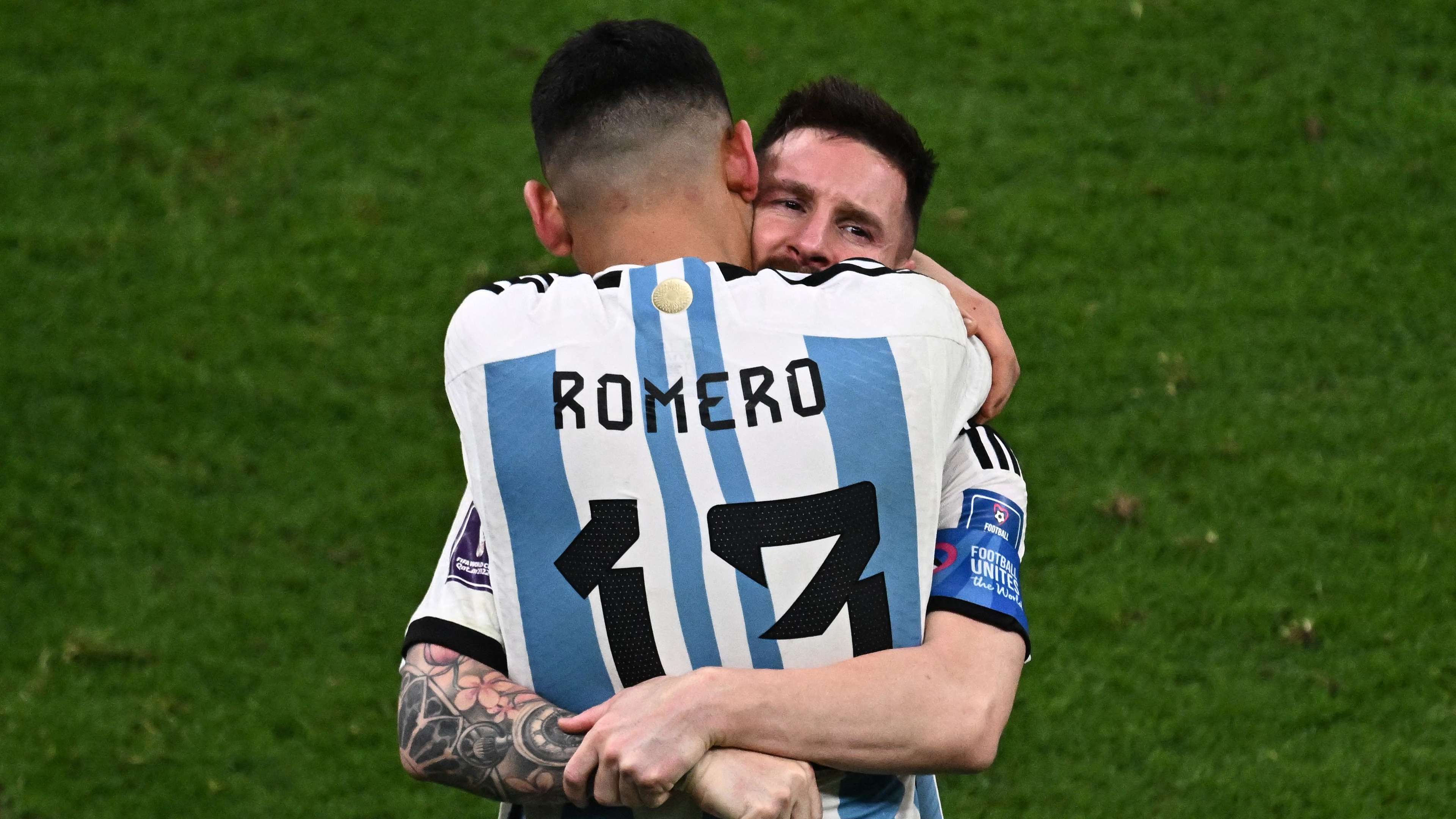
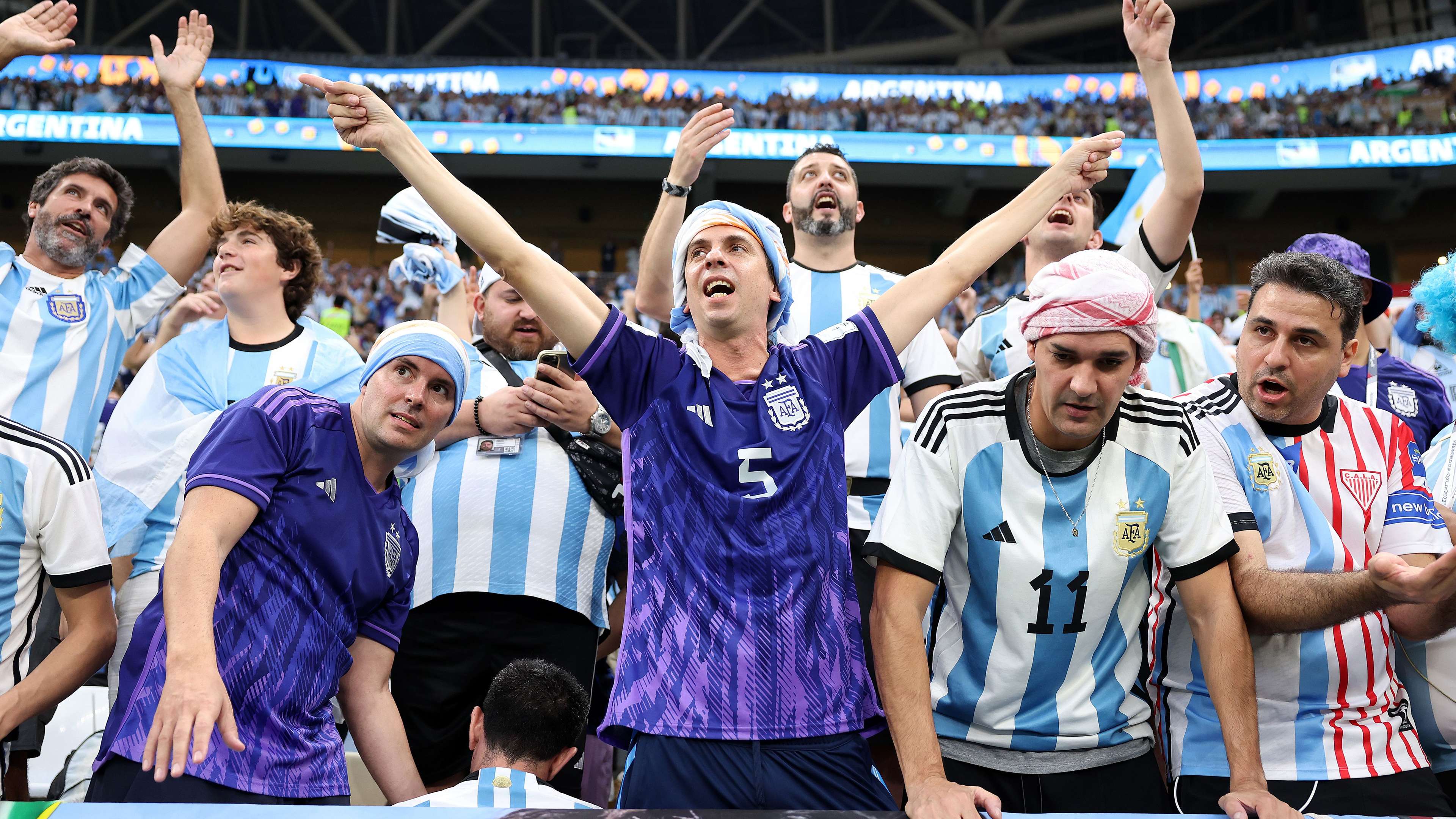
  • Argentina v France: Final - FIFA World Cup Qatar 2022Getty Images Sport

    Vibrating in the desert

    Because if there’s one thing that defines Argentina’s national team at World Cups, beyond the titles, it’s passion. A passion that is non-negotiable, that doesn’t understand distances or results, that is inherited from parents to children and multiplied in every corner of the planet. That passion was what led thousands of Argentines to Qatar, to mortgage their savings, cross deserts, and sing until they lost their voices. It was what made a whole country say, after the defeat against Saudi Arabia, ‘We’re going to win anyway’ - and they did.

    Qatar 2022 was not just a championship, it was a collective catharsis, a historical repair. Argentina arrived wounded, carrying the open scars of so many lost finals. But this time, passion turned into conviction, and conviction into glory. Lionel Scaloni, with his humility and calm, channelled that energy. Messi, in his maturity, stopped carrying the weight of the ‘Messiah’ and became what he had always been: Just another Argentine, one who feels, suffers, and loves football like anyone in the stands.

    From that World Cup on, something changed forever. The world understood that the Argentine fans are not just colour, noise, or folklore; they are a way of living. In every stadium in Qatar, the chants never stopped. While other teams fell silent, Argentines turned every match into a national celebration. That image, thousands of sky-blue-and-white shirts vibrating in the desert, remains etched as a symbol of the planet’s footballing soul.

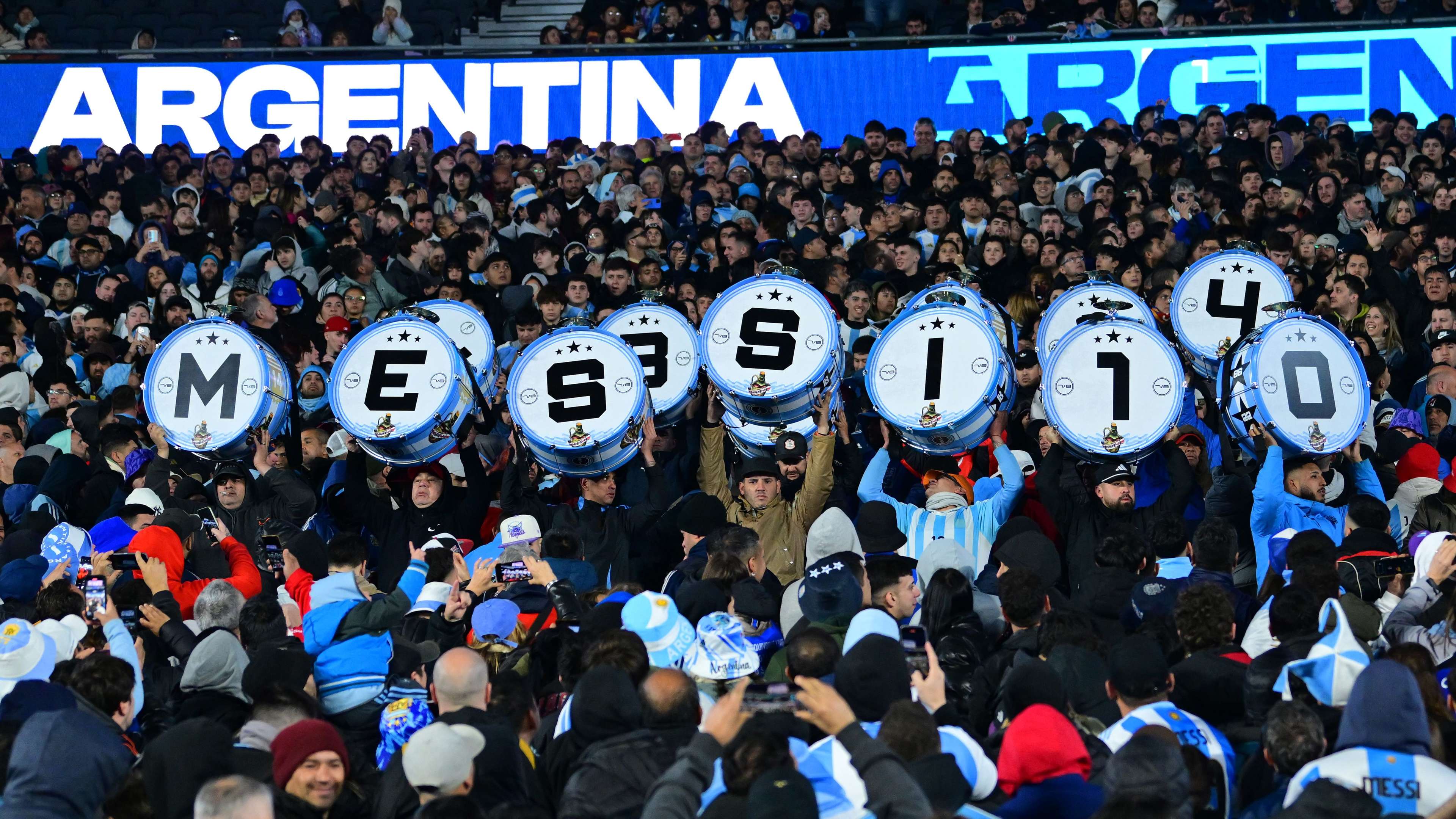
  • Argentina v Venezuela - FIFA World Cup 2026 QualifierGetty Images Sport

    'Vamos Argentina, carajo'

    And now, in 2026, that flame moves to the U.S., a country that for decades saw football as a foreign sport but now breathes the aroma of mate and 'vamos, vamos Argentina' thanks to Messi. That the next World Cup is played ‘at home’ for him is no coincidence: it’s the perfect closing of the circle. The boy who dreamed of the World Cup in Rosario and lifted it in Lusail will now defend the title in the country he has adopted as home.

    In every city where the national team plays, there will be a piece of Argentina. In Miami, where Messi has sowed love; in New York, where Argentine communities already dream of painting Times Square sky blue and white; in Los Angeles, where Latinos worship Messi as a contemporary god. There will be no stadium without Argentine chants, without flags reading ‘La Scaloneta doesn’t give up’.

    Passion will cross borders once again, but now with the certainty of knowing themselves world champions. And it’s not just because of Messi; it’s because of what Argentina represents in World Cup history. From Mario Kempes’ grit in ’78 to Maradona’s immortal magic in ’86; from the tears of 2014 to the redemption of 2022. Every generation left a mark, and all joined together in the same cry: ‘Vamos Argentina, carajo’. That phrase sums up a century of football; of defeats and glory, of identity.

  • TOPSHOT-FBL-WC-2022-MATCH64-ARG-FRA-TROPHYAFP

    Anything is possible

    Qatar marked a before and after because it restored hope. Argentina went from being the team that ‘almost’ won to being the one that dared to do it all. And that transformation was born from popular passion. Not from a tactic, not from a strategy, but from the inner fire that burns in every Argentine when the anthem plays. The national team didn’t win with talent alone - it won with soul.

    That same soul will travel to the U.S. in 2026. It will be the World Cup of the children of Qatar, those who grew up watching Messi kiss the trophy, those who believe anything is possible if you play with heart. It will also be the World Cup that confirms the Argentine legacy; a legacy of football, but above all, of emotion. Because Argentina teaches the world that football cannot be explained, it must be felt.

    And when Messi once again puts on the sky-blue-and-white jersey on American soil, he won’t just be a player defending a title, he will be the symbol of a nation that turned passion into art. People will follow him, from Buenos Aires to Los Angeles, from Cordoba to New York. There will be no distance that can stop that.

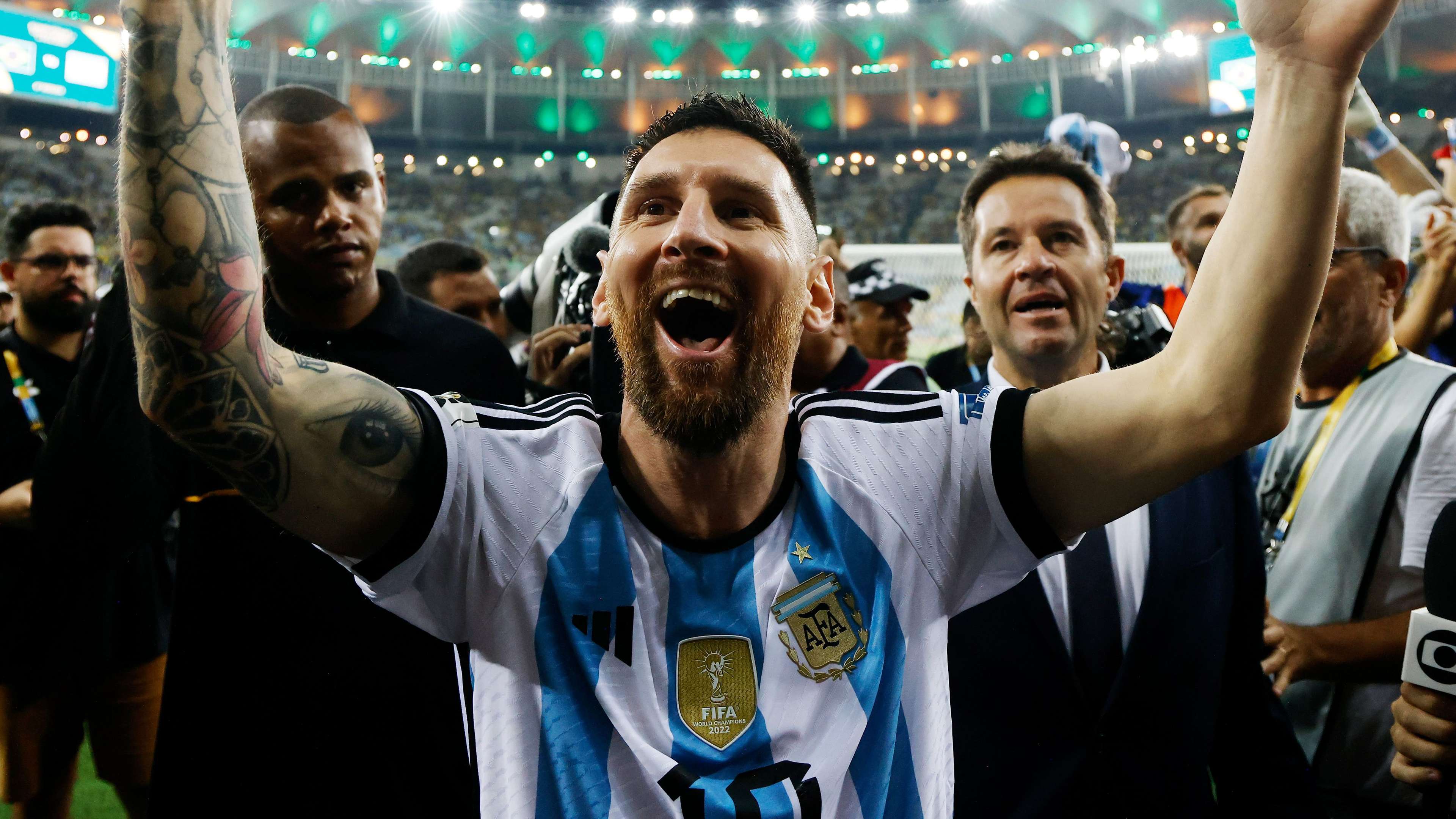
  • Brazil v Argentina - FIFA World Cup 2026 QualifierGetty Images Sport

    Not measured in trophies

    World Cup 2026 will be the stage where Argentina once again shows its essence. It may win or lose, but what never fades is that flame that sets it apart, its absolute love for the jersey. What began in Qatar will keep beating, with Messi as an emblem and millions of voices reminding the world that as long as passion exists, Argentina will always be present.

    Because if there’s something football learned from Argentina, it’s that titles fade, but passion remains. And that passion - the unknown embraces, the shared tears, the shouts that travel beyond the sea - is the true Albiceleste legacy in World Cups. A legacy not measured in trophies, but in hearts.

    And when, in 2026, the anthem plays again amid flags, tears, and smiles, the whole world will understand that Argentina is not just defending a title: it’s defending a way of life. And that as long as this passion exists, it will never stop being a champion.