+18 or +21, depending on state | Commercial Content | T&C's Apply | Play Responsibly | Publishing Principles
This page contains affiliate links. When you purchase through the links provided, we may earn a commission.
College Soccer: State of the GameImagn/GOAL

College Soccer at a Crossroads: Once the primary pathway to the pros, NIL, MLS academies and sweeping court rulings now threaten collegiate game’s relevance

There were people lining the streets of Burlington to greet the Vermont men’s soccer team back in town. The college side had just completed what was, in truth, an improbable run to a national championship. It was your classic sports story. 

The Catamounts had never won a title. They were unranked at various points throughout the season. They got hot at the right time, and stayed that way, all the way to a trophy lift. 

It was, all said, a jubilant scene, one that illustrated the energy, passion and staying power of college soccer. Yet, that moment was also emblematic of the changing landscape of the collegiate game in the U.S. - all told, nearly 80 percent of the players in the College Cup were born outside the United States. 

The average age was early 20s - not teens. What used to be the ideal bridge between youth soccer and MLS is not rapidly disappearing, replaced, instead by a collegiate proposition that offers second chances for those who have fallen through the European cracks. A long-held tradition - developing American players going to college programs to refine their game, and build toward a professional career - is all but gone. 

And college soccer is struggling to keep up with the rate of change. 

“It's an evolving landscape that keeps changing,” Maryland coach Sasho Cirovski said. “When I first started, back in early ‘90s, college soccer held the preeminent soccer place in the U.S.”

  • Seattle Sounders v FC DallasGetty Images Sport

    Following a familiar trend

    This is hardly a unique story in the scope of soccer in the United States. Relative to the rest of the world, soccer in America is still in its gestation period. MLS is entering its 30th season. For comparison, some of the biggest clubs in Europe have been in existence for 120 years. Pro soccer in the U.S., as a viable way of making a living, is a recent phenomenon. 

    And the college game was once the predominant path to making it. 

    The early names make for fine reading. Clint Dempsey, Cobi Jones, Alexi Lalas, Claudio Reyna and Darlington Nagbe played collegiately in the U.S, and seven of the starting XI from the 1994 USMNT side that lost to Brazil in the World Cup quarterfinals attended at least some college. There were alternatives - indoor leagues and foreign trials, chief among them - but the collegiate avenue was the most fertile. 

    Options still remain. There are 212 men’s and 333 women’s college soccer programs at the Division 1 level. Men’s college soccer has steadily declined since 1995, with the percentage of Division 1 schools offering soccer programs reducing from 65 percent to 59 percent. 

    Women’s soccer, meanwhile, has spiked. More than 90 percent of Division 1 schools offer soccer programs. More scholarship money goes to the women’s game than the men’s game. And even though the NWSL made the landmark decision of abolishing the collegiate draft as part of last year’s Collective Bargaining Agreement, women’s college soccer remains strong.

    That, in part, can be attributed to the fact that the NCAA women’s game, for the most part, is the the main path to a professional career in the United States - such is the relative lack of development of NWSL franchise academy systems.

  • Advertisement
  • Cavan Sullivan Philadelphia Union 2 2024IMAGN

    MLS's impact

    The opposite is true in the men’s game. In fact, the growth of the professional scene has changed college soccer radically. As MLS has increased in quality, and clubs have invested more into player development through academies, college is no longer the primary pathway.

    “It’s more competitive because the MLS player’s first goal and first priority is to play for the first team, or for MLS Next Pro,” Vermont coach Rob Dow said. 

    These days, most MLS clubs have fleshed out academies. They are recruiting players before their teen years, and thinking about shuffling them into the first teams by the time they hit 15 or 16. 

    That leads to something of a conflicting approach. For the players, who have been trained by their clubs to push for first-team soccer at all costs, college becomes less relevant. Anything that isn’t professional is, in effect, a failure. 

    “The messaging is, ‘Don't go to college if you want to be a pro developmentally, it's not good for you’, which is not true, but that's the message,” Georgetown head coach Brian Wiese said. 

    Making decisions about a professional career at 15 - especially for those who aren’t elite - is complicated, and in some ways risky, Wiese said. Agents are now pressuring kids to sign for MLS Next Pro clubs, or try their hand in USL. Suddenly, a wave of teenagers is playing with adult men - and falling through the cracks. 

    That leaves colleges, once the developmental space for those same players, either picking up the scraps or looking to recruit players elsewhere. 

    “It's much, much harder to recruit the top American players to play in college coming out of the MLS academies,” Cirovski said. 

    Yet coaches still insist that the “old” genre of American player should still treat college as a viable option. “We believe that we can still compete with our model, assuming that we get our 18-year-old American kids who become 21 to 22-year-old American kids,” Wiese said.

  • College CupIMAGN

    Looking abroad, and investing in transfers

    But the need for American talent itself presents an issue of its own. Player development might be the central thesis of many college coaches - at least in their pitch to would-be players, along with the value of a college education. 

    But they still have to win soccer matches. 

    The response from a number of college coaches has been to look beyond recruiting high school and club players in the U.S. Instead, they into a soccer transfer portal rife with talent - or focus overseas. 

    The result is a sport, at the college level, getting notably older. The logic is clear with transfer students - they tend to be later into their collegiate careers, looking for either one last shot at playing the game, or finishing off their degree. 

    “A lot of people would solve their problems with an older player as a junior who's not happy, or a grad student who was happy, but has one more year,” Wiese said. “And teams want to plug their roster for immediate success with a transfer,” 

    The foreign market, though, is different. 

    Bringing in overseas talent is not a new concept. Senior figures at universities have turned their eyes abroad for years, dipping into showcases and energizing an ever-expanding scouting networks around the globe. Programs such as Africa’s Right to Dream have also served as valuable feeder systems for universities looking to compete. 

    In previous years, foreign players were around the age of an average college freshman, brought in from a boarding school or private institution outside U.S. borders. Now, though, the focus is on footballers in their early 20s who have lost their shot at a professional career in their native lands. 

    America, they are often told, is the golden ticket to either long-term employment thanks to a college degree - or more appealing to some, another go at a professional career. 

    “What you've seen is all of the top programs, along with the obviously top mid-majors, have gone with an older player, more international players, and more transfers - proven players - to fill the needs and voids of the top young Americans not pursuing college,” Cirovski said. 

    And the age differential from just a decade ago is notable. Maryland’s average age last season, for example, was 22 - and they are among the younger teams in the collegiate game.

  • Vermont Catamounts win college titleImagn

    NIL, revenue sharing, and finding money

    And then, there’s the issue of money. In 2021, the U.S. Supreme Court opened the doors to allowing student athletes to profit off their Name, Image and Likeness (NIL). What followed has been a recruiting arms race, with companies small and large investing heavily in college athletes. The most lucrative deals came in two major collegiate sports: football and basketball. 

    Men’s college soccer is, in most cases, not a revenue-generating sport, and has relatively low publicity compared to its counterparts. But there are complexities. Most NIL deals, historically, came from university donors, who poured money into collectives - effectively to encourage players to “sign” for colleges. It’s what Dow relied on for Vermont. 

    “If we can raise $150,000 to $200,000 a year, we can think about national championships in the future,” he said. “So, yeah, that's the alumni are really, really important.” 

    But four years on from that original deal, things might yet shift again. As part of a settlement to a class-action lawsuit, which took effect last month, schools will be able to dole out up to a combined $20.5 million in payments to any or all of their athletes. Virtually all of the money will go to football players and to a lesser extent, men’s basketball players. 

    The settlement allows universities to pay students directly, and it comes with a number of restrictions on students’ compensation and colleges’ athletic programs. Students in top athletic programs will now need approval to receive compensation from brands or donor groups. 

    Colleges will also be able to give out more athletic scholarships, but in exchange, schools are required to further limit the number of players on each team who are eligible for tuition aid. College soccer teams can now hand out a maximum of 28 scholarships. It remains to be seen how many of those will actually be filled out - or how much money each individual sport will get. 

    There are concerns, Wiese admitted, that it could have an adverse effect on non-revenue sports - soccer among them. Some schools might spend more on revenue-generating programs, such as football and basketball. The solution, he fears, could be soccer programs disappearing altogether - stripped of financial support.

    “We're non-revenue, and we're at real risk of saying, well, ‘One easy way of saving money is let's cut men's soccer,’ depending on the philosophy and situation of these schools,” Wiese said. 

    Or, perhaps more immediately, schools will want to allocate their available cash to win-now players - and not the American teenager they once valued so highly.

    “You're going to fill those 28 spots with the 24-year-old international player,” Wiese said. “You're going to fill those spots for the transfer who may be able to fill an immediate need, or grad student. And what you're finding is there's less room for the really good 18-year-old American player.”


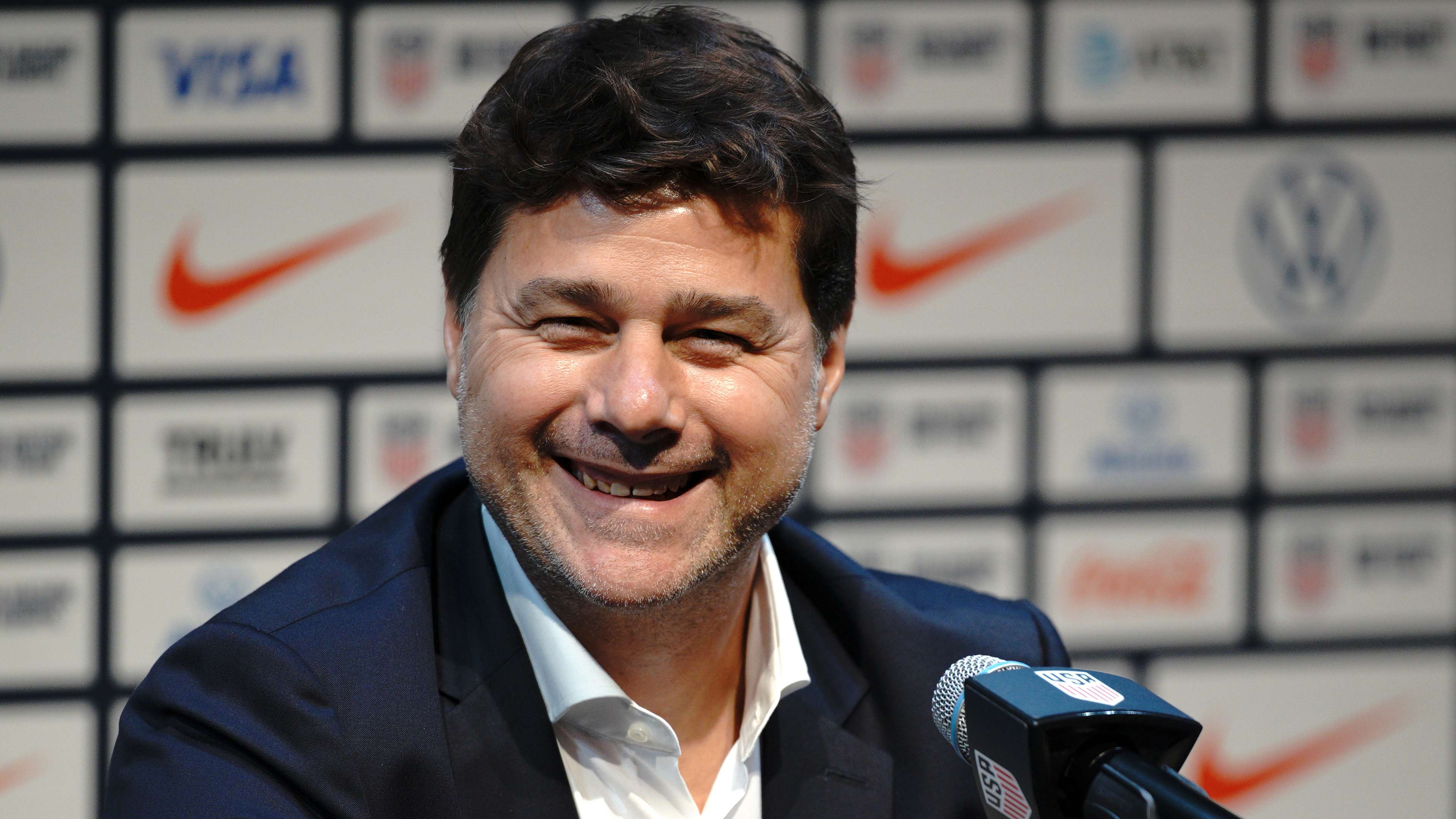
  • U.S. Soccer Introduce Mauricio Pochettino As Men's National Team Head CoachGetty Images Sport

    An undeniable improvement in quality

    There are, of course, some benefits here. Investing more in older players has, generally, led to an improved quality of college soccer. For the fan - even what Cirovski described as the “college soccer basher” - the product on the field is indisputably better. 

    It has also prompted an urgency for change among key stakeholders in the sport. U.S. Soccer announced its support for the collegiate system in full in June, piecing together a committee to make recommendations and support the continued growth of the college game.

    “College soccer is integral to the fabric and future of our sport in this country,” U.S. Soccer CEO JT Batson said in a statement. “The individuals joining this group bring unique perspectives and expertise that will help us build a model where college soccer can thrive in a modern, connected system - all working collaboratively in service to soccer.”

  • brian wieseIMAGN

    Facing an existential threat

    Among the proposed solutions is an increased collaboration between MLS and the collegiate system. The two bodies have been at odds in recent years, with college coaches, in particular, suggesting MLS has disregarded the NCAA. 

    “Some of the issues stem from the MLS teams not really investing in college soccer,” Wiese said. “I think the owners are spending a lot of money on their developmental academy systems and their MLS next pro rosters.” 

    MLS clubs insist that such assumptions are inaccurate - even if they are looking to develop professional players. 

    “For all of our guys, even the guys that we think have a good shot at a pro career, we will encourage them to pursue both tracks from day one - not shut down the college option, even if you think you're going to go pro and you want to go pro, keep as many doors open as possible,” Chris Cartlidge, the Colorado Rapids academy director, said. 

    Others suggest the changes represent an opportunity to push agendas. Cirovski has long believed that colleges should play a two-semester model, expanding the season from the fall to the spring. That would, in theory, alleviate the pressure on players, allow for optimal recovery, and provide coaches a full season to develop talent. 

    “My genuine hope is that this is the last year that we will play a fall championship, hopefully for all of division one men's college soccer,” Cirovski said, “but minimally, for the most ambitious conferences and teams that want to really play in a spring championship. So we can really grow this.” 

    Wiese thinks that an age cap - and allowing teenagers who don’t make it in the pro game to be eligible to still be able to compete collegiately - could be a good start. 

    “Make us the best U23 league in the United States,” Wiese said. “Once you turn 24, you can’t play college anymore. But for kids who sign a pro contract at 16 or 17 or 18 - give them eligibility to be able to play. That solves a lot of issues.” 

    Either way, there are other issues that need to be addressed. College soccer, overall, is getting older. The player pool is drying up. And even if fairytale programs such as Vermont still exist, it seems that change needs to happen if the system - once crucial in the fabric of American soccer - is to stay alive. 

    “If we don't do anything to sort of address some of this stuff, there's a very real chance we're gonna be cut in half,” Wiese said. “There might be 120 division one soccer programs in five years.”