
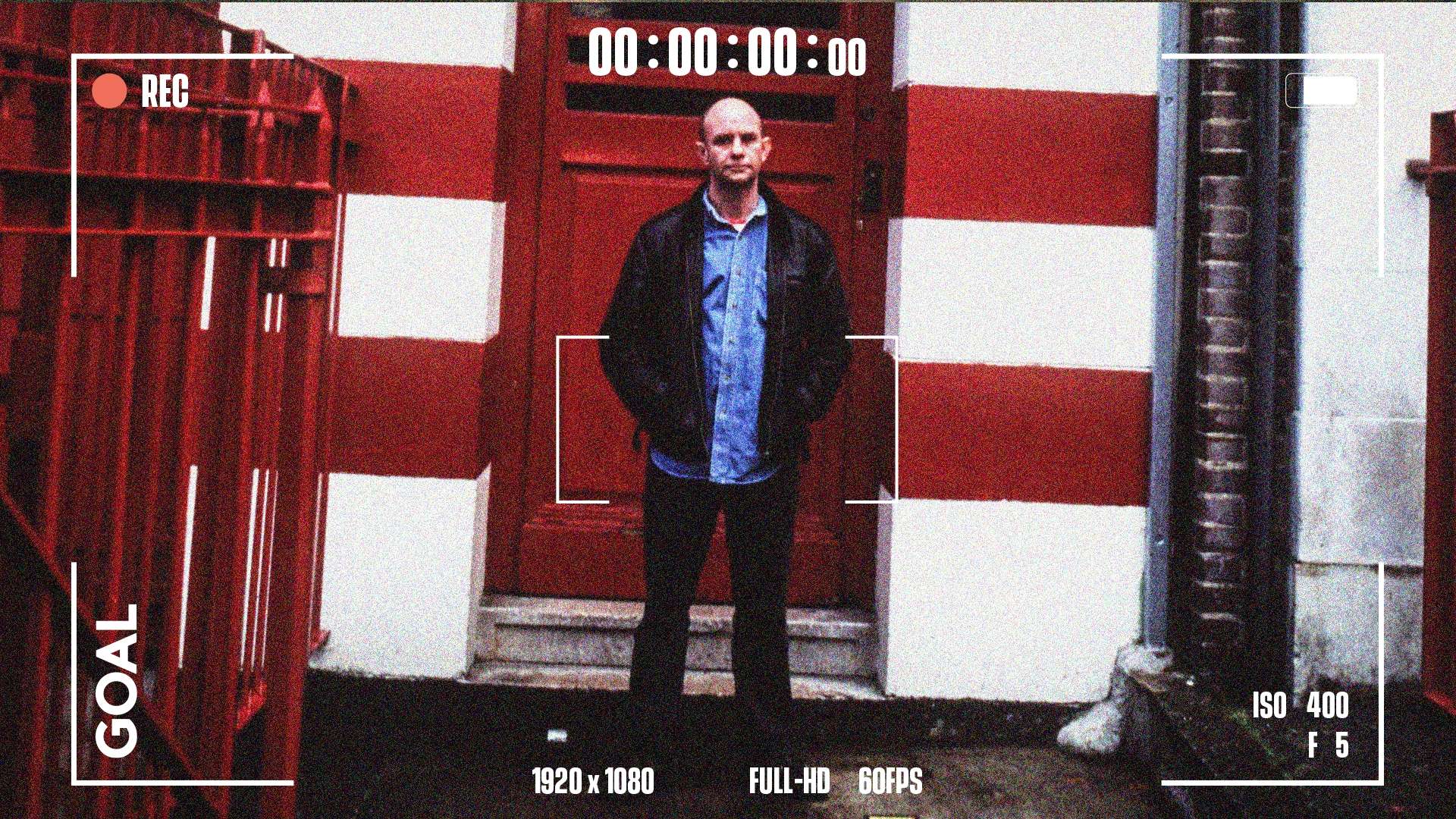
It’s a book that still has a special place in the hearts of Arsenal fans around the globe.
Nick Hornby’s 'Fever Pitch' is also considered by many critics as the book that redefined the football-writing genre following its publication in 1992.
And it’s still as popular now as it was all those years ago when it landed on the shelves and told the story of Hornby’s obsession with Arsenal as he grew from boy to man while standing on the Highbury terraces.
“I hoped that football fans would recognise themselves in it,” Hornby tells GOAL. “But I didn’t necessarily expect it.
"So, it was very gratifying to see how it was received. I think if you get the feelings right, then people will identify with it no matter who they support.”


As well as winning awards and selling millions of copies worldwide, Fever Pitch is one of the rare examples of a football book which made the successful transition to the big screen.
The film, which featured Colin Firth in the lead role, was released in 1997 and was based loosely on Hornby’s memoirs.
Hornby played a major part in its production, adapting and fictionalising his own story, with the main theme focused around Arsenal’s historic title winning 1988-89 campaign.
 Getty
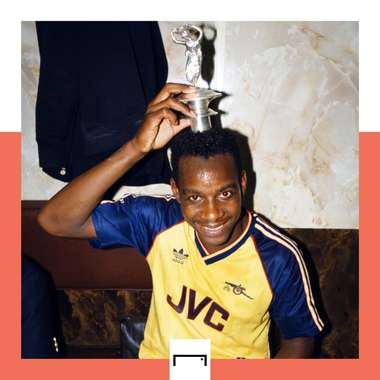
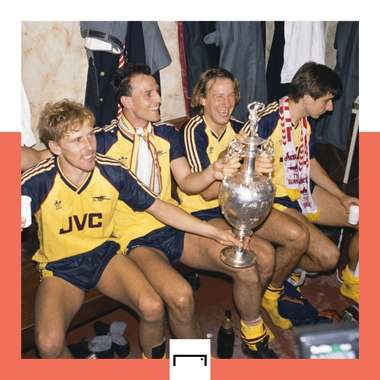
GettyIt culminated with the famous 2-0 win against Liverpool at Anfield on the final night of the season, when Michael Thomas’ injury-time strike gave Arsenal their first league championship success since 1971.
Just like the book, the film struck a chord with its audience.
It told a story of a character, Paul Ashworth, and his battle to balance a devoted obsession for his football club with his attempts to settle down with a woman, played by Ruth Gemmell, who had no interest in football whatsoever.
“When I wrote the book, I knew that the first three important people to read it would be women,” Hornby explained. “My first wife, my agent and my editor.
“I think that probably helped me to see the book as an explanation of a mindset. That was one of the things that I was trying to do.
“I was trying to say 'I know you think we’re morons, but this is what happens.' And then the guys were behind me saying 'Yeah, that’s exactly how I feel.'
“So, it sort of worked for both genders, or people who liked football and people who didn’t.
“And I really wanted to keep that for the film. It sort of shaded in what obsession really is.”
The seed for the Fever Pitch film started to grow almost as soon as the book was complete.
Hornby was invited on ‘The Late Show’ on BBC2 and while he was filming, someone connected with the show raised the idea of turning the book into a feature film.
“He said he wanted to direct it and that he wanted me to adapt it,” Hornby recalled. “I laughed and said, 'Be my guest.'”
 Getty
GettyHornby started writing some draft scripts and, after a producer was found, the idea was taken to Film Four.
“My attitude was I’d just keep writing drafts until I was stopped and told that it was not going to go anywhere,” Hornby said.
“But after I’d done about four of them, they said they were going to make it. It helped that both the guys I saw at Film Four were Arsenal season-ticket holders. They were really into the idea of it.
“I was doing other things at the time – I wrote High Fidelity – so I was sort of fitting it in between things, not really expecting it to go as far as it did.
“And then, suddenly, we had the money to start casting and we shot it in 1996.”
By the time Fever Pitch was released a year later, the landscape at Arsenal had changed dramatically from the time that the book was focused on.
George Graham – the man who masterminded the 1989 title success and followed it up with another league championship in 1990-91 – had left and been replaced briefly by Bruce Rioch.
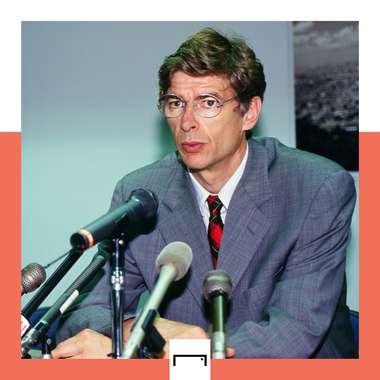
But Rioch had only lasted one season, with vice-chairman David Dein convincing the Arsenal board to bring in Arsene Wenger in 1996.
And when the film hit the big screens, Wenger had started to bring about a remarkable turnaround in fortunes in north London, with his French revolution already in full force.
 Getty
GettyHornby said: “The two significant years for Fever Pitch were 1992 and 1997. The book was published in 92, three weeks after the Premier League was formed.
“When I was writing it, I knew that was happening, but I had no real idea what that was going to mean for football.
“And then, the film came out in 1997. which obviously in British cultural history was a big year.
“So, through coincidence really, the book and the film both came out at times when first football and then the country was changing.”
Hornby added: “Funnily enough, between 1992 and 1996, despite the cup wins, they were awful years for Arsenal really. We really did feel like an also-ran club.
“The two cups in 93 were a laugh and then the Cup Winners Cup was great, but during the last year of George and then the year of Rioch, you thought ‘We are years away.'
“I remember when we lost in Paris in 1995 [Cup Winners Cup final vs Real Zaragoza], we were all sitting in a bar saying ‘I can’t see us being in another European final this century.'
“We certainly didn’t think there would be a double coming up and all these amazing players. It just changed so quickly once Arsene came in.
“I’m just so glad that David [Dein] grasped the nettle. It was very bold.
“Dennis [Bergkamp] was already there. Then [Patrick] Vieira, [Nicolas] Anelka, [Emmanuel] Petit and [Marc] Overmars came, and that just changed everything.”
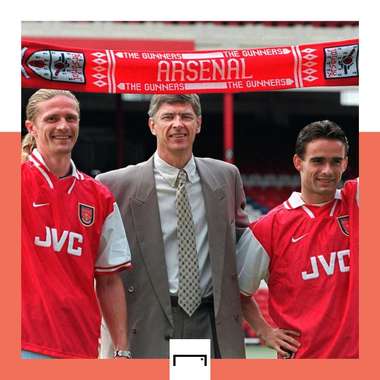 Getty
GettyThe success Arsenal were starting to enjoy on the pitch around the time of the film’s release played a part in how Fever Pitch was received when it hit the big screens.
After some difficult years, there was a feel good factor around the club once again and the explosion of the Premier League around the globe meant that football had never been so mainstream.
But as had been proven countless times before, making a film based around football was always fraught with danger.
A lack of authenticity was always a problem and that was at the forefront of Hornby’s mind from the moment production got underway in May 1996.
“We started shooting at Highbury straight after the Bolton game on the final day of the season,” he said.
“I was in the stands with the producer and the first time they had the teams run out of the tunnel, they had the two goalkeepers lead them out.
“I was sitting there saying 'Unless they are both captains, that’s not right.' So, they did it again and then they did something else wrong.
"I kept pointing things out. I was really involved trying to make it accurate as I could.”
The hard work certainly proved worth it for Hornby and for all involved in the production. While staying true to the book, Fever Pitch the film captured the imagination of its audience.
From the drama of Arsenal’s title win, to the emotion of the love story at its heart, it had something for everyone and that was clear from how it was received.
And for Hornby, who had put so much passion into writing the original book, that was exactly what he set out to achieve when he sat down and started to put together the very first draft of the film.
“I was trying to avoid phoniness,” he said. “I wanted it to feel like Colin [Firth] was actually a fan, so that it had that sense of disastrous emotional commitment to a cause.
"I wanted that to come across because we all know it’s daft that it affects us so much.
“Beyond that, it had to be something different from the book and that was one of the reasons I wanted to do it.
“I’ve never adapted one of my own books since. But that one, I thought it’s my story and it’s my family and didn’t want someone else taking liberties with it.
“So, I wanted to be as faithful to my own book as I could, while knowing that it was going to be something completely different.”