
 GOAL
GOALBuilt for Lionel Messi, unprepared without him: Why Inter Miami need a succession plan or risk sliding back into mediocrity
At the final whistle lately, Lionel Messi has tended to do the same thing.
There are few post-match pleasantries and little lingering on the pitch. Instead, the Inter Miami star puts his head down and makes a beeline for the tunnel. Messi plays his football. Then he disappears.
In isolation, there is little wrong with that. Messi is 39, arguably the greatest player of all time and under no obligation to provide a show once the game has ended. Yet at this particular moment, the image feels telling. Miami’s entire sporting and commercial project revolves around him. Messi plays, and Miami follow.
That arrangement has worked. Messi helped transform one of MLS’ worst teams into champions and turned Miami into a global brand. He did not do it alone, of course. The project has been supported by the immense financial backing of Jorge Mas and the profile and influence of David Beckham. Together, it has been a near-perfect formula.
It is also a formula with an expiration date.
Messi is 39. The 2026 World Cup, widely viewed as the natural endpoint of his international career, has passed. His recent Instagram post following the death of his father also raised questions about how much longer he wants to continue playing. His Miami contract runs through the 2028 season, but no contract can guarantee that a 39-year-old will continue until its conclusion.
And so the onus is on Miami. Messi has ultimate control over his future, but the club would do well to start thinking seriously about its own. If Miami continue to rely on him as the answer to everything, their post-Messi future could look pretty bleak.
A bad team being carried
 Getty
GettyMessi has often cut a frustrated figure after the final whistle this season
Miami's current state is tricky to define. One fundamental thing is clear: they are not a particularly good soccer team. Their 4-1 battering at the hands of Nashville Saturday night summed it all up. Miami had the majority of possession, but were sliced up on the break.
Their midfield was too slow. The spaces were too big. Hany Mukhtar, an adept No.10 who cuts up the best of teams in this league, made a true mockery of the Herons. He bagged two. Sam Surridge added another. Andy Najar provided one more, the right back marauding forward to turn home as Miami failed to develop anything resembling a defensive shape. Eddi Tagseth and Matthew Corcoran ran them ragged in central midfield. It was a miserable evening for Miami.
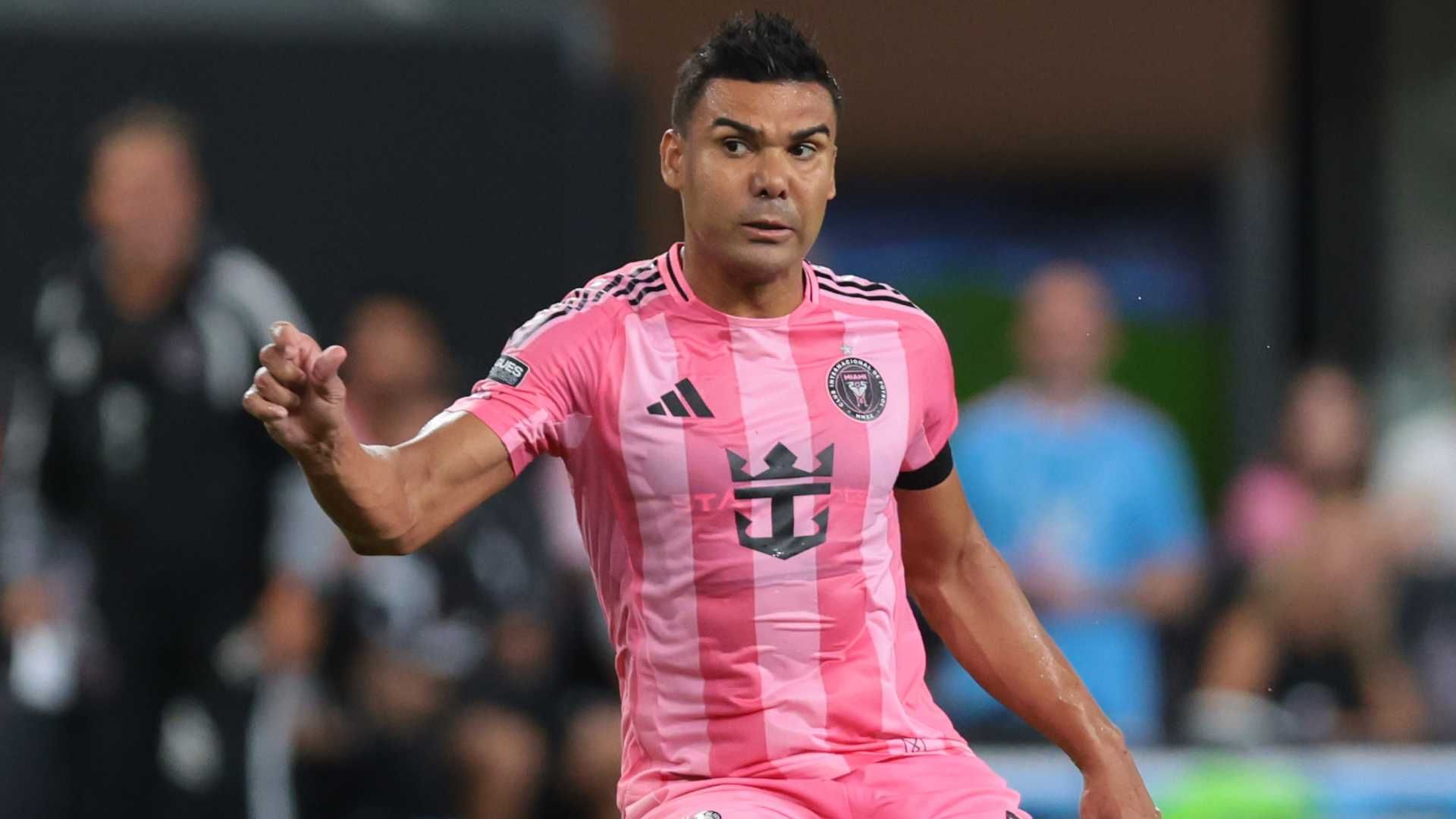
It was also emblematic of a clear formula to beat them: keep Messi quiet, or limit him as much as possible, and Miami's frailties are laid bare. Messi doesn't want to defend. Luis Suarez, 39 and truly trying his best, doesn't have the legs. Rodrigo De Paul's work rate cannot be questioned on the right of midfield, but Casemiro, a marquee post-World Cup signing, is running through sludge in the middle. This shouldn't be a surprise, but the drop-off from Jordi Alba to a Sergio Reguilón who hasn't played regular soccer since 2022 is truly stark. There are no tactical remedies to fix these clear flaws. Miami are, at best, an average playoff team being carried by one man.
An abysmal transfer strategy
.jpg?quality=60&auto=webp&format=pjpg&width=1280)
Miami's transfer plans do little to suggest they have considered what the world beyond Messi looks like
Surely, these faults can be amended, right? Any objective viewer could look at a squad, analyze its faults, and identify key areas for improvement. Even in the world of restrictive salary caps, Miami have been creative. Whether rival fans like it or not, the Herons have completed some financial gymnastics to sign big names.
It's obvious, for example, that Miami need legs in forward areas and in central midfield. Elite central midfielders do not fall off trees, and they don't always sign for MLS clubs, either. Yet there is a world in which, say, N'Golo Kante, might have been added instead of Casemiro. Perhaps spending $15 million on German Berterame, a forward who isn't particularly good in one specific area, wasn't the wisest of moves. Benjamin Cremaschi might have pushed his way out after feeling misused by Javier Mascherano - something he openly admitted in an interview. Yet more care for him might have given Miami a more obvious young, energetic central midfielder to build around.
The problem is, Messi is certainly calling some of the shots here. It goes right back to 2023, when Sergio Busquets and Alba were reportedly both signed to encourage Messi to come. De Paul revealed that his wish to play alongside Messi and stay sharp for the World Cup - he and Messi were reportedly holding extra training sessions in the run-up to the tournament - was the main driving force for him leaving Atletico Madrid.
Even Casemiro, who was Messi's rival for years at Real Madrid, claimed that he is in Miami in service of the GOAT:
"For me, without a doubt, I am coming only to play with the best player of all time," he told reporters in his introductory press conference. "I want to enjoy, I want to help him to keep winning because he is a winner. Another player is joining who wants to win, who wants to compete.
What happens if Messi walks?
 Getty
GettyThe Argentine's departure will surely be a blow - whenever he walks
Yet whether Messi is the one making the phone calls or not is irrelevant. The fact is, this is a team assembled to keep him happy - not a sustainable winning side. And Miami need to think about what their long-term future looks like.
This is a weird juncture in the scope of MLS. The switch to a Fall-Spring calendar, scheduled for the 2027-28 season, will allow teams to be active in the transfer market. MLS owners reportedly heard proposals about restructured salary rules that would allow them to spend more. This is the bit where teams can get a bit more serious - or, at least, think about it.
Messi has a contract that will last until the end of the 2028 season. He is, technically, tied down for next year's "sprint season" as well as the first full fall-spring campaign. At the very least, Miami have one full year, an abbreviated campaign, and what remains of this one to go with their main man. But should Messi walk at the end of the year, things look bleak.
Then, they will be saddled with expensive DPs that don't quite fit the mold. De Paul is under contract - on DP money - through 2029. The same goes for Berterame. Casemiro does not, at the moment, occupy a DP slot. But Miami's flexibility with De Paul, in which they signed him on lesser money before offering more handsome financial terms, could be in play.
Miami should have saved themselves
 Getty Images
A player like Julian Alvarez would be an ideal but likely unattainable successor to Messi.
And that would be the worst possible scenario on several levels. What Miami eventually need is not merely another high-level player, but someone capable of becoming the sporting and commercial face of the club. Julian Alvarez is the dream. He would not reproduce Messi’s box-office pull - no player could - but his quality, age, marketability, work rate and connection to Argentina make him the one name who could form the basis of a genuine succession plan.
Even Alvarez, though, is closer to fantasy than a straightforward solution. Atletico Madrid paid an initial €75 million, with a further €20m in potential add-ons, to sign him from Manchester City in 2024. This summer, the Spanish club reportedly rejected a €150m offer from Real Madrid. Miami would therefore need to produce a transfer package far beyond normal MLS spending before even addressing his salary.
Alvarez is the only name who offers even the beginnings of a genuine succession plan. If Miami decide that kind of move is financially impossible, the next logical route might be to pursue an American star.
Christian Pulisic and Weston McKennie are the only two who truly make sense. Pulisic is the most recognizable active American player, while McKennie combines quality with personality and a profile that would resonate in the United States. Yet neither possesses anything approaching Messi’s global box-office appeal. They could be part of the next version of Inter Miami; neither could be expected to replace the attraction around which the club has been built.
That is the problem. Miami remain tied to Messi not only as a player but as a business. His presence drives sponsorships, ticket demand and global attention. A stand at Nu Stadium bears his name, and his compensation package reportedly includes ownership shares. This is much more than a soccer decision. Messi is the foundation of the entire project, and Miami have yet to show how they intend to rebuild it when he is gone.
Hamstrung Herons
 ZUMA Press Wire
Recent results suggest that Miami will struggle to replicate their MLS Cup success.
What comes next, then, is difficult to determine.
Miami were one of the worst teams in MLS before Messi arrived. They had signed established stars such as Blaise Matuidi and Gonzalo Higuain, but neither had anything close to Messi’s impact, and the club ranked in the bottom third of the league in attendance. By the time Messi joined in July 2023, Miami were all but out of the playoff race and had never won a trophy. Phil Neville had already been dismissed, the roster was full of holes, and the club appeared to be going nowhere.
The danger is that Miami eventually fall back into that pattern. The transition is coming, and it will not be easy. The club has built so much of their sporting and commercial identity around Messi, while the Argentine naturally retains control over when his time in Miami ends. That leaves the Herons with little room to prepare for what comes afterward.
It is entirely possible that Messi has one last Herculean effort in him and can carry Miami to another trophy. But recent results, particularly a dire showing against Nashville, suggest doing so will be a massive ask for an incomplete team.
Until then, Miami are left watching their star man head down the tunnel after each frustrating result and wondering what will remain when he does so for the final time.