This page contains affiliate links. When you purchase through the links provided, we may earn a commission.
Champions League Super League GFXGOAL

The Super League has arrived (sort of): New Champions League format is already angering players and leaving fans confused

Former UEFA chief executive Gerhard Aigner once dismissed the idea of a European Super League as "an illusion" – but its power has always been very real. As former AC Milan director Umberto Gandini pointed out, "the birth of the Champions League in 1993" was effectively UEFA's response to Silvio Berlusconi's attempt to create a breakaway competition for Europe's elite.

It was also no coincidence that just two years after Berlusconi backed another bid to create a Super League, UEFA increased the amount of teams and games in the Champions League, and introduced a second group stage to generate more matches.

"The threat of a Super League always ends with UEFA promising the big clubs more revenue," Tsjalle van der Burg, an assistant professor in Economics at the University of Twente, told GOAL in January 2021. "As long as UEFA is doing that, there will be no Super League. However, by constantly meeting the big clubs' demands because of the threats, we will end up with a format that closely resembles a Super League."

And that's exactly where we now find ourselves, with the expanded Champions League set to kick-off this week with a new format that makes the competition look like a Super League in everything but name.
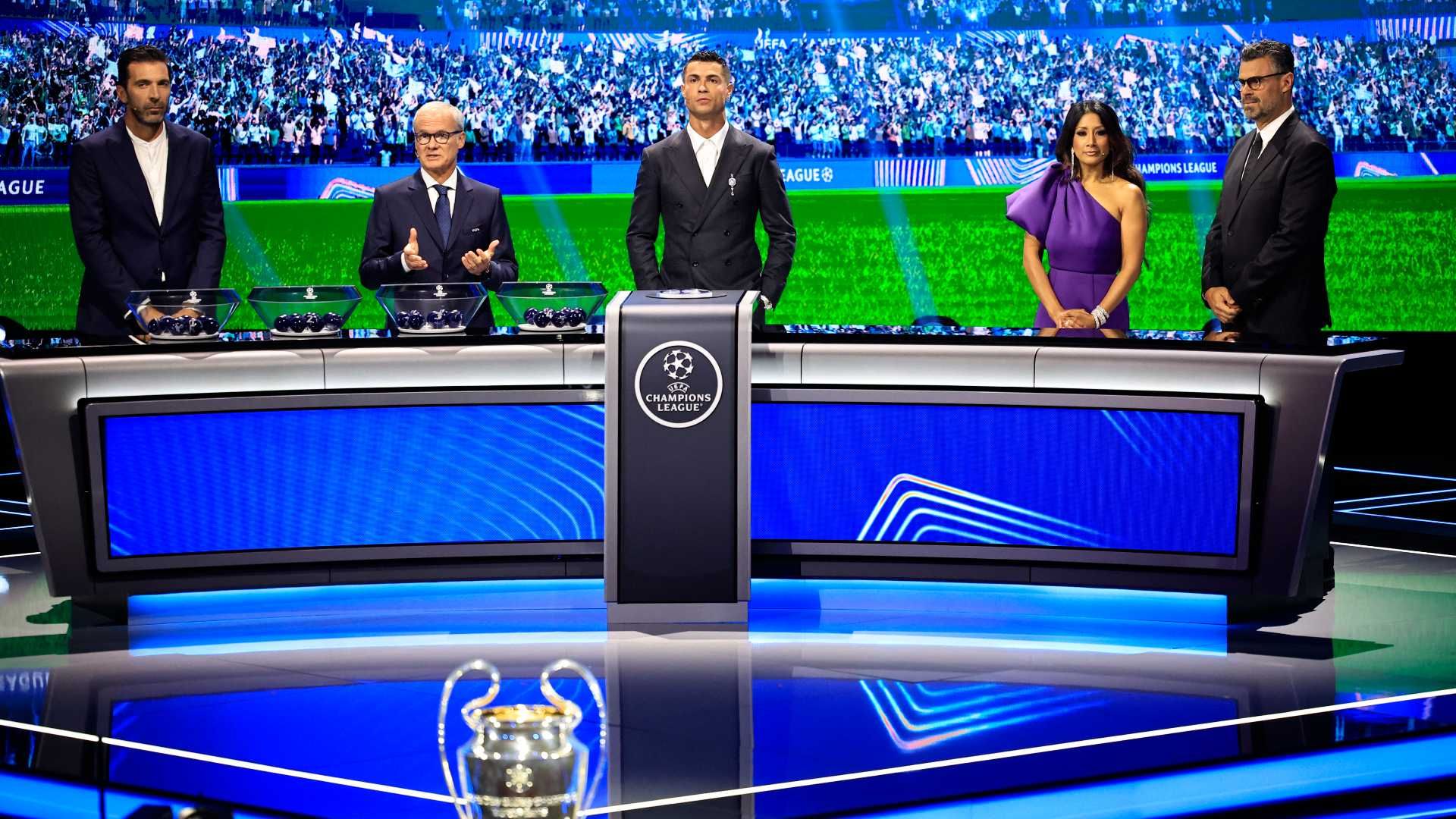
  • champions league draw(C)Getty Images

    The 'Swiss Model'

    An expansion was inevitable as soon as reports first surfaced of another attempted breakaway towards the tail end of 2020, and UEFA had already proposed implementing a 'Swiss Model' before the ill-fated Super League launch in April 2021.

    There is no group stage under the new system - just one big league phase in which all 36 qualifiers (up from 32) play eight games, four at home and four away, against eight different teams.

    The top-eight ranked teams will then progress directly to the last 16, while those ranked ninth to 24th will enter a play-off round. The remaining 12 teams will be eliminated from continental competition completely, as the Europa League safety net has now been removed.

  • Advertisement
  • TOPSHOT-FBL-EUR-C1-DORTMUND-REAL MADRIDAFP

    'Every game counts'

    According to UEFA, the benefits of the new format from a fan's perspective are threefold:

    "The new league format will involve more European teams in each competition and will allow fans to not only see more top European matches, but also to see those matches take place earlier in the competition;

    "The new format will introduce a better competitive balance between all the teams, with the possibility for each team to play opponents of a similar competitive level throughout the league phase;

    "Every game counts. The new league format will ensure that any result has the potential to dramatically change a team's position, right up to and including the very last matchday. Winning or losing the last game of the league phase could make the difference between a side qualifying automatically for the last 16, entering the play-offs or being eliminated from the competition altogether."

    Scepticism abounds, though.

  • Champions League completed draw 29082024Getty Images

    Convoluted and confusing

    UEFA is acutely aware that the 'Swiss Model' has already confused many within the game, and attempted to make light of that widespread sense of bemusement in a 'comedic' promo ahead of the draw for the league phase.

    In time, all should become clear - or at least clearer. As the revamped tournament progresses, fans (and journalists!) will undoubtedly get a handle on the new format - but doubts remain over its efficacy.

    By changing the set-up so that every team must face at least two teams from Pot One, the draw has unquestionably thrown up several heavyweight clashes - but the question is whether circumstance will strip them of some of their significance.

    The argument is that every team will want to finish as high up the standings as possible - firstly, to avoid the hassle of two extra games in February, and secondly to boost their seeding for the last 16. However, could the attractiveness of certain fixtures actually be diluted or devalued?

    The old format certainly had its flaws, but it was capable of producing the odd 'Group of Death', such as last season's pool pitting Paris Saint-Germain, AC Milan, Newcastle and Borussia Dortmund against one another.

    The only certainty there was that two top teams would be eliminated, making every point important. There is zero guarantee that the stellar showdowns in the league phase will be just as meaningful.

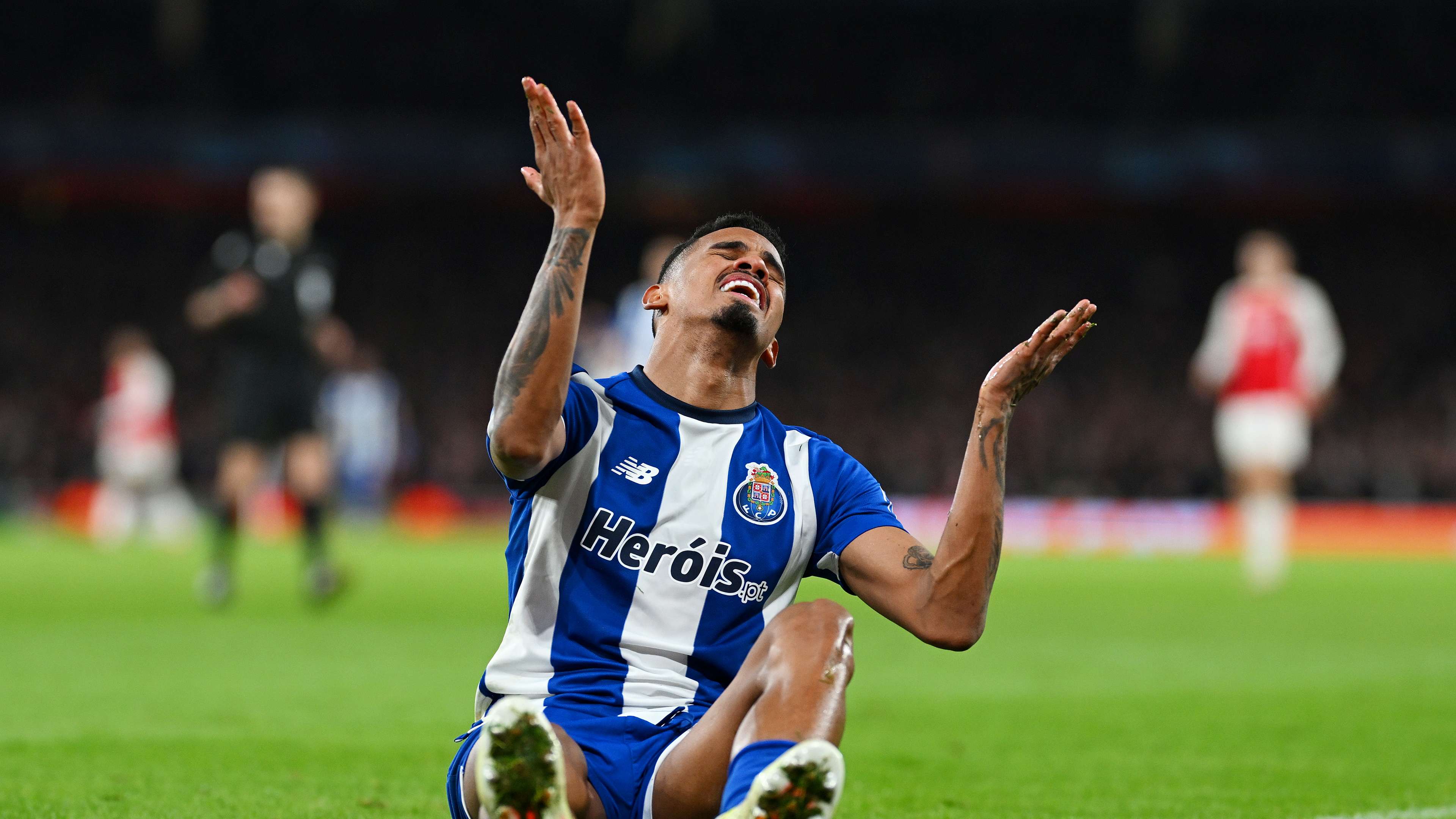
  • Arsenal FC v FC Porto: Round of 16 Second Leg - UEFA Champions League 2023/24Getty Images Sport

    144 games to eliminate 12 teams

    For example, when PSG host Manchester City at Parc des Princes on January 22, how much will actually be on the line? The common consensus is that 15 points will be enough to secure a top-eight finish, so there is a chance that both teams will already be assured of a place in the last 16 by the time they meet, making for a distinct lack of jeopardy.

    Furthermore, if Inter were to lose to Manchester City on matchday one, would it really put them at risk of elimination? Not at all. Nine points (three wins) from their remaining seven games would still likely be enough to at least secure a place in the play-off round.

    UEFA is therefore basically pinning its hopes on the meeting of two top teams being a draw in itself, whereas the mass appeal of such contests in the past was that they usually occurred in the knockout stage. It was the threat of elimination that made those matches utterly compelling, meaning it's entirely probable that the revamped competition will still only come alive in the knockouts.

    The big difference is that it's just going to take much longer - and a lot more matches - for us to get to that point, and that's the real problem with the Swiss Model. Whereas previously 16 teams were eliminated after 96 games, now it will take 144 games to eliminate just 12 - and we're still likely to end up with more or less the same clubs in the last 16 as every year, as the changes will do little to address the disparity in wealth at the top of European football.

  • FBL-ENG-PR-COMMUNITY-MAN CITY-MAN UTDAFP

    'Absolutely absurd'

    Unsurprisingly, the insertion of four additional matchdays (two in the league phase, and two for the play-offs) into an already congested calendar has not gone down well with those responsible for generating all this extra drama and revenue - the players.

    "We have overloaded schedules and play non-stop. Right now, I feel like I'm suffocating," former Manchester United and France defender Raphael Varane admitted last year. "From the managers and players, we have shared our concerns for many years now that there are too many games, the schedule is overcrowded, and it's at a dangerous level of players' physical and mental well-being.

    "We just want to be in good condition on the pitch to give 100 percent for our clubs and fans. Why are our opinions not being heard?"

    It's a valid question but the answer is obvious: more matches means more money for clubs and organisers, which is why we're going to be 'treated' to an expanded FIFA Club World Cup in the summer of 2025, too.

    "It is always the same," Real Madrid goalkeeper Thibaut Courtois said in October 2021. "[UEFA] can be angry about teams wanting a Super League, but they don't care about the players, they just care about their pockets."

    Man City midfielder Bernardo Silva echoed those sentiments just last week, saying: "The schedule is completely crazy... We’ll probably play every three days for months. It’s been absolutely absurd.

    “In the Champions League, if you don’t qualify for the round of 16 you still have to play two more games. It’s true that the squads are bigger, but I’m not going to say that it’s easy. It hasn’t been easy. I spend very little time with my family and friends. The amount of games we’re subjected to is absolutely absurd.”

  • England v Switzerland: Quarter-Final - UEFA EURO 2024Getty Images Sport

    'More important than the game'

    In his role as UEFA's chief of football, Zvonomir Boban acknowledged in August 2023 that player welfare was a long-running problem and that the risk of burnout is only increasing, as we've seen with top young talents such as Gavi and Pedri.

    "How often have we spoken critically about the calendar and too many games? We are not listening to players and coaches," the former Croatia midfielder said. "It's crazy. It's too much, so we will not do this. Our guidelines are different."

    And yet UEFA has just introduced an expanded Champions League that will only increase the workload on players that are already at breaking point.

    Boban, who has since quit his job at UEFA in disgust, added in an interview with Gazzetta dello Sport: "I’ve made lots of compromises in my life, I’m ashamed of some of them. But, with the pure politics of those who besmirch the world of football in order to defend their own interests, it was not possible to continue. And believe me, despite my role being very prestigious, the decision to step away because of my beliefs was still a painful decision.

    "Unfortunately, for years we have seen that technocracy is rampant in the football system, depriving it of the values that it should represent and defend. These people think they are more important than the game, the players, the coaches, the supporters."

    One cannot help but wonder, then, if there is any hope for the future of the game. Boban has already ruled out challenging Aleksander Ceferin for he UEFA presidency, but says that the governing body really could use "a real football man" at the helm.

    Will it get one? It seems unlikely. But we do at least know one thing for sure: While the jury may be out on the new Champions League format, it's clear that the Super League is no longer just an illusion. On Tuesday night, in fact, it will become a reality.