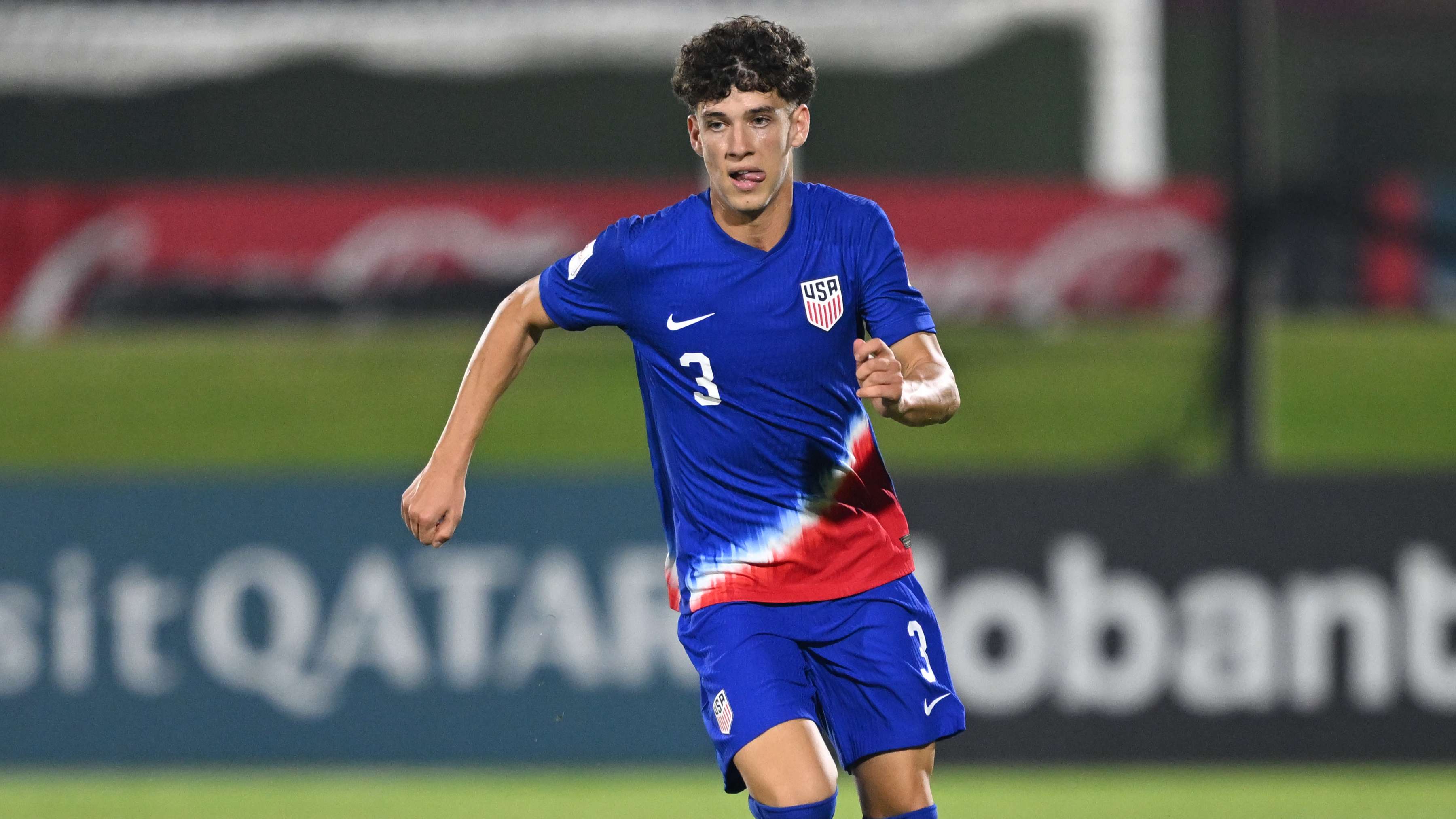
US Youth Soccer GFXGOAL

'We're constantly trying to make the system better' - The state of American youth soccer: Growing faster than ever, but can anyone keep up?

McCarren Park was covered in ice. The high-tech turf, enstamped in the middle of Williamsburg, Brooklyn - surrounded by a running track that is usually buzzing with life - found itself blanketed in many days of residue. Some of it was fresh snow. Some was frozen sludge that had compacted over time, a thick reminder of the days of frigid winter weather the area had experienced.

Yet the north end of the pitch was a teeming patch of green. A small area, no more than 15 yards wide and 30 long, was filled with a dozen young children, kicking a ball around between two undersized goals. They wore contrasting pinnies and were wrapped up tightly in hats and gloves. Parents watched along as their kids ran around breathlessly.

The game served as a stark contrast to the white expanse around it. Nobody else was there - save for a brave jogger or two. But soccer lasted on.

That sort of scene, or at least some version of it, is increasingly prevalent in North America. Youth culture used to be played out with bouncing balls on black tops, or in dusty diamonds and scratty outfields. And sure, those spaces remain.

But now, in countless neighborhoods, some affluent, others less well off, soccer is the movement. It’s a wonderful thing for the beautiful game in the United States. Yet, in Landon Donovan's mind, the system is broken.

"In America, we're such a massive country, and we have a lot of people who know nothing about soccer who get an opinion on soccer and have an influence in soccer. So it's really find commonality. If I had a conversation with a youth soccer coach, half the time, that coach thinks they know way more than me," he said on GOAL's The Rondo podcast.

Yet, there are plenty of people around the sport who feel strongly towards the contrary, and that there has been real progress made.

“We're constantly just trying to make the system better. How can we get better athletes and players into our academy? How can we train them better? How can we make the environment better?” New England Revolution Sporting Director Curt Onalfo said to GOAL.

Now, the question that remains is how America takes this all forward. In a split system defined by its conflicting interests, change won't be easy.

  • American youth soccer part 1Getty

    Money, money, money

    Of course, not every child who braves the cold on a Tuesday night in Brooklyn has to be a professional soccer player. Some sports are simply recreational. And for a long time, that’s all that soccer was in this country. It makes sense, after all. This thing just requires a ball and something to kick it into. But America has always had talent. Now, it has more.

    The quality of the American player is, no doubt, improving. And so is the infrastructure around it. Yet it remains a mystery that the U.S. has never developed a singular world-class footballer who has stayed at the top of the game for a consistent period of time. Those involved in the game insist that making a Christian Pulisic isn’t the goal. Rather, the focus is on raising the floor.

    How, exactly, it can be done, though, remains a challenge. The fundamental problem is that, unlike in other countries, American youth soccer is expensive. That has never changed. Some of the numbers average parents pay for a good level of club soccer is eye-watering. An elite-level club team in the Washington, D.C. area charges $4,100 per year for U-13s - those are the kids on track to play professionally, or at least in college. Travel ball? That’ll cost around $3,000 when you include team fees. And that cost is largely prohibitive for many families. A recent report from the Aspen Institute’s Project Play initiative found that 32 percent of youth players in the New York City/New Jersey area cite cost as a major barrier - rising to 41 percent among low-income households.

    Donovan was also critical of the high costs and also the fact that the focus is often on results rather than development.

    "You have all these youth clubs charge you crazy fees," he said. "It's all about winning. The kids get left behind because the clubs want to make money, the coaches want to make money, they want to win, and the kids don't develop. And now we're seeing the fruits of that."

    Even at a more basic level, families spend a lot to allow their kids to play this sport. According to Project Play, the average family spent $924 annually on soccer in 2025. Suburban parents paid $1,552, while urban families paid north of $1,600. Only travel baseball is more expensive - and that gap is narrowing.

    But cost isn’t the only barrier. Even for families who can afford to play, access to the game is uneven in quieter ways. The Aspen Institute found that only 21 percent of low-income youth have access to a car ride to games or training, compared to 86 percent of high-income players - a gap that quietly shapes who can stay in the system.

    Still, some argue that those prices can be justified. A $4,000 club season often includes three training sessions per week and roughly 15 games across the fall and spring -around $50 per session.

  • Advertisement
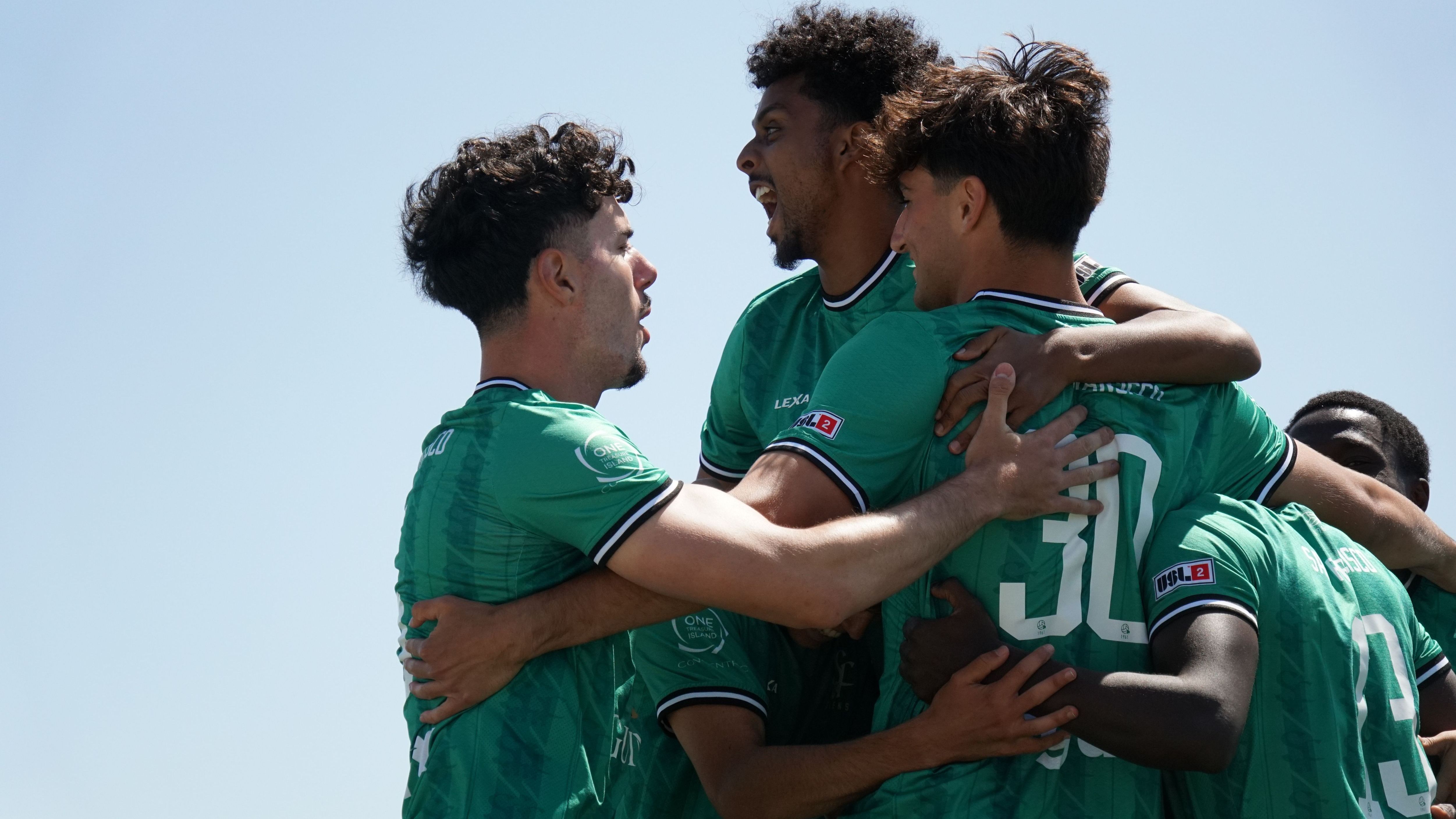
  • SF Glens 3Kyle Kenney-Dunham

    A lack of alignment

    There is also a divide in terms of pathways. In Europe, for example, youngsters play for a local club, trial with a nearby professional team. And if they are good enough, they get moved into the system. To be sure, there are varying degrees of success and mixed levels of support and resources. But in general, there is a well-trodden, singular path that allows talent to be found, developed, looked after, and shuffled into the professional game.

    The American system, however, offers two real distinct pathways: the old-fashioned springboard of some version of club soccer into the college game; and professional academies that shuffle youth talent into MLS - or, increasingly, USL teams.

    “I think obviously the youth soccer space has gone through a significant period of evolution, with different national platforms popping up,” said Mike McNeil, Executive Director of SF Glens, a highly-ranked Northern California youth academy. “There's been a lot of competition between them. But I feel optimistic that there will be some sort of alignment.”

  •  MLS NEXT Pro MLS NEXT Pro

    MLS, which is trying to evolve

    MLS, in theory, has a first-mover advantage here.

    It also, unlike so many other youth options, has a lot of money. For the most part, MLS clubs are able to fully fund their players (although there is some fine print). And in recent years, they have made a real effort to shuffle players into the first team. The Philadelphia Union are the often-cited hallmark, and for good reason. Their YSC academy, which mimicked many a European model by building academic responsibilities around soccer practice, ensured that the Union had not only control of their talent but also the ability to develop at a higher rate.

    And while not every team has undergone a similar sort of system, plenty are investing big in youth. LAFC hired Toni Hernandez, a former La Masia director who was in high-level positions while top talents such as Lamine Yamal developed in the Barcelona academy. He saw that the U.S. could be a real opportunity.

    “You see all of these kids playing soccer. I think I can help this talent grow to the professional level,” he said.

    Charlotte FC, a leader in MLS sports science, have emphasized the importance of data when it comes to developing pros - especially by tracking physical “ages”.

    These things aren’t exactly new, though. In the end, for MLS, it comes down to decision-making. Often, the hardest decision in professional soccer, in fact, is to identify when a young player is ready to make the step up. Some rely on the numbers: age, physical profile, stats.

    But for others who have been around the game for a long time, the eye test is enough.

    “It’s just by watching and observing. You see the kids that are progressing, and then the ones that are, quote unquote, high potential, and keep working with them,” Onalfo said.

    Old-fashioned? Perhaps. But the Revolution have signed 16 players to homegrown contracts, and sold for a tidy profit. Onalfo, meanwhile, helped flesh out D.C. United’s academy in the early days, and was at LA Galaxy when they became a bona fide MLS dynasty in a league that is set up to prevent them. He might just know what he’s talking about.

    “You end up seeing it with your own eyes if the kid is exceptional. If you can’t see that, you don’t know what you’re doing. We don’t have some analyst behind a computer telling us who to pick and bring in to our academy,” Onalfo said.

    The Red Bulls, meanwhile, are at the other end. Whereas the Revolution - like the majority of MLS clubs - are effectively a single entity that connects the academy to the first team, the Red Bulls are a key cog in a global network that has, historically, invested heavily in youth. But what was once a famous pipeline has rather dried up. Tyler Adams, who left the Red Bulls in 2019, was the last big prospect to move from the United States to Europe. He is still lauded as an immense success by those inside the organization. But the truth remains: that was a long time ago now.

    An organizational reshuffle and plenty of investment are aiming to change that. The Red Bulls are opening a state-of-the-art training centre in New Jersey. Their appointment of Michael Bradley as head coach this season represents a bit of a shift towards youth. And perhaps most importantly, their youth side won MLS Next Pro last season with Bradley at the helm - using MLS’s reserve league as a forum to let their talents grow.

    It’s part of their ethos, in general, to ensure that the kids are the future.

    “We are not a team that's going to spend 10, 20 million on a player to find here and fill seats,” New York Red Bulls Head of Sport Julian de Guzman said. “That's not what we're about. We feel more excitement when you have a local player who gets to make his debut.”

  • ENJOYED THIS STORY?

    Add GOAL.com as a preferred source on Google to see more of our reporting

  • Pedro Guimaraes, USYNTGetty

    USL, and moving talent around

    Yet the problem with MLS academies is their size. They are, in effect, becoming a little too big. Players are held back. Those who might be ready for a jump are stuck training with the wrong age group or trapped in an ill-fitting tactical system.

    That’s where USL gets interesting. The USL Championship features 25 teams, many of which have well-established academies in their area. But figuring out what, exactly, to do with their top youngsters is difficult.

    The internal transfer market in USL is near-nonexistent. Players sign mostly one-year contracts on cheap salaries and then move elsewhere. Youngsters need to be incredibly good to make it. There are, as yet, no high-profile examples of USL young players moving from one club to another. That’s why some have taken to selling their best to Europe. Orange County SC are, perhaps, the most impressive example. As of 2026, they are the most successful side in moving youth talent overseas.

    For the kids themselves, it’s a pretty easy sell. They believe they’re good enough to play at the highest level. Local academies - in this case, LAFC and LA Galaxy- cannot guarantee them professional minutes, or even a chance at the pro game. So, OCSC will grant playing time in the USL, and then tease a move to Europe.

    “What we sell is ‘Look, if you're performing at 16, 17, you'll be playing in the first team,’ OCSC President of Soccer Pete Nugent said. “And that's much harder for an MLS team to offer that, just because of the amount of growth and talent that's in MLS now.”

    One such example is Pedro Guimaraes. He was shuffled into the OCSC first team as a talented teenager. In February, the USL club agreed an incentive-laden deal to send him to Frankfurt that could net them a handy return should he go on to play at a high level in Europe.

    “It was a really perfect scenario. We exposed him to a first-team environment, and he excelled. He's a highly technical player. He's very uncomfortable on the ball, but can play multiple positions. Frankfurt showed a strong interest in bringing him over and getting him out there,” Nugent said. “He'll see out the year with us and go in the summer window.”

    Other USL clubs can benefit due to geography alone. Phoenix Rising are in an interesting spot geographically. The closest MLS academy is in another state - and five hour’s drive away. Arizona isn’t rife with talent, but they certainly have a say in picking up whoever may be in the area. That leads to certain advantages.

    “Phoenix Rising and just focusing on us, we really focus on local players, local talent, long-term youth development, and then try and push them into our pro pathway within our academy system,” Phoenix Academy Director Andy Chapman said.

    Their “High Performance” program allows academy kids of any age to train with the first team. They, too, have seen the reward of giving youngsters a chance.

    “Our players have the freedom to play in Europe if they sign a professional contract with USL. And we've had a true and practical track called the track record of if you're good enough, you will play at the USL championship level,” Chapman said.

  • brian wieseIMAGN

    College soccer still has a fit?

    College soccer, at least on the men’s side, has decreased in value for the professional game. Multiple General Managers and Chief Soccer Officers of MLS clubs told GOAL that last year's MLS SuperDraft class was particularly weak.

    In some ways, there is a reliance on the “old system” to improve. Notable figures around college soccer have been pushing for significant changes in the format for some time now. The idea of a “two semester model” to split competitive play between August and May, has been in play for years. And in 2025, U.S. Soccer set a clear pathway towards it, publishing a White Paper outlining a potential model for a revamped men’s college soccer system.

    Such a refurbishment of a struggling format has offered real encouragement to those around the club game.

    “Once you start really expanding that season, and it's one game on the weekend, you can really use periodization and have some sort of season planning go along with it. I think there's real development that can happen within the college game now,” McNeill said.

    It is, in fact, the one reason it can stay alive.

    “The college game can really have a massive story to tell, or a huge impact in the development of top players in the country now,” McNeill said.

  • European teams keeping an eye on the market

    Yet for the multitude of paths, there remains the fundamental fact that European clubs have two eyes on American youth soccer.

    “The one thing that these European clubs do really, really well is they extensively scout. Every club in Germany, Portugal, Spain, will have a scout representative at these tournaments. So they're aware of their players from 13, 14, 15. So they're aware of the top players on the radar,” Nugent said.

    A USL GM also outlined to GOAL that he toured Benfica’s facilities and found that the Portuguese giants had in-depth knowledge of the American game - right down to the lowest of youth levels.

    “They knew everything about it,” the GM recalled. “They knew everything about a young boy that we had at the time. They could tell you about players within the league. What that did, for me, was show that they are not opposed at a club of that level, looking at leagues that may be under-recruited for talent.”

    That should come as no surprise for a club such as Benfica, which has carved a niche as one of the best talent flippers in Europe. Others aren’t so sold on the idea of the American market, though. Juventus, for example, believes the academies it has in the U.S. aren't to find future Weston McKennies, but rather to impart their value and training to kids who want to learn the game.

    “Our international Academies do not have a sporting goal. The project was born to bring Juventus' colours, methods and values to as many kids as possible,” a spokesperson for the club said.

    Other European clubs have a sizeable presence in the United States. Borussia Dortmund has 15 academies around the U.S., including one in Hawaii. PSG have an immense U.S. presence. However, some have questioned how sincere their intentions are in the U.S.

    “They have 15,000 kids. Three make it. Three of them,” said former USMNT center back Jay DeMerit, who runs a soccer camp with high-level youth talents in Canada. “They're not trying to make the next Jude Bellingham. It's not on their roadmap. If Jude shows up, great. If they make money and sell them on, great.”


  • Missy Price U.S. Club Soccer

    Trying to bring everyone together

    There are some people out there who are doing things a different way. USL, ECNL, MLS, and college soccer all have, loosely, the same goal: the development of talent. But they have conflicting interests, differing price points, and uneven levels of coaching. Some are trying to make this thing more equitable, less complicated, and as cheap as possible.

    U.S. Club Soccer is, in effect, an organization that goes about its business behind the scenes. There are different strands everywhere, and the non-profit works diligently to try to get everyone on the same page. That means having their hands in everything, from elite coaching programs to counselling for parents who might push their kids a little too far.

    “[The U.S] has a terrible track record of making what should be one of our biggest assets, which is our size, and turning it into one of our biggest hurdles. If you start to align in a meaningful way, all of these folks and organizations generally start to think about it as being on the same team,” CEO Mike Cullina said to GOAL.

    And they are doing camps their own way, too. Earlier this year, they expanded id2 a program that aims to scout, educate, and develop the talents that might have slipped through the cracks. What started with U-14s is now expanding, but the idea is that, in effect, a nationwide talent identification network can work in the U.S. The players identified meet at a camp in Chula Vista, California, where they train, play, and compete.

    They work with parents, too, using sports scientists and professionals to cope with the rigors, stressors and, often, misunderstandings that come with high-level youth soccer.

    “It’s hard for parents to put their ego aside. There are all of these pressures in our society where it's never enough. When your friends are like, ‘Oh, what are your kids up to?’ and you're just like ‘They just have their hobbies.’ Some people are really uncomfortable with that,” Dr. Missy Price, Vice President of Education & Development for US Club Soccer, said.

    Local programs are also chipping in. Brando Babini is 21-years-old and a student at Brown University. He grew up in New York City, and was a high-level youth soccer player who flirted with a pro career. At 16, he realized it wasn’t going to happen. But when he pondered his own journey, he figured something was missing: mentorship.

    “I was like, this isn't happening for me. I reflected on my journey, and I was like ‘What's something that was missing in this experience? What do I wish existed when I was a youth player? And the answer was so clear to me: ‘it was a mentor, it was a big brother’,” Babini said.

    So, he energized his network of parents, as well as former and current pros, setting up a system in which professionals and college students could advise youngsters on their career paths. His idea has since become a program, Youth 4 Youth, with well-attended college camps and partnerships with MLS.

    That, too, can be a model of how this thing can spread in America.

    “It's the most Gen Z football academy that you can imagine. We don't scout players. They find us online, and they send us the highlight tape. We have them try out, and then we leverage everything with our peer-to-peer network,” Babini said.

  • Sam Al-BasithSam Al-Basith

    'We don’t want to develop robots'

    And so we return to the idea of the American player.

    Sam Al-Basith, who used to work for the LA Galaxy academy and now runs a training academy in Los Angeles, so.LA, thinks kids need to be given the platform to be more brave with the ball. That, he argues, is holding America back.

    “You look at all of these players that are breaking through at the top, top level, they’re creative, they’re courageous. They’ve got some swag in there. They’re able to eliminate 1v1, receive on the move, change direction with the ball,” he said.

    Al-Basith’s goal, then, is to help develop a bit more expression. His business, based in Southern California, offers expansive training for youngsters - boys and girls - who are encouraged to take more risks.

    “We don’t want to develop robots. We have to develop people who are intentional. Kids in this day and age are lost. They need support,” Al-Basith said.

    As part of it, he holds group training sessions on weeknights. But he also does video sessions and teaches classes based on preparing for the mental side of the game. One minute they could be watching clips of Kylian Mbappe cut in from the left wing. The next they could be meditating.

    “We train self belief, the things that you can help yourself towards, trying to find the balance,” Al-Basith said.

    And there are plenty more like him. He argues that perhaps a little more riskiness, a little more expression, could be the key to lifting American soccer up that little bit higher. Ultimately, after all, it comes down to individuals. The system is improving - even if it is certainly imperfect. Europe is watching. Clubs, academies and others are certainly trying to do their part.

    What remains, then, is the drive of the kids who brave the ice of a Brooklyn park in the middle of winter.