
“Jamie Gittens is back,” Chelsea FC manager Liam Rosenior announced last Friday. Less than 24 hours later, after a brisk training session and the Blues’ 7–0 EFL Cup romp over Port Vale, the boss was forced to revise that optimistic outlook. “Unfortunately, Jamie appears to have suffered another thigh injury in training yesterday,” Rosenior confirmed. We’ll need to have him examined to be sure. It’s a real shame for him. I think this is the third time this has happened to him.” The injury is a fresh blow to Gittens, who has worked tirelessly to establish himself in Chelsea’s development squad. His pace and directness have impressed coaches and fans alike, but the recurring hamstring issue threatens to derail his momentum once again. For Rosenior, the setback underscores the fine line between progress and frustration in the life of a young professional. With the Blues’ schedule set to intensify, the club’s medical team will play a crucial role in managing Gittens’ recovery and ensuring he returns only when fully ready. In the short term, Chelsea’s depth will be tested. Rosenior will look to other attacking options—including Callum Hudson-Odoi and Christian Pulisic—to provide firepower in the upcoming league and cup fixtures. Supporters will hope that Gittens can eventually join them on the pitch, free from the nagging pain that has interrupted his rise. Until then, his progress will be monitored closely, with every scan and rehabilitation session bringing him a step closer to a fourth—and hopefully final—comeback.
 Getty Images Sport
Translated by
An immediate setback after his comeback! The nightmare year for a former BVB star shows no sign of ending. The 29-year-old, who once dazzled Signal Iduna Park with his pace and trickery, has suffered another injury just days after returning to full training. Club doctors confirmed that the forward will be sidelined for at least six weeks, dealing a fresh blow to both his personal ambitions and the club’s hopes of challenging for silverware this season. Supporters, who had already watched the winger miss large chunks of the campaign because of a series of nagging muscle tears, reacted with a mix of frustration and sympathy on social media. “Yet another setback-stay strong!” one fan tweeted, while another noted, “His talent is undeniable, but these injuries are truly relentless.” For the player himself, the latest diagnosis feels like a cruel twist of fate. Having worked tirelessly through rehabilitation, he had only just begun to rebuild match fitness when the familiar pain returned during a routine sprint drill. Coaches, who had been eager to reintegrate him into the starting XI, must now rethink their attack options ahead of crucial fixtures against top-half opponents. In the short term, the club’s medical staff will focus on a conservative treatment plan that combines rest, targeted physiotherapy, and advanced recovery technologies. They insist that rushing his return is no longer an option, given the risk of a repeat injury that could derail his career. Longer term, the club faces difficult decisions about the player’s future. With two years remaining on his contract and a hefty wage packet, executives will weigh the pros and cons of retaining him as a potential asset versus exploring a transfer that could recoup some of their investment. For now, though, the conversation remains on hold; all parties are concentrating on getting him back to full health. Fans, meanwhile, are urged to stay patient. The club has promised regular updates but cautions that recovery timelines in sports medicine are never exact. For a supporter base that has grown accustomed to seeing their former star light up games, the wait will be tough. Yet, as one season-ticket holder put it, “We’ve been through the highs and lows together. He’ll come back stronger, and we’ll be cheering him on every step of the way.”
 Getty Images Sport
Jamie Gittens is still searching for his first goal in both the domestic league and the Champions League. The forward has featured regularly for his club, yet the statistics column next to his name remains stubbornly empty. Fans and analysts alike are noting the drought, though coaches continue to express confidence in his ability to break the deadlock. In modern football, strikers are judged above all by their ability to find the net, and Gittens will know that a debut strike could unlock his season. Until then, the narrative around his form will persist, underscoring the fine line between promise and production at the highest level.
It would be a mistake to assume that the pacy winger’s form had been flawless before this latest outing. Quite the opposite: under Roseniors’ predecessor, Enzo Maresca, Gittens struggled to secure a regular starting berth. When he did get on the pitch, his performances were largely lacklustre, although flashes of ability hinted at his potential.
In his first season back on home soil, both club and player had hoped for far more. The statistics underline his limited impact: 27 appearances, only 12 starts, and an average of just 40 minutes on the pitch per outing. He has completed the full 90 minutes twice, the most recent occasion coming back in November.
For an attacker, his return of one goal and five assists is underwhelming, and he is still searching for his first goal in 23 combined Premier League and Champions League outings. The numbers tell only part of the story. Gittens’s game often lacks the sharpness and end-product needed to justify a regular starting berth. His pace is obvious, yet he frequently struggles to turn that raw speed into decisive moments. Defenders, once unsettled by his bursts, now seem better equipped to contain him. The club’s expectations, shaped by his promising pre-move form, have not been met. Gittens himself arrived with ambitions of becoming a key figure, but those hopes have been tempered by reality. The coaching staff value his attributes, but they need more consistent performances before they can entrust him with a more prominent role. For now, Gittens remains a talented but unfinished winger whose potential is clear yet unfulfilled. With competition fierce, he must use every minute he gets to prove he can be the difference-maker everyone expects him to be.
 Getty Images Sport
Jamie Gittens is conspicuously missing the rhythm that once propelled him into the hearts of football fans. Without that fluid cadence, his movement around the pitch lacks the familiar swagger, and the team’s attack feels noticeably blunted. Observers point out that his first touch has lost its sharpness, and his runs no longer carry the same menace they once did. Clearly, rediscovering that rhythm will be key if he is to recapture his best form and help his side push forward with purpose.
What Gittens currently lacks, beyond goals, is consistency. Despite brief signs of stability in the autumn, he has spent months searching for rhythm. His sole goal to date—a Cup strike against Wolverhampton—highlighted his potential, as did his Man of the Match performance in the 5-1 Champions League win over Ajax Amsterdam.
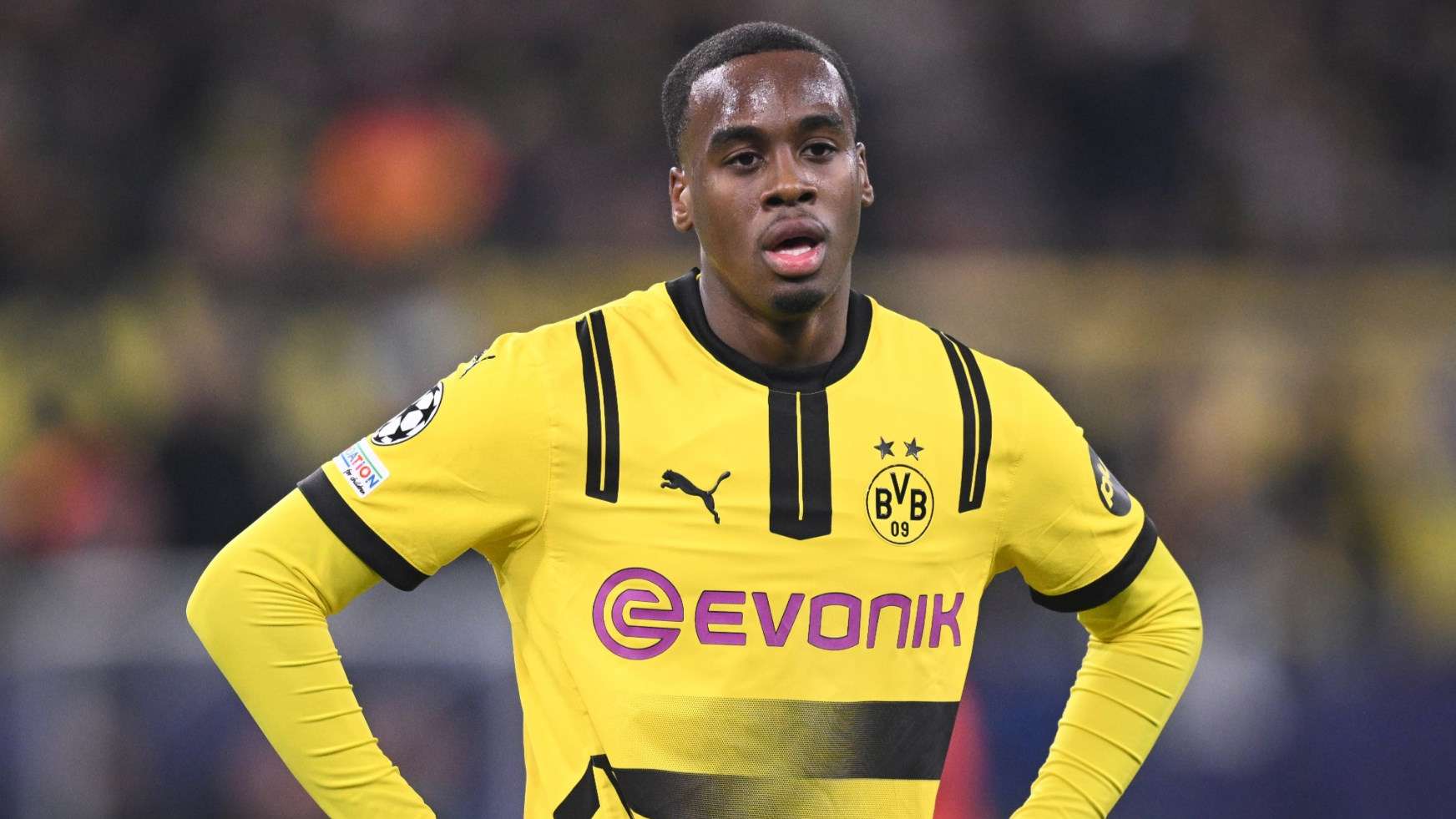
Those performances briefly suggested he had found his feet, yet the inconsistent run has continued, leaving him searching for the kind of form that marked his breakthrough in Dortmund. Under Nuri Sahin, Gittens flourished, contributing nine goals and five assists in the first half of last season and establishing himself as one of the Borussia side’s most dynamic attackers. Once Niko Kovac took charge, however, his progress stalled abruptly; the new coach’s tactical approach seemed to marginalise Gittens, and the forward has not regained that early momentum. With competition for places intensifying, the next few fixtures could be decisive for his development and his place in the squad. For now, the club’s medical and coaching staff remain patient, insisting that Gittens’s long-term potential justifies a measured, supportive approach.
 Getty
GettyJamie Gittens spent the twilight of his BVB career confined to the substitutes’ bench. Despite showing promise during his earlier appearances, the young forward was unable to secure a regular starting spot in the final phase of the season. Head coach Edin Terzić frequently opted for more experienced options, leaving Gittens to watch from the sidelines and bide his time for opportunities that came fewer and farther between. The club’s crowded forward line, combined with the demands of multiple competitions, meant that minutes were scarce for anyone not deemed a first-choice selection. As a result, Gittens’s development trajectory hit a temporary plateau, underscoring the challenging yet familiar path faced by many young talents in the modern game.
Gittens played no part in the race for fourth place in the Champions League. In his final months at Borussia, he was demoted to a substitute, partly due to Kovac’s switch to a back three and the simultaneous phasing out of players who thrive on one-on-one situations. This was followed by the next bitter episode at Chelsea.
All things considered, Gittens would be well advised to draw a line under this campaign and, like the club as a whole, make a fresh start when pre-season begins. Reading between the lines of Roseniors’ public comments, there is reason to believe the youngster may prosper under the Englishman’s tutelage more than he did under Maresca.
Provided, of course, that his muscles stop playing tricks on him.