
.jpg?auto=webp&format=pjpg&width=3840&quality=60)
The 2026 FIFA World Cup is set to take place across North America, Mexico and Canada and will see some of the greatest players in the game battling it out to be crowned world champions.
A total of 104 matches will be played over the course of the tournament following the decision to expand the tournament to 48 teams.
Here, GOAL brings you all you need to know about how long each game will last, plus all you need to know about half-time, hydration breaks, extra time, penalties and more.
How long is a FIFA World Cup match?
.jpg?format=pjpg&quality=60&auto=webp&width=380) Getty Images
Getty Images
The World Cup will kick off with an initial round robin group phase featuring 12 groups of four teams. The teams will all play every other nation in their group with each match lasting 90 minutes and consisting of two 45 minutes halves. The half-time interval lasts for 15 minutes and sees each team return to the dressing room along with the coaching staff.
Games can also last slightly longer than 90 minutes due to injury stoppages or breaks in play. This time (known as injury time or added time) is then added back on at the end of matches, meaning most games last for several minutes longer than the actual 90 minutes.
Assistant referees signal how much injury time will be played at the end of the game by holding up a board to signal to players, coaching staff and the crowd how many added minutes will be played.
What happens in extra-time?
.jpg?format=pjpg&quality=60&auto=webp&width=380) Getty Images
Getty Images
After the group section of the World Cup the tournament progresses to a knockout phase in which the format changes slightly. Knockout matches will still last 90 minutes but extra-time will be played if scores are still level at the end of regulation time.
Teams will play 30 minutes of extra-time, divided into two 15-minutes halves. The half-time break is much shorter than in regulation time, with teams permitted only a brief break for a drink and to change ends.
If the match is still level after the 30 minutes of extra-time, then penalties will be used to determine the winner of the matter.
What was the longest FIFA World Cup match?
.jpg?format=pjpg&quality=60&auto=webp&width=380) Getty Images
Getty Images
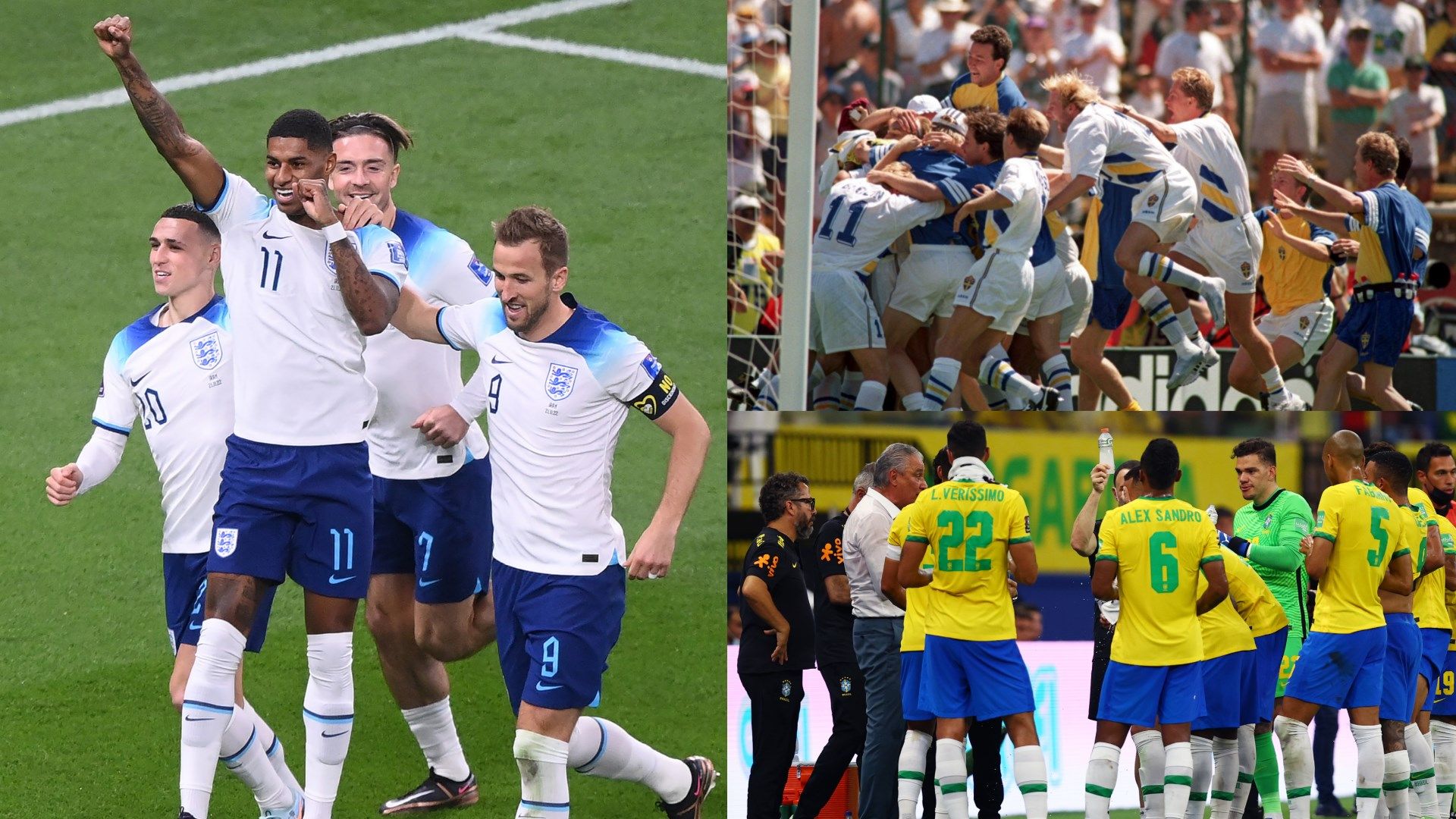
The record for the longest 90-minute FIFA World Cup match belongs to England and Iran who played for a whopping 117 minutes at World Cup 2022 in Qatar.
The Three Lions ran out 6-2 winners in a game that featured 14min 08sec of stoppage time in the first half and another 13min 08sec in the second 45 minutes.
The 24 minutes of stoppage time means the match is in the Guinness Book of Records for the most added time in a FIFA World Cup match at 24 minutes.
It’s slightly different in the knockout phase, when extra-time and penalties are used. West Germany's win over France in the semi-finals of the 1982 tournament saw 12 penalty kicks taken. Sweden and Romania matched that record in 1994 in the quarter-finals in the USA, with the Swedes progressing.
What are water breaks & why have they been introduced?
.jpg?format=pjpg&quality=60&auto=webp&width=380) Getty Images
Getty Images
The FIFA 2026 World Cup will feature water breaks (also known as ‘hydration breaks’ or ‘cooling breaks’) throughout the tournament.
Each half will feature a three-minute hydration break in a bid to “prioritise player welfare” and will take place regardless of the weather conditions "to ensure equal conditions for all teams, in all matches.”
Concerns over high temperatures and player welfare at this summer’s tournament have prompted the introduction of hydration breaks, with the match referee set to stop the game after 22 minutes to allow players to re-hydrate.
Chief tournament officer Manolo Zubiria has explained how the hydration breaks will work.
"For every game, no matter where the games are played, no matter if there's a roof, [or] temperature-wise, there will be a three-minute hydration break. It will be three minutes from whistle to whistle in both halves," he said. "Obviously, if there's an injury [stoppage] at the moment of the 20th or 21st minute and it's ongoing, this will be addressed on the spot with the referee."
Are there commercial or ad breaks in soccer games?
Television adverts have only previously been used before, at half-time and after football matches but will be used in World Cup games after FIFA granted permission for broadcasters to show adverts during cooling breaks.
Broadcasters have been advised that adverts should not start within the first 20 seconds of the referee whistling for the start of the hydration break and that coverage of the action must resume more than 30 seconds before play is due to start again.
There will be the option for commercial broadcasters to either go to a split-screen or a full cut-away when it comes to advertising breaks. The split screen option would only allow broadcasters to use adverts for FIFA partner sponsors, but any type of advert would be allowed on a full cut-away segment.
The moves means the games at World Cup 2026 will effectively be split into quarters and follow in the footsteps of US sports. Major US leagues like the NFL, NBA and WNBA all follow the same format and regularly cut to commercial advertising breaks during time-outs.
Does soccer have timeouts?
Soccer has never traditionally used time-outs, with time being added on at the end of the half for any stoppages due to injuries, substitutions or delays instead.
However, the introduction of cooling breaks at World Cup 2026 will effectively split matches into quarters and may be seen by many as effectively being a type of time-out.