hall of fame romarioGetty Images

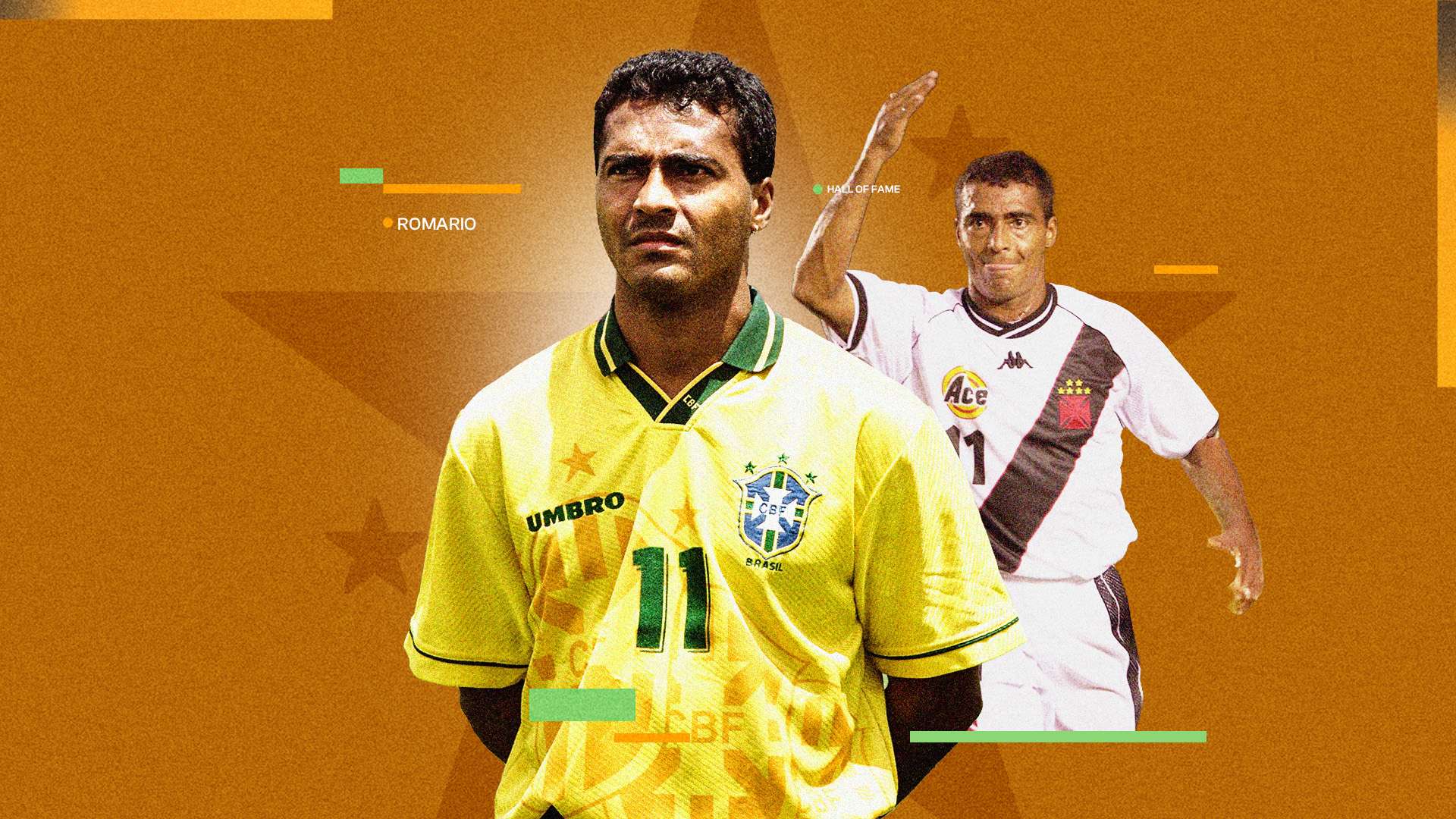
Hall of Fame: Romario - Brazil's penalty-box panther with over 1000 career goals
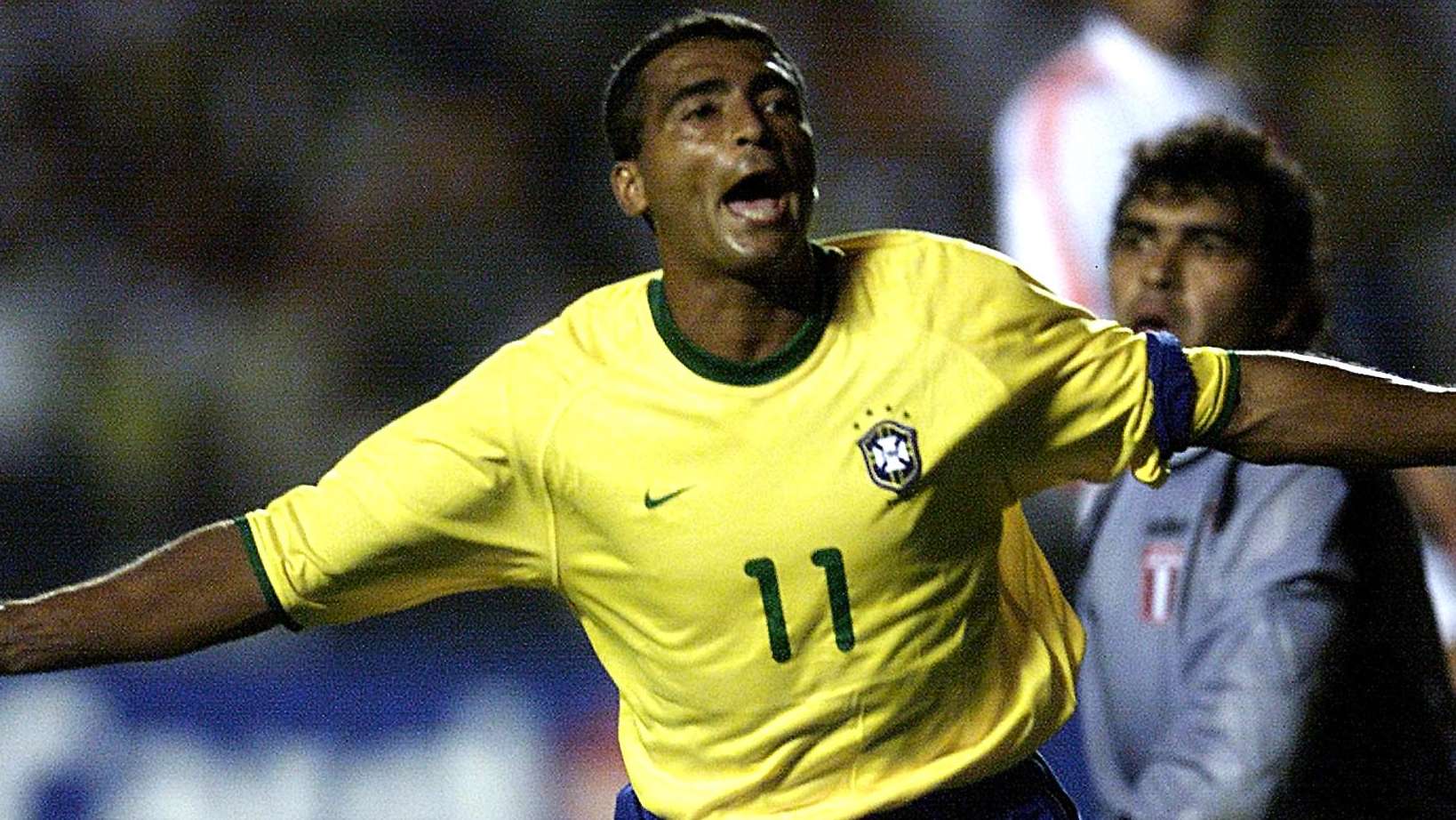
  • One of the game's greatest finishers

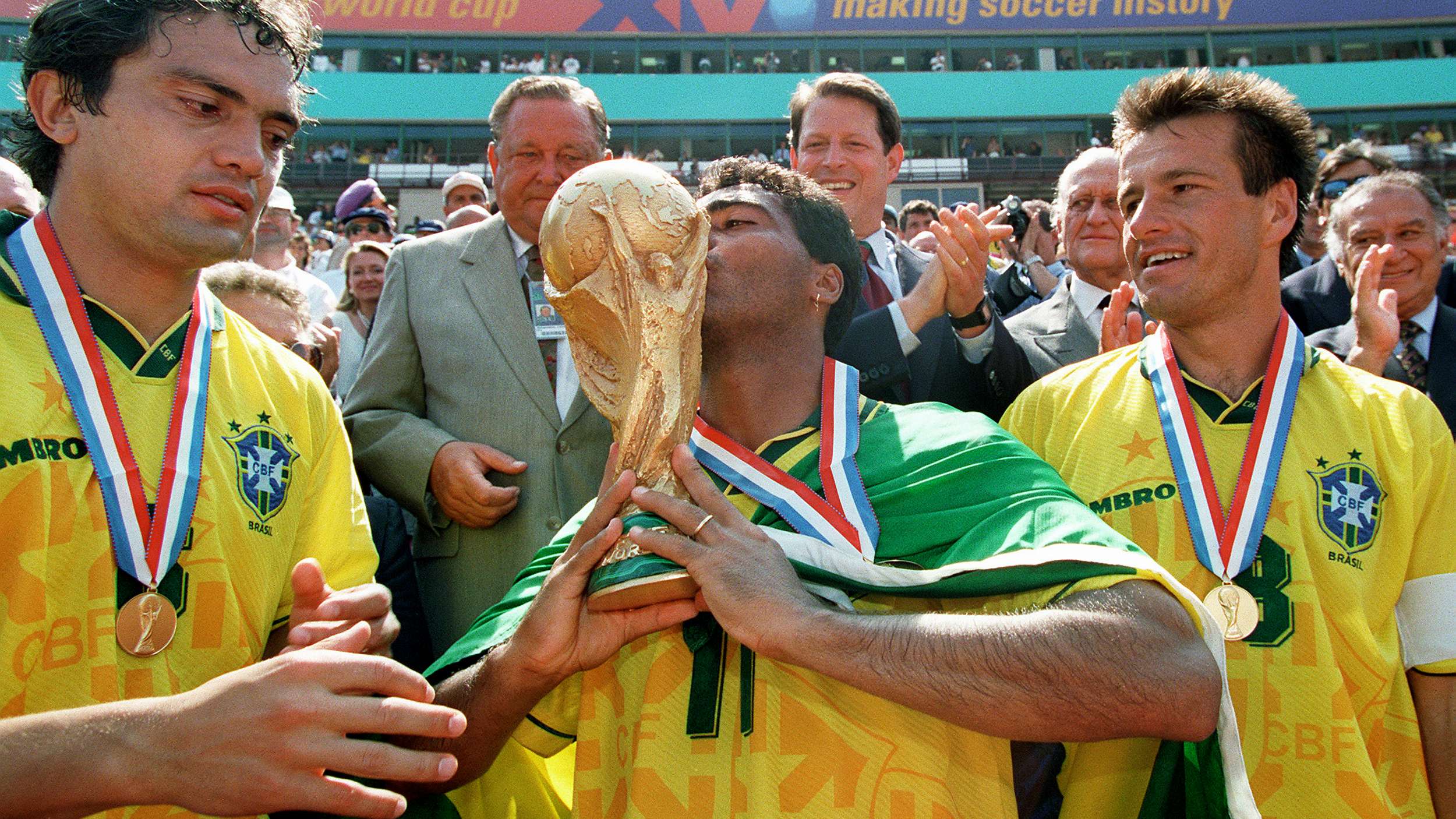
    Having emerged from the favelas of Rio de Janeiro, Romario achieved the highest goals a footballer could aspire to. His greatest successes came with the Brazil national team, with whom he won the South American Under-20 Championship (1985), silver at the 1988 Seoul Olympics, two Copa America titles (1989 and 1997), a Confederations Cup (1997) and, above all, the 1994 World Cup in the United States.

    Romario turned scoring goals into an art form. Sometimes he scored on the run, after sneaking away and touching the ball several times with his favoured right foot, while on other occasions he was more direct, finding the net with either foot with his first touch or on the rebound.

  • Advertisement
  • SOC-BRAZIL-PERU-ELIMINATORIASAFP

    'Unmarkable' with a magic touch

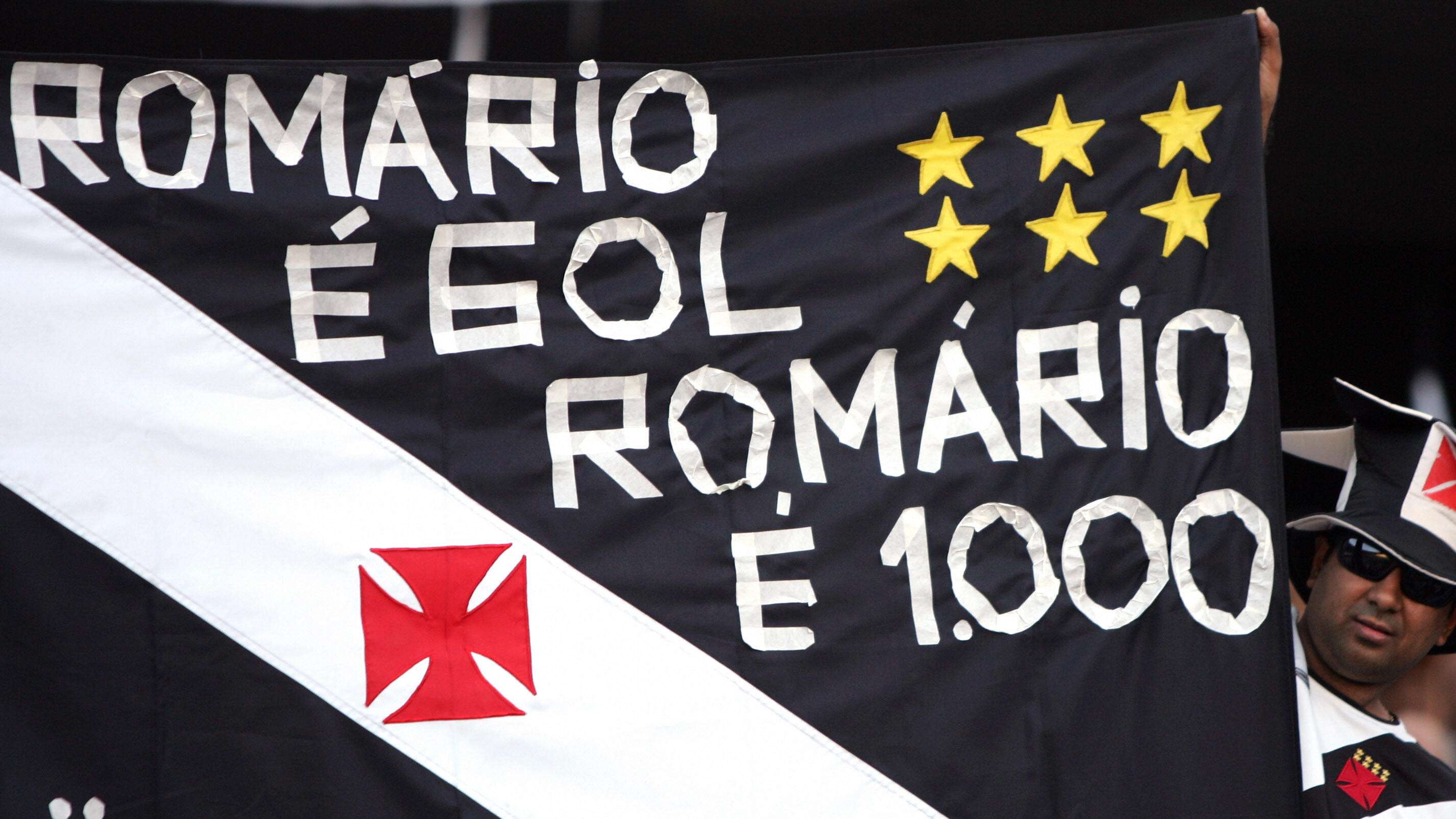
    Romario claims that, including friendlies, charity matches and youth games,he has scored over 1000 goals over the course of his career, a milestone he reached at the age of 41 on 20 May, 2007, when he scored a penalty for Vasco da Gama against Sport Recife.

    It matters little that FIFA only recognises 760 of his goals in official matches between clubs, the senior national team and the Olympic side, making Romario the fourth-highest scorer in football history, though they concede his tally reaches 929 when taking into account his youth-team efforts.

    "When Romario touches the ball, it makes a magical sound," former Italy centre-back Alessandro Costacurta said of facing the Brazilian goal machine. "'Tum tum tum'. He touches it many times in a few metres and then has the ability to understand when his opponent is moving, but above all to understand the movements of his team-mates first in order to pass the ball. Inside the area, he is unmarkable."

  • Robbed of the Ballon d'Or

    Certainly, 'O Baixinho' ('The Little One') - as he was called because of his short stature - ruled the penalty area, but Romario was capable of scoring goals in all sorts of ways; with lobs or soft touches, with brutal power, from inside the area or from distance, and even with his head, thanks to his ability to control the ball and read its trajectory in advance. He won team and individual trophies around the world, finishing as top scorer in 26 different competitions, a record that is unlikely to be equalled.

    Romario's magical year came when he won the World Cup in 1994, but at the time non-European Union players were not eligible for the Ballon d'Or, meaning he missed out on winning the greatest individual prize in the game. FIFA did award Romario the FIFA World Player of the Year award, while in 2000, he won the South American Ballon d'Or as the best player on the continent, but he never got his hands on the ultimate footballing honour.

  • From the favelas to the big leagues

    Born on 29 January, 1966 in Bairro Jacarezinho, Romario grew up within one of the worst favelas in Rio de Janeiro. Despite the situation of destitution and absolute poverty, his love for football saved him, and at the age of 10, he began playing football with Estrelinha de Vila de Penha, a team founded by his father.

    In 1979, at the age of 13, Romario was signed by the Olaria youth team, whose first team played in the Brazilian top-flight at the time. Here he was spotted by Vasco da Gama, who brought him into their youth academy.

  • SOC-BRAZIL-VASCO-MERCOSURAFP

    On the rise

    Romario's rise to the top of the world was rapid and meteoric. He was determined to make his mark and reach the top, and he proved to be a deadly finisher for Vasco, scoring goals galore. In 1986 and 1987, he was the top scorer in the Carioca Championship, which he also won in 1987 and 1988.

    Meanwhile, in 1985, he won the South American U20 Championship with Brazil before finishing as top scorer and winning a silver medal at the 1988 Seoul Olympics. On 23 May, 1987, at the age of 21, Romario made his debut with the senior national team, and in 1989 he won his first Copa America as a key player.
  • Move to Europe

    After the Copa America, Romario made the switch to Europe, joining PSV in the Netherlands. With the Dutch giants, he enjoyed five extraordinary years, scoring 165 goals in 167 matches while winning three Eredivisie titles, two Dutch Cups and one Super Cup. He also finished as the top scorer in the European Cup on two occasions. In 1990, Brazil manager Sebastiao Lazaroni selected Romario for his World Cup squad, but due to an injury sustained before the tournament, he barely kicked a ball in Italy.

    Romario's footballing rise continued in Catalunya as he left PSV to join Johan Cruyff's Barcelona in the summer of 1993 for a fee of $10 million. At Camp Nou, the Brazilian became the sublime finisher for Cruyff's 'Dream Team' that contained the likes of Pep Guardiola, Ronald Koeman and Michael Laudrup.

    Romario immediately won La Liga in his first season, becoming Pichichi after netting 30 goals in 33 appearances and leaving his mark on El Clasico with a historic hat-trick in the 5-0 win over Real Madrid in January 1994.

    It was in that match that Romario scored one of his most iconic goals. In the 24th minute with the scores still level, the Brazilian moved onto the Blancos' defensive line. The ball reached Guardiola, and Romario gave him a clear signal to pass the ball to his feet. The Spanish midfielder complied, and Romario received the ball at the edge of the area with his back to goal and of little danger to the Madrid backline. However, he suddenly performed a half-turn, the famous 'cola de vaca' ('cow's tail') feint, rotating his body 180° before slipping the ball into the corner.

    "It was God who guided me," Romario said after the match. "Today I showed who I am. Those who doubted me can watch the footage."

    With the Blaugrana, Romario also reached the 1994 Champions League final, but he was neutralised by AC Milan's backline as the Rossoneri ran out 4-0 winners in Athens.

  • Brazilian forward Romario kisses the FIFA World CuAFP

    Golden years

    At the end of that season, Romario arrived at the 1994 World Cup as Brazil's key player. Once in the U.S., he worked wonderfully well with his 'twin' Bebeto on his way to scoring five goals in six games and it was between him and Roberto Baggio for who would be deemed the Player of the Tournament. The pair faced off in the final in Pasadena, and while 'The Divinie Ponytail' missed his spot-kick in the shootout for Italy, Romario made no mistake.

    He was subsequently named the Player of the Tournament, but his relationship with Barcelona quickly deteriorated upon his return to Spain. Romario's behavioural issues, which included to him being fined 10 million pesetas in the summer for returning late after the World Cup, resulted in him making a sensational transfer to Flamengo in January 1995. His final match with the Catalans proved to be a resounding 5-0 defeat in the Clasico against Madrid at Santiago Bernabeu in which Romario came on as a substitute without making an impact. He left the Blaugrana having scored 39 goals in 65 appearances.
  • A supporter of Brazilian footballer Roma...AFP

    Non-stop goals

    Despite leaving Barcelona, Romario continued to find the net at an alarming rate. He fired Flamengo to two Carioca championships, finishing top scorer on four successive occasions, though he did make a brief return to Europe when he joined Valencia in January 1996. However, he did not see eye to eye with coach Claudio Ranieri and returned to Flamengo a year later.

    At the same time he and Ronaldo were blossoming into an unstoppable partnership for Brazil, and the pair led the Selecao to Copa America and Confederations Cup triumphs in 1997. However, new coach Mario Zagallo wasn't convinced, and controversially left Romario out his squad for the 1998 World Cup.

    Back at club level, Romario returned to Vasco da Gama in 2000 and struck up an explosive partnership with Edmundo. In his first season paired with 'O Animal', the former Barca striker won his only Brazilian Serie A title amongst a raft of other trophies. However, a shot at one last World Cup passed him by as he was again overlooked in 2002, this time by Luiz Felipe Scolari. His Selecao career officially came to an end in 2005 with a record of 55 goals in 70 appearances, which leaves him fourth on the overall list of Brazil goal-scorers.

    After taking in spells with Fluminense and Al-Sadd, Romario once again returned to Vasco with the stated aim of reaching 1000 career goals. However, he could not rediscover his best for his childhood club, and he subsequently left to play for Miami FC in the USL and Adelaide United in the A-League. He would only reach four figures, though, once he made one final return to Vasco.

    "I had the opportunity to achieve this milestone not only for myself, my parents and my family, but for the whole world," a tearful Romario told reporters from O Globo who had rushed onto the pitch at the moment he reached the milestone. "It was God who wanted the ball to go into the net today. It's an extraordinary moment in my life."

    "I am delighted to have achieved this milestone," he added. "On an individual level, it is the greatest achievement of my career. I dedicate it to my family and my children. I am very emotional. For now, thank you. Thank you very much to all of you." In total, Romario scored 265 goals in four spells at Vasco.

    In April 2008, at the age of 42, Romario officially announced his retirement, though he did return to the pitch on a couple of occasions thereafter.

  • Controversial character

    After retiring from football, Romario embarked on a political career and is now a senator. But during his playing days, his private life and behaviour were always the subject of much debate.

    A lover of carnival, beaches, beautiful women and the good life, Romario proved to be both the bane and delight of his coaches, though some of the anecdotes about his life blur the line between reality and legend. What we do know is that he has had three failed marriages, six children by four different women and numerous flings.

    "I love the night," Romario liked to say. "It has always been my companion."

    After the 1994 World Cup, Romario admitted to having had sex before the final in Pasadena. In response, his first wife, Monica Santoro, asked him for a divorce. Three years later, during the Copa America in Bolivia, he found a way to escape unnoticed from the Brazilian training camp with Ronaldo.

    But the anecdote that best embodies Romario's free spirit is the bet he made with Cruyff during his time at Barcelona: "One day, Romario asked me for three days off to go to the carnival in Rio. I replied, 'If you score two goals tomorrow, I'll give you two days off more than the others'. The next day, Romario scored two goals in the first 20 minutes and immediately after scoring the second, he asked me to take him off. I asked him what had happened and he came up to me and said, 'Mister, my plane to Rio leaves in an hour'. I had no choice but to keep my promise!"

    "I've never been an athlete," the player himself summed up. "If I had had the life of an athlete, I would certainly have scored many more goals, but in the end, I don't know if I would be as happy as I am today."