The official cited a high-profile arbitration case from the Paris Olympics, underlining the complex legal and sporting issues at stake. Such references are crucial in football governance, as they demonstrate how international dispute-resolution mechanisms can shape competition rules, protect athlete rights and maintain the integrity of the Game. By invoking the Paris precedent, stakeholders can anticipate how similar controversies might be adjudicated, allowing clubs, players and competitions to align their strategies with established legal principles. This approach promotes consistency, transparency and accountability—core values that modern football administration seeks to uphold. Ultimately, drawing on well-documented Olympic arbitrations offers a practical roadmap for resolving disputes fairly while preserving the sport’s commercial and competitive interests.
Al-Hadari heaped praise on the performance of the Black Atlas star, singling out his command on the ball, his incisive runs and his ability to unlock defences with a single pass. The veteran goalkeeper underlined the forward’s maturity, noting that he has grown into a complete player capable of influencing games in multiple ways. Al-Hadari stressed that the 23-year-old’s work-rate and off-the-ball movement create headaches for opposition back lines, and he highlighted the player’s willingness to track back and press as a key factor in the team’s recent defensive solidity. He also pointed out that the star’s confidence is contagious, lifting the entire squad and inspiring younger teammates to aim higher. According to Al-Hadari, the forward’s blend of technical ability and physicality makes him a rare talent, and he expressed confidence that bigger stages await the player in the near future.
Referee Mahmoud Wafa is under pressure. This brief yet loaded statement signals that the experienced match official is facing significant scrutiny or expectation ahead of his latest assignment. In football, such pressure can stem from several sources, including the importance of the game, the intensity of the rivalry, the presence of vocal supporters, or recent controversial decisions that have drawn media attention. When a referee is described as being “under pressure”, it suggests that every call he makes will be examined under a magnifying glass, and his ability to remain calm, consistent, and authoritative will be tested. For Wafa, a veteran of regional and international fixtures, managing this pressure is part of the job; nevertheless, the weight of expectation can still be felt in the build-up to kick-off. Fans, coaches, and players will all be watching closely, hoping that his performance rises above the scrutiny and allows the match to flow fairly and smoothly.
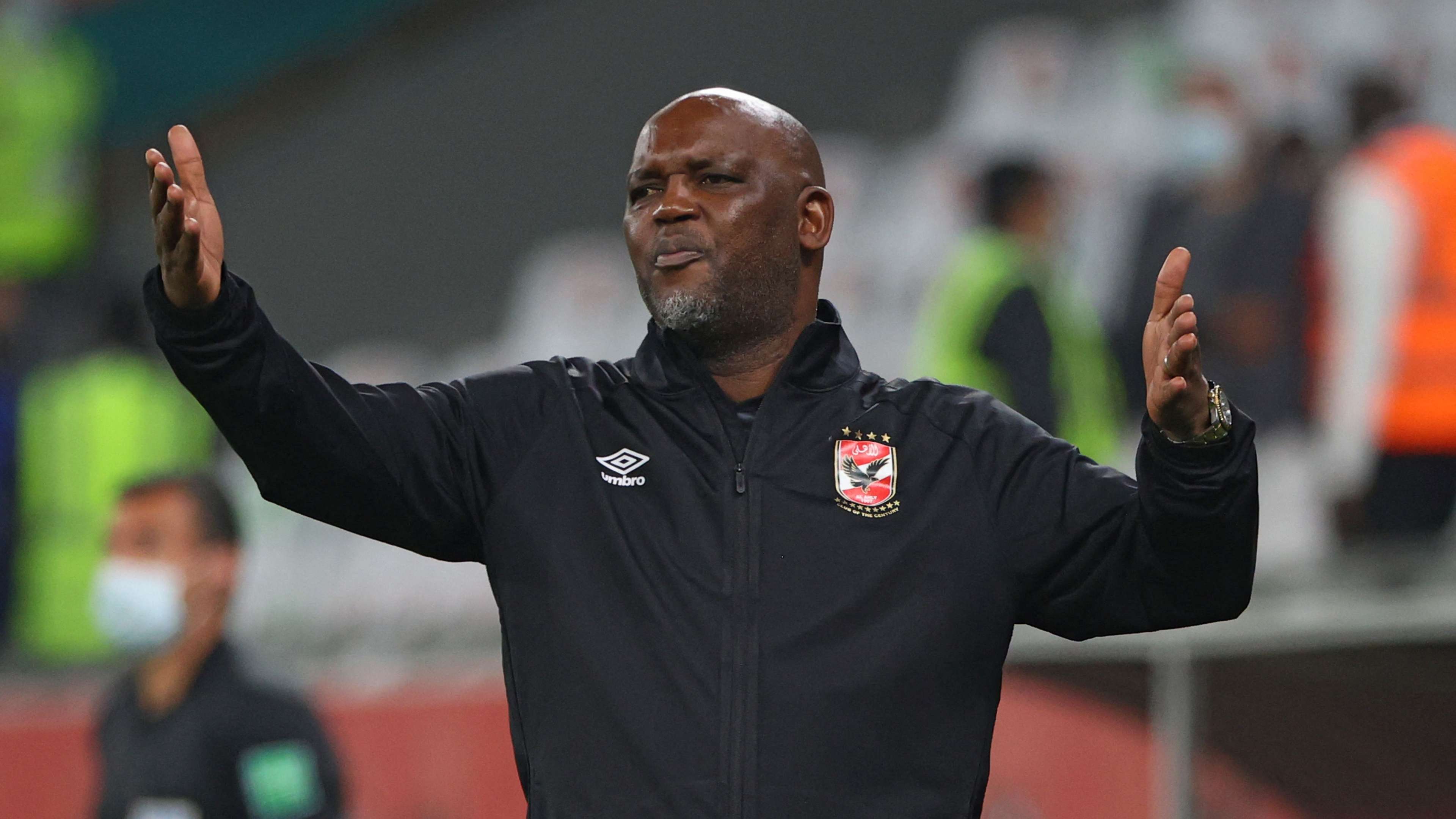
The three-time CAF Champions League winner has been without a club for over a year since leaving his last team in Iran. During this period, he has been focusing on developing young talent through his football schools. While away from the dugout, he continues to be linked with a number of teams looking to secure his services.
For a player who has not featured in competitive football for nearly five years, the road back is proving to be a steep one. Clubs appear hesitant to gamble on someone who has been out of the game for so long. Even teams in the lower tier appear reluctant to offer him a chance to revive his career.
The South African forward has quietly carved out a stellar campaign in Egypt, delivering consistent performances that have propelled his club to the summit of the log standings. Sitting above giants Al Ahly, Zamalek and Pyramids FC, his form has been instrumental in maintaining their grip on first place and reinforcing his growing reputation in North Africa.

 Ceramica Cleopatra