

Ronaldo Benzema Saudi Pro League HIC 16:9GOAL

Cristiano Ronaldo, Karim Benzema and more superstars on the way: Is the Saudi Pro League a threat to Europe's elite or a well-funded retirement league?

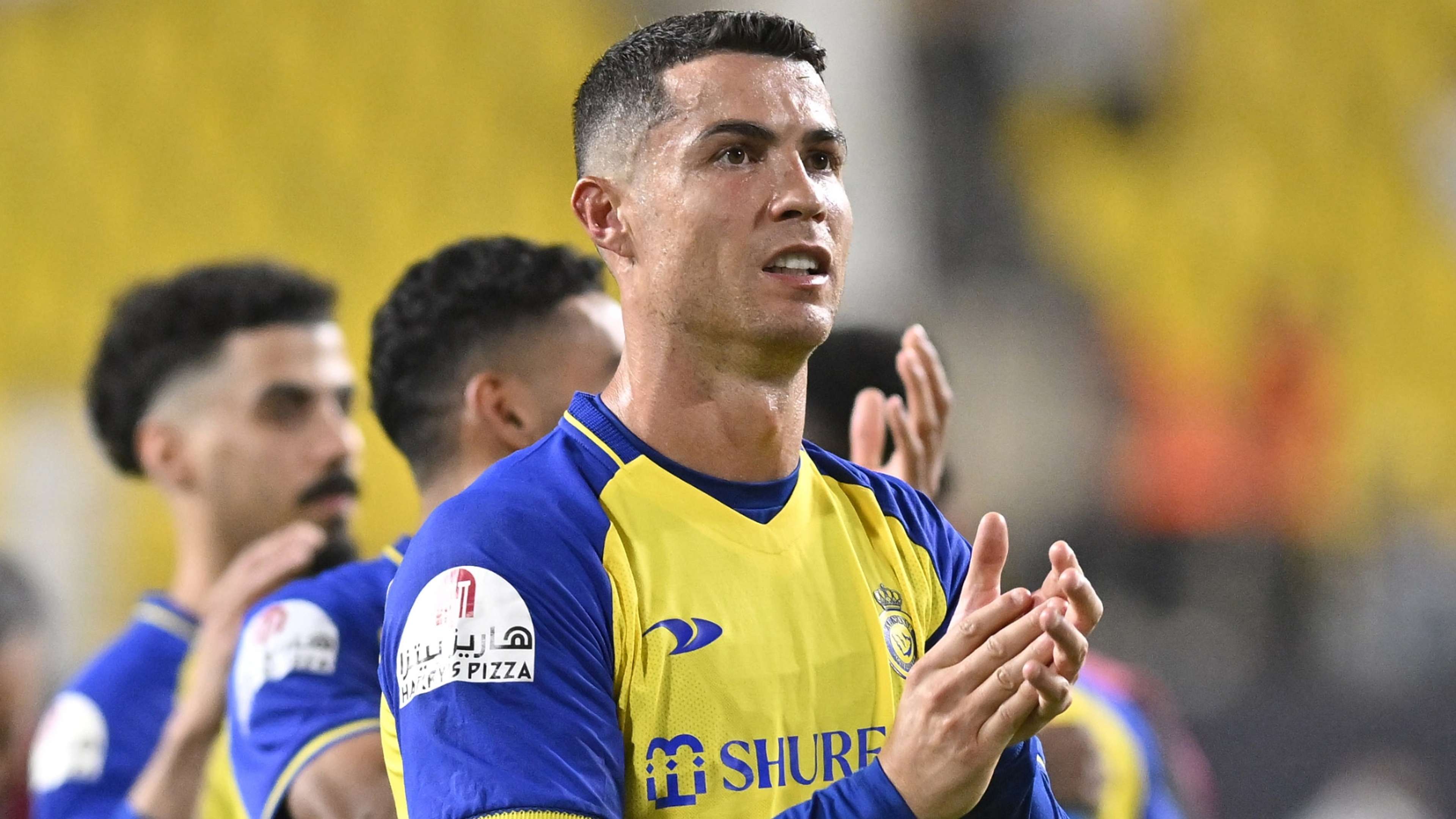
When Cristiano Ronaldo claimed that the Saudi Pro League will become an elite competition "in the coming years", the obvious reaction was, 'Well, he would say that, wouldn't he?' Ronaldo is being paid ridiculously well to play for Al-Nassr. But he's also effectively serving as the poster boy for a league - and indeed a country - with grand ambitions.

In that context, he's actually been admirably open about some of the challenges facing the Saudi Arabian game, particularly its infrastructural issues. But Ronaldo remains intent on changing how the Saudi Pro League is perceived, especially in Europe.

"I think you should look at it in a different way," he told reporters in March. "I'm not going to say that the league is a Premier League, that would be a lie."

But is Ronaldo telling the truth when he says that the Saudi top flight will soon rank "among the top five leagues in the world"?

Certainly, the potential is there, because the money is there, and Ronaldo has just been joined in Saudi Arabia by former Real Madrid team-mate Karim Benzema, the current Ballon d'Or holder. The promise of one last colossal contract is understandably difficult for any professional to resist.

But will the Pro League prove anything other than a lucrative retirement home for ageing superstars? Can it really attract younger players at the peak of their powers?

GOAL investigates all below...
  • The Lionel Messi blow

    Lionel Messi insisted after joining Inter Miami that he had rejected an offer from Al-Hilal for family reasons. "If it had been a matter of money," he explained in an interview with Mundo Deportivo, "I would have gone to Saudi Arabia or elsewhere."

    Messi clearly felt, though, that his wife and children would find it easier to settle in Miami, a city with a huge Hispanic population. Still, his snub was undeniably a massive PR setback for the Pro League.

    Having both Ronaldo and Messi in the same competition would have been an enormous boost. Even just pitting them against one another in a friendly shortly after Ronaldo's signing provoked huge interest in the league's all-star game.

    Messi may be on the wane but, as he proved with one logic-defying display after another in Qatar, he remains a magician - one that fans would have flocked to see perform.

    His rejection, then, highlighted a potential problem for the Pro League: not all footballers will be swayed by the enormous amounts of money on offer in Saudi Arabia.

    There will be other concerns, some of which will be related to the social scene and local laws. However, others will be drawn to Saudi Arabia for religious reasons, just like Benzema.

    "I'm Muslim and this is a Muslim country," he said after signing for Al-Ittihad earlier this month, "I have always wanted to live here."

    The bigger hindrance to attracting top players will be the standard and prestige of the Pro League.

  • Advertisement
  • A retirement league?

    Ronaldo, Benzema, Messi, N'Golo Kante, Luka Modric, Neymar, Pierre-Emerick Aubameyang - Saudi Arabia's past and present transfer targets all share something in common. They're all in their thirties, and all past their peak, albeit to varying degrees. And that's understandable, of course.

    Football has become dreadfully Euro-centric and even the notion of a 'Big Five' is arguably outdated, when one considers that the likes of Ligue 1, Serie A and the Bundesliga have effectively become feeder leagues for the Premier League.

    All of the money in the game today is concentrated in England, and a few super-clubs dotted around the continent. It is, therefore, difficult to tempt anything other than veterans to move out of Europe, as MLS has discovered over the years. Messi is obviously something of a special case but it's not as if we're suddenly going to see players in the mid-20s following the seven-time Ballon d'Or winner to the States.

    However, what we should continue to witness is a steady stream of South American starlets flowing into MLS, given it is now viewed as something of a springboard for a European move. That may be a cynical take on things but the bottom line is that the standard of MLS is improving as a consequence, which is hugely beneficial for everyone connected with American soccer, including the USMNT.

    Would Saudi Arabia really be satisfied with something similar happening in the Pro League? Probably not when one considers that one source told France24 that Al-Nassr's objective after landing Ronaldo was to create the "new Galacticos".

    However, the likes of Luis Figo and Zinedine Zidane were in their prime when they were signed by Real Madrid. The Pro League doesn't quite have the same pulling power as Florentino Perez during his first spell at the Santiago Bernabeu - not yet, at least.

    Let's put it this way, if Serie A is struggling to shake its reputation as a place "where celebrities go in their twilight" despite its teams' impressive performances in Europe this season, it will be even more difficult for the Saudi Arabian top flight to convince the watching world that it's an elite competition if its biggest draws have all seen better days.

  • Crstiano-Ronaldo(C)GettyImages

    'Widespread contractual violations'

    Evidently, the high-profile players that do agree to join Pro League clubs will be well remunerated and won't have any salary-related issues.

    After all, the possibility of Ronaldo publicly complaining about his wage not being paid on time would be a PR disaster of catastrophic proportions.

    However, it remains to be seen how mid or lower-level talent is treated, given FIFPRO, which represents professional footballers all across the world, has previously warned its members against signing for clubs in Saudi Arabia "because of systematic and widespread contractual violations".

    The organisation has claimed that the "non-payment of salaries is a recurring problem for players in Algeria, China and Saudi Arabia" - and the mention of China there is interesting.

  • Oscar Shanghai SIPG 02012017Getty Images

    The Chinese Super League comparison

    It's not that long ago that the Chinese Super League was attempting something very similar to the Pro League by luring big names to Asia with massive contracts.

    Again, some of those targeted were past their best but there were some very notable signings, chief among them Oscar, a Brazil international who was only 25 when he swapped Chelsea for Shanghai Port. "The Chinese market is a danger for all," then-Blues boss Antonio Conte told reporters. "Not only for Chelsea, but all the teams in the world."

    The bubble soon burst, though. Oscar may still be in China but most of the stars that arrived during the boom in 2016 and 2017 have long since departed.

    A government that had initially thrown its full weight behind a plan to "professionalise" the league slowly but surely began to withdraw its support, not least because there was a perception that the foreign stars, many of whom treated the experience like a paid "holiday", as Carlos Tevez put it, were actually hindering the development of homegrown players.

    What amounted to a tax was effectively placed upon overseas signings, making a move to China far less appealing, while the financial crisis caused by the pandemic and the "de-corporatisation" of club names saw most companies lose all interest in continuing to invest in the league.

  • 'A global investment powerhouse'

    It has, therefore, been argued that the Pro League could experience a similar fate. After all, oil money is not a renewable resource. It will eventually run out. Not anytime soon, though. And besides, as outlined in the Vision 2030 blueprint, Saudi Arabia intends to broaden and diversify its revenue streams.

    "We are not dependent solely on oil for our energy needs," Crown Prince Mohammed bin Salman wrote in his leadership message. "Gold, phosphate, uranium, and many other valuable minerals are found beneath our lands. But our real wealth lies in the ambition of our people and the potential of our younger generation. They are our nation's pride and the architects of our future."

    They are also massive football fans. According to the Pro League's interim CEO, Saad Allazeez, "80% of the population either play, attend or follow the beautiful game." So, their continued support of the current regime would certainly not be hindered by the transformation of the Pro League into a top-class competition - or a successful bid for the 2030 World Cup.

    Because that's where all of this is leading. Saudi Arabia wants to establish itself as a major player in football, as sport is one of the key pillars of its drive "to become a global investment powerhouse".

    Moves are already being made to secure support for 2030. Bin Salman was very visible in Qatar, often found sitting alongside FIFA president Gianni Infantino on matchdays, while the Guardian reported last month that Saudi Arabia has opened talks with the Confederation of African Football (CAF) about sponsoring a new African Super League.

  • 'We should not run away from our differences'

    As for the Pro League, the decision to allow the PIF to take 75 percent stakes in four of the country's biggest clubs was a serious statement of intent, part of a privatisation plan which will also allow other companies and agencies to invest in teams.

    The undoubted aim is to make a succession of superstar signings and distribute them evenly among Al-Ittihad, Al-Ahli, Al-Nassr, and Al-Hilal, thus creating a Saudi Arabian 'Big Four'. As models go, the Premier League isn't a bad one to follow for a nation looking to attract the attention of the footballing world.

    The idea is that the market value of the Pro League will more than double in the next seven years, which is an ambitious goal, of course. Both time and patience will be required.

    But maybe not as much as many outsiders believe. After all, Saudi Arabia has effectively just taken over golf, after agreeing a merger between its LIV Golf group and the PGA Tour. The latter brings credibility to the table, the former bucketloads of cash, meaning it makes perfect sense from a business perspective.

    And yet such a deal would have been unthinkable even a month ago, given the level of acrimony between the two organisations, and their respective sets of players and officials. Indeed, the discourse was so toxic that even 9/11 was brought into it, with PGA Tour board member Jimmy Dunne saying last year that he wouldn't want his paycheque signed by a Saudi bank.

    However, just last week, the very same official was defending the merger on live television in the US and telling those on opposite sides of the golfing divide that "we should not run away from our differences".

    When it comes to Saudi Arabian investment, then, nothing can be ruled out, meaning Ronaldo could well be proven right. The Pro League could well become one of the top five leagues in the world - because anything is possible when there is this much money involved.