Sonhadores - Estados UnidosGOAL

LEGACY: The iconic 2002 World Cup run that set the benchmark for American soccer

If that had happened, if that day had gone the U.S. men's national team's way, a legendary run could have gone at least one step further. Yet, even without that call, the summer of 2002 remains a defining moment in American soccer. It was the moment in which the USMNT truly arrived on the global stage, paving the way for all that has come since.

That was the summer the U.S. made it to the quarter-finals of the World Cup, the nation's deepest run to date. Yes, the 1994 World Cup ushered in an era of American soccer but, in many ways, 2002 was the peak of that era. During that run through South Korea and Japan, the USMNT made it further than any of its predecessors or successors.

Along the way, they toppled a powerhouse, won a defining match against a fierce rival and, throughout the journey, the world was introduced to characters such Landon Donovan and DaMarcus Beasley, icons who would go on to define a generation.

So, even now, all these years later, the impact of that tournament is undeniable. It's still the benchmark for the USMNT program, one that the nation has yet to replicate. This was the USMNT's best World Cup performance, and it has influenced all of the World Cups that followed.

"We showed the world we can play," U.S. coach Bruce Arena said after the loss to Germany. "We haven't arrived, but there's a bright future for the game in the United States."
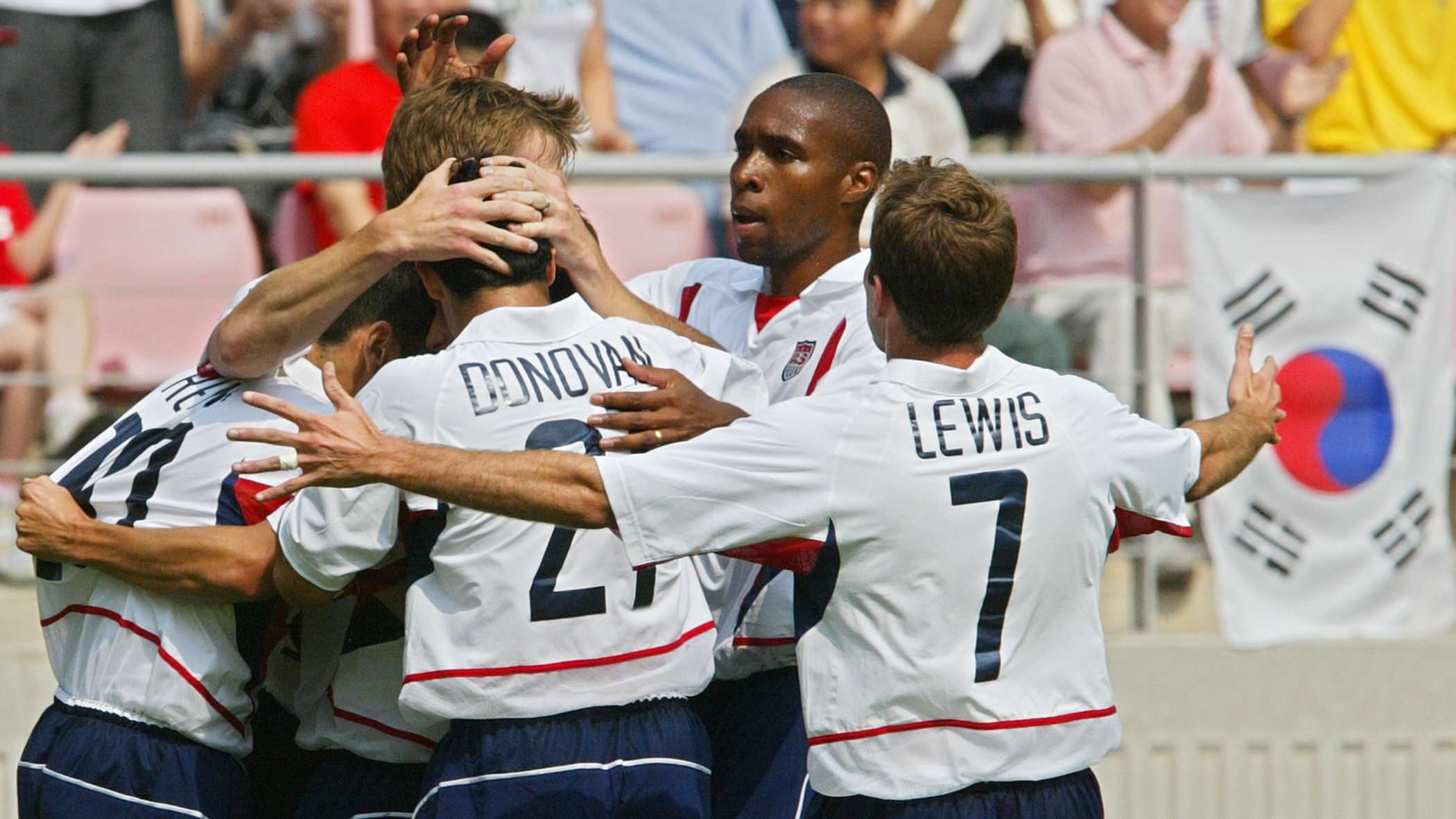
  • USA goalscorer Brian McBride (2/L) celebrates hisAFP

    Setting the stage

    To truly grasp just how improbable that 2002 run was, you have to understand what came before it. This was a USMNT group approaching the modern era, but hadn't reached it. While 1994 was the catalyst for the game in America, it was the 1990 tournament in which the U.S. returned from a 40-year absence from the world's greatest sporting show. They were promptly swept aside, losing all three games by a combined six goals.

    Then, in 1994, with the world watching, the U.S. put in a respectable performance on home soil, emerging from the group before falling in the last 16, showing signs of life in a country in which soccer was on the upswing.

    Then came 1998. With momentum building over the previous four years, the U.S. fell totally flat in France that summer, once again losing all three games. It raised all the obvious questions: Was 1994 a fluke? Could this U.S. team, realistically, compete with the world's elite outside of America?

    It seemed the U.S. might not even get the chance. Under coach Arena, the U.S. ushered in a new era, featuring 37 players across the qualifying run. Controversy engulfed the journey, particularly towards the end of the hexagonal stage as the U.S. squandered an early lead in the table with consecutive losses to Mexico, Honduras and Costa Rica. They would need results to go their way - and they did. With a win over Jamaica in the penultimate game, and a draw with Trinidad and Tobago to close out qualifying, the U.S. made it, but barely.

    "The mission was simple," midfielder Earnie Stewart told U.S. Soccer in 2022. "We had to win games and then you have to wait on the rest that you don't have any influence on. You try to block that out for as much as possible because it doesn't help the game."

    "I was just so elated that we qualified," added Brian McBride.

    It wouldn't be easy once the U.S. got to Asia, though. First up was the mighty Portugal. What followed was one of the all-time great upsets...

  • Advertisement
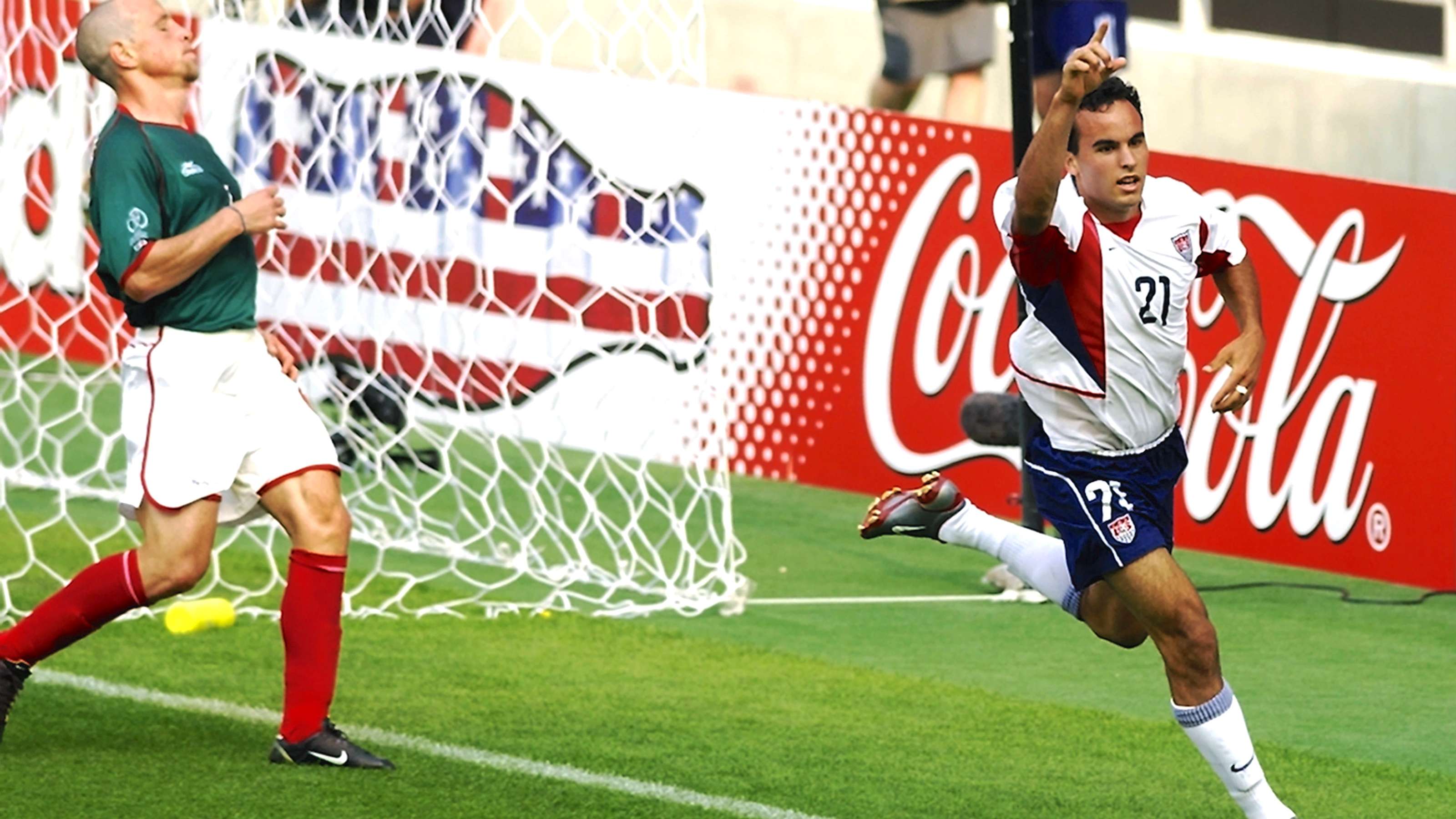
  • US forward Landon Donovan (R) celebrates after scoAFP

    Ultimate upset

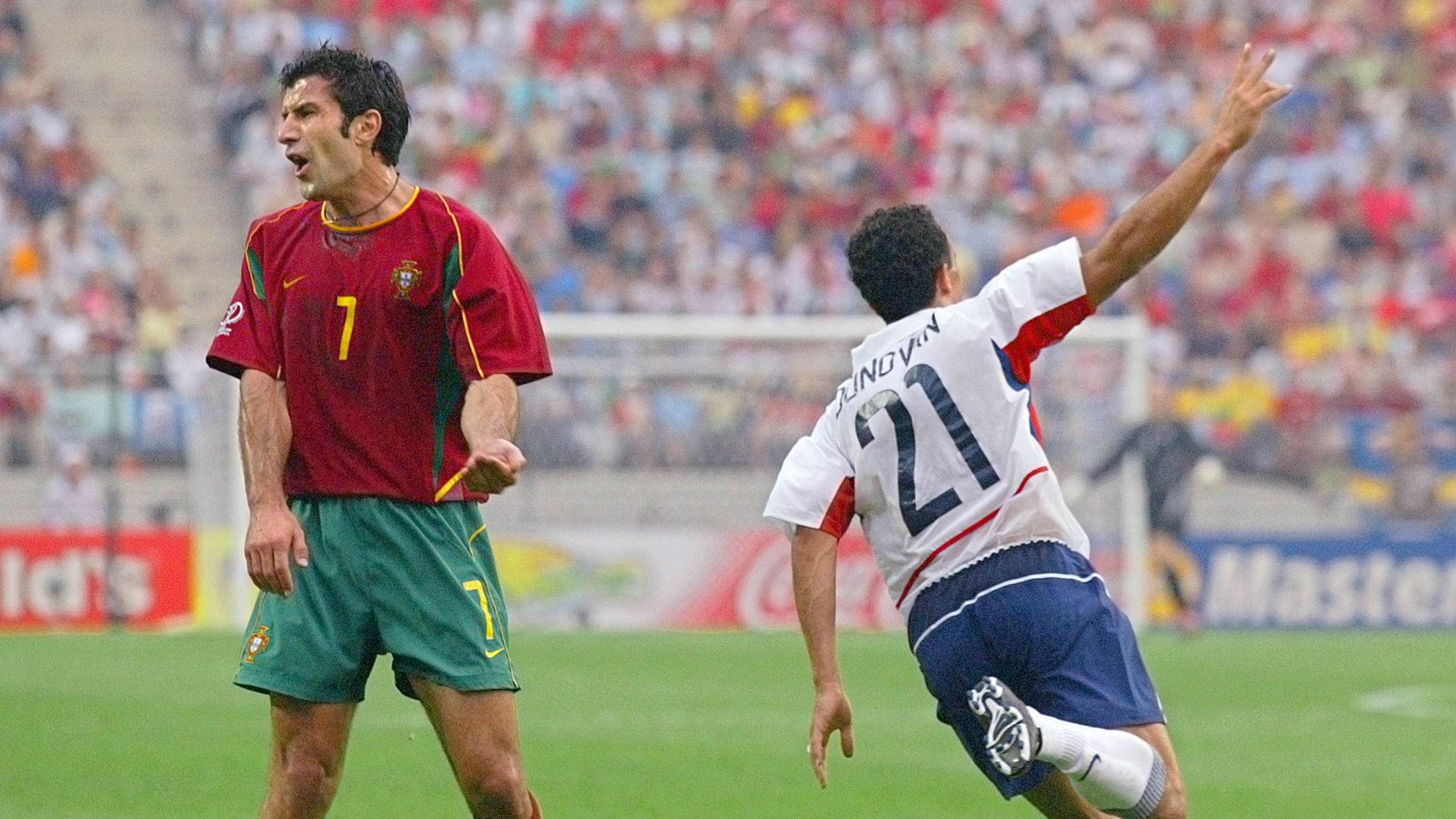
    The Portugal team that the U.S. met in their first game was one led by a golden generation. Rui Costa, Luis Figo, Pauleta - all legendary figures. The U.S. team? Not so much. Yet, it was the USMNT that left victorious in that opening match following an all-time performance.

    They fell behind early thanks to a John O'Brien goal in the fourth minute, but that was just the beginning. A Jorge Costa own goal doubled the lead before Player of the Match McBride made it three in the 36th minute, leaving one of the world's best teams shellshocked. Portugal fought back, scoring two goals of their own, but it wasn't enough - when the whistle blew at the Suwon World Cup Stadium, the scoreboard read 'USA 3, Portugal 2'.

    "It is probably the biggest win in the modern era," Arena said after a match that also featured the World Cup debuts of two players who would go on to define the USMNT for a generation. Helping to lead the line was Donovan, who was making waves after winning a Golden Ball at the Under-17 World Cup in 1999. It was Donovan who set up the Costa own goal, banking a shot off the defender and in to really give the U.S. momentum.

    On the left of the U.S. team was Beasley, who also emerged as a standout during the tournament. The two young stars would go on to feature in all three of the USMNT's group-stage matches, which included a draw with South Korea and then a 3-1 loss to Poland that at least featured a Donovan goal. Ultimately, the U.S. finished second in the group, three points behind co-hosts South Korea, while that legendary Portugal team went home early.

    The next test, though, would be the most unique. Up next was the USMNT's most familiar rival for a game on the biggest stage: Mexico.

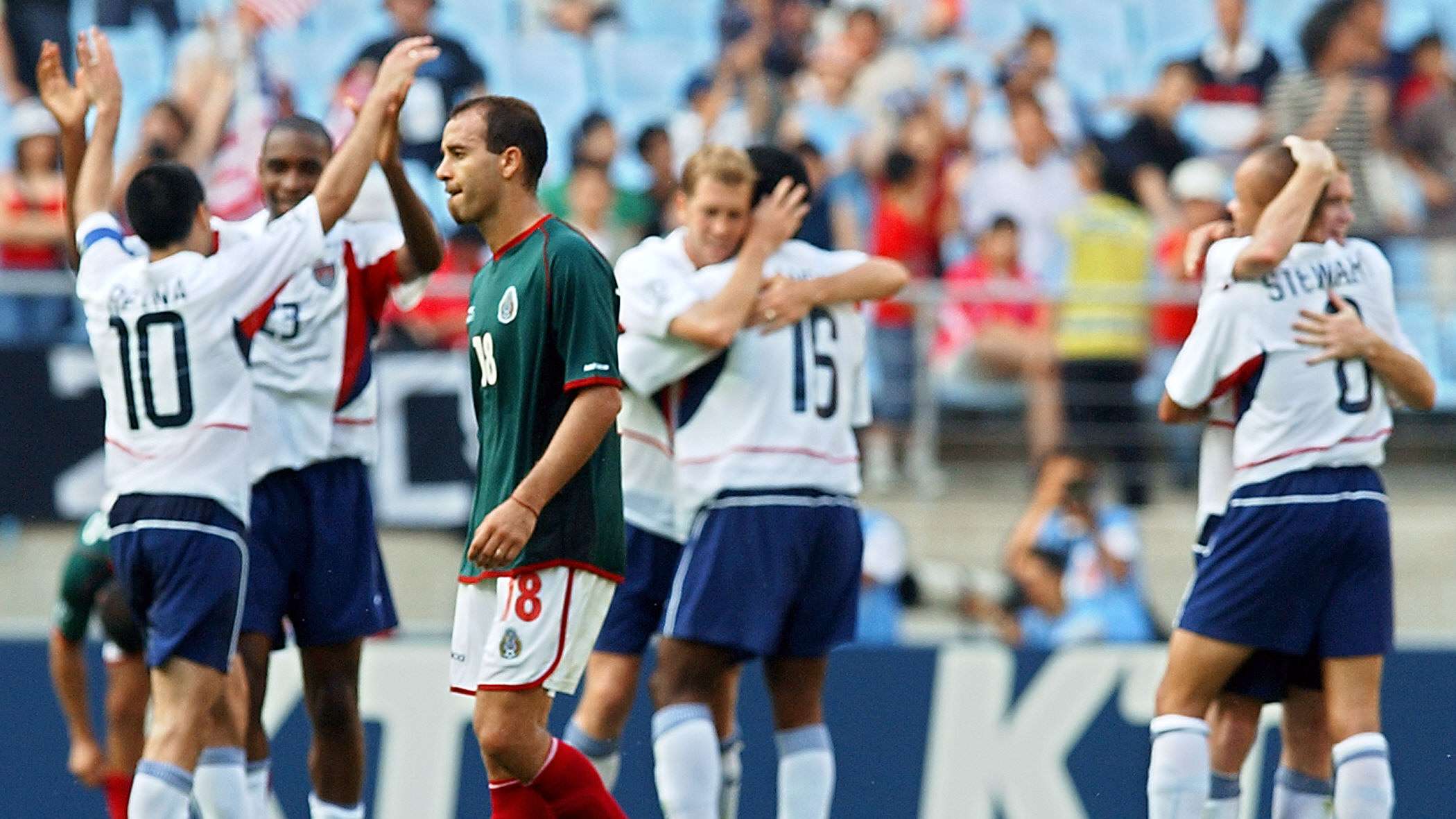
  • USA's Claudio Reyna (L#10), Carlos Llamosa (C#16)AFP

    'Dos a cero'

    If you follow the USMNT, you've heard of 'Dos a Cero'. It's become a legendary scoreline in the rivalry between the USMNT and Mexico. The biggest and best moment in that scoreline's history happened on June 17, 2002 in Jeonju, South Korea. It was on that day that 'Dos a Cero' became a legend.

    Meeting for the first - and so far only - time at a World Cup in their combined histories, the U.S. and Mexico were matched up in the first round of the knockout stages. Pride was on the line, as was a spot in the World Cup quarter-finals.

    The U.S., once again, seized an early lead thanks to a goal from McBride, an advantage they'd never relinquish. When Donovan netted in the 65th minute, it was effectively over. 'Dos a Cero', and the U.S. were into the last eight.

    "I certainly had an understanding, even though I was 20, that it was possible that we would never play them again in a World Cup," Donovan told ESPN. "There's a historical context here that if this was the only time we ever played them... We wanted to make sure that we always had that victory. The result cemented in Mexican fans' minds that this rivalry was now real. No matter what happens in qualifying or friendlies, they can never, ever, ever take that away from us. Immediately, it gave us more credibility, and I think it made the rivalry very real for the first time."

    With that credibility in their back pocket, the U.S. had nothing to lose in the quarter-finals.

  • ENJOYED THIS STORY?

    Add GOAL.com as a preferred source on Google to see more of our reporting

  • Michael Ballack Oliver Neuville Germany 2002 World CupGetty Images

    Controversial exit

    All these years later, it remains one of the World Cup's most controversial moments, and the U.S. was on the wrong side of it, ultimately leading to their exit. Paired up with the mighty German team including the likes of Oliver Kahn and Michael Ballack, the U.S. were, once again, underdogs. That belief was only justified late in the first half when Ballack found the back of the net, sending the U.S. into half-time needing a goal to keep their World Cup dreams alive.

    The U.S., though, had reason to believe it was coming. Donovan had forced two saves out of the legendary Kahn, giving them some semblance of momentum heading into the second half. Then it happened. A cross in from Claudio Reyna found future USMNT boss Gregg Berhalter, whose volley was blocked by Kahn. The ensuing rebound clearly hit the arm of defender Frings on the line. It could have been a red card and a penalty that would have changed the game. Instead, it was nothing. No call. Play on.

    "It was a 100-per-cent penalty," Arena said. "I hate to say we were cheated out of it... We had the momentum in the game. We controlled the game. We would have beaten Germany and gone on to the semi-finals. One of my conclusions out of that is that we still as a country had not earned the respect of the world."

    In some ways, though, they did on that day. Legendary German defender Franz Beckenbauer was among those to say the U.S. deserved to go through. Kahn, for his heroics, was named Player of the Match, showing just how much the U.S. actually threatened a star-studded German team.

    On that day in 2002, the U.S. showed they could play with anyone in the world and, all these years later, it remains one of the biggest statements in American soccer history, despite the result.

  • Landon Donovan USMNT 2002 World CupGetty Images

    Lasting legacy

    Even now, 23 years later, the USMNT is still chasing that summer. The team has yet to match the heights of 2002 and, while there have been some big World Cup moments in the tournaments since, none have reached the same dizzying level.

    It was, in many ways, the USMNT's true introduction to the elite of the game. Everything that happened after can be traced back to that 2002 team. Donovan, who was recognised as the Best Young Player at the tournament, went on to set the tone for a generation alongside long-time team-mate Beasley, leading the team through some of its biggest moments. Players such as McBride, Reyna and Brad Friedel were among those to earn status as legends. So, too, did Arena, the USMNT's most successful coach. Berhalter took the reins for a time, too, leading the U.S. back onto the global stage in 2022 in Qatar before falling a step short of the one his 2002 team reached.

    And so now, with the 2026 tournament on home soil looming, 2002 remains the benchmark. To move through a World Cup, a team has to, inevitably, slay some giants. The U.S. did just that and, with another break or two, could have extended the remarkable run. It's a reminder, then, that a little bit of fortune goes a long way.

    Maybe that'll happen next summer. Maybe 2026 is finally the year the U.S. breaks through that glass ceiling and takes the next step - USMNT coach Mauricio Pochettino has set the quarter-finals as the target for success as co-hosts next year. Until then, though, that 2002 run will have its place in history for those who remember not just how much the U.S. achieved, but how much the American game grew as a result.

0