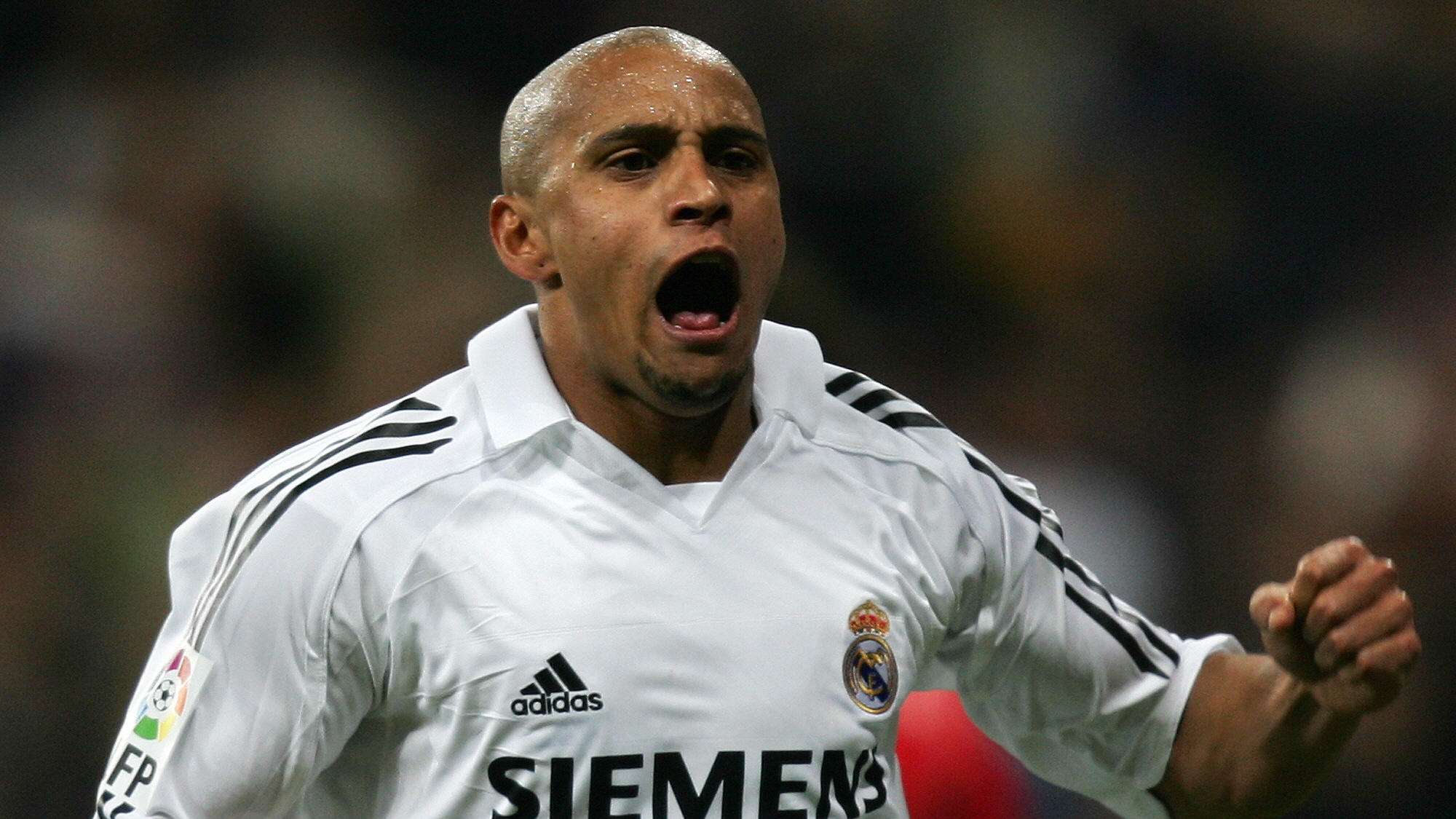
Roberto Carlos will go down as an icon. Not only for his otherworldly talent displayed on the pitch but also for his impact within advertising and the video gaming world. Those young enough to have played the earliest iterations of Pro Evolution Soccer, for example, will look back fondly at being able to unleash the Brazilian's incredible speed and shot power on human and AI opponents. Unstoppable.
Aside from the free-kicks that defied physics and his unique and inimitable status, too little is said about Roberto Carlos' career achievements. In terms of titles, Roberto Carlos won La Liga four times, he lifted the Champions League on three occasions, claimed two Intercontinental Cups, a World Cup and two Copa America trophies. In total, he scored 69 goals wearing the famous white of Real Madrid, and goes down as one of the most prolific defenders in the club's storied history, behind only long-serving stalwarts Fernando Hierro and Sergio Ramos.
He was also crowned as the best defender in the Champions League for two consecutive years and came second in the Ballon d'Or voting in 2002, behind his team-mate and friend Ronaldo. Four years later, he also achieved the honour of having made the most appearances for Real Madrid of any player born outside of Spain, surpassing the great Alfredo Di Stefano. A born winner and perhaps one of the most consistent Brazilian players of all-time, with Roberto Carlos playing 10 seasons at the very highest level.
In short, Roberto Carlos has to go down as one of the greatest players to ever play the game. A monumental footballer, and something even more than a generational icon. He's an idol, a role model, and a shining example for those who want to start playing football. And to answer the question of whether we'll ever see 'the next Roberto Carlos'? Impossible.