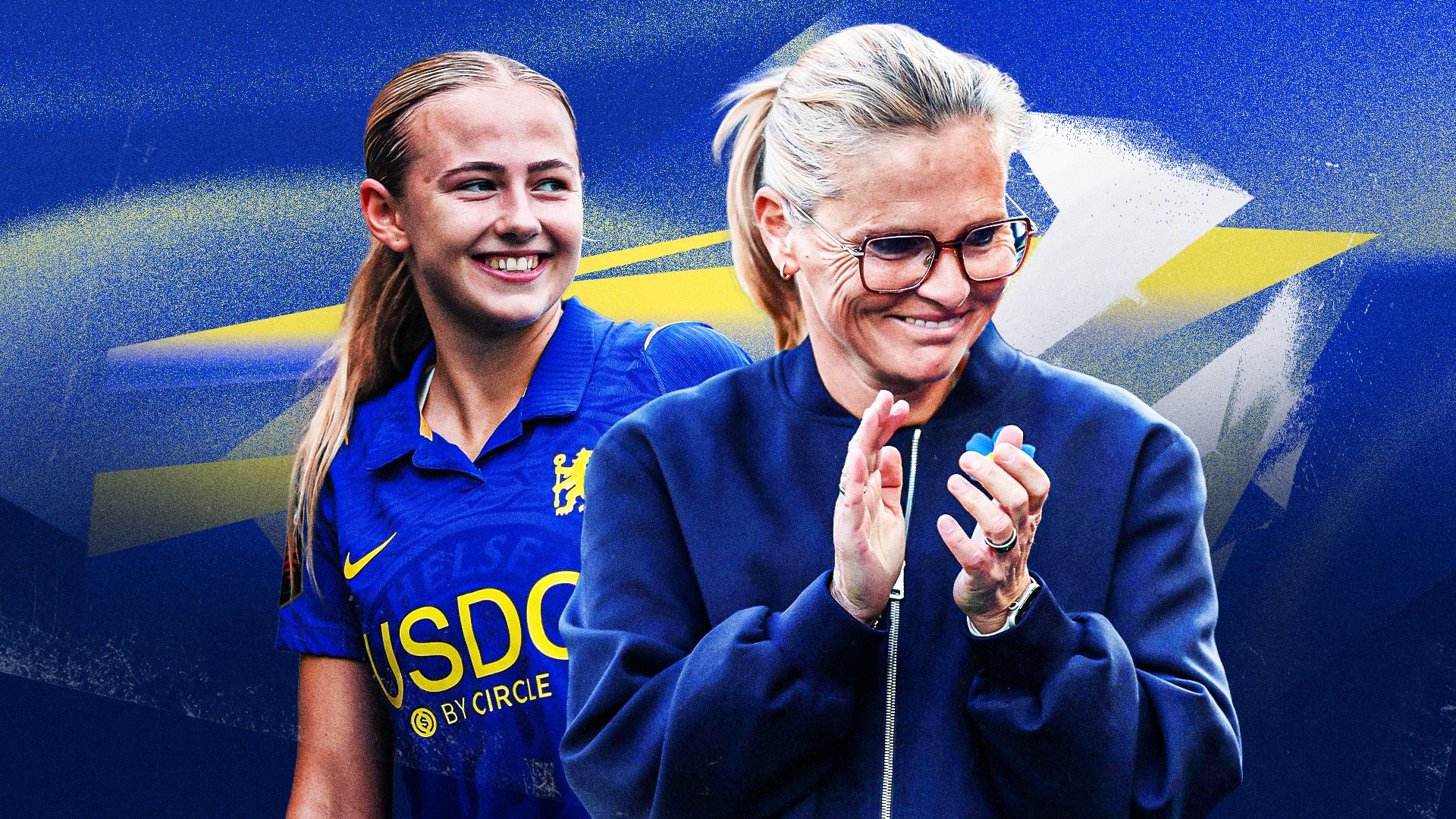
O Chelsea confirmou que a lendária atacante Sam Kerr deixará o clube quando seu contrato expirar, no final da temporada atual. A jogadora da seleção australiana encerra uma passagem de seis anos e meio repleta de títulos no oeste de Londres, durante a qual se tornou uma das finalizadoras mais precisas da história do futebol feminino.
As transferências no futebol feminino dispararam nos últimos 18 meses. Foi em janeiro do ano passado que Naomi Girma se tornou a primeira jogadora a atingir um valor de transferência de um milhão de dólares no esporte; no entanto, ela já é apenas a sexta jogadora mais cara de todos os tempos, com valores de transferência na casa dos sete dígitos se tornando cada vez mais comuns à medida que o esporte cresce.
Enquanto o Chelsea e o Manchester City se preparavam para se enfrentar nas semifinais da FA Cup Feminina no domingo, todos os comentários giravam em torno de Khadija Shaw. A atacante fica sem contrato em Manchester daqui a algumas semanas e tudo indica que ela vai sair, com o Chelsea em busca de sua contratação. Então, é claro, Shaw foi a protagonista em Stamford Bridge, marcando dois gols para eliminar o Blues da competição e levar o City a Wembley em uma vitória dramática por 3 a 2 que ficará na história como um clássico da copa.
O Manchester City enfrentará o Brighton na final da FA Cup Feminina no final deste mês, depois que Liverpool e Chelsea foram eliminados nas semifinais no domingo. Será a primeira aparição em Wembley para as Seagulls, que derrotaram as Reds em uma vitória dramática por 3 a 2, e elas serão grandes azarões contra o Manchester City, o recém-coroado campeão da Superliga Feminina, que venceu pelo mesmo placar na prorrogação em Stamford Bridge, graças aos dois gols de Khadija Shaw.
Daqui a algumas semanas, o contrato de Sam Kerr com o Chelsea chegará ao fim. Após seis anos e meio, 156 partidas e 114 gols, que ajudaram a conquistar 12 troféus, parece que este mês será o último dela vestindo a camisa azul do Chelsea. Se for assim, Kerr partirá como a maior artilheira de todos os tempos do clube na Superliga Feminina e uma verdadeira lenda — mas ainda há tempo para ampliar esse legado.
Nas últimas semanas, enquanto o Manchester City buscava seu primeiro título da Superliga Feminina em 10 anos, o clima ficou tenso dentro e fora de campo. A perda de pontos ameaçou permitir que o Arsenal voltasse à disputa pelo título, até que o próprio tropeço dos Gunners no meio da semana, em Brighton, pôs fim a esse suspense. Ainda assim, embora quaisquer preocupações em torno do destino do troféu da WSL tenham sido agora deixadas de lado, os torcedores do City ainda podem se preocupar com o futuro de sua atacante estrela, Khadija Shaw.
Manchester United, often simply referred to as "United," are one of the most iconic and successful football clubs in the world, based in Old Trafford, Greater Manchester, England. The club was founded as Newton Heath LYR Football Club in 1878 by the Lancashire and Yorkshire Railway depot at Newton Heath. The team changed its name to Manchester United in 1902 and moved to its current home, Old Trafford, in 1910.
Famous players
Manchester United have been home to some of the greatest footballers in history. Sir Bobby Charlton, a World Cup winner with England in 1966, is arguably the most iconic figure in the club's history. Other legendary players include George Best, known for his flair and skill, and Eric Cantona, who brought a winning mentality to the club during the 1990s. More recent stars like Cristiano Ronaldo, Wayne Rooney, and Paul Scholes have also contributed significantly to the club's success.
Honours
Manchester United are one of the most decorated clubs in English football, having won a record 20 Premier League titles (formerly the First Division). They have also lifted the FA Cup 12 times, the League Cup five times, and the UEFA Champions League three times. The club's dominance in English football was particularly evident during the 1990s and early 2000s under manager Sir Alex Ferguson.
Managers
Sir Alex Ferguson is undoubtedly the most successful manager in Manchester United's history. He spent 26 years at the club, leading them to an unprecedented era of success. Before Ferguson, managers like Matt Busby and Wilf McGuinness played crucial roles in shaping the club's identity. More recent managers, including David Moyes, Louis van Gaal, and José Mourinho, have faced the challenge of maintaining the club's high standards.
Stadium
Old Trafford, often referred to as the "Theatre of Dreams," is one of the most famous stadiums in the world. With a capacity of roughly 75,000, it is among the largest football stadiums in the United Kingdom. The stadium has hosted numerous major matches, including UEFA Champions League finals and FIFA World Cup matches.
Location
Manchester United are based in the city of Manchester, which is located in the northwest of England. The club's home ground, Old Trafford, is situated in the Trafford borough. Manchester is a major industrial city with a rich footballing heritage.
Owners
In February 2024, British billionaire Sir Jim Ratcliffe's company, INEOS, acquired a significant 25% stake in Manchester United. This acquisition granted Ratcliffe sporting control over the club, placing him in a position to influence key decisions related to its operations.
Ratcliffe has already made a substantial financial commitment to Manchester United. His large investments demonstrate his dedication to the club's success and his willingness to provide the necessary resources for its growth.
Perguntas frequentes
When were Manchester United founded?
Manchester United were founded in 1878, although under a different name at first - Newton Heath LYR. The name Manchester United was born in April 1902, beating alternative suggestions like Manchester Central and Manchester Celtic.
Who are the owners of Manchester United?
Manchester United are currently co-owned by the Glazer family, as well as INEOS founder Sir Jim Ratcliffe. In February, Ratcliffe bought an initial 25% stake in the club, ganing control over all the sporting operations.
What is Manchester United's stadium called?
Manchester United play their home games at the Old Trafford, which is also known as the 'Theatre Of Dreams' among fans and pundits.
What is Old Trafford's capacity?
Old Trafford has a capacity of 74,310, making it UK's second-biggest football stadium in terms of capacity (behind Wembley).
How many trophies have Manchester United won?
Manchester United have an impressive haul of 68 trophies in their prestigious history, which includes 20 league titles, three Champions Leagues, as well as 13 FA Cups.
How many Premier League (top flight) titles have Manchester United won?
Manchester United have won a record 20 English top flight titles. They have won 13 titles in the Premier League era, all of them coming under Sir Alex Ferguson. United, though, haven't lifted the Premier League trophy since the 2012-13 season.
Who has made the most appearances for Manchester United?
With 963 appearances to his name, Ryan Giggs holds the record of making the most appearances for Manchester United. Giggs made his debut for the club in March 1991 and spent his entire professional career, spanning 23 years, at Old Trafford.
Who is Manchester United's all-time top goalscorer?
Wayne Rooney is Manchester United's all-time top goalscorer with 253 goals in 559 games for the club. He spent 13 years at the club, from 2004 to 2017.
Which famous players have played for Manchester United?
Eric Cantona, Cristiano Ronaldo, George Best, Paul Scholes, Wayne Rooney, Rio Ferdinand, Edwin van der Sar, Zlatan Ibrahimovic, Angel Di Maria, and Denis Irwin are some of the most famous players to have donned the Manchester United colours.
Which famous managers have been in charge of Manchester United?
Sir Matt Busby, Sir Alex Ferguson, Jose Mourinho, David Moyes, and Louis van Gaal are among the most famous to have been at the helm at Old Trafford.
What is Manchester United's nickname?
Manchester United are famously known as The Red Devils among their fans and rivals alike. The term was introduced by the legendary Sir Matt Busby in the 1960s – after the tragic Munich air disaster – seeking inspiration from a local rugby club from Salford, who were referred to as "Les Diables Rouges" (The Red Devils) when they toured France in 1934.