+18 | Commercial Content | T&C's Apply | Play Responsibly | Publishing Principles
Premier League Big Six over GFXGetty/GOAL

The age of the Premier League's 'Big Six' is over - Man Utd & Tottenham's incompetence has left smaller but smarter clubs dreaming of Europe and the title

Article continues below

Article continues below

Article continues below

In May 2017, the final Premier League table for the season made for grim reading from a competitiveness point of view. Finishing in the top six positions were Chelsea, Tottenham, Manchester City, Liverpool, Arsenal and Manchester United. In some order, they were the favourites to take up those spots before a ball had been kicked, even despite Leicester City winning the title the year before, this seen as restoration of the status quo after a once-in-a-lifetime miracle.

Lagging eight points behind sixth-placed United were Everton, who were stranded on an island between those teams and the rest having finished a whopping 15 ahead of the team in eighth, Southampton. Only six points separated the Saints and Watford in 17th. The Premier League was a closed shop split into two sections - the challengers and the rest.

This was the Premier League's 'Big Six' power axis at its strongest; a top-heavy division at its lopsided apex. The 2010s were almost exclusively dominated by these clubs, and this trend followed into the next decade.

Alas, there is at last some reversal. Television money from the league's obscene broadcasting deals has filtered through to the 'other 14'. Profit & Sustainability Rules (PSR), though flawed, have levelled the playing field slightly. Traditionally smaller teams are thinking outside the box and working much smarter than they used to in order to close that gap, while those above are burning cash like their lives depended on it. The 'Big Six' era is over.

Follow GOAL on WhatsApp! 🟢📱
  • FBL-ENG-PR-MAN UTD-ARSENAL-WENGERAFP

    'Big' origins

    The cartel of 'big' clubs has gone through some changes during the Premier League era, with a five-some - Arsenal, Liverpool, United and Spurs, plus Everton fresh from their trophy-laden adventures in the 1980s - helping get the breakaway from the Football League off the ground in the first place. The great irony was only champions United made up the top five of the inaugural 1992-93 season, with Aston Villa, Norwich City, Blackburn Rovers and QPR following immediately behind them.

    The Red Devils, managed by pre-knighthood Alex Ferguson, swept through the formative years of the Premier League, claiming five of the first seven titles and finishing as runners-up in the other two. It would raise their global profile to the level it stands at today, the dominant force in the first true age of footy on the telly.

    Blackburn, bankrolled by local businessman Jack Walker, were the second different team to win the title, taking the glory in 1995, but it wasn't until Arsene Wenger's arrival on British shores a year later that United's power truly came under threat. Together, United and Arsenal - the 'Big Two' - took home every title from 1996 to 2004, as well as the majority of other domestic honours.

    But beneath them, potential contenders were getting their acts together. Liverpool's alternative treble in 2001, which helped Michael Owen take home the Ballon d'Or, propelled them back into the top-table picture, while Chelsea's re-qualification to the Champions League in 2003 and subsequent takeover by Roman Abramovich, with the unprecedented spending that followed, expanded the bracket from 'two' to 'four'.

    The Premier League pounced on this newfound dynasty of dominance. We had 'Grand Slam Sundays' in which the 'Big Four' would face off against one another. The latter stages of the Champions League were also swarming with Premier League clubs, ultimately leading to the first all-English final in 2008 between United and Chelsea. The product was booming.

    It was growing too. Manchester City were taken over by the Abu Dhabi United Group in 2008, and their first port of all was to sign rising Real Madrid starlet Robinho from under the noses of Chelsea. By 2011, City had reached the Champions League, and 12 months later they snatched their first league title in a generation away from United with the last kick of the season.

    Meanwhile, Tottenham clawed their way into the picture too. Martin Jol took them to fifth in successive seasons, Juande Ramos won the 2008 League Cup (their last trophy to date, of course) and then Harry Redknapp led them into the Champions League. A run of 11-straight finishes in the top six, a couple of title challenges and a first-ever trip to a Champions League final followed, even if silverware did not.

  • Advertisement
  • Manchester City v Huddersfield Town - Premier LeagueGetty Images Sport

    Years of dominance

    From 2010 to 2024, the 'Big Six' ruled with an iron fist. Only 12 times out of a possible 90 combined scenarios in that period did a member miss out on finishing sixth or higher. They had the wealth and the prestige, even with Financial Fair Play rules implemented to thwart Chelsea and City-style spending sprees.

    The gap to the rest of the league became a chasm. In 2018, City became the first top-flight team in English history to break the 100-point barrier. The year after, both the Champions League and Europa League finals were all-Premier League affairs. In the three years after Leicester's title win in 2016, none of the chasing pack got close to a whiff of European football's top table.

    Around the same time, the 'Big Six' weren't just ruling the roost over the players' transfer market, but for managers too. Liverpool attracted Jurgen Klopp when they were languishing in mid-table. Arsenal were the party to call time on Wenger's reign of over two decades. United rotated their way through a series of high-profile names despite internal unrest. Tottenham held off the advances of Real Madrid and United to keep Mauricio Pochettino.

    These cycles don't last forever, though. It wouldn't be too long until most of the 'Big Six' ran into real adversity.

  • Eddie Howe Unai EmeryGetty Images

    The gatecrashers

    Leicester's title pushed the reset button for Premier League royalty. Those who needed to clean house and start over did so. Their adjacent and parallel declines were aligned, even if the rebirths weren't.

    When the Foxes looked a safe bet to crash the top four - and even top three - again in 2019-20 by the time the world went into lockdown, similar alarm bells started ringing. With Liverpool running away with the title and City at a safe distance in second, the onus was on United, Chelsea, Tottenham and Arsenal to reclaim what they felt was theirs. In the end, Brendan Rodgers' men collapsed during 'Project Restart' and wound up fifth. The same happened the following season, again pipped to the post on the last day of the season.

    That was another warning sign for the near future. West Ham flirted with the top four under David Moyes, with his second tenure at the London Stadium peaking with Europa Conference League glory. That same 2022-23 season, Newcastle wrestled themselves free from Liverpool to finish fourth and secure a return to the Champions League after a 20-year absence.

    It was a novelty seeing such matches back at St James' Park, even if a monstrous 4-1 win over Paris Saint-Germain proved a false dawn and Eddie Howe's side were eliminated in the last-ever group stage. But their successful domestic venture paved the way for Aston Villa to follow in 2023-24, fighting off Tottenham to take the last Champions League spot. The Magpies and the Villans were the protagonists to the prelude of today.

  • Brighton & Hove Albion FC v Brentford FC - Premier LeagueGetty Images Sport

    'No easy games'

    The world of football cliches has only been emboldened and empowered by the Premier League's global influence. Of the hundreds and thousands in our lexicon, one is resonating above all others right now - there are no easy games.

    So why is that? Why are we going through a concentrated version of this line as opposed to yesteryear? There are a few key factors.

    For those wanting to find a way to blame Pep Guardiola for the traits and quirks of 'modern football', well, you may be onto something. It's not as if he invented playing from the back, but he certainly played a role in popularising it and showing it's a needed vehicle for results. How the sport is played now across all levels is much, much different to the days of even the 'Big Four'.

    The added layer to this shift in philosophy is teams are still finding ways to play the game with their own idiosyncrasies. Brentford and Brighton, for example, consistently punch above their weight, yet their tactical approaches are wildly contrasting, with the Bees more direct and fast-paced compared to the pass-and-move ways of the Seagulls.

    Bottom-half and mid-table sides also don't shrink in the spotlight as much as they used to. Scalps are slightly more commonplace, if in part because of ball-playing has led to an increase of ways to score at both ends of the pitch (thanks again, Pep).

    Put it this way. During the 2016-17 season referenced at the top, the 'Big Six' averaged 79.5 points between them. The lockdown-hit 2019-20 term saw that number drop to 71.2. As it stands, 2024-25 will tank out at 64.6.

  • Tottenham Hotspur v Manchester United - Carabao Cup Quarter FinalGetty Images Sport

    Struggling giants

    That seasonal average is largely being brought down by the exploits of United and Spurs, who at the time of writing sit 13th and 15th in the table, respectively. Their individual crises have been discussed to death, but it's crucial to note why both are in these messes - incompetent mismanagement from the top down has caught up with them.

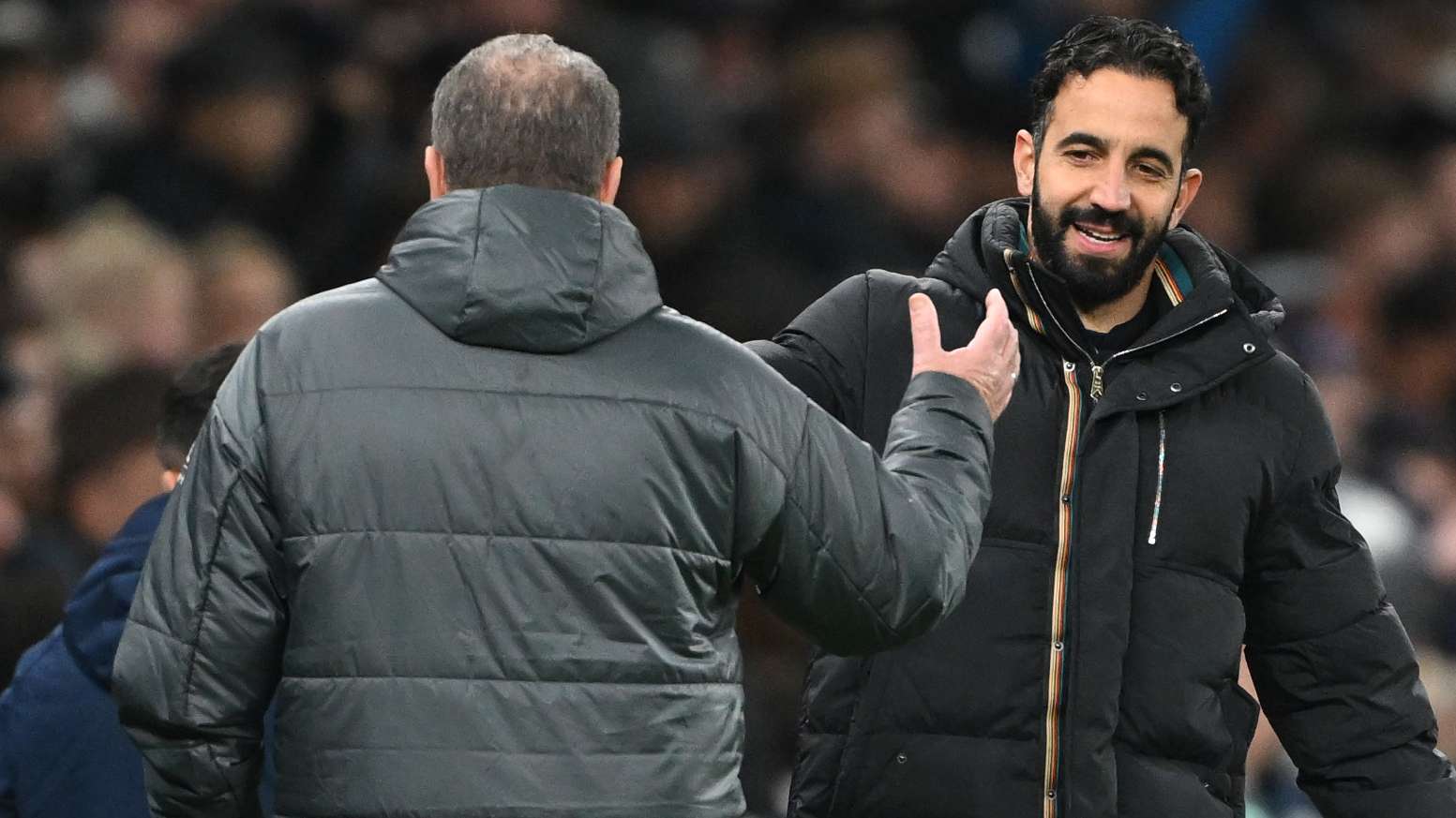
    There are simply too many clever and cunning clubs in the Premier League to get away with nonsense anymore. At United, their indecision over Erik ten Hag, from INEOS' takeover last January to his long-awaited firing in October, has set them back massively. Handing Ten Hag the keys to the summer transfer window despite only just surviving the sack was an incredible misstep, and now they're hoping Ruben Amorim - who lambasted his team as possibly the worst in United's history - will miraculously pick up the pieces. Even he, as accomplished as he's been so far in his young career, has come unstuck again and again in games United had been expected to prevail in.

    With Tottenham, their chickens have come home to roost. Daniel Levy deserved great credit for his role in transforming Spurs from a mid-table side to one who were even in the frame for the misguided European Super League, but therein lies his major problem. Every decision the club has made since reaching the 2019 Champions League final has massively backfired, and that's now manifesting in this current rut. The subpar playing squad is no longer being held together by Harry Kane, and the gap in quality from starters to backups has been exposed by their injury list.

  • Nottingham Forest FC v Liverpool FC - Premier LeagueGetty Images Sport

    Most competitive Premier League ever

    And here we are today. In third place are Nottingham Forest, level on points with Arsenal and six off of leaders Liverpool. Newcastle and Villa have overcome poor starts to push for another Champions League jaunt. Bournemouth - no disrespect, we love Andoni Iraola and the Cherries, but Bournemouth - are in the hunt for Europe, as are Fulham, Brighton and Brentford.

    After a nightmare run through the autumn, City have strung some results together and are back in fifth, only a couple of points behind Chelsea heading into Saturday's meeting at the Etihad Stadium. A few wins on the trot is all it takes at the moment to propel yourself into contention, and it's allowing a previously maligned pack to dream again.

    Tottenham are actually a fascinating case, whether you regard them as a traditional 'Big Six' side or a club on the decline, boasting the division's seventh-best goal difference, second-best attacking record and with 11 of their 12 losses coming by only one goal. In a sense, they are the perfect embodiment of this new age - you can win 4-0 away at the champions as easily as lose 2-1 on your home turf to relegation zone no-hopers.

    You'd be daft to bet on which teams will be representing England on the continent next season; that's the beauty of it all. Everyone is in that race, and if Liverpool indeed part ways with their out-of-contract star trio of Mohamed Salah, Virgil van Dijk and Trent Alexander-Arnold, a similar window may open to the title in the coming years.