+18 | Commercial Content | T&C's Apply | Play Responsibly | Publishing Principles
This page contains affiliate links. When you purchase through the links provided, we may earn a commission.
Atlanta United president Garth LagerwayAtlanta United

'MLS is rising, the World Cup is coming' - Atlanta United exec Garth Lagerway on city's place in global game, sensational signings of Miguel Almiron and Emmanuel Latte Lath, and why no need for 'miracle' in MLS playoffs

Atlanta United president Garth Lagerway took exception to a question asked of him in early February. Asked about the "miracle" upset that was Atlanta's knockout of favored Inter Miami in the first round of the 2024 MLS playoffs, Lagerway made it clear that the club's next playoff win - and he's sure that there will be one - won't be considered so seismic.

"I was like, 'OK, what would it take for it not to be a miracle that we win in the playoffs?' " Lagerway told GOAL. "Maybe, we get to the point where we're expected to win in the playoffs and we're favored to win."

That's exactly what Atlanta have done. It has been a chaotic 12 months for the club. They sold their three best players last summer, letting Caleb Wiley, Thiago Almada and Giorgos Giakoumakis go for a combined $43 million - the most lucrative trio of outgoings in MLS history. Instead of plummeting to the depths of MLS, they stayed afloat, beat Lionel Messi and Miami in the first round of playoffs, and showed that there is enough to work with here to make something special.

The logical next move, though, was to reinvest - and push back towards the top. The good news was the plan was already in place. Atlanta needed a striker, and, ideally, two other attacking players. Aleksey Miranchuk was taken care of in August. The two other newcomers were sorted within a month of the offseason.

"We were actually able to deploy the capital then more quickly that even than I thought we would be able to," Lagerway says.

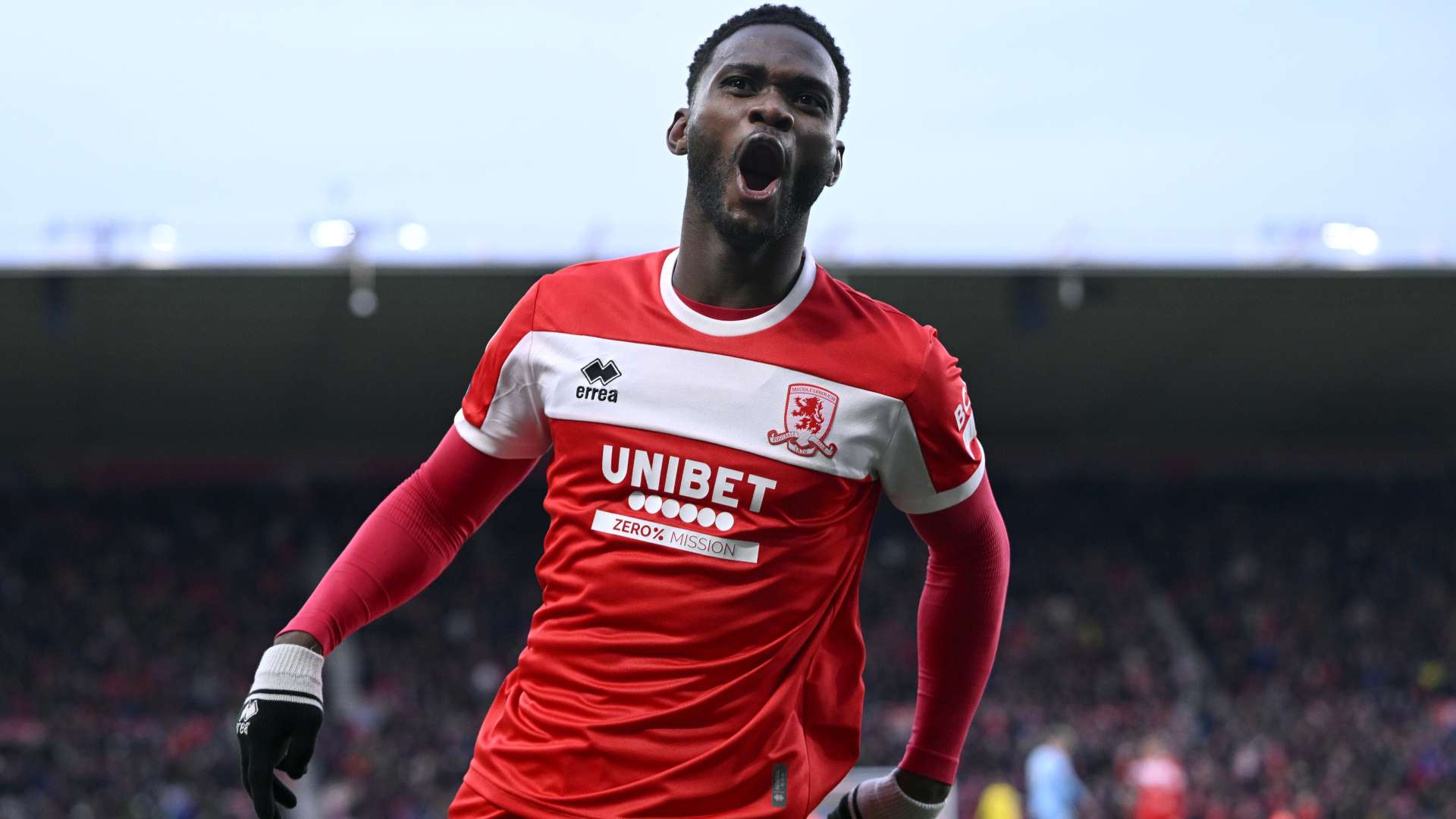
The other two - former Middlesborough striker Emmanuel Latte Lath and returning hero Miguel Almiron - would seem to take Atlanta from fringe playoff contenders to among the best teams in the Eastern Conference. Throw in a new sporting director, Chris Henderson, formely of Inter Miami. Add a head coach who has won MLS before, Ronny Deila, coming off two separate stints in the Belgian top flight. And suddenly, this is a team that has a legitimate shot to win it all.

But what seems a hurried process has actually been a calculated. Some of these names have been on Atlanta's radar for a year.

"What I would say is we track players, usually for six to 12 months," he said. "The thing for MLS teams is what we want ideally, is players that are running down toward the end of their contract, because then you get a more favorable economic deal."

So much for that. Almiron and Latte Lath were bank-breaking moves. Add them together and the club spent over $30 million - Latte Lath is a new MLS transfer record signing. But he turned down Premier League offers to come. Atlanta have a proper player on their hands. So yes, it does break precedent. But Atlanta had money to spend, an owner who encouraged reinvestment, and a top-down model to make this all work. That playoff "miracle" should the same result occur might not be such a surprise.

Ahead of the MLS season, Lagerway talked about Atlanta's busy offseason, how they signed Almiron, and why this could be their year in the latest GOAL Convo.
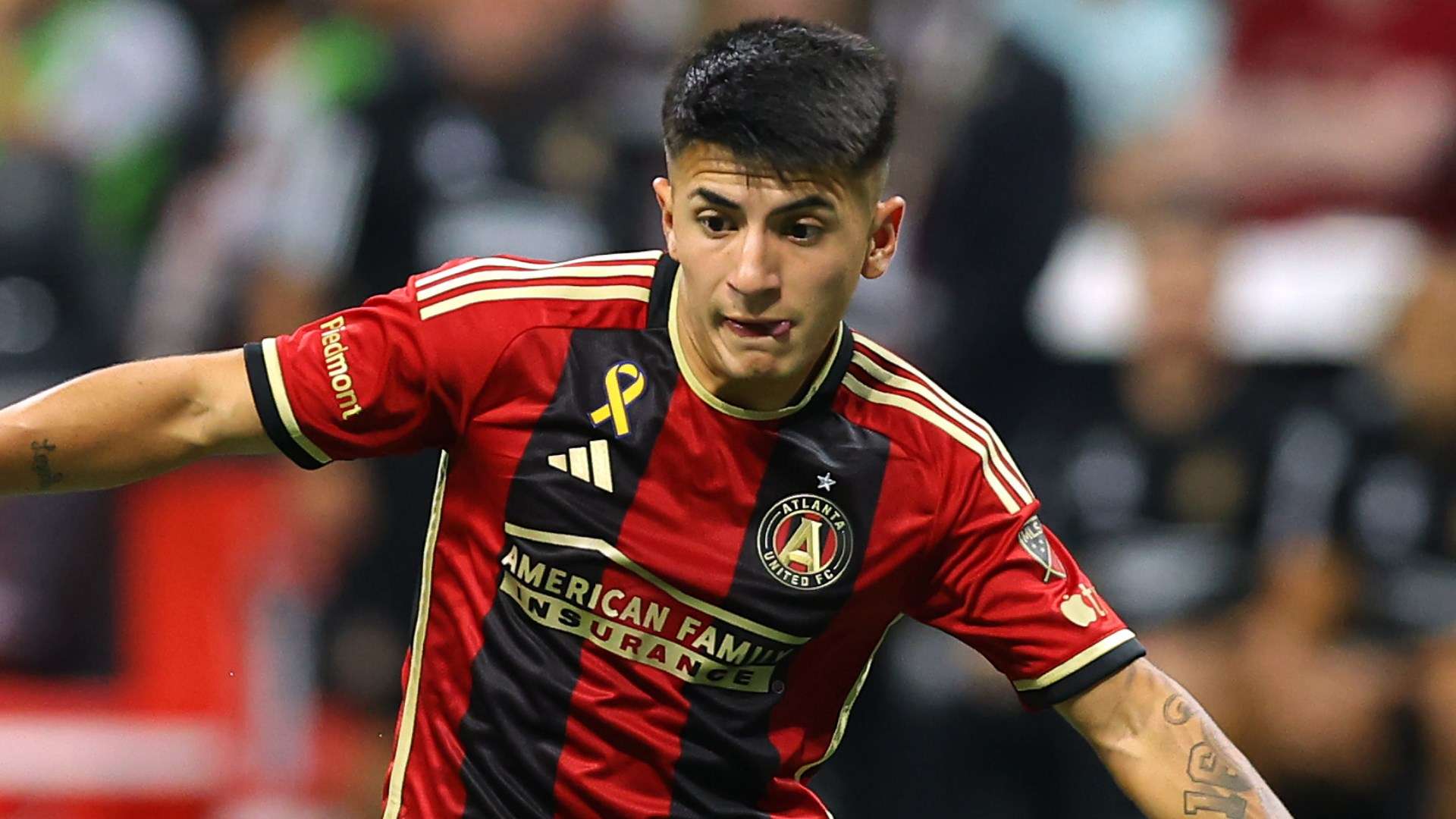
  • Thiago Almada Atlanta United 2023Getty Images

    ON SELLING AT THE RIGHT TIME

    GOAL: Why did you sell when you did? Because you guys made $50 million from three sales?

    LAGERWAY: It was reported that way. The reality is, it was probably from five sales that we made $53M. We had sell-ons on a player named Esequiel Barco as an example, to Russia from Argentina. Now, obviously the three, Almada, Giakoumakis and Wiley, those three together were around $43M... To answer "Hey, why sell?" then the answer is, you have to sell to the people with the money, and you have to sell when they want the player. That's maximizing your market value. And the decision we made, on a basic level, was we didn't think we were going to win the championship with the team that we had last year.

    And so then we became like, "OK, we're going to liquidate the portfolio." Basically, we're going to sell off all our assets. OK, so how can we do that to maximize value? Because if we maximize the value, then we get to make all the other decisions. If you don't have the value, then you don't get to the next step of making the other decisions. And so we were able to be pretty successful in terms of offloading the assets and maximizing market value. But that came at a significant cost in that it was in the middle of our season. And because the MLS season doesn't align with the European season, at least not so far, we had to then go literally months. We made some of the deals, I think, in April and May, ahead of the Euros and Copa America, and then couldn't replace them until our window opened in July. So we literally had months where we were playing without the replacements for those players.

    GOAL: How did you manage that?

    LAGERWAY: Well, sure enough, we were able to get in Pedro Amador for Caleb Wiley, and were able to get in Aleksei Miranchuk for Thiago Almada. We wound up getting 18 goals from our strikers that played in lieu of Giakoumakis. So although we didn't replace him, we actually got decent output from the strikers. That was credit to Rob Valentino would become our interim coach. That's why we went on the run at the end, because we finally replaced the players.

    Then we went on that little run and beat Miami. So, it all started to come together, but we really didn't feel like we had enough experience from a staffing perspective long term. And so then we brought in Ronny Deila. We brought in Chris Henderson. We brought in David Tenney, who, for me, is the best sports scientist in North America. We wanted to make sure we managed all these new assets we were acquiring. And we did.

  • Advertisement
  • Miguel Almiron Paraguay 2024Getty Images

    ON A BUSY OFFSEASON

    GOAL: So how did you go about making those signings?

    LAGERWAY: We said, "OK, now we're aligned, now we can start pushing the capital out." We didn't want to spend a bunch of money on players and profiles that maybe didn't match the long term management of the club. And so once we got into December, got the management aligned, and hired Chris Henderson a couple days before Ronny, to make sure those two were lined up as well, we were actually able to deploy the capital then more quickly that even than I thought we would be able to.

    We got Miguel Almiron, which is a no brainer on and off the field for us in terms of the returning hero, coming back to Atlanta United. And we get Emmanuel Latte Lath. But the other thing we switched on a really basic level, because we were buy, develop, sell. And we had some really good additional success with that. If you come to Atlanta and you stay for a year or two, that you can be sold on, and you can go other places, which is great for the players and great for the club too. What we've tweaked is to say, "Hey, we really would like players that want to be in Atlanta." And we believe Atlanta is a big enough club now.

    MLS is rising, the World Cup is coming, in our building, Mercedes Benz Stadium. We had the Copa America. Now we have the Club World Cup this summer. We have the World Cup next summer. U.S. Soccer relocated to Atlanta last year. We are becoming an international soccer city. I understand that sounds silly to say on some level, when you have 120 years of soccer all over the world. And I'm not claiming we're the greatest or anything like that. But the city itself investing in soccer. We have the biggest fan base in America. These are all objective facts that maybe lead up to, "Hey, our fan base deserves players that want to play for Atlanta."

    Miguel Almiron, coming home as the returning hero, so to speak - we think that really matches. We have a highly motivated player to make Atlanta do well. Latte Lath is the same. We were competing with Premier League teams for his signature, and he chose to come to Atlanta. So that's hopefully a good sign that this is a place where he wants to make his future. A year ago, we had signed a player like Bartosz Slisz, who had offers in Italy, had some offers in Germany. And so we really thought that that was important to our core and to our locker room, to have players that wanted to be in Atlanta, win for Atlanta, and we thought that that was a good match for our fan base who expects us to win - as they should - as giving us the most support in North America.

  • Latte Lath MiddlesbroughGetty

    ON PREPARING FOR SUMMER MOVES

    GOAL: I was wondering how far in advance, from a scouting perspective, do you have these names in mind? How far in advance are you thinking, "We're going to have this much money, here's who we're spending it on?"

    LAGERWAY: So in MLS there's the discover rule, which means you can only have one team at a time talk to the players. Charlotte had the discovery rights and so, like last summer, we couldn't talk to Almiron. Charlotte had the right to do that. They were trying to sign him. So it didn't matter. It wasn't on the radar. It was other targets. And then, in the winter, Charlotte eventually came around and said, "Hey, we're not sure we want to spend this much on Almiron. We have another target." So they gave us a call and said, "Hey, would you guys be interested in [Almiron]?" And then that started the conversation. We said, "Hey, we have to talk to the owners to try to figure out what's possible and what's not." Eventually we did that. And then it kind of snowballed from there. And so that one is very much a specific case, though, right there is literally one player with that level of influence in Atlanta, and that would be known to all MLS teams.

    What I would say is we track players, usually for six to 12 months. The thing for MLS teams is what we want ideally, is players that are running down toward the end of their contract, because then you get a more favorable economic deal. So if you can hopefully build your team and be successful, and then once you get to that base level success, you're kind of changing one or two players every transfer window, and you're able to kind of line up when players run out of contract, and then you acquire them. Now, obviously, when we set the league record for a transfer fee on Emmanuel Latte Lath you'll say, "Hey, that doesn't really sound like a free transfer strategy." You're right, but we really felt like we needed this impact player as a striker. We had the resources available, and so we reinvested them.

    And that's one of the things about having the ownership that we do, you know, with Arthur Blank, we have his full support. Any money we have goes back into the team. So we're very, very lucky in that sense. And we're lucky to be part of this bigger organization where, you know, this is an NFL-level organization serving us from a financial perspective. Our building is a $2 billion building. Even when players like Messi walk into Mercedes Benz stadium, they're like, "OK, this is a proper stadium." So we have some of these advantages, and we're able to sign some players on those timelines, and hopefully they'll make an impact.

    GOAL: On the Latte Lath signing, one thing that struck me is, obviously, that there's the price attached to it. But even if that deal didn't go through, you were looking into other names. Was there a sense that you had to make an impact signing? Or bring in a big name?

    LAGERWAY: I think big name, I want to be careful with - just because I don't think any of these guys are household names, if we're being honest about it. But we had sold Giakoumakis in April of the year before. It was one of those where I don't know that we had to sign, but it was definitely a goal of ours to sign. So yes, we had offers out on multiple players, and we had that alignment from December, so we knew if we had the sporting director and head coach in agreement on the type of player, there's more than one of those players.

    So you go do that, and then hopefully that maximizes the chances. But we signed three designated players in this window. That's more than I've ever done in my career. So, like, I can't sit here and be like, "Oh yeah, that was the plan all along." We were fortuitous in terms of, in particular, the Klich acquisition - D.C. United holds on to the designated player tag, but we get the player at a reduced price, in addition to the other two that we paid, obviously bigger money for.

  • FBL-USA-MLS-MIAMI-ATLANTAAFP

    ON BEATING MIAMI

    GOAL: That Miami win in the playoffs made headlines, not just in America, but around the world right by virtue of who you beat. On the back of that, did you feel a bit more pressure this offseason to get it right? As if to say, you know, we can build on that?

    LAGERWAY: It's funny. I would actually say I felt a little bit of relief. I had been here going on two years at that point, and we hadn't won anything. I had won and had some success in Salt Lake and had some success in Seattle. And so I was like "Man, I hope we can recreate this in the third place in Atlanta." And we really hadn't had a ton of success. And so we got the players right at the end of the season with Rob Valentino's influence, we were able to put together that run. So it honestly was like a little bit of like stress relief. Some of the same things, the same concepts can work. It set up that offseason of change in the management change, into the head coach and now signing more players. It gave me a little confidence that maybe we are starting to trend the right direction.

    GOAL: Almost a sense of "this is working?"

    LAGERWAY: Exactly. My job is to build the organization. But the way you see the progress is through the success on the field. And so it felt like you laid all this foundation. And so it was, in that sense, really gratifying to see Rob's success, as well as the team's success. Importantly, it gave us something to build on going into 2025, where now the group the players believe, "Hey, we can do this. We just knocked off, you know, the No. 1 seed, the team that set the points record in the regular season last year. We can be a good team." And so I think that was an important psychological boost for us heading into the season.

  • FBL-EUR-C4-BRUGGE-MOLDEAFP

    ON LEADERSHIP CHANGES

    GOAL: And I want to talk about the new manager. He won has MLS Cup. How much of his winning pedigree was important, and also what kind of culture are you trying to build by bringing in someone who's a proven winner with European experience?

    LAGERWAY: "A proven winner" is the big phrase. We didn't want someone where it was their first job. We thought that for a club our size, with the resources we have, we can go get a proven winner. And we added Ronny. That was a big part of it, but we also like Ronny's ability and desire to raise the standard, to really raise the level and hold people accountable, and that's something that really only comes with experience. When you're talking about a proven winner, obviously, that's a successful coach. But the coach wouldn't continue to get jobs if you weren't successful. So they're closely intertwined, this idea of proven clearance and experienced coach, successful coach.

    One of the things that we look at when we scout players, we look at "have they succeeded in other countries or other cultures?" Because if they're adaptable, whether from language or from culture or from playing style, then probably when they move to MLS, with altitude and time zone change and heat in the summer and cold in the winter and all the things that go into MLS, they have a better chance if they've done this outside of their home country. We thought that's a concept that might work with coaches as well. And because Ronny has succeeded in Belgium, he's succeeded in Scotland, he's succeeded in New York.

    So certainly MLS success was a big part of it, but he has succeeded in a number of places, which pointed toward his adaptability. So now we've combined a proven track record of success, this personality that we think can raise the standard of the club, really hold everybody accountable at a higher level, proven winner, and also somebody who's going to adapt where they're not going to come in and be dogmatic and simply say, "Well, I'm from Europe, and you have to play the way that I play, because we know better in Europe." That was not going to fly with us either.

    GOAL: What about Chris Henderson, brought in to be the sporting director from Miami?

    LAGERWAY: Chris and I worked together in Seattle, and we just had a bunch of success. We really compliment each other. Chris' on the field talent identification is the best that I've ever worked with. I'm a lawyer by training, I build the organization, so I'm off the field in terms of my strengths, and so we complement each other really well. Chris is a little nicer than I am too, so maybe he softens up some of our rough edges. And so, you know, again, we just a good combination. We really like each other. His office is next to mine again. It just feels right. That's how we had it in Seattle for seven years. We'll run into each other in the hall, we'll give each other a hug.

    It sounds completely cheesy. I understand that. And it's not like we're just spontaneously hugging you all the time. We're just happy. You get confidence because you've had success together before. There's a trust. It's just like any relationship - you have to trust. We see soccer the same way, so we like the same kinds of players for the most part. And again, that kind of compatibility is really important as well. We both liked Ronny. If you could ask "What makes an organization successful?" Well, there's lots of smart people in the world, and there's lots of different ideas, but if you can just get people aligned, and if you can get everybody kind of rowing in the same direction... we all want to win. That's great.

    But the way you get there, the process by which you get there, is what's going to build a sustainable foundation. And that's where that alignment, that intellectual and personality alignment come in. We have a really good mix. If everybody's intense, you're going to burn everybody out. If everybody's nice, then you're going to be too soft. You got to come back to the middle. And so we really got a good mix and a good compliment of personalities to push the organization forward.

  • 2018 MLS Cup - Portland Timbers v Atlanta UnitedGetty Images Sport

    ON EXPECTATIONS FOR THIS SEASON

    GOAL: To put a bow on it, what are the expectations for this season?

    LAGERWAY: We've got to walk before we run. We've got to get everybody fit. We've got to build a group up. So I'll know a lot more in two or three months is my answer to that question. If you say, "Hey on opening day, what are the expectations?" Well, we want to finish top four in East. It's a really competitive conference. When you look at the Miamis and the Cincinnatis and Columbus and the New Yorks and the Torontos. There's a ton of teams that are spending money now in the Eastern Conference specifically. So it's very competitive. So we can finish top four. That means probably we get multiple home games in the playoffs. Our record in the home playoff games is pretty good. And that was a big factor for us against Miami. We put 70,000 in the building for game two, and you win that, and have the best momentum going into game three. So that was good.

    And then we want to try to advance in Leagues Cup. We really like this new format, playing the MLS teams against the Liga MX teams. And one of the biggest growing demographics in Atlanta is the Hispanic demographic. So we think, terms of building our fan base is really, really interesting in terms of playing these games. A lot of those fans are saying, "Hey, I grew up rooting for club America, rooting for Monterrey, rooting for whatever team." But they live in Atlanta, and so if we beat those teams that maybe they grew up rooting for, that's a pretty powerful way to hopefully get them to say, "Hey, you know what, we could be your second team." Even if they'll support those teams back in Mexico. But if you're in Atlanta, you'll come watch the Atlanta United game. Have a good time.

    And then obviously the ultimate proof is, can we win MLS Cup? I think again, you got to walk before you run. You got to accomplish some of those goals along the way, have a consistent regular season, become a consistent contender. And then when you get in the playoffs, what we proved last year is anything can happen. And I think I did an interview last week, and they were like "it was really a miracle that you won in the playoffs!" I was like, "OK, what would it take for it not to be a miracle that we win in the playoffs?" Maybe, we get to the point where we're expected to win in the playoffs and we're favored to win, and I think that would be progress in and of itself.