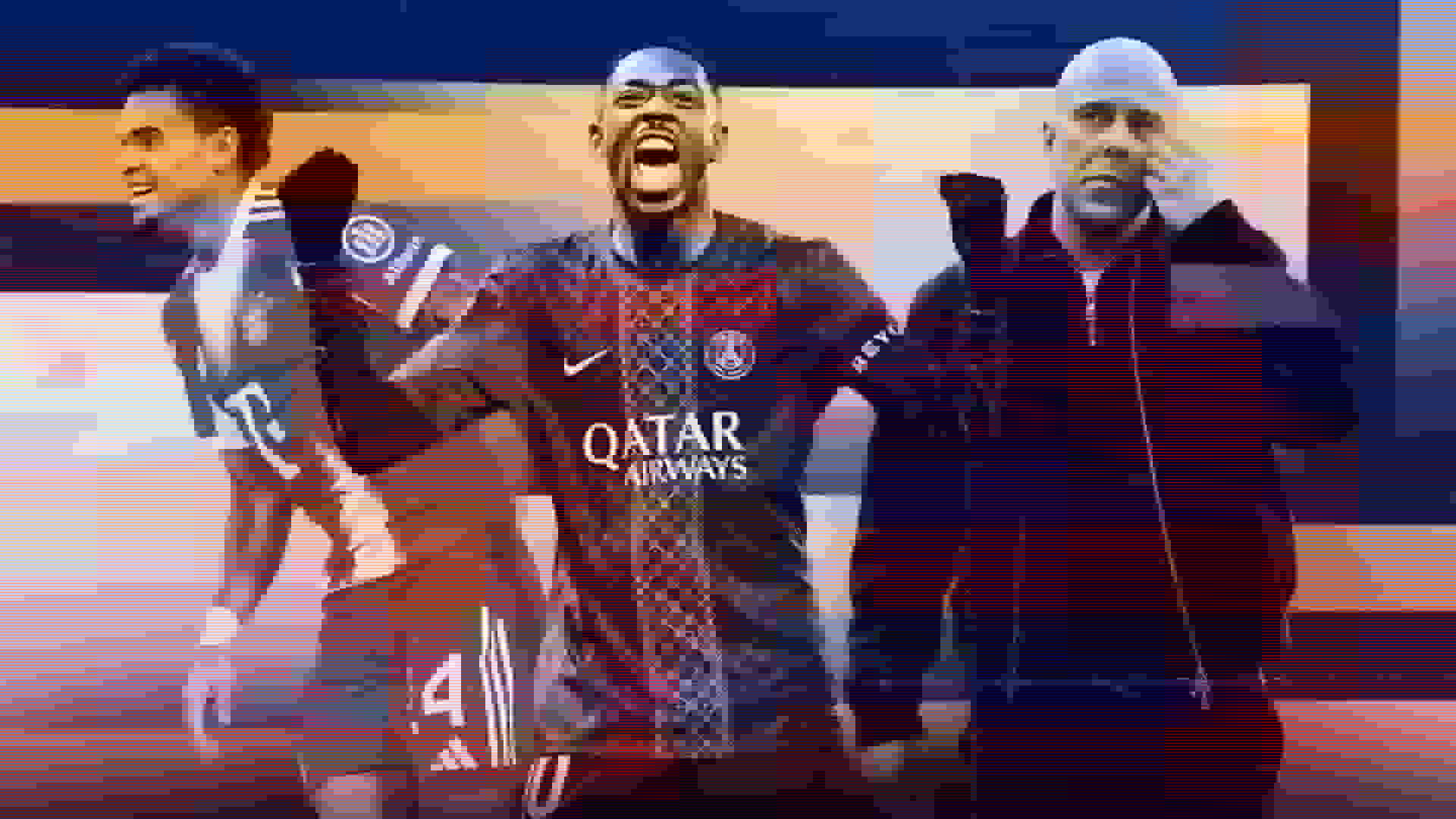

About half an hour into the squad announcement press conference, Jürgen Klopp was thrown a small riddle. It was about which successful club coaches later became Germany coach. Hansi Flick quickly named Klopp, then drew a blank. "Who then?" he asked the room. The answer: Julian Nagelsmann.
"Oh yes, sorry," Klopp called out, and he already sensed it could make headlines. "Write the story you want to write," Klopp said, before stressing at length his utmost respect for Nagelsmann. Naturally, it immediately brought back memories of Klopp's legendary "still" remark in the run-up to the World Cup, when he himself was a TV pundit and Nagelsmann was still Germany coach.
That was the only faint swing back towards the DFB's gloomy recent past. On every other topic, Klopp worked hard and convincingly to steer the focus towards the positive and inspire belief in a better future. For the national team, but also for Germany in general.
For his first selection, Klopp called up 44 players, split into two squads for the four upcoming Nations League matches. The list includes plenty of familiar long-serving internationals, but also 16 partly very unknown debutants such as Mika Baur of Celtic Glasgow, who would never have expected a call-up themselves. Klopp's message is clear: anything is possible.


Jürgen Klopp plans to use Joshua Kimmich in midfield
Beyond that brief quiz moment, Nagelsmann barely featured at the press conference, but in one sense he remained omnipresent. Klopp openly picked up on several of the criticisms levelled at Nagelsmann in recent months and, each time, firmly set out a different approach.
Take Joshua Kimmich, whom Nagelsmann had used at right-back. "Not in a single conversation that I had with my coaching colleagues was he listed as a right-back," Klopp said. "We see him as a midfielder." And still as captain, as he confirmed.
He also brushed aside the familiar objection that Germany lack decent alternatives to Kimmich at right-back. According to Klopp, Freiburg's Philipp Treu, called up by him for the first time, should be asking himself in this debate: "Huh, what are they talking about?" He also named Josha Vagnoman of VfB Stuttgart as a promising candidate.
At Stuttgart, Klopp's break from Nagelsmann is especially striking. Leaving aside Alexander Nübel, who moved to Besiktas Istanbul in the summer, Nagelsmann had nominated three Stuttgart players for the World Cup in Deniz Undav, Angelo Stiller and Jamie Leweling. And Klopp? He left out that exact trio and instead called up four others in Vagnoman, Chris Führich, Finn Jeltsch and Maximilian Mittelstädt. True, Undav, Stiller and Leweling have recently been dealing with knocks, but they have also each played in all Bundesliga matches so far.
 IMAGO
IMAGOJürgen Klopp shows a greater presence than Julian Nagelsmann
Missing too are the two Nagelsmann favourites at the centre of probably the most controversial debates around the DFB team in recent years: Leroy Sane and Leon Goretzka, who is currently carrying an injury anyway. Klopp explicitly does not want their omissions from the squad, just like those of Undav and Stiller, to be taken as final. At the same time, though, he also revealed that he has not yet held talks with them, unlike with almost all other remotely interesting German footballers.
"I've been out and about a bit in the last four weeks, met many, many players in person, seen them, whether on the training pitch or in conversation," Klopp said. To clarify, he then added: "Seen them, had them physically in front of me. The difference from the picture I had before is quite big. It makes a big difference in developing a feel for a footballer when you see him live."
Those sentences can certainly be read as a small hidden dig at Nagelsmann. In any case, poor communication and a lack of personal visits to clubs and stadiums were common criticisms of Nagelsmann. With his completely contrasting approach, and also with the nomination of players from smaller clubs such as Augsburg or Elversberg, Klopp is sending the message that he wants the whole of football Germany involved in the national team's restart.
For all the euphoria this squad announcement and press conference have undoubtedly created, results still have to follow, as they always do in football. The Nations League serves up a tough start: an away game against the Netherlands first, then three more matches against Greece twice and Serbia.