
+18 | Commercial Content | T&C's Apply | Play Responsibly | Publishing Principles
Promise David Canada Gold CupGetty Images

'Make Canada as proud as possible' - Promise David, Luc de Fougerolles embrace World Cup spotlight as CanMNT look ready for the moment

TORONTO — When Promise David wakes up on Friday, he's going to watch anime. After potentially playing in his first World Cup game, he thinks he'll stop at McDonald's.

While some players say the biggest matches of their lives are "just like any other game," Promise, or Tobi as he is known to his teammates, takes that quite literally.

Sitting in a Montreal hotel before Canada's final pre-World Cup friendly against Ireland, he pulls out his phone and starts scrolling. He's looking for the shows he's watched most recently. He identifies Wistoria: Wand and Sword as his latest obsession while also enjoying being back home, where he's been able to catch up on the TV series Office Movers, which features a cameo from Drake.

"I'm finally back in Canada, so I can watch Office Movers," the towering 6-foot-5 striker, who scored 15 goals in 37 games this season for Belgium's Royale Union Saint-Gilloise, said while enjoying the comforts of being home and having access to the show's streaming platform. "I hate watching shows on sketchy sites or something, but now that I'm in Canada, I stream entire seasons."

For someone who recently returned from an accelerated injury recovery to make his first World Cup roster and is just days away from playing in front of 40 million Canadians, the candor is exceptional. It truly doesn't faze him.

"Same s--t, different day," he says. "Wake up, watch my favorite shows, listen, eat, stretch, follow the game plan and then go score some goals and win."

David, 24, was playing youth soccer in Croatia four years ago when Canada went to the 2022 World Cup, the nation's first men's tournament in 36 years and only its second ever. He never expected to be playing at the 2026 World Cup.

The rapid rise reflects the evolving nature of the Canadian Men's National Team program. He, along with four others on the 26-man squad, was not well known to the broader Canadian soccer community in 2022 and is now among the 13 debutants at this year's tournament.

Yet, as has been the case for many of Canada's players, it wasn't an easy road, even as the group appears calm heading into the first World Cup matches on home soil.

For Promise, it all came crashing down in February when he sustained a significant hip injury that cast doubt on his dream. He felt as if an elastic band had "exploded" in his hip. The tendon required surgery and a grueling recovery, but through conversations with head coach Jesse Marsch and an immense determination to reach the tournament, he's recovered in time.

"Point blank, yes, it would've been a failure," he said of his goal of making the 26-man squad. "I recover like a superhuman, and I ate my vitamins as a kid.

"The pain was a lot, so my brain just blocked off some of it... I don't [have a high pain tolerance], but I also want my bank account to have a high balance, so it's just pain, but we got paid for it."

Healthy now, he visualizes his McDonald's meal. He had Chick-fil-A and an Oreo milkshake when Marsch told him he'd made the team, but he's not satisfied yet. His rise, along with his calm demeanor, has become a defining factor for an unsatisfied, slightly ailing squad preparing to step onto the sport's biggest stage.

  • Team Canada Airport Arrival - FIFA World Cup 2026Getty Images Sport

    Why the World Cup is important to Canada

    Canada is the overlooked little brother of the trio of co-hosts welcoming the World Cup to North American shores. The United States, with its rambunctious attitude and influence, stands as more than just an elephant in the room. Mexico, with its unrelenting passion and expectations, welcomes the tournament for a third time.

    Canada? Well, 12 years ago, they were 122nd in the FIFA rankings. When a 17-year-old Alphonso Davies made an impassioned speech in Russia in 2018 to help land the 2026 World Cup, they were ranked 80th.

    The country has played six men's World Cup games and lost them all. Its greatest achievements are the 1904 Olympic gold medal and the 2000 Gold Cup, one that came before widespread TV broadcasts and one that required a lucky coin toss to advance in the tournament.

    This summer, though, it's a chance to show how far the country has come and why its place in the world's most popular sport is here to stay, taking advantage of the multicultural fabric of its cities and its sporting passion beyond hockey.

    "I think we as a country, we're trying to develop as much as we can," vice-captain Stephen Eustáquio said after a 2-0 win over Uzbekistan in the penultimate game before the World Cup.

    "Obviously, we believe that we have a very strong team, and that we can push things, but we respect everybody who has been through this path. Obviously, past teams had their hard moments trying to break the rock to make Canada a football country, but at the same time, I think we both share the same motivation, the same goals, which is to make Canada as proud as possible."

    The tournament will serve as a massive inflection point for the sport, regardless of how the team performs. It stands as a chance for the CanMNT to prove to its own citizens, many of whom don't identify with Canada through soccer, that they, too, can compete with the best in the world.

    The 2022 effort, Canada's first World Cup in 36 years, had positive moments. The run to the semifinals of the 2024 Copa América, before being eliminated by reigning World Cup champion Argentina, reinforced that growth. Now, though, the emphasis is on making real strides at the World Cup.

  • Advertisement
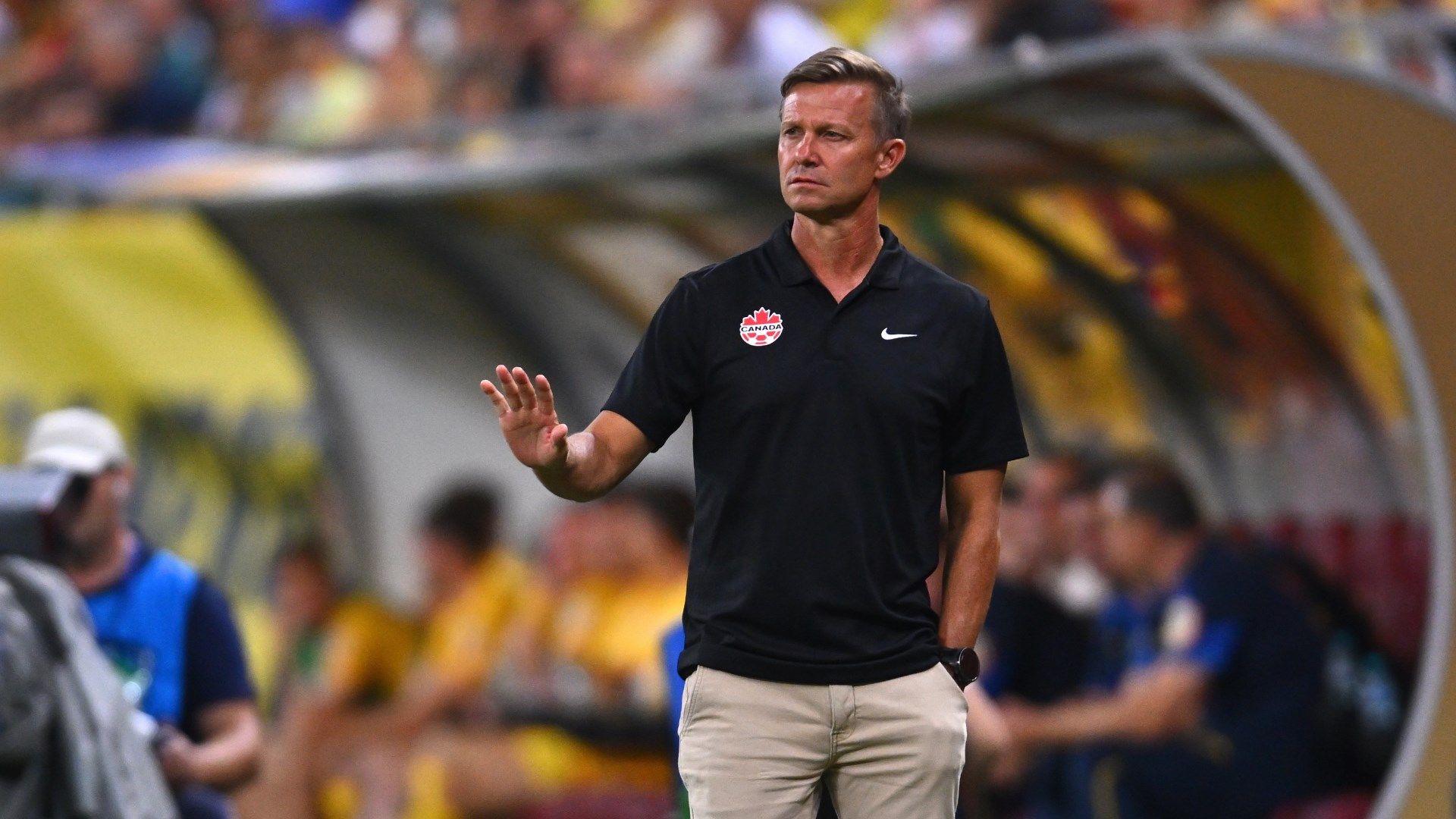
  • Jesse MarschGetty

    What is success to Canada?

    But what is success? It depends on who you ask.

    At the lowest level, it would be a draw, while others would say they need to advance from the group stage. Some would say that's aiming too low and that a Group B victory and a place in the round of 32 in Vancouver should be the expectation. There are even those who dream of a quarterfinal appearance after winning the group and two knockout-stage games in Vancouver.

    "We can go on a deep run," says Luc de Fougerolles, a 20-year-old Fulham center back heading to his first World Cup after his first season of senior men's soccer in Belgium on loan with FCV Dender. "Maybe I have a goal in my head, but I think every player that goes to the World Cup wants to win it."

    While Canada isn't likely to win, the loose definition of success plays in its favor. Making it out of the group and playing a knockout-stage game, even in the expanded 48-team tournament, would be monumental for the program. Winning a game like that would change the sport forever.

    "I want people to be like, yeah, do you guys remember that Canadian team in 2026? Oh my god, what a team, that type of sh--," added David. "That's my goal at least, I want us to put on a show."

    How many acts that show lasts might not matter too much. At least, it isn't the be-all and end-all as it is for the other co-hosts, as Canada have committed to Marsch's leadership through the 2030 World Cup cycle with the hope of continued progression.

    "They all understand how important the World Cup is in general," injured captain Alphonso Davies said, although he remains in doubt for the opening game. "There's not much I can say to motivate them more. Them just being in the World Cup and being able to play in front of the country and for the country, it's motivation enough."

  • Canada v Uzbekistan - International FriendlyGetty Images Sport

    Is Canada built to win?

    With nine players named to the 26-man roster dealing with some type of injury over the last several months, there is doubt about just how durable Canada can be at the World Cup. However, if the recent win over Uzbekistan offered anything, it's that the team's DNA are coming together at the right time, albeit at the last minute.

    Canada are defined by counterpressing in a 4-4-2, with wingers overlapping with the fullbacks to create attacking overloads. In the middle of the park, a double pivot controls the game, with one striker often dropping back to expose midfield spaces and drive into them, creating chances for wide players or central runs. At the back, the team has been as defensively stout as any under Marsch, allowing 18 goals in 30 matches.

    "We have good balance in this squad," Marsch said after the Uzbekistan win. "There had been a lot of talk about how we haven't scored goals from the run of play, understandably, because we hadn't, but I kept saying the goals are coming, because I know that we have a lot of firepower."

    "We got another clean sheet, and it's only three goals we've given up in 10 games, and that's an incredible record. If we can continue at that pace, we give ourselves a chance to have a good World Cup."

    The team, despite its injury concerns and missing star talents at times, has been consistent, with goalscoring the only real weak point. That seems to be turning a corner. This summer, there's hope that the deeper Canada goes, the healthier and stronger they can become.

  • ENJOYED THIS STORY?

    Add GOAL.com as a preferred source on Google to see more of our reporting

  • Canada v Uzbekistan - International FriendlyGetty Images Sport

    The political power of the World Cup

    While the soccer aspect is paramount for Canada, hosting the World Cup is also a vital exercise during a tense period in North American trade, as Canada seeks to diversify amid a less amicable relationship with their southern neighbor and largest trading partner.

    The World Cup keeps Canada, a prominent G7 member, in the global spotlight as a form of soft power. Despite the tournament being unlikely to pay off financially, the 13 games in Toronto and Vancouver are costing $1.3 billion in taxpayer money. The opportunity to showcase the country to the world, much like three previous Olympics, is vital to national pride and identity in the global marketplace, especially given the influence of neighboring U.S. culture.

    It's unlikely the tournament will leave a significant physical legacy. There have been minimal infrastructure projects tied to it, and it's fair to argue that the money could have been spent elsewhere. Yet, as reasonable as that argument may be, do governments not also have a role in supporting things that inspire people and capture the imagination? The World Cup is one of those rare events, and Canada has the opportunity to host it.

    So why not embrace it for what it is: an opportunity to bring people together and put Canada back on the world stage? Promise David, at least, said he wants it to be a show. Canada now hopes it's a good one.