If Barcelona are a polished machine, then Real Madrid under Mourinho remain a project under construction.
The summer signings tell us exactly what the club wanted to do. Marc Cucurella, Ibrahima Konaté, Denzel Dumfries, Bernardo Silva and Yan Diomandé were among the most notable additions, while Endrick and Carlos Espí returned from their respective loan spells.
Real Madrid's final squad contains 26 players, though Mourinho prefers a tighter group of around 22.
That hands him something extremely valuable across a 38-match league season: the luxury of available options.
He has built a much stronger foundation in several key positions. Cucurella is not just another left-back rotating with Mendy. Given Mendy's physical problems, the Spaniard represents a clear upgrade, and Mourinho specifically insisted on signing him. His ability to defend robustly and contribute to possession also gives Real Madrid a more convincing option down the left.
Konaté, meanwhile, is the most interesting gamble. He was by no means perfect during his last season with Liverpool, and his level became a subject of debate, but Mourinho is betting on the physical attributes that made him so effective alongside Virgil van Dijk.
The Frenchman gives Real Madrid a strong central defender on the right side, with pace in recovery and the ability to defend large spaces. That could prove crucial if Mourinho wants to push the full-backs forward. He started 36 matches in the Premier League last season, despite the inconsistency in his level.
Dumfries, meanwhile, is perhaps the signing with the greatest attacking potential. He scored five goals and provided two assists in Serie A and the Champions League last season, but his 2024-2025 campaign was far more productive: 11 goals and five assists across the two competitions. His arrival gives Mourinho a physically strong player in the wide position, capable of creating danger from the right.
One clear problem remains. Real Madrid did not sign Rodri.
This could become one of the decisive details of the season. Barcelona have strengthened the very position that Real Madrid perhaps most needed to reinforce.
Rodri's arrival gives Flick a top-class defensive midfielder and an exceptional organiser of possession, whereas Real Madrid rely on Valverde, Tchouaméni and their other options in midfield.
Mourinho may need to compensate for this tactically, which explains the focus on organisation in Real Madrid's performances during the early part of the season.
Against Inter, he was particularly interested in what happens when his side loses its defensive edge. He praised the moments in which Real Madrid maintained their cohesion, and acknowledged that the match became more difficult when the team stopped controlling the spaces.
Here lies the biggest point of intersection between Mourinho and Flick. Flick wants Barcelona to play with intensity and ferocity. Mourinho wants Real Madrid to determine when that ferocity is necessary.
The latter approach could prove extremely effective across a title race, and it could also protect Real Madrid from their own attacking stars.
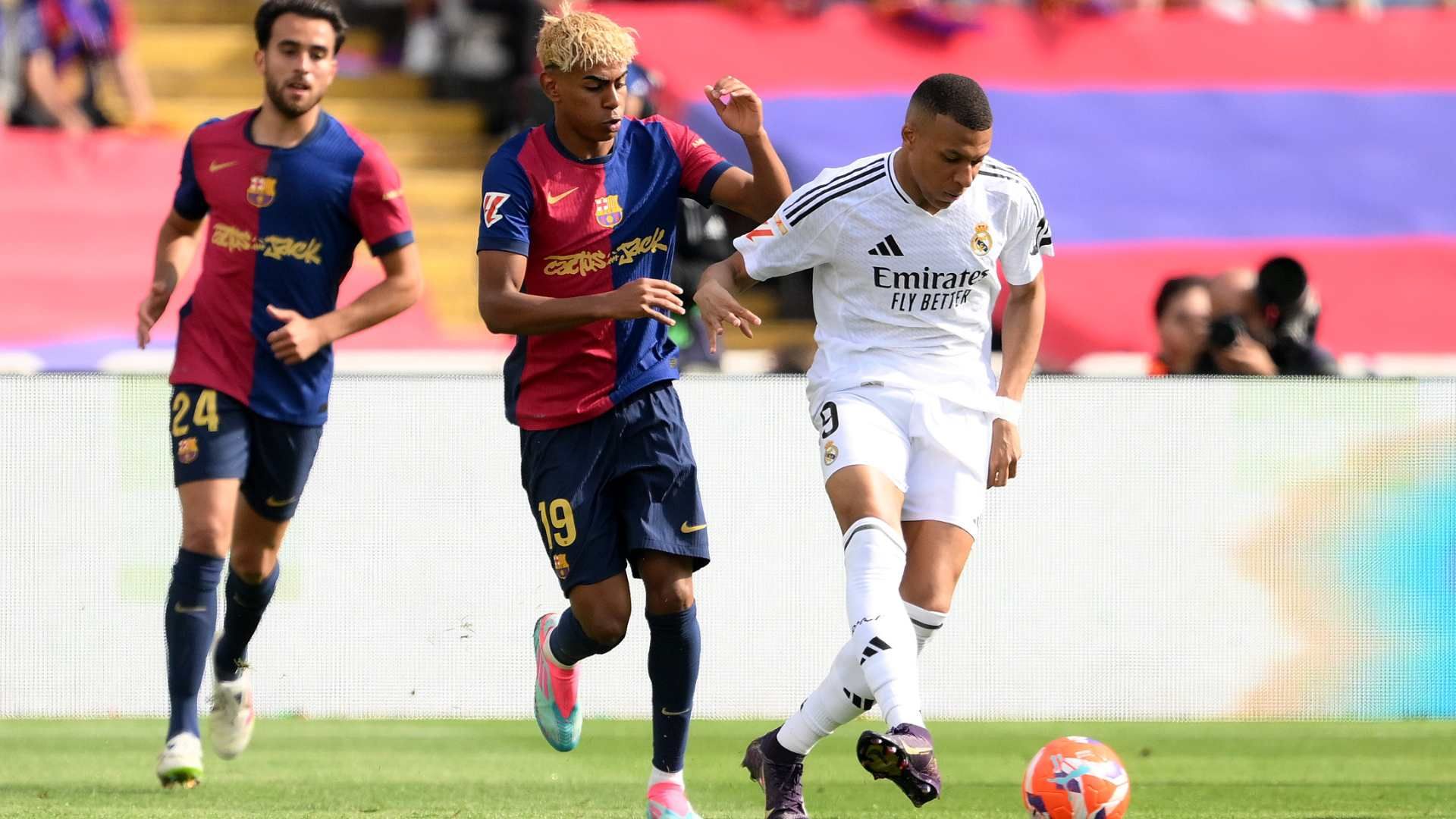
One obvious question surrounds Mourinho's team: how can he get Mbappé, Vinícius and Bellingham to coexist without sacrificing the defensive balance?
Mourinho has already begun to protect his stars publicly. He later defended Vinícius and Mbappé, insisting that players who score goals and work for the team should not automatically become scapegoats when the level of performance drops.


.jpg?auto=webp&format=pjpg&width=3840&quality=60)

