The South African coach has finally addressed the long-standing rumours surrounding Durban City FC chairman and his alleged tendency to interfere with tactical decisions. The former Maritzburg United boss, who is now making waves in Morocco with Raja Casablanca, has provided a rare glimpse into the inner workings of one of South Africa's most prominent football administrators.
The former Masandawana head coach has welcomed the intense title race currently unfolding in the Premier Soccer League, insisting that the neck-and-neck battle between the Brazilians and Buccaneers is exactly what South African football needs. The three-time CAF Champions League winner believes the unpredictability of the current campaign has breathed new life into the domestic game as the season reaches its climax.
The 44-year-old South African coach of the Green Eagles was left fuming after his side's title ambitions took a massive hit during a chaotic "Classico" against the CAF Champions League finalists. The match was overshadowed by scenes of violence in the stands and a series of officiating decisions that have sparked a heated debate across the Moroccan top flight.
South Africa is among the 16 teams that made it out of the initial group stage after finishing second in their pool, which had the seven-time champions Egypt who eventually topped it, alongside COSAFA duo Zimbabwe and Angola, who were eliminated. Former Buccaneers tactician hopes to see his country in the final but has branded another team as the 'most dangerous.'
The 44‑year‑old coach took charge of Raja in September and has since collected 15 points from seven Botola Pro matches, lifting the club into fourth place. With Raja sitting five points behind leaders Wydad Athletic Club but holding a game in hand, Davids now turns his focus to the January window to strengthen his squad.
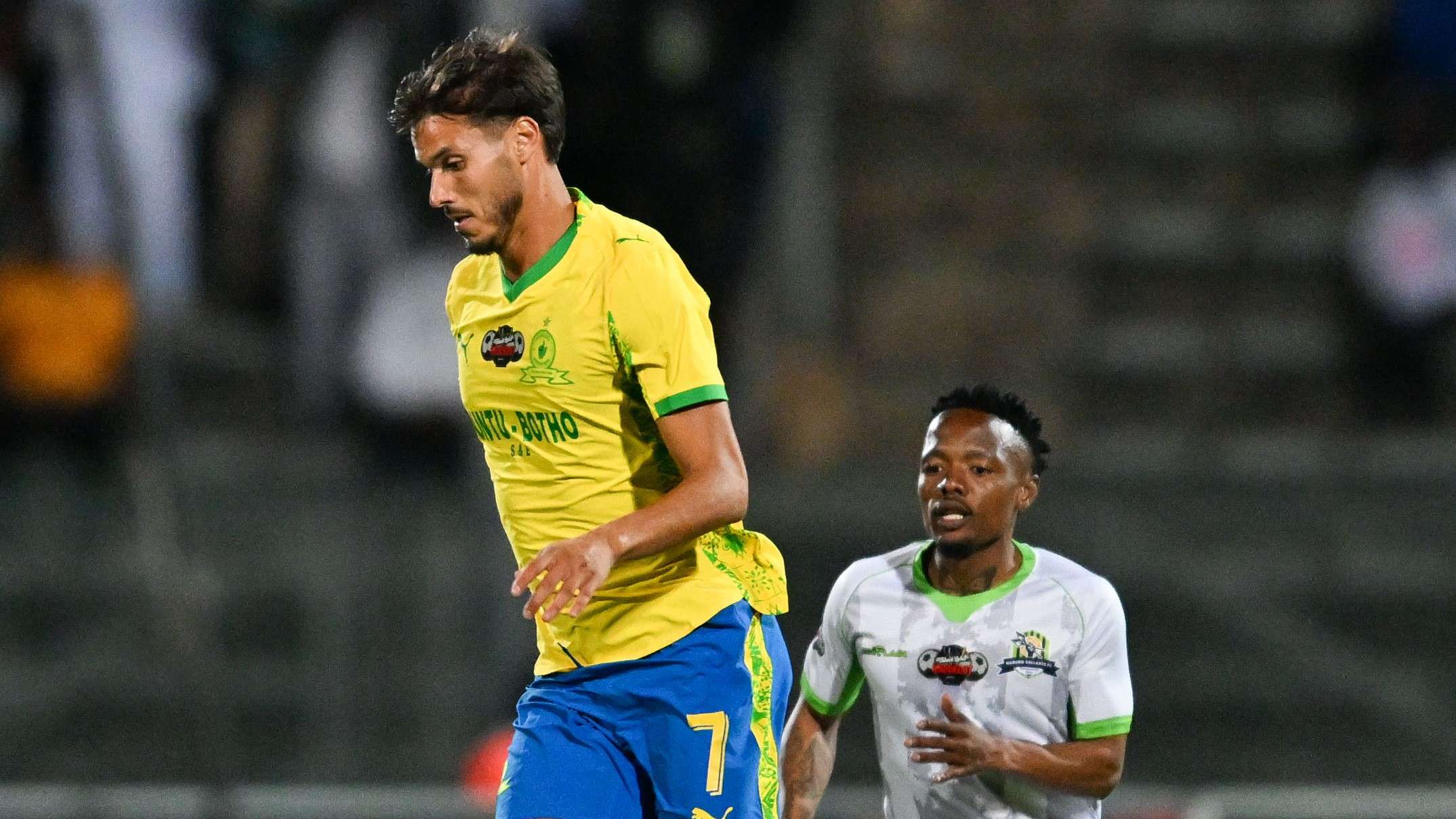
The former Mamelodi Sundowns attacker is a regular starter for the Moroccan giants, where he is one of their key players. After his impressive performances at the 2025 FIFA Club World Cup, the 32-year-old continues with his good form for the Casablanca side.
Manchester United, often simply referred to as "United," are one of the most iconic and successful football clubs in the world, based in Old Trafford, Greater Manchester, England. The club was founded as Newton Heath LYR Football Club in 1878 by the Lancashire and Yorkshire Railway depot at Newton Heath. The team changed its name to Manchester United in 1902 and moved to its current home, Old Trafford, in 1910.
Famous players
Manchester United have been home to some of the greatest footballers in history. Sir Bobby Charlton, a World Cup winner with England in 1966, is arguably the most iconic figure in the club's history. Other legendary players include George Best, known for his flair and skill, and Eric Cantona, who brought a winning mentality to the club during the 1990s. More recent stars like Cristiano Ronaldo, Wayne Rooney, and Paul Scholes have also contributed significantly to the club's success.
Honours
Manchester United are one of the most decorated clubs in English football, having won a record 20 Premier League titles (formerly the First Division). They have also lifted the FA Cup 12 times, the League Cup five times, and the UEFA Champions League three times. The club's dominance in English football was particularly evident during the 1990s and early 2000s under manager Sir Alex Ferguson.
Managers
Sir Alex Ferguson is undoubtedly the most successful manager in Manchester United's history. He spent 26 years at the club, leading them to an unprecedented era of success. Before Ferguson, managers like Matt Busby and Wilf McGuinness played crucial roles in shaping the club's identity. More recent managers, including David Moyes, Louis van Gaal, and José Mourinho, have faced the challenge of maintaining the club's high standards.
Stadium
Old Trafford, often referred to as the "Theatre of Dreams," is one of the most famous stadiums in the world. With a capacity of roughly 75,000, it is among the largest football stadiums in the United Kingdom. The stadium has hosted numerous major matches, including UEFA Champions League finals and FIFA World Cup matches.
Location
Manchester United are based in the city of Manchester, which is located in the northwest of England. The club's home ground, Old Trafford, is situated in the Trafford borough. Manchester is a major industrial city with a rich footballing heritage.
Owners
In February 2024, British billionaire Sir Jim Ratcliffe's company, INEOS, acquired a significant 25% stake in Manchester United. This acquisition granted Ratcliffe sporting control over the club, placing him in a position to influence key decisions related to its operations.
Ratcliffe has already made a substantial financial commitment to Manchester United. His large investments demonstrate his dedication to the club's success and his willingness to provide the necessary resources for its growth.
Frequently asked questions
Quando è nata l'Atalanta?
L'Atalanta è nata il 17 ottobre 1907, fondata da alcuni studenti liceali con il nome Società Bergamasca di Ginnastica e Sports Atletici Atalanta. Fino al 1914 la squadra giocherà però solo partite amichevoli.
Chi è il presidente dell'Atalanta?
Antonio Percassi è il presidente dell'Atalanta dal 2010. Ex calciatore della Dea e del Cesena, è a a capo della holding Odissea SRL, di cui fanno parte marchi come KIKO.
Come si chiama lo stadio dell'Atalanta?
L'Atalanta gioca le proprie gare interne a Bergamo, al Gewiss Stadium. L'impianto della Dea è chiamato anche Stadio Atleti Azzurri d'Italia ed ospita la squadra dal 1928, anno della sua inaugurazione.
Perché si chiama Atalanta?
L'Atalanta prende il nome da Atalanta, eroina della mitologia greca esperta nella caccia. Nonostante venga chiamata Dea, Atalanta non era una divinità, ma una principessa figlia di Iaso, re dell'Arcadia.
Qual'è la capienza del Gewiss Stadium?
Il Gewiss Stadium, impianto dell'Atalanta, può ospitare 24.950 spettatori. Per un periodo l'impianto di Bergamo ha ospitato anche l'Albinoleffe e l'Alzano Virescit.
L'Atalanta ha mai vinto lo Scudetto?
L'Atalanta non ha mai vinto lo Scudetto. Il più importante risultato in un singolo campionato di Serie A è il terzo posto ottenuto dal 2018 al 2020, per tre annate consecutive.
Quante coppe europee ha vinto l'Atalanta?
L'Atalanta ha vinto una coppa europea per la prima volta nella primavera del 2024, ovvero l'Europa League. La Dea è stata poi battuta nell'estate successiva in finale di Supercoppa Europea.
Quanti trofei ha vinto l'Atalanta?
L'Atalanta ha vinto due trofei nella sua storia. Prima dell'Europa League del 2024, infatti, la Dea aveva conquistato la Coppa Italia del 1963.
Perché l'Atalanta gioca in nerazzurro?
L'Atalanta gioca inizialmente in bianconero, ma dopo la fusione con la Bergamasca, squadra bianco azzurra, si scelse un colore per squadra: nero dall'Atalanta e azzurro dalla Bergamasca.
Chi ha segnato più goal nella storia dell'Atalanta?
Cristiano Doni è il giocatore con più goal nella storia dell'Atalanta. Nel corso del periodo 1998-2003 e 2006-2012 l'ex centrocampista ha segnato 112 reti con la Dea.
Chi ha giocato più partite con l'Atalanta?
Giampaolo Bellini ha giocato 435 partite con la maglia dell'Atalanta. Tra Serie A e Coppa Italia ha siglato anche 12 goal nel periodo 1998-2016.
Come è soprannominata l'Atalanta?
Oltre a squadra nerazzurra e Dea, in passato l'Atalanta è stata chiamata anche la 'Regina delle provinciali', visto che si tratta dell'unica tra le principali squadre di Serie A non aver mai vinto lo Scudetto.
Da quando l'Atalanta non gioca in Serie B?
L'Atalanta ha giocato l'ultima volta in Serie B nel 2010/2011. Nella storia la Dea ha militato nella seconda serie 34 volte, ma anche in Serie C nel 1981/1982.
Perché l'Atalanta si chiama Dea?
L'Atalanta viene chiamata Dea in virtù del suo nome, che provenie dalla mitologia greca. In realtà, però, Atalanta non era una divinità, ma 'solamente' una principessa.
Perché i giocatori e i tifosi dell'Atalanta sono orobici?
I giocatori e i tifosi dell'Atalanta vengono chiamati orobici in virtù degli orobi, antica popolazione preromana alla quale viene attribuita l'origine di Bergamo e di Como.