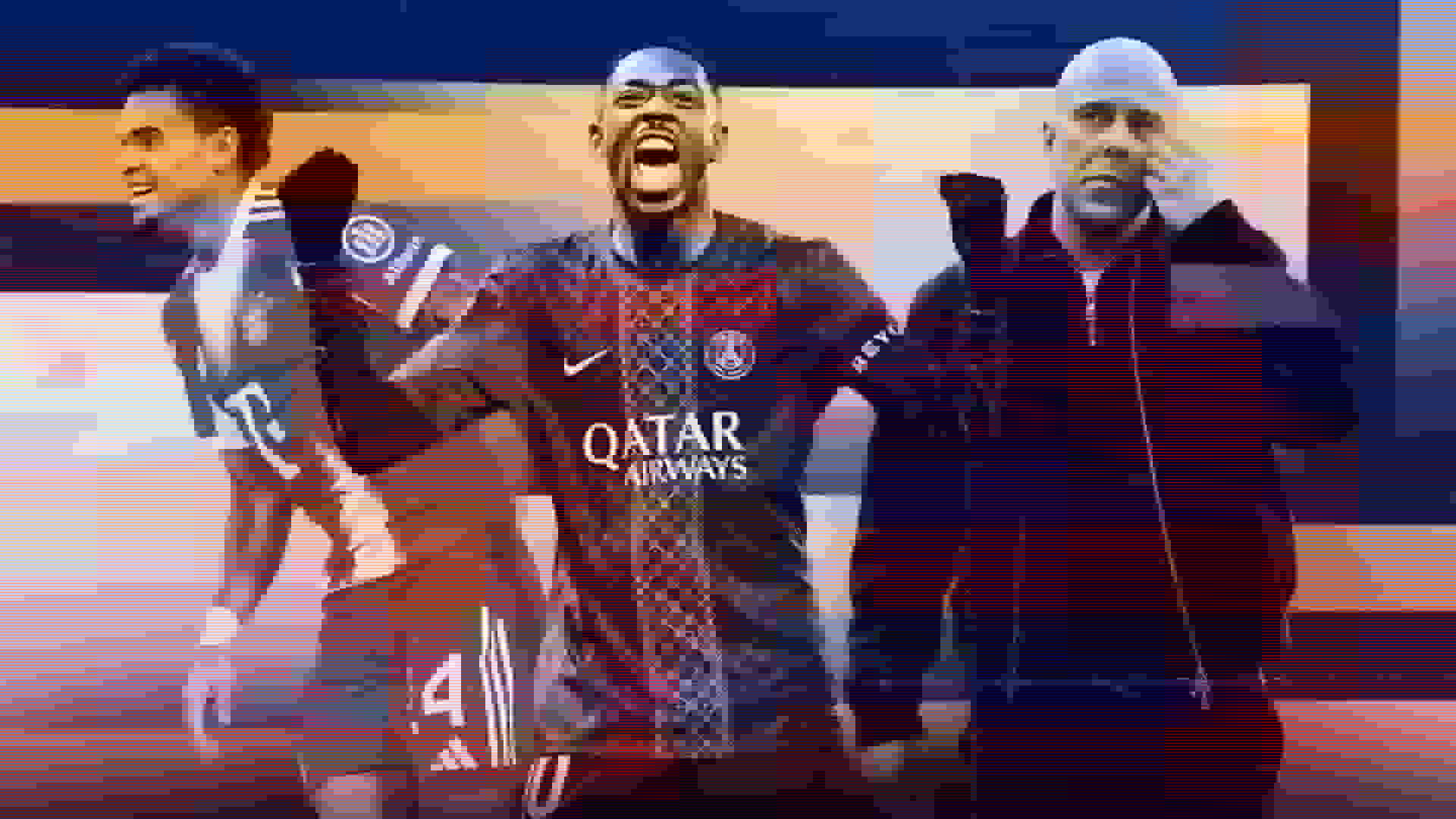
Words provided by Howard Akumiah, Fiifi Anaman, William Amofah and James Corbett.
 AFP
AFPDreams, shadows and a shortage of goals: why Ghana won’t win the World Cup
 Getty
GettyThe case for the defence
Let’s first restate the structural argument, because it remains true. As Otto Addo, the coach who took Ghana to this tournament and was sacked for his trouble, told our podcast before his dismissal: “There was no point zero, where all countries had the same chance to qualify for the World Cup.”
Colonialism, resource extraction and a transfer market in which just 76 cents of every $1,000 spent globally finds its way back to African clubs have left Ghana fighting an economic battle it cannot win.
The domestic league never recovered from the 2001 Accra Stadium disaster that killed 126 people and the stadium-going culture with them.
The academy system treats teenagers as what one Manchester City document infamously called “venture capital.”
Players who should be building understanding in Accra build it instead in Bournemouth, Tottenham and Leicester, for other people’s benefit.
None of that has been fixed. Most of it has got worse. Eight years after Anas Aremeyaw Anas’s Number 12 exposé toppled the GFA leadership, the association’s delegates voted last August to extend presidential term limits, clearing the path for Kurt Okraku to entrench himself in power.
FIFA not only waved it through; Gianni Infantino appointed Okraku to chair FIFA’s anti-racism committee.
Miguel Maduro, the former chairman of FIFA’s own governance committee, told us this is “an organization that has rules but does not have the rule of law”: rules applied selectively, as instruments of power.
Most Ghanaians, scarred by 2018, assume the worst of Okraku, of his CAF boss Patrice Motsepe and by extension of Infantino himself.
Why would anyone in that chain reform a system that put them there?
So yes: the odds are stacked, the game is broken and the people running Ghanaian football have given supporters little reason for trust.
All of that is real. None of it, though, explains away the football.
 Getty Images Sport
The case for the prosecution
Strip out the grievances and look at the team. Ghana have lost five of the last six matches and are without a win since last October. They have won just nine of their last thirty.
The decline stretches back the best part of a decade, bottoming out in the humiliation of failing to qualify for the 2025 AFCON, when they finished rock bottom of a group containing Angola, Niger and a Sudan side assembled from YouTube discoveries.
From 2008 to 2017 Ghana reached the semi-finals of every AFCON they entered. Now, with the tournament expanded to twenty-four teams, they couldn’t even get in.
The qualifying campaign for this World Cup briefly suggested a team reborn: top of the group, goals flowing, a “different face,” as Addo put it.
But watch those matches closely and the warning signs were everywhere. There was no recognisable philosophy, no clear strategy; players strung things together rather than executing a plan, and in the final third the team looked utterly bereft of ideas.
That Jordan Ayew kept stepping up with important goals felt more like a miracle than a product of coaching.
Then came Vienna. On 27 March, Ghana lost a friendly 5-1 to Austria, and within twenty-four hours Addo, whose win percentage stood at a dismal 36% from 22 games, was gone, sacked barely ten weeks before the tournament at a reported cost of $500,000.
In his place, with around fifty days to prepare, came 73-year-old Carlos Queiroz, a man of genuine pedigree (Real Madrid, Ferguson’s Manchester United, eight national teams) who promptly declared Ghana “the biggest challenge of my entire career.” Given that his CV includes dragging Iran to consecutive World Cups, that is not a compliment.
And here is the heart of it: Ghana cannot score when it matters. Addo’s own post-mortem of the AFCON disaster was telling. Ghana, he insisted, created more big chances than almost anyone in qualifying, “but we couldn’t score a lot of goals... we missed a lot of chances, this is the fact.”
A team that generates chances and doesn’t convert them isn’t unlucky; over thirty games and a winless eight month streak, it is simply a bad team. World Cups are won by sides who put the ball in the net under pressure. Ghana, demonstrably, do not.
The talent, as ever, isn’t the issue, though even here the news is grim, with Mohammed Kudus, the team’s most gifted creator, ruled out through injury. Antoine Semenyo has been devastating in the Premier League. Leicester’s Abdul Fatawu, fast, clever and armed with an explosive shot, could be a candidate to be one of the tournament’s surprise stars. But good individuals do not make a good side, and this collection of players neither looks nor feels like a team.
Rate their impressiveness as a percentage and you would struggle to go beyond 30 or 40. Even Panama, the supposed banker, no longer looks safe, and without Kudus the question of where the goals come from grows only more pointed.
 Getty Images Entertainment
Priorities, as ever
What does look healthy is the money. Ghana’s qualification is worth around $12.5m, with players pocketing $100,000 each in appearance fees.
From the eyes of a TV audience grounded in Europe-based stars routinely earning such sums in a week, this doesn’t seem much, but place it in the context of a country where the entire domestic TV deal for the Ghana Premier League is worth that in a year, the sums are staggering.
The “football people,” as they are known in Ghana, are about to cash out.
The government, meanwhile, talked about spending over $9,000 per head flying some 800 fans to America, to the bafflement of a diaspora already there in their hundreds of thousands (Ghana’s Government belatedly walked back on the plan after protests).
Stonebwoy’s official World Cup song reportedly cost $20,000. In Ghanaian football, the celebration is always better funded than the preparation.
Expectations have been recalibrated accordingly. After 2010’s quarter-final high, Ghana went to 2014 and 2022 targeting the last eight and twice failed to escape the group.
This time the stated ambition is merely survival to the knockout rounds, and in a bloated 48-team tournament even this diminished team will probably manage it. That, realistically, is the ceiling.
Queiroz likes to quote “the most special man he ever met”. Nelson Mandela, he says, told him: “Carlos, we never lose. We win or we learn.”
It is a beautiful philosophy, and over the coming weeks Ghana will get to live it. They will not win. They will learn, again, that structural injustice and rotten governance are only part of the story, and that no amount of grievance, however legitimate, puts the ball in the net.
Until somebody fixes the goalscoring, the dreams will keep losing to the shadows.
ENJOYED THIS STORY?
Add GOAL.com as a preferred source on Google to see more of our reporting