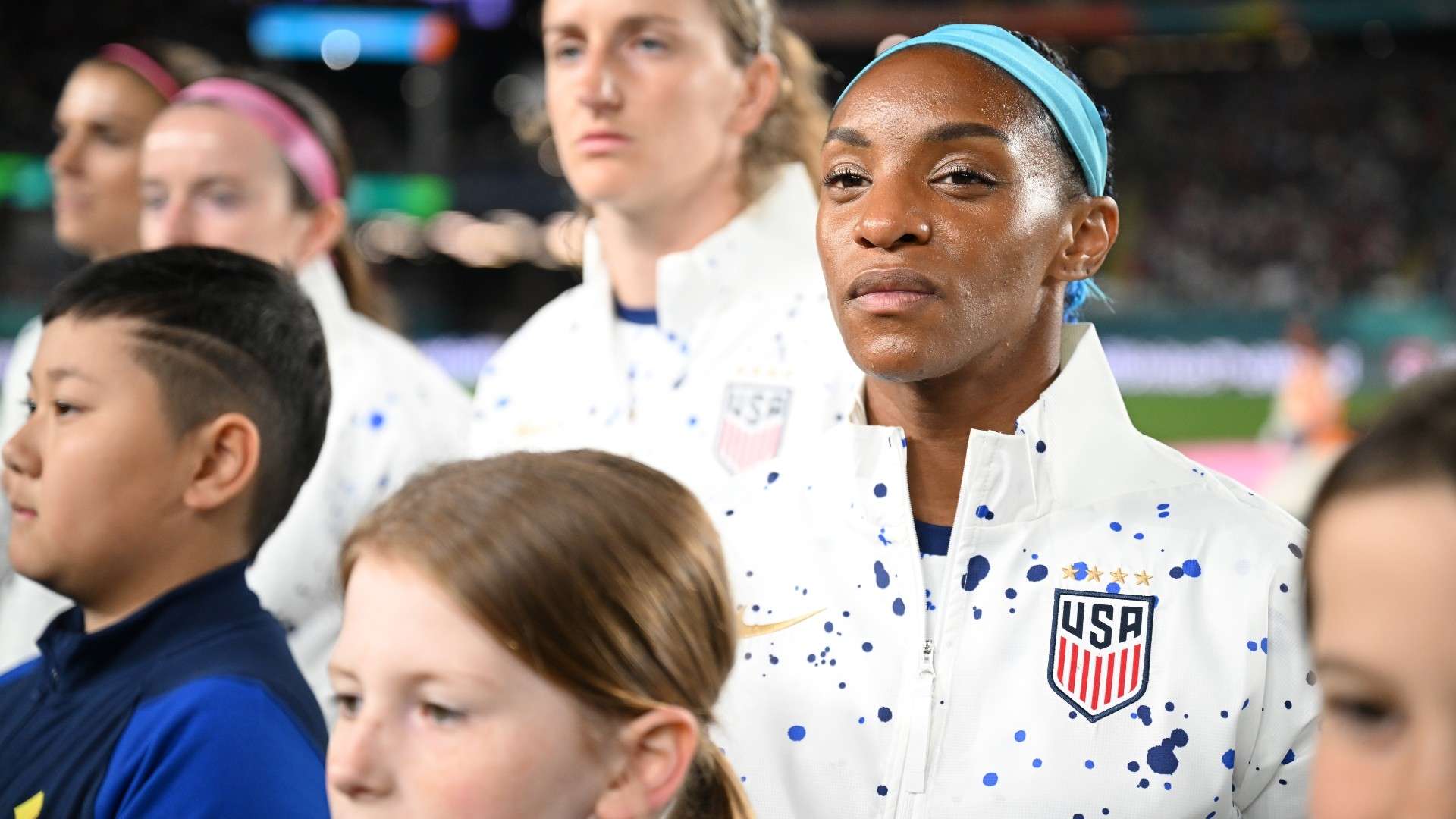
USWNT Black next generationGetty/GOAL

'We're here to thrive' - Sophia Wilson and Crystal Dunn on the USWNT's rising generation of Black stars, the impact they'll make and how they can lean on each other to change the world

The U.S. women's national team means so much to so many people. It's more than just a national soccer team -- it's an institution that represents hope, equality, strength, power, and success... all rolled into one.

But for decades, it didn't necessarily look like the people it represented. Like much of high-level women's soccer, there was a lack of diversity at the top of the American game for years.

That's changed now. The new generation of USWNT stars is led by a group of rising, Black up-and-comers, determined to change the game for those after them. They know that they embody those values mentioned above, but they also represent much more.

NOTE: This story was originally published during Black History Month in 2024.

  • 'Representation does matter'

    "I think it's definitely something we and others are aware of," USWNT star Sophia Wilson tells GOAL. "I think it's a major shift in what this team has always been and I think it's a really good thing because I think representation does matter.

    "For all the young, women and men and kids and girls and boys of color who have a dream and who want to, whether it's to be on this team or whatever their dream is, I think it's important for them to see people who look like them doing that."

    Smith doesn't have to fight these battles alone, though. Crystal Dunn, one of the team's veteran leaders, was a trailblazer before her. From battling stereotypes to changing the way the program thinks about photoshoots, making sure there's more representation in the team's content, Dunn has always approached that national team knowing the type of change she can inspire.

    And now, as she looks at the generation following behind her, she sees more change coming. A new USWNT is rising, and it's only just beginning.

    "I think for a long time," Dunn tells GOAL, "across all industries, it's not even just women's soccer, as a black woman, we feel like, 'Oh, we're here to just survive this environment', And I'm like, 'No!' We should be here to thrive in this environment and not just be that token black girl that's just like, 'Oh yay, they let you in!' We deserve to feel like we're impactful, that we are gatekeepers, and that we are a vital part of this. We need to continue to push that narrative that we're here to really eat and we're here to really thrive in these environments."

    As part of Black History Month, GOAL spoke to both Wilson and Dunn about their experiences as young African-American women in soccer, the moments that defined them, and how this new generation of USWNT stars can lean on each other to alter things forever.

  • Advertisement
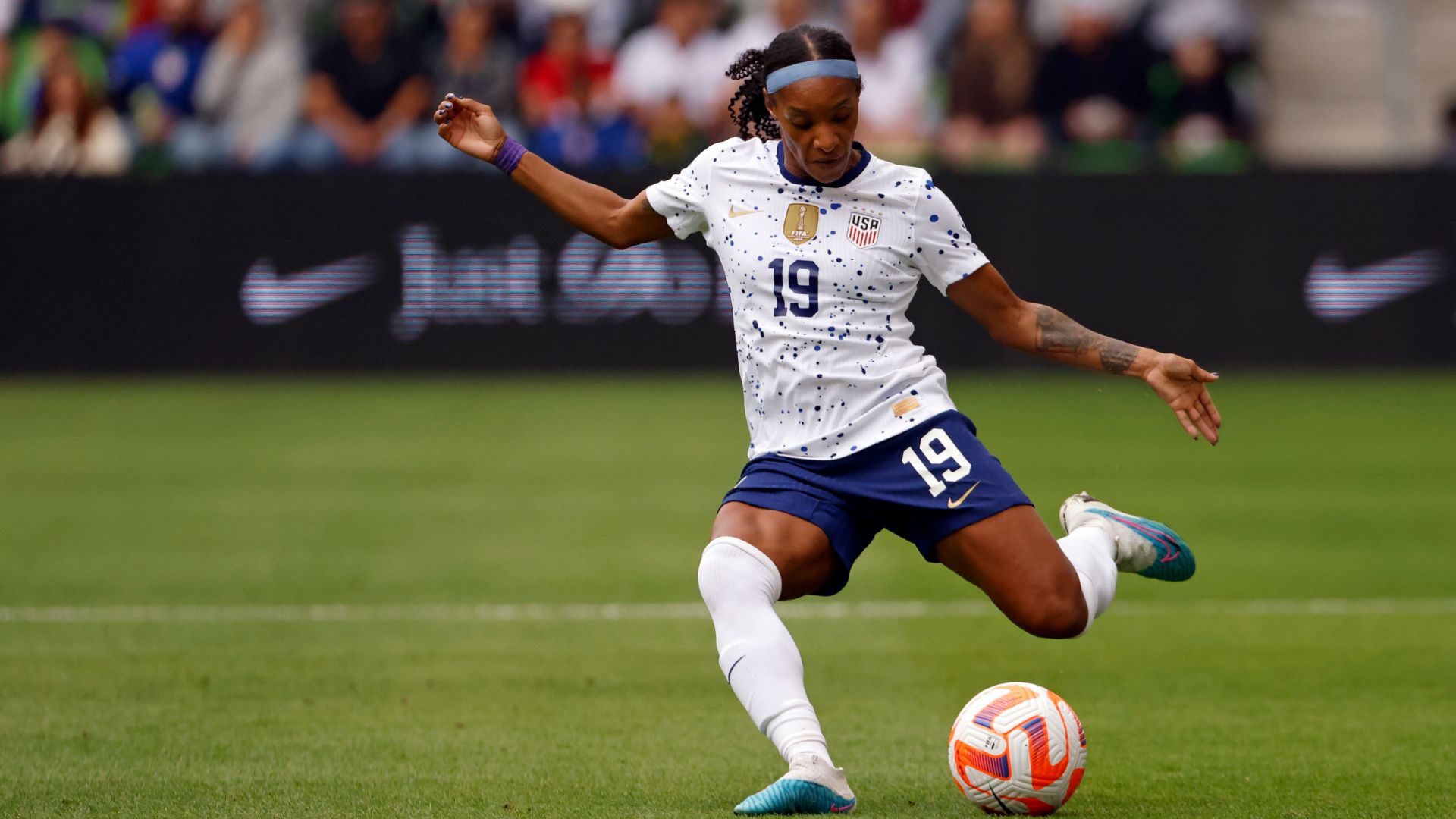
  • Crystal Dunn USWNT 2023Getty Images

    'Where are all the black girls?'

    Wilson's story so far, the beginnings of which will feel familiar for many African-American soccer players, is quite extraordinary.

    "I grew up in a pretty predominantly white area," Wilson tells GOAL, "so where I went to school, the teams that I played on growing up were predominantly white. I was usually one of very few Black players and that was kind of the case throughout my childhood. Even when I changed clubs and was driving down to Denver, it was still the case. I wasn't paying a lot of attention to that, but I would notice it. It would make me wonder 'Why?'. Like, where were all the Black girls? Where were the young Black girls who wanted to play soccer?"

    At one point, Dunn, like Wilson, was one of those young Black girls, and she also rarely encountered Black teammates or opponents on Long Island during her youth. For many young, Black players, that's enough of a reason to step away.

    All too often, soccer is labeled as a "white" or "Hispanic" sport, one that hasn't always been welcoming or available to young Black players. It was very possible someone like Dunn could be convinced to focus on other activities. Dunn, though, is thankful that she had some advocates standing behind her: her parents.

    "At a young age, I did realize that there weren't many in the sport that looked like me," Dunn tells GOAL. "Sometimes, I was the only Black player on the entire field. I was pretty young when I realized. My parents, I would say, did an amazing job of just kind of putting it on my radar but not also making me feel like 'Oh, yeah, like this sport may not be for you because many of us don't play it'. I think they were very much like, 'I want you to be able to see things, keep enjoying it, keep loving it'. I think that's really important, especially as parents, to just educate our kids but, at the same time, always support their dreams. I think I was very fortunate to have parents that really supported mine."

  • The need for role models

    The easiest way to draw someone into a sport, or any activity really, is to give them someone to look up to. Role models are important and, for years, young Black girls had few that looked like them playing at the highest levels of soccer.

    There were plenty out there in other sports. Serena Williams inspired millions in tennis, as have Naomi Osaka and Coco Gauff in modern times. Simone Biles is a history-maker in gymnastics, while the likes of Lisa Leslie, Sheryl Swoopes Candace Parker and Maya Moore have represented basketball at the highest level.

    In American soccer, Brianna Scurry is the first everyone points to, and for good reason. The legendary 1999 World Cup goalkeeper captured the hearts of millions during her career.

    Dunn, though, points to Williams as the player she saw herself in. She even wore Williams' name on the back of her jersey back in 2019 when players were given the chance to honor influential women in their lives.

    "To me, Serena was somebody that looked like me," Dunn says, "and I was able to really connect visually with who she was and everything that she was about as a woman of color in tennis. Tennis was one of those sports that, for a long time, had hardly any Black people in it. I kind of feel like I resonated with her and everything that she went through in her career and was able to follow her journey and be able to be like, 'Okay she's the one who just stuck with it and, therefore, I'm gonna just stick with it'."

    We all know how that went for Dunn. She went on to become a legendary figure herself, having amassed 141 caps and counting. For years, though, she was one of the only Black players in the USWNT setup. For example, at the 2016 Olympics, her first major tournament, Dunn was one of just three Black players in the squad.

    Eight years younger than Dunn, Wilson remembers watching her now-teammate help set the tone with those national teams. She recalls seeing the likes of Christen Press, Jess McDonald and Adrianna Franch, too.

    Wilson, like Dunn, idolized Williams but, on the soccer side, she was blessed with a few more role models to look up to before breaking into the team.

    "I would say Crystal's definitely one of them," Smith said when asked about her role models. "I think I was fortunate to grow up in a time where there were a few black players that played for the USWNT but still not very many.

    "I am a big Serena fan too. I grew up always watching her and just learning from her and wanting to be her but in my sport. I would say those were the big ones. I'm also a big Marta fan, too. I wanted to emulate her game in a way because she was always crafty, always trying new and different things and I like trying new and different things. I would say those three, for sure."

  • Small things, huge difference

    It seems like such a small thing for those who haven't lived it, but, for Dunn, it was something that really resonated with her.

    She had just made her dream come true by earning her maiden USWNT call-up. Coming up was a photoshoot and, as part of that, all the members of the team were put through hair and makeup. Dunn, though, quickly realized that the setup wasn't going to work for her. There was no one there that knew how to work with Black hair or skin. Dunn had to go to the bathroom and get herself ready. She was the only one there that knew.

    It's the type of thing that makes someone feel different, if not unwelcome. And, for Dunn, it made her question herself a bit. Was this a fight worth picking? How could she change this for the better and make sure that the next generation of Black girls wouldn't have to do what she did to have their hair and skin make them feel confident and comfortable?

    "When you're one of very few of anything in an environment, I feel like you're constantly battling and figuring out your battles," Dunn says. "Sometimes you can't always fight everything. Sometimes you need to just do it and down the road say that you actually had a problem with it or that you would like this resolved or fixed or whatever.

    "That was what my earlier years were all about. I felt like I was the only one and felt like 'Okay, if I'm the only one with this, maybe this is not a big deal'. That comes with being younger. When you're younger, you don't feel like you have that power, that voice to be able to raise any concerns that you may have, no matter how big or small. When you're one of the only few, you have to navigate your battles.

    "I think, outside looking in, it's easy to be like, 'Oh, I didn't even think about that', but yeah, that's something that you have to live every time you come into camp and there's a photo shoot or a picture or anything. I'd have to just say that I'm going to go just do my own and hopefully look good with all the photos being taken. Everyone's getting their makeup done professionally, so I always felt like I'd never look like the best version of myself. It's just little things like that that I had to navigate."

    Wilson, meanwhile, says she's had similar experiences throughout her career

    "Crystal's example is definitely true," Smith says. "I think even now, it's kind of about going out of the way to make sure that there's someone who knows how to do a Black person's hair for photo shoots. If girls want braids or makeup, it does seem like you always had to request that and it's not just something that's been thought of in the same context when you're hiring hair and makeup. That's just a requirement."

  • Wilson makes history

    Wilson is still somewhat astounded by it. It couldn't be true, could it? She hadn't even fathomed it until she was told after the fact.

    In 2022, the Portland Thorns star was named U.S. Soccer's Female Player of the Year. The award came after a breakout campaign that saw her win the NWSL MVP award and an NWSL title on the club side to go with an 11-goal campaign for the Stars and Stripes. That year, she went from prospect to star, becoming the first Black woman to win the award.

    "I honestly had no idea until someone told me when I won that that was the case," Smith says. "I think it was a shock to me, for sure, because there have been so many amazing, talented, athletes on this team that came before me who are Black, and it is unfortunate that it took this long for that to happen.

    "I think, for me, being the first one to win that award, it's tough, but it's also a step forward in the right direction and I hope that that's the future and that there are more and more Black women and Black players on this team to get the recognition that they deserve."

    She was joined by Naomi Girma in that club just one year later, as the USWNT defender became the second Black woman to claim the award in 2023.

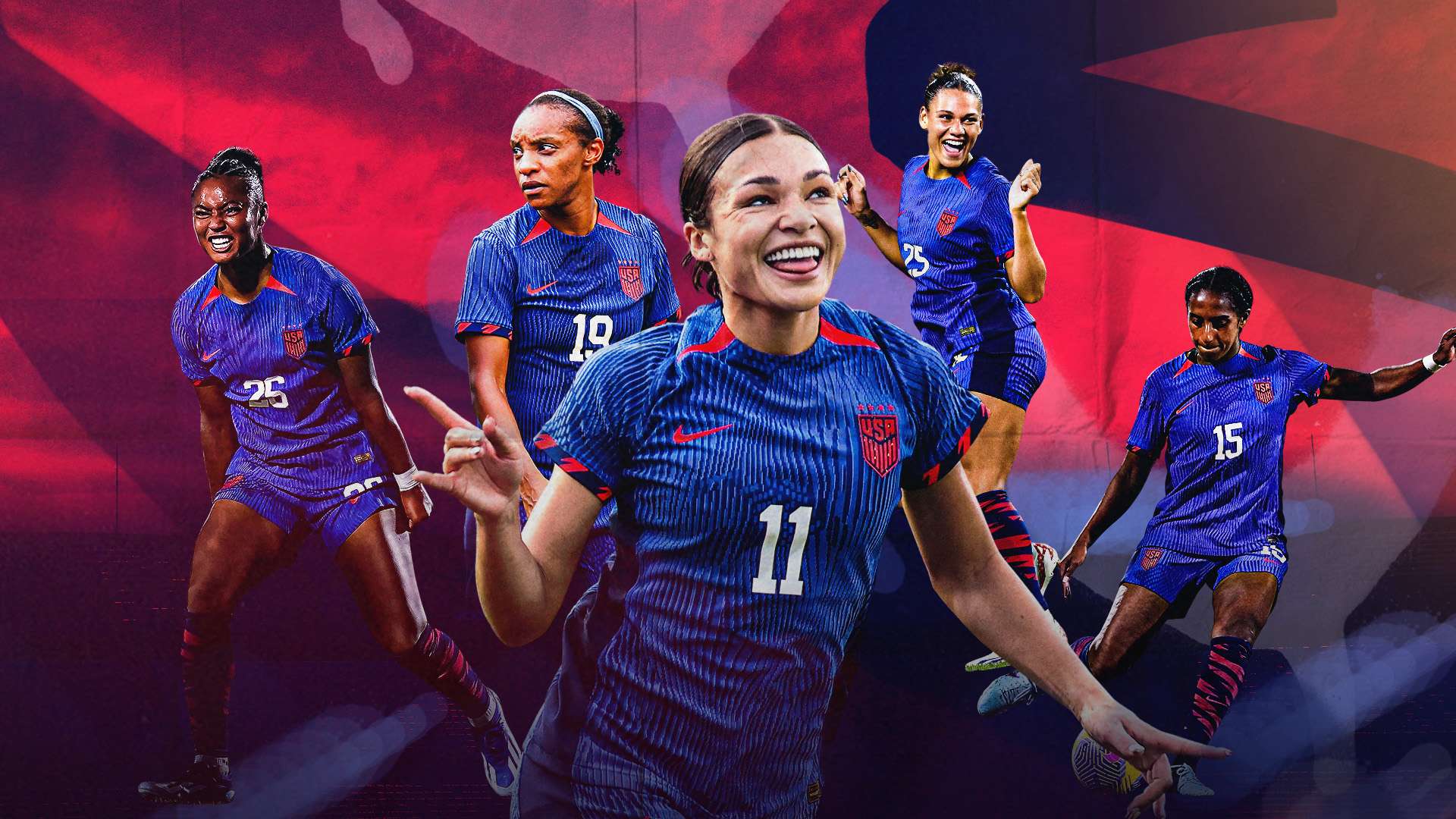
    Since her breakout campaign, Wilson has arguably emerged as the next face of the USWNT. In the lead-up to the World Cup and the Olympics, it was Smith's face on billboards and in commercials. Rather quickly, the now-23-year-old striker went from being a rookie to a history-maker, leading her team to an Olympic gold medal alongside Trinity Rodman and Mallory Swanson in the attack. All three have become household names. All three are also Black women.

    "I think it's a really awesome thing that I get to kind of be seen as a role model," she said. "That's something that I always pride myself in. That's a big reason why I do what I do because I want to inspire younger generations to have big dreams and not ever think that any goal is too big.

    "I'm getting the recognition through my play but, when it comes to things off the field, if it's a commercial, if it's a sponsorship, I think those things go a long way as well because people see those, kids see those, and, going back to representation, if a kid can see a person and a player who looks like them doing something like that, it just shows them that they can do that, too. At the end of the day, I think that's the most important thing and what a lot of us on this team hope to leave as our legacy."

  • Glad they have each other

    Smith is far from alone too. We mentioned Girma, Rodman and Swanson, but a quick look at the current USWNT player pool quickly reveals a new generation of young, Black stars ready to make a difference.

    The names we've mentioned are all regulars with the team but coming up behind them is a generation of girls ready to push them, many of whom happen to be Black. The Thompson sisters, Alyssa and Gisele, recently became the third set of siblings to appear in a USWNT match together. Jaedyn Shaw might just be this team's next big star. If not her, it might be Lily Yohannes, a player who looks ready to legitimately contribute despite being a teenager. Yazmeen Ryan and Michelle Cooper have made waves in the attack, as has Mia Fishel. You can add veteran Lynn Biyendolo to the mix, too, as she continues to set a tone for those following her.

    It's a massive shift from Dunn's early days, and it's not necessarily just including Black women. Sofia Huerta and Ashley Sanchez have spoken about lacking Mexican-American role models as well, with both going on to make the 2023 World Cup squad.

    At times, though, Dunn was the only Black woman on the field in major matches. That's not the case anymore.

    "I think it's really special," Wilson says. " I think a lot of us probably grew up in similar ways where we were one of the few Black people on our teams, and so to get to the highest level you can get to and to look around and have each other and see each other, I think it's a really special thing and something that I don't know that any of us had growing up. Having that now, it definitely is a really special thing. I think we have a really awesome group of people here and it's really fun to be a part of."

    The younger players in that group aren't going anywhere. Dunn, meanwhile, is settling into her role as elder statesman of the group. With three Olympics and two World Cup appearances to her name, she is now the veteran. And, thinking back on what it was like when she was Wilson or Girma's age, she can't help but feel proud of what she's seeing from the next generation.

    "We don't all have the same experiences," she says. "I can only imagine that they weren't always that comfortable in their environments through the course of their career and I think it really shows how resilient they all are. It's amazing. I feel like I'm almost like Mother Duck here! I'm so happy that they've found their way and found their voice and they found their image in the soccer world.

    "I'm also so proud that a lot of them came in together. I think it's given them kind of like this comfort coming into this. It's something that I kind of wish that I had when I came up: looking around and being like, 'Okay, there's a group and we're here!' I think when I see them all come in, I'm really happy that they are so close and they got in on the national team at similar times where they had each other to lean on and be able to talk things out and things like that. It's just really nice to have others you can lean on at the start of your career."

  • Crystal Dunn USWNTGetty

    Defying stereotypes

    At times, Dunn might have been too aware of it. Early in her career, she was determined to fight back against stereotypes. We've all heard them... "pace and power". Dunn, and every Black player playing at a high level, feels the need to prove they're more than that.

    "I've always been an advocate for women of color in this sport, and I think it's important that I leave this game better than when I found it and that's with everything about the way I play and my style of play," she says. " I try to give people a snapshot of what women of color can do in this sport. I've always been told that I'm fast, I'm athletic, and I'm like, 'Yeah, I can be those things, but don't mistake those qualities for all that I am'.

    "I think I've been a very versatile player throughout my career and I feel it's a very safe argument to say that I can play multiple positions because I'm athletic, and I have to remind people that most midfielders aren't the fastest players on their team! It's one of those things where I have to reiterate that women of color can be more. It doesn't mean that they don't possess those qualities, but don't be so quick to say that that's all that they are and all they can ever be."

    Dunn is quick to add that she thinks that begins at the youth level, where Black players, in particular, are often praised for their speed. For Dunn, it's about teaching players from an early age that they can be more than just athletes and letting them build that confidence until they reach the top.

    "I just hope that Black athletes can be recognized for their talent and how good of a soccer player they are, not just as an athlete," Smith adds. "I think that's something that oftentimes gets lost when talking about Black athletes. You always want to compliment their athleticism and their natural gifts that they have and we forget to acknowledge that they're technical and they're actually just really good at playing the game."

  • A bright future

    As if Dunn wasn't already determined to keep her national team spot, the rising group of young Black stars has only given her more of a reason to keep being a part of it all. Real change is happening, and Dunn's groundwork was vital in ushering in that change.

    She has no plans of going anywhere. Mother Duck is here to stay as the USWNT prepares for whatever's next, and she has so much to offer, not just on the field, but off of it.

    "I've always been motivated by what soccer has done for me versus 'Oh, I'm here to just be a soccer player'," Dunn begins. "I think I always carried myself in a way where I know that I represent a minority group. That doesn't feel like pressure to me. That just makes me more motivated to remain in this environment for as long as possible so that I can continue doing good work in this environment and be able to leave this team in a better place.

    "I've never really let it get to me that I'm like, 'Oh, I may be one of the few on this team, that's so much pressure', I don't really see it that way. I see it as an opportunity to be like, 'Yeah, I get to put on display, me as a woman of color what we can do in this sport and what we can portray to others."

    Wilson hopes this is all just the beginning. Her biggest hope is to say the barriers that prevent so many kids from playing continue to be removed. The pay-for-play model, she reiterates, keeps so many young players out. How many Sophia Wilsons out there were deterred, for one reason or another, before they ever really had a chance?

    Wilson and her teammates know that they represent so much. The new generation, one that will give young boys and girls role models that they didn't necessarily have growing up. They also know they represent hope, of what can happen for a young player of any background with a lot of hard work and a little bit of luck.

    "I think a big part of it for a long time is just how hard it is and how expensive it is to have access to a good club team, to develop your game at a young age, to go play in tournaments where you get seen by U.S. Soccer scouts or college coaches," Smith says. "I think that's always been something that isn't available for everybody, unfortunately. The players who don't have resources or access to that kind of development growing up, I think that's where it goes wrong and that's where we've missed out on some of those players. I think, hopefully, those things are changing and it's getting easier.

    "It really has always been about just finding the best players. The best players get the call-up and to see this many black players getting called up to be on this team, it really is such a cool and powerful thing."