+18 or +21, depending on state | Commercial Content | T&C's Apply | Play Responsibly | Publishing Principles
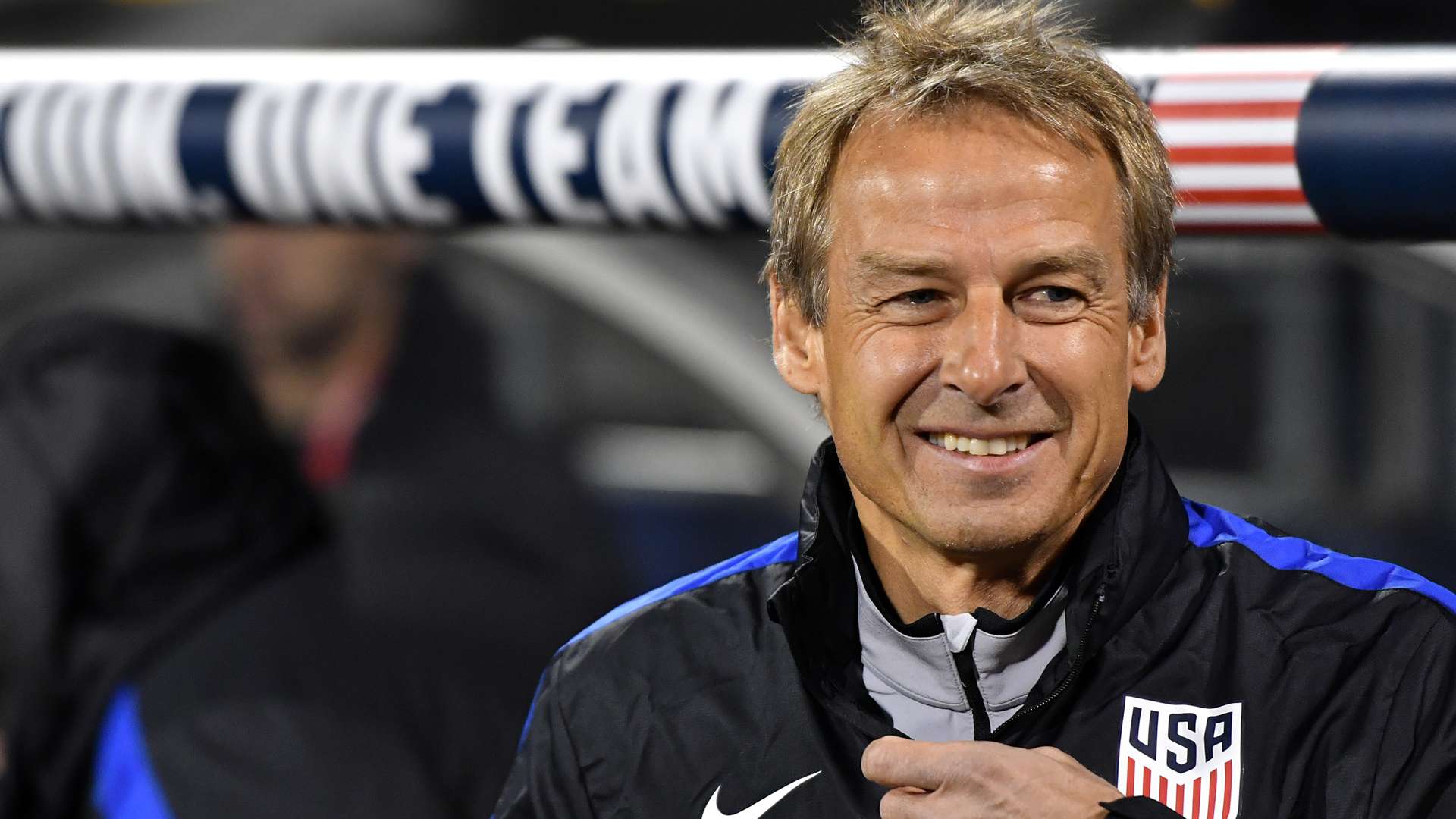
Jurgen Klinsmann and Mauricio PochettinoGetty Images

'Massive appointment' - Jurgen Klinsmann hails Mauricio Pochettino as 'fantastic' for the USMNT, so can the new coach learn anything from his predecessor?

Even with the month-long buildup, there was still palpable excitement when American soccer finally got their man, and Mauricio Pochettino was announced as the new U.S. men's national team coach in mid-September. The USMNT needed a spark, especially after the Copa America failure, and Pochettino seemed to be exactly the right name at exactly the right time.

Pochettino isn't the first big swing this program has taken, of course. More than a decade before Pochettino arrived in New York for an glitzy introductory news conference, Jurgen Klinsmann found himself in the very same situation, explaining his vision for changing American soccer.

In some ways, those news conferences are where their similarities end, aside from a Tottenham connection. The USMNT's two most famous head coaching hires are two very different people brought in to do two very different jobs at two very different times.

When hired in 2011, Klinsmann was cast as the dreamer and the visionary. Pochettino, on the contrary, is the pragmatist brought on for the sole purpose of achieving results, with the 2026 World Cup on the horizon.

Their approaches, mindsets and resumes are entirely different. So, too, is the USMNT situation they inherited. Klinsmann, like everyone else who follows American soccer, will be watching on to see how Pochettino fares. And like many other observers and fans alike, he's excited about Pochettini's arrival.

"I think he is a fantastic appointment," Klinsmann told ESPN. "I think he lifts the mood with all the soccer fans in this country, because, obviously, he has experience on the highest level. He played the game himself, so he can show the players a bit where he comes from as a player. But then also look at that resume he has as a manager, being in different parts of the world, having a lot of experience, and having a good idea also what it means on the Hispanic side of things, which is a big part in the United States.

"I think it's a massive appointment. It's exciting. I'm really thrilled about it and keeping my fingers crossed for him."

How does Pochettino compare to Klinsmann? How do they contrast? And what overlap will there be in how they approach their time as USMNT boss? GOAL takes a look

  • Jurgen Klinsmann USA Copa America 06232016Mark J. Rebilas

    The need for a big swing

    The pursuit of Pochettino took weeks. The pursuit of Klinsmann took years.

    The ex-Germany striker was a legend long before he was offered the USMNT job, having established himself as one of the most dangerous forwards the game had seen. He'd long had a connection to America, though, having put down roots in sunny California. For years, then-U.S. Soccer president Sunil Gulati had earmarked Klinsmann as the man to be the face of American soccer.

    It never quite seemed to work out. Klinsmann reportedly turned down the job several times as he began his managerial career in charge of his native Germany and his country's biggest club, Bayern Munich.

    His time at Bayern ended with a thud, leading to him taking a consultancy role with Toronto FC in the club's early years. In the summer of 2011, though, U.S. Soccer finally reeled him in, hiring Klinsmann to replace Bob Bradley following a 4-2 loss to Mexico in the 2011 Gold Cup final. Klinsmann would have a three-year runway to build his team up for the 2014 World Cup, but that wasn't his primary job, in a way.

    Instead, the task was to reshape American soccer from the ground up.

    In contrast, that is not al all Pochettino's mandate. The former Chelsea and Tottenham boss has instead brought in for one sole purpose: win. The 2026 World Cup is on home soil, and it's about a year and a half away. Pochettino, working on a two-year contract, won't have time to make sweeping changes; he'll instead be making tweaks and adjustments in style and personnel to get this team where it needs to go.

    The swing taken by U.S. Soccer is entirely different than 13 years ago. Pochettino's aims are near-term. Klinsmann's were long-term. It's not just their goals that are different, though, but so are their resumes.

  • Advertisement
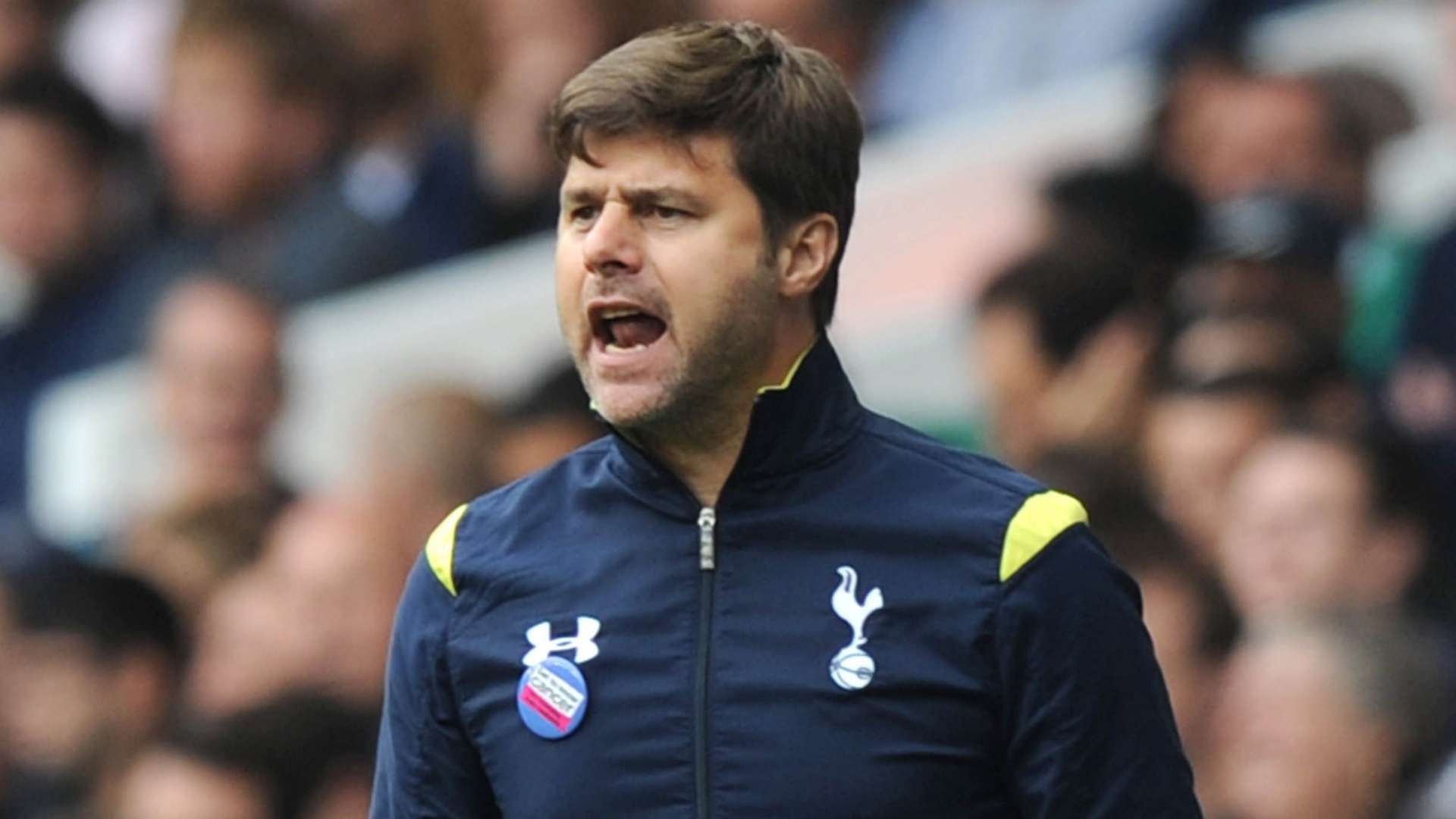
  • Mauricio Pochettino, TottenhamGetty Images

    Mismatched levels of experience

    Klinsmann's coaching resume simply doesn't stack up to Pochettino's. Pochettino was a good player while Klinsmann was a great one. As coaches, though, those labels are flip-flopped, although Klinsmann did have one thing that Pochettino doesn't yet: international managerial experience.

    When hired in 2004, Klinsmann began an aggressive revamp of the German national team. After failing at Euro 2004, they needed it, too. Klinsmann ushered in a youth movement that carried Germany all the way to third place at the 2006 World Cup. Klinsmann, in many ways, succeeded in reshaping the perception of German soccer before stepping out on a high in 2006. His replacement, assistant Joachim Low, ultimately led Germany to a World Cup in 2014, building on the foundation Klinsmann had put in place.

    Klinsmann's time at Bayern Munich, though, exposed his flaws. He attempted to implement a similar movement of change but, this time around, it failed. Klinsmann's lack of tactical expertise was exposed, with captain Phillip Lahm calling the era a "failure" due to the lack of in-game strategy.

    No one will accuse Pochettino of lacking tactical expertise. In fact, he's built his career off of it, particularly with clubs punching upwards.

    He broke through as coach of Espanyol, but really emerged during his lone season at Southampton. His time at Spurs made him one of the hottest coaches in the world, leading to jobs at PSG and Chelsea. Pochettino has tangible club success, most impressively, Tottenham's run to the 2019 Champions League final.

    Throughout his career Pochettino has built his teams on aggressive, pressing soccer. It's part of the reason he struggled at PSG, where egos ended up taking over. Pochettino is a master at managing good but not great teams, which is precisely where the USMNT sit right now.

    What can Pochettino learn from the German coach's experience? What mistakes can he avoid?

  • Howard Klinsmann USMNTUSA Today Sports

    'Understand the American player'

    Tim Howard was a key player throughout Klinsmann's tenure, and he has said there's one simple way for Pochettino to avoid the pitfalls that his former coach fell into during his second cycle. It comes down to relationships.

    "Jurgen tried to reinvent the wheel but he didn't teach us a lot of soccer," Howard wrote in the Daily Mail. "So we had to rely on the likes of Michael Bradley, Clint Dempsey, Landon Donovan and Jozy Altidore to bring the team together and win games - in spite of the manager.

    "The lesson for Pochettino to learn from Klinsmann? Understand the American player. Don't make it about yourself. Every culture has different nuances - wherever you coach around the world. So, yes, players have to be pushed out of their comfort zone, but you have to learn what makes people tick."

    Pochettino faces a tough task in that regard. He's walking into a USMNT group low on confidence, as displayed both in the frustrating finish to the Copa America and disappointing friendlies against Canada and New Zealand last month. His presence alone will inspire, but he'll need to both get to know players and build them up - all in a very tight window.

    "Of course, the confidence was a little bit low after the Copa America. We are going to work on the recovery [of that confidence] because they are good professionals," Pochettino said at his introductory press conference. "Not only in tactics, physical and psychological, we are going to work to create the right pattern to follow... It is a very good generation of players and football is a confidence sport, we all understand that. But then we need to show that we play with that quality on the pitch. We need to work on that."

  • Pulisic Milan Champions LeagueGetty

    A look at the club side

    Klinsmann, in many ways, challenged players' mentality. He called on the USMNT's top stars to be uncomfortable, to push themselves until they can push no longer. The players behind them, he said, needed to go to Europe and learn in that dog-eat-dog environment.

    In many ways, Pochettino is reaping the benefit of some of Klinsmann's work, even if it upset many at the time. Klinsmann would be thrilled to see the likes of Christian Pulisic, Weston McKennie and Folarin Balogun challenging themselves at big, historic clubs. He'd also love that they chose to fight it out after difficult moments.

    "A national team needs to be surrounded by players who always play at the highest level possible," Klinsmann told ESPN, "because if you have players in Europe and your players are possibly in clubs that are in the Champions League, then these players are used to playing against the best in the world. Not only when there's a World Cup or when there's a Copa America, they are used to doing it week after week."

    "If you have an opportunity to go into Europe, then give it a try. If it doesn't work, no problem. Now obviously, years after that, you look at the U.S. national team and pretty much everybody plays in Europe."

    Pochettino, meanwhile, won't be as laser-focused on players' career paths or the role of MLS in American soccer's player development. He's looking more at the here and now, who's playing and who isn't.

    "It is clear that you can perform well, but when you spend too much time without competing, your timing and fitness always tend to go down," Pochettino said. "This is a handicap that sometimes can't be allowed on a national team. I'm a little worried about this."

  • Mauricio Pochettino USMNT Press conferenceAFP

    The road ahead

    Klinsmann was given five years in charge of the USMNT, and it would have been more if not for a disastrous start to that fateful 2018 World Cup qualifying campaign. He was encouraged to think bigger picture. He was encouraged to take some risks, on and off the field.

    Pochettino doesn't have that luxury. In fact, he doesn't have many games at all. With the U.S. already included in the 2026 World Cup as one of the host countries, meaningful games will be hard to come by, giving Pochettino little time to really implement on-field tactics.

    "It's not going to be an easy one when, for sure, the expectations are also high," Klinsmann said. "You go to a World Cup in your own country. It will rock two years from now, hopefully, but he doesn't have any qualifying games, so it's tricky because he's playing pretty much only friendly games..

    "They have the Gold Cup next summer for a little competition, but you cannot compare the Gold Cup to a Copa America or European Championship. He doesn't have many highly competitive matches, but I think the appointment is very exciting, and I'm sure that the players are excited as well."

    Pochettino, though, isn't concerned with that. He thinks he'll have enough time to rebuild this team by 2026.

    "I think everyone thinks that there is no time to prepare and to arrive in our condition to the World Cup," he said. "What I want to tell you that I am in the opposite side. I believe that there is time enough. I don't want to make an excuse and don't want to create an excuse for the player to say, 'Well, yeah, we don't have time to buy into the new idea, the new philosophy, the new football.'

    "I think the players are so intelligent and so talented, and they can, I think, play in a different way. For sure, I think we have time. We have time, and we need to really believe in seeing big things. We need to believe that we can win. We need to believe that we can win the World Cup."

  • Jurgen Klinsmann USMNTGetty

    How would Klinsmann advise Pochettino?

    Klinsmann isn't ready to dish out unsolicited advice. He knows that his USMNT is a very different one than the current version, and that the coaching circumstances are just as contrasting. If Pochettino does reach out, though, Klinsmann said he would be thrilled to sit down and speak.

    "Mauricio doesn't need any advice from other coaches, but I'm sure he reaches out to people that know the U.S. Soccer environment a little bit," Klinsmann said. "He will make his calls and he will ask some questions, which is just normal... It's good that he comes in fresh. It's good that he comes in with his own ideas... If he reaches out then, for sure, you have a nice cup of coffee and you give your opinion, no problem."

    Pochettino will no doubt be studying the Klinsmann era, just as he'll study the Gregg Berhalter, Bob Bradley and Bruce Arena tenures, as well. He's a coach that will immerse himself in American culture. He's already calling it soccer, after all.

    Like Klinsmann, Pochettino is now the public face of the USMNT. He's the one steering the ship to the World Cup and, perhaps, beyond. It's a unique job and a unique challenge - which is what attracted Pochettino to the role to begin with.

    Few understand what he's in for. Klinsmann is one of those few. And if Pochettino avails himself of the opportunity to learn from what Klinsmann did right - and, as important, what he did wrong - he might just steer this U.S. team onto the path of success for 2026.