+18 | Commercial Content | T&C's Apply | Play Responsibly | Publishing Principles
USL RondoGetty

'It's anti-soccer that we haven't had it all this time' - USL club owners, presidents embrace promotion-relegation after years of waiting

Rob Salvatore has heard the noise for years. Promotion-relegation was, for some time, the worst kept secret in American soccer. Someone, somewhere, at some time, was going to implement it. And the Charleston Battery owner had been on the receiving end of questions ever since it was even rumored to be a possibility.

He was routinely pestered at home games, by both loyal regulars and European enthusiasts, as to when his team would be part of a grown up ecosystem, one that adapted the model found in global soccer.

“When it initially came up, there was this real desire from the fan base,” Salvatore told GOAL.

And now, those fans have their wish - at least, in some senses. The USL announced last week that it will implement promotion and relegation between three professional divisions by 2028, concurrent with launching a league with Division One status. Needless to say, this stands as a landmark moment in American soccer. And according to many owners, who voted overwhelmingly in favor of its implementation, pro-rel is the beginning of the second wind of a league that is properly starting to grow up.

“It's great for real soccer fans," Orange County Soccer Club President Dan Rutstein told GOAL. "It's great for the players and the future players. I know there's a long way to go, but this really does feel like day one of soccer in America reaching maturity."
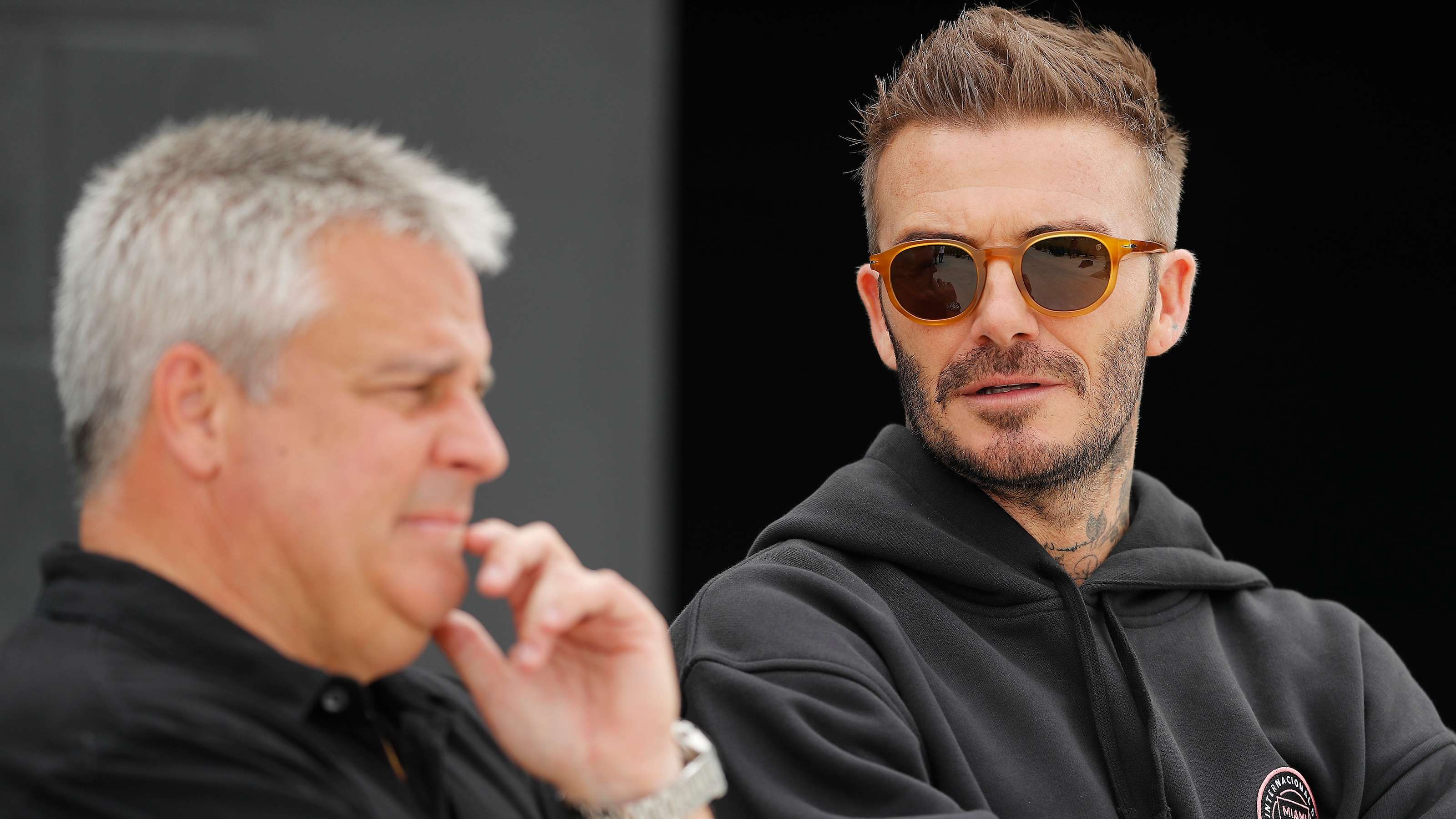
  • USL President Paul McDonough and Miami's David BeckhamGetty Images

    A long time coming

    Pro-rel, conceptually, has been a part of the American soccer landscape for years now. MLS officials are routinely bugged about it - and regularly rebuff speculation that it can be put into place in the United States. The USL, complete with its Championship, League One and League Two seemed an ideal spot for implementation.

    It helped, too, that USL operates in a separate universe from MLS. There is no $500 million buy in for a new franchise - the reported mark the ownership of new club San Diego FC had to pay.

    This is cheaper and more agile. And Paul McDonough, when took over as USL President in May 2023, tried to cut through the noise and implement the system immediately. He chose an owners meeting in Colorado Springs that August for the spot, calling for a snap vote on promotion-relegation. It was dismissed almost immediately. McDonough was disheartened, he admitted.

    But now, nearly two years later, the league is seemingly ready. At least, that’s what the system says. A month ago, owners passed a surprise vote to garner a new league with division one status. That paved the way for promotion and relegation. The vote came quickly, and was passed by a supermajority. Messaging is loud and clear: it is time to take the next step.

  • Advertisement
  • 'A real football team, for real football fans'

    It has often been the gripe of soccer snobs and European skeptics that American soccer cannot be fully legitimized until promotion and relegation is implemented. It can be a thinly-veiled argument. Soccer has existed in the United States for a long time, and will continue to thrive in MLS. But some owners insist that this does give USL a specific sort of authenticity.

    “We’ve always seen ourselves as a real football team, for real football fans, doing real football properly," Rutstein said. "So the missing piece of that, which was never in our control, was promotion, relegation. We’ve wanted this all along."

    Some have gone even further - casting off the former, and current, system as one that betrays the way the game is supposed to be played.

    “I didn't think it would happen before we even kicked off," Matt Valentine, chairman and founder of Dallas’ incoming USL franchise, told GOAL. "So it's all coming a little quicker than we had anticipated. But I love it. It's anti-soccer that we haven't had pro-rel all this time. So it's, long, long, long overdue."

    The Battery have heard something similar, with the type of fans who tend to watch European soccer - and occasionally come to their games - newly intrigued.

    “I’m trying hard to get the European fans. They could be Americans, they could be ex-pats. You're trying to really bring them into the mix and get them to come to more and more games and pay more attention to us, watch the development pipeline.” Salvatore said. “There's a lot of people who I don't even think are sports fans, but they watch Wrexham, they watch Ted Lasso, they understand it - and they're really intrigued by the concept of it and the jeopardy.”

    And then, there are the familiar touchpoints of a global soccer system. Some around the league have insisted that promotion and relegation will give dead-rubber contests meaning. There is no longer the option to simply drift through the dog days of the season - investment and continuous competitiveness will now be enforced.

    “It’s going to bring the fans more of what they’re truly used to in big games, meaningful games - even when you’re at the bottom," Las Vegas Lights owner Jose Bautista said. "And for a team that is facing relegation - not that you ever want to be there - at least now it’s not just a race to the bottom."

  • Don Garber, MLSImagn

    'The significance is huge'

    There is a marketing aspect to this, to be sure. Owners hope the relative novelty of pro-rel in American sports makes USL a more intriguing product as a result.

    “The significance is huge," Phoenix Rising President Bobby Dulle said. "It’s unprecedented here. Those that follow the sport around the world know that it’s customary. So we’re not the norm here in the U.S."

    And that has long been an issue for USL. MLS may only be 30 years old, but it has an established infrastructure. The league added its 30th franchise this season, and, despite hefty buy-ins, there will likely be more markets interested.

    Some hope, though, that the implementation of promotion and relegation shows how USL’s relative youth can be an asset. If MLS is stuck in its ways, USL can be nimble.

    “I don't want it ever to be XFL or some Savannah Bananas bullsh*t," Salvatore said. "I think we can challenge and innovate and but do it in a way that's pure."

    MLS, for its part, insists that more soccer is always a good thing.

    “I want more soccer,” MLS Commissioner Don Garber said in an interview with Boardroomin early March. “I want more professional soccer. I want more jobs for people who can be in the business. I want more marketing, promotion. So if they’re able to pull it off, good for them.”

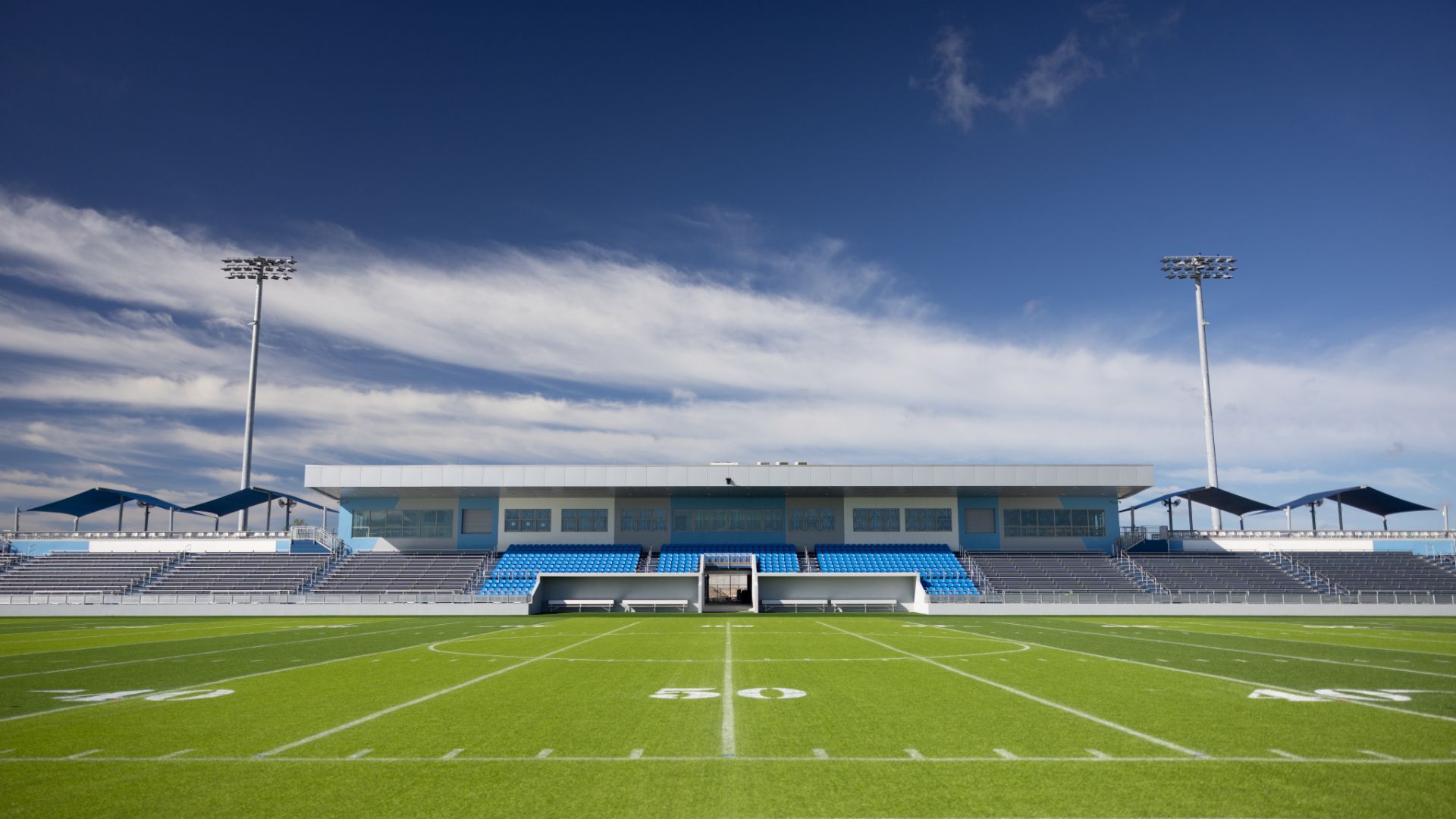
  • Paradise Coast StadiumFC Naples

    'This helps them buy into the romance of the game'

    USL League One welcomed five new clubs prior to the 2025 season. The range of their facilities differ massively. One of them plays at a fully-fleshed out, state of the art soccer complex. Another plays at a high school field. All of them will have to wait a few years for this to happen, but there’s a real chance that any of the five, with the right investment and shrewd recruitment, could be playing at a higher level.

    That’s part of the dream of the global soccer scene: a small club having the chance to make it big. It’s something that will now be introduced to the game in the United States.

    “For the casual fan, I think this helps them buy into the romance of the game, and the passion that people have for their clubs. I think that pro-rel helps that tremendously,” Valentine said.

    Of course, that will bring about fierce competition. There is also the inevitable scenario that someone from the Championship will be relegated to League One. That, too, is its own kind of footballing journey.

    “I assume no one’s going to want to be the owner of the first ever team to be relegated," Rutstein said. "The way these things work, someone’s more worried about being the first USL Championship team to go down to League One. The threat of relegation is very real."

  • Jose Bautista Las Vegas Lights

    'We're going to have to get more strategic'

    But that fear will bring about competition, some owners have said. There is an acceptance around the league that the USL is a level below MLS in terms of quality. Less significant payrolls, a smaller talent pool, and a minimal global footprint have made that clear. But the need to spend could change things.

    “We're going to have to support a higher level of the USL that's on par with MLS," Bautista admitted. "We're going to have to be able to recruit that level of talent that’s technically better than USL championship as it stands right now."

    The players are out there, Bautista insisted.

    “You have an immense pool of talent right to be able to draw from, and it just feeds into the growth of soccer in North America in the last 10 years, and it puts it on an even faster track,” the former MLB star said.

    Such growth will require significant injections of cash, though. Bautista admitted that he might have to seek outside money to give the Lights a lift - especially given the pressures of the Las Vegas market. Others have already started thinking about investing in youth development, and putting money into different levels of the club, all with the same goal in mind.

    "We're going to have to get more strategic," Dulle said. "We're going to have to put more money into different levels and different areas the organization. So when you do those things, ultimately the product should, should, in turn, be better."

    Rutstein talked to sponsors within days of the league’s announcement, with interest in renewing and restructuring deals ahead of what might be a financial boom in the sport. And there will certainly be more chats to come.

  • Indy Eleven Louisville City USLGetty

    'We don't know the rules yet'

    It’s a simple equation, really, once everything is pieced together - at least in theory. Higher stakes lead to more competition, which leads to more money, more investment, and better game on the pitch. Where there was once limited drama, it should generate excitement. A look at the global scene reinforces that notion.

    “You know, people will say the English Championship is more competitive than the Premier League because of what's at stake in terms of the game,” Rutstein said.

    USL is uniquely positioned, McDonough insisted, as it does not have a massive broadcast rights deal. While that limits overall league value, dependence on local revenues - and not much else - forces clubs to push to the top as quickly as they want.

    There are some questions, though, that make clubs hesitate. The restrictive standards for Division One soccer in the United States present a legitimate obstacle. For one, the league must have 12 teams, spanning three time zones. At least 75 percent of the teams have to be in metropolitan areas of at least 1 million people. Stadium seating capacity must be a minimum of 15,000.

    None of the USL Championship’s 24 clubs currently meet all of those criteria - although construction is underway on some stadiums that could bridge the gap. Criteria for net worth of owners, team operations staffs and a TV deal also have to be met.

    “We don't know the rules yet about how it works, whether you have a waiver for a couple of years, all of the things that other countries solved 50 years ago,” Rutstein said. “The teams who want to make the promotion push will probably need to think about upgrading their stadium. Maybe there's rules about baseball fields not being allowed anymore. We don't know yet.”

    Clubs also have queries about how the basic format. There is no clear guidance as to whether playoffs remain in place, or how they could function in a revamped format. McDonough said in an interview with USL All Access that there would remain "some type of a playoff mechanism."

    Owners aren’t quite sold on that - yet.

    “If we were doing it tomorrow, I would have been more worried, just in terms of, like, are we going to get the competitive structure right” Salvatore admitted.

    Still, this provides an opportunity. And for the kinds of fans who were pestering Salvatore week in, week out, promotion and relegation is the natural next step.

    “We're all dreamers," Dulle said."And we all want this to continue to grow and get bigger and better."