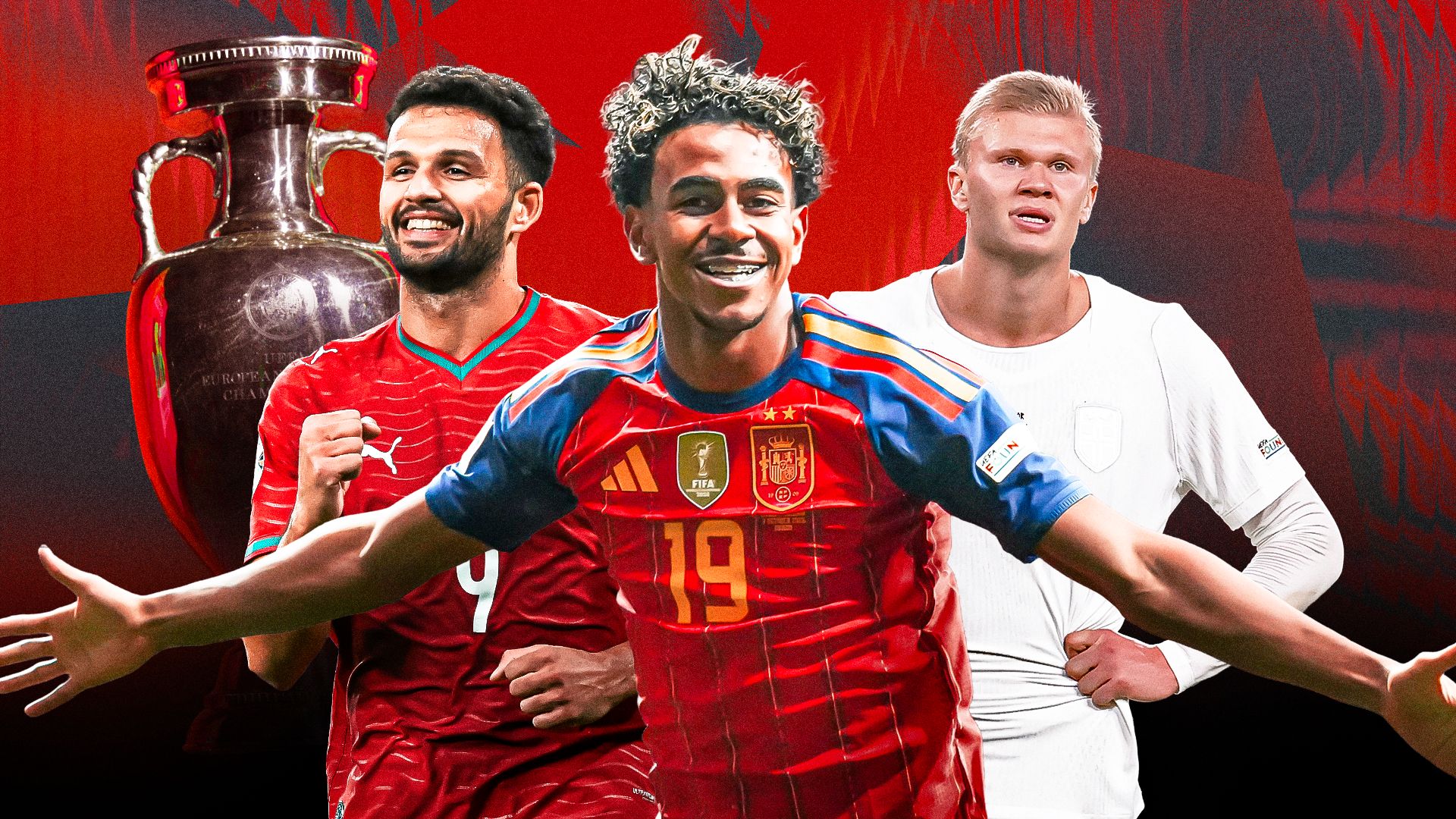
The annual NXGN lists are back for 2026, as GOAL ranks the world's top teenage talents in men's and women's football, crowning winners that will follow in the footsteps of the likes of Jude Bellingham, Rodrygo, Gianluigi Donnarumma and Vicky Lopez in being recognised as the best young footballers on the planet.
A total of five Premier League clubs secured automatic qualification for the Champions League last 16, with Arsenal, Liverpool, Tottenham, Chelsea and Manchester City all finishing in the top eight while Newcastle United missed out. The Magpies must now navigate a treacherous play-off round alongside giants Real Madrid and Paris Saint-Germain after a chaotic final matchday.
The final round of league phase fixtures in the 2025-26 Champions League is finally upon us, and it promises to be the most dramatic yet. Only table toppers Arsenal and Bayern Munich have already secured automatic qualification for the round of 16, with the former boasting a 100 percent record through their first seven games, while just four clubs have been eliminated so far: Eintracht Frankfurt, Slavia Prague, Villarreal and Kairat.
Kazakhstan isn't a nation known for its love of football. That doesn't mean it's non-existent, however, and with a new teenage sensation emerging as one of the country's best players already, the nation sandwiched between Europe and Asia could be on the verge of a golden generation.
Kylian Mbappe delivered a stunning hat-trick in Real Madrid’s 5-0 Champions League win over Kairat Almaty on Tuesday, but the French star still left the pitch frustrated at not taking all of his chances. The 26-year-old, who has now scored 13 goals this season, believes finishing opportunities is exactly what he was brought to the club to do.
Kylian Mbappe bagged himself a hat-trick in the Champions League and became the third quickest to reach 60 goals in Europe's premier competition, which puts him on course to beat Cristiano Ronaldo's incredible record tally. The Real Madrid superstar reached the landmark in just 89 games, courtesy of a treble against Kairat, while it took Ronaldo 98 games to reach the same number. And the France international is the second youngest to hit 60 goals, beaten by a matter of days, by Lionel Messi.
Manchester United, often simply referred to as "United," are one of the most iconic and successful football clubs in the world, based in Old Trafford, Greater Manchester, England. The club was founded as Newton Heath LYR Football Club in 1878 by the Lancashire and Yorkshire Railway depot at Newton Heath. The team changed its name to Manchester United in 1902 and moved to its current home, Old Trafford, in 1910.
Famous players
Manchester United have been home to some of the greatest footballers in history. Sir Bobby Charlton, a World Cup winner with England in 1966, is arguably the most iconic figure in the club's history. Other legendary players include George Best, known for his flair and skill, and Eric Cantona, who brought a winning mentality to the club during the 1990s. More recent stars like Cristiano Ronaldo, Wayne Rooney, and Paul Scholes have also contributed significantly to the club's success.
Honours
Manchester United are one of the most decorated clubs in English football, having won a record 20 Premier League titles (formerly the First Division). They have also lifted the FA Cup 12 times, the League Cup five times, and the UEFA Champions League three times. The club's dominance in English football was particularly evident during the 1990s and early 2000s under manager Sir Alex Ferguson.
Managers
Sir Alex Ferguson is undoubtedly the most successful manager in Manchester United's history. He spent 26 years at the club, leading them to an unprecedented era of success. Before Ferguson, managers like Matt Busby and Wilf McGuinness played crucial roles in shaping the club's identity. More recent managers, including David Moyes, Louis van Gaal, and José Mourinho, have faced the challenge of maintaining the club's high standards.
Stadium
Old Trafford, often referred to as the "Theatre of Dreams," is one of the most famous stadiums in the world. With a capacity of roughly 75,000, it is among the largest football stadiums in the United Kingdom. The stadium has hosted numerous major matches, including UEFA Champions League finals and FIFA World Cup matches.
Location
Manchester United are based in the city of Manchester, which is located in the northwest of England. The club's home ground, Old Trafford, is situated in the Trafford borough. Manchester is a major industrial city with a rich footballing heritage.
Owners
In February 2024, British billionaire Sir Jim Ratcliffe's company, INEOS, acquired a significant 25% stake in Manchester United. This acquisition granted Ratcliffe sporting control over the club, placing him in a position to influence key decisions related to its operations.
Ratcliffe has already made a substantial financial commitment to Manchester United. His large investments demonstrate his dedication to the club's success and his willingness to provide the necessary resources for its growth.
Sıkça sorulan sorular
Quando è nato il Milan?
Il Milan è nato nel 1889 con il nome di Milan Football and Cricket Club. La data non è certa, ma il club la fissa tradizionalmente nel 16 dicembre.
Chi è il presidente del Milan?
Paolo Scaroni, dirigente e banchiere italiano, è il presidente del Milan. Il proprietario del club rossonero è invece la società americana RedBird Capital Partners, fondata da Gerry Cardinale.
Come si chiama lo stadio del Milan?
Lo stadio del Milan è chiamato Giuseppe Meazza in onore dell'attaccante dei primi del '900. L'impianto è denominato anche San Siro, in virtù della zona di Milano in cui si trova.
Qual'è la capienza di San Siro?
San Siro, o il Giuseppe Meazza di Milano, ha una capienza di 75.817 posti a sedere. Il Milan condivide lo stadio con i cugini dell'Inter.
Quanti Scudetti ha vinto il Milan?
Il Milan è la terza squadra per Scudetti vinti in Italia. Dietro Juventus (36) e Inter (20) c'è la società rossonera con 19, a un passo dalla seconda stella.
Quante Champions ha vinto il Milan?
Il Milan è la squadra italiana con più Champions League vinte e la seconda in assoluto dietro al Real Madrid. I rossoneri hanno conquistato sette trofei nel corso della propria storia.
Quanti trofei ha vinto il Milan?
Il Milan ha vinto 31 trofei in Italia tra Scudetti, Supercoppa Italiana e Coppa Italia, oltre ad altri venti titoli in giro per il Mondo, di cui anche due Coppa delle Coppe. Il totale è dunque di 51 trofei.
Perché il Milan si chiama così?
Fondata da un gruppo di italiani ed inglesi a Milano, il club venne chiamato con il nome inglese della città, di fatto Milan. Per un periodo la squadra divenne Associazione Calcio Milano per volere fascista.
Perché il Milan gioca in rossonero?
Herbert Kilpin, principale fondatore del Milan e primo allenatore, scelse il rosso per rappresentare il fuoco dei giocatori e il nero come paura degli avversari nell'affrontrare gli stessi.
Perché il simbolo del Milan è un diavolo?
Il Milan scelse i colori rosso e nero per creare una squadra di Diavoli in grado di mettere paura agli avversari. E così, tramite i colori ufficiali del club, arrivò anche il soprannome e il noto simbolo.
Chi ha segnato più goal nella storia del Milan?
Lo svedese Gunnar Nordahl è il miglior marcatore nella storia del Milan con 221 goal. Il record del 'Pompiere' resiste dal 1956, anno in cui ha lasciato i rossoneri.
Chi ha giocato più partite con il Milan?
Paolo Maldini è il giocatore con più presenze in maglia Milan, ben 902. Il difensore rossonero è anche il più titolato, con 26 trofei nella sua lunga carriera
Come è soprannominato il Milan?
Oltre ad essere chiamato club rossonero in virtù dei colori, il Milan è soprannominato anche Il Diavolo. In alcune occasioni i suoi giocatori sono denominati anche Casciavìt.
Quale allenatore ha più panchine con il Milan?
Nereo Rocco è l'allenatore che ha il record di panchine alla guida del Milan, 459. Il 'Paron' ha guidato i rossoneri in tredici stagioni, vincendo anche due Champions League.
Perché i giocatori del Milan sono i Casciavit?
Nel ventesimo secolo i tifosi milanisti furono prevalentemente di estrazione proletaria: per questo motivo venivano chiamati casciavit - cacciaviti - per sottolineare l'origine popolare in contrapposizione ai fans dell'Inter, principalmente borghesi.